Scum: Hope of the Future
Algae Is a Potential Energy Source that Feeds on Undesirable Things

Algae blooms can be dangerous for life forms both marine and human. Besides the “dead zones” in our oceans, we’ve all probably seen them in smaller bodies of fresh water, too, green scum covering the surface, or sometimes even brown or orange muck. This thick covering is disturbingly unfresh looking, and potentially toxic or suffocating.
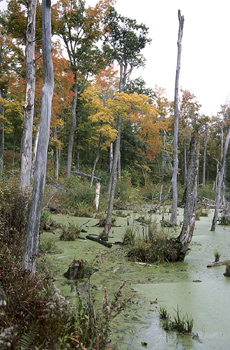
Good news is wafting up from the scum though. Algae is a potential energy source that also happens to feed on all kinds of undesirable things we have too much of (hence its ubiquitousness) such as CO2 and other carbon-based pollutants, sewage, agricultural and animal wastes. And aside from some types being grown and sold as nutritional supplements, this source of energy would not cut into the world’s food supply, like the thousands of acres of grain being turned into ethanol at a time when grains are needed for food. Algae also grows faster and takes up less room and resources.
There is a high-powered race in the alternative energy world to make turning algae into fuel economically viable. You know it’s gaining credibility when big oil is investing in it. Some companies would have their algae ponds located next to power plants, whose emissions would become food for the algae. Wouldn’t that be great. It’s even better than power plant emissions being turned into baking soda!