Puppy Mills
Purebred Breeders Gets Sued
This is the time of year where kids pester their parents with the standard question: “Mom? Dad? Can we get a puppy for Christmas?” Every year, thousands of well-meaning parents buy their child a puppy for Christmas and unknowingly support puppy mills. Since the Internet is so widely used today for anything from buying socks to buying exotic pets, many people use the World Wide Web to find the perfect puppy, without knowing where that puppy is coming from and without taking the time to visit the breeder.
Here’s a case in point: A woman named Karen Leland and 10 others recently filed a lawsuit against Purebred Breeders, the parent company of PuppiesDirect.com. Their claim is that the company’s puppies don’t come from quality, responsible breeders as they advertise. After spending $1,500, Leland’s puppy died within a week. A spokesperson for Purebred Breeders said the lawsuit has no merit and that the breeder has thousands of satisfied customers. However, Humane Society officials said they have undercover video of some of the company’s suppliers, which they claim are large-scale, unsanitary, and inhumane breeding facilities known as puppy mills.
Puppy Mills 101
Puppy mills are breeding kennels, located mainly in the Midwest, that are notorious for their cramped, unsanitary conditions and their continuous breeding of purebred animals. Puppy mill kennels usually consist of wire-mesh cages kept outdoors where female dogs are often bred continuously without rest between heat cycles. The mother dogs and their puppies often suffer from malnutrition and lack of veterinary care and receive little, if any, human contact. The puppies are taken from their mothers at four to six weeks of age (before they should even be weaned) and are sold to brokers who pack them into crates for transport to pet shops. The female dogs are typically killed once they stop producing litters. Unfortunately, puppy mill breeders are concerned more about the profit they make from puppies over the health and welfare of the animals. According to the Humane Society of the United States, there may be as many as 10,000 puppy mills operating across the United States.
Another reputable source — The Oprah Winfrey Show — sent an undercover investigator to Amish farms in Pennsylvania. Wire cages filled with dogs were stacked on top of each other and even though the farms spanned over 60 acres, these dogs never stepped foot on grass. At one puppy mill, the farmer had his dogs running on wheels in fan casings that looked like giant gerbil wheels. The farmer claimed this helped them get exercise as they were never out of their cages. Bill Smith, of Main Line Animal Rescue, was the one who encouraged Oprah to do a show on puppy mills. Smith and his volunteers rescue unwanted puppy mill dogs and adopt them out to families. According to Smith, “A number of times they’ll call us and give us 45 minutes to an hour to come out and pick up a dog before they shoot it when they no longer want it. It’s always amazing to me when I go out to pick up a dog they’ve had for eight or nine years and it doesn’t even have a name. It’s never been out of the hutch. It doesn’t know how to walk. I have to carry it to the car. It’s heartbreaking.” Smith says that Main Line Animal Rescue has rescued approximately 8,000 animals in its 12 year of existence — about 5,000 of those were from puppy mills. For more information on Main Line Animal Rescue, visit http://www.mainlinerescue.com/
When I witnessed puppy mills firsthand in Lancaster, Pennsylvania, my first question was, “How the heck is this legal?” The U.S. Department of Agriculture is supposed to monitor and inspect kennels to ensure they are not violating the housing standards of the Animal Welfare Act, but kennel inspections take low priority at the USDA. In addition, many of these breeders are operating without a license and slip through the cracks of the USDA.
What You Can Do
1. Adopt instead of buy. If you’re looking to get a dog, check with your local shelters first. Not only will you be saving a life, but you will ensure that your money is not going to support a puppy mill. There are many dogs waiting for homes in shelters all across the country, and close to 20 percent of these dogs are purebred. If you are set on a particular breed and can’t find it at your local shelter, try a breed rescue group through www.petfinder.com. Even Oprah is convinced to adopt next time. After the puppy mill episode aired, Oprah said: “I am a changed woman. I will never go anywhere else but a shelter.”
2. Research your local pet store. If you must adopt from a pet store, find out where the dogs are coming from. According to Main Line Animal Rescue, 99 percent of pet shop dogs come from puppy mills, and if they state the animals came from the Midwest, it’s a good chance that it’s a puppy mill.
3. Beware of internet sales. Those who sell animals on the Internet are not held to the Animal Welfare Act regulations and so are not inspected by the USDA. If you fall in love with a puppy through the internet, make a visit to the breeder in person.
4. Know how to recognize a responsible breeder. Responsible breeders have their dogs’ best interest in mind. If someone is a responsible breeder, they should be screening you just as you are screening them. Ideally, the mother dog should be part of their family. You should be allowed to see the breeding premises and be able to meet the mother of the puppies you are interested in. A responsible breeder will have health checks on all the puppies and will take them back for any reason if it doesn’t work out. If the breeder doesn’t allow you to see their facility in person, that should be a red flag.
With so many homeless dogs and cats being put to death every year in animal shelters, there is simply no reason for animals to be bred and sold for the pet-shop trade. Visit your local animal shelter and adopt!
Adoptable Pet of the Week
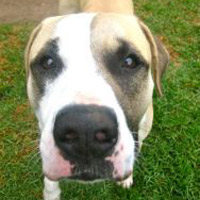
Tasha is a female American Staffordshire terrier mix. She loves attention and to run around and play. She has a lot of energy, so she will need a family that loves to spend time with her. She is a younger girl and in the prime of her life. Come take a look at Tasha and see what a great dog she is.
For more information, visit the Santa Barbara Humane Society at 5399 Overpass Road, call (805) 964-4777, or check out www.sbhumanesociety.org. Shelter hours are Monday-Saturday, 10 a.m.-4:30 p.m.