

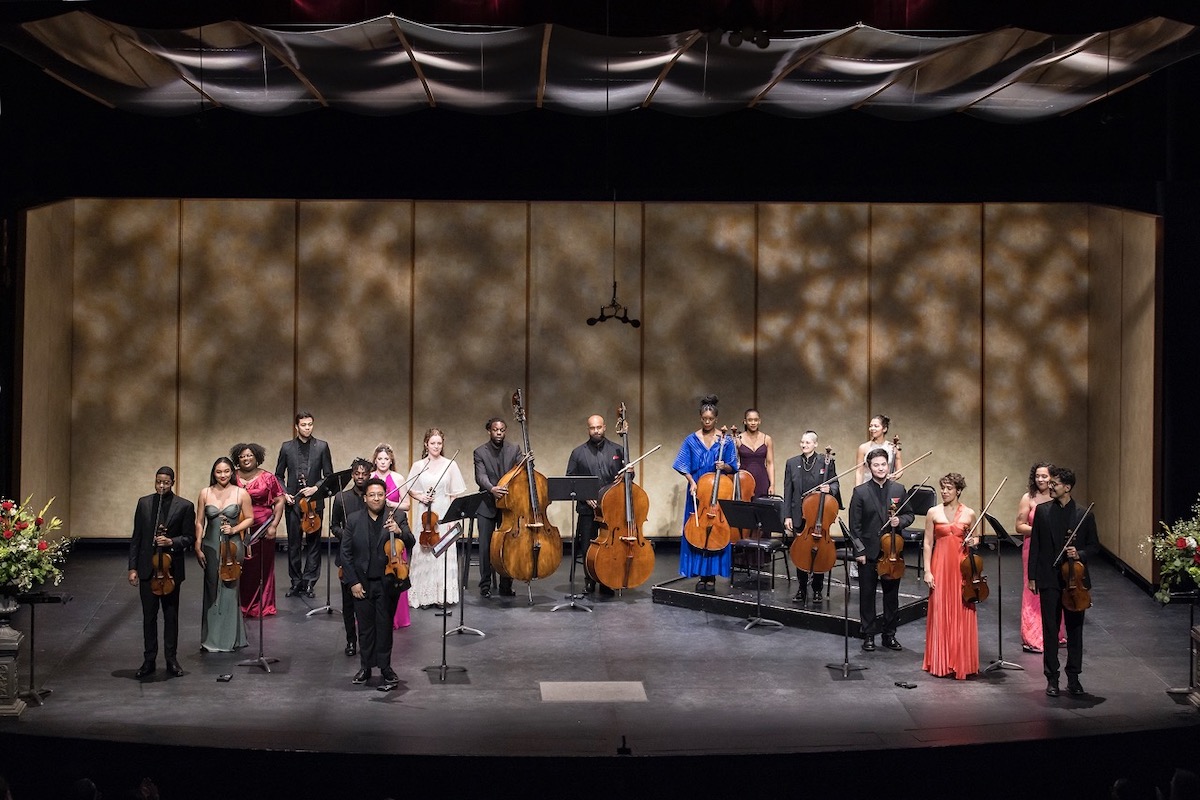
When the Sphinx Virtuosi played the Lobero on March 15 as the finale of the chamber-esque Masterseries component of CAMA’s season, it was clearly one of the more intriguing concerts of the current classical harvest, with various elements of surprise in place.
For one, programming-wise, the group deviated from the standard repertoire fare that tends to dominate Santa Barbara’s classical agenda. The musical menu was largely cooked up by living composers and included four fresh, new pieces written for the group out of a six-work program. In terms of the racial and gender makeup of the 18-piece string ensemble, we were happily greeted by the sight of a group composed of musicians of color, and a healthy component of women on stage.
That equal time-oriented aspect of the group’s very being and core mission — as a performing arm of the diversity-geared Sphinx Organization, fully in motion for 20 years now — is an important distinguishing feature of the group, and a thrilling surprise for audiences accustomed to stubborn old-school norms and hiring biases in the classical field. The focus on musicians of color extends to the expanding in-house playlist, ushering in music by composers of color, both living and historical.
Less of a surprise were the integrity and energy of this project, which gained increasing public attention with the release of its debut album, Songs of Our Times, last year. This all Black and Latinx ensemble coheres into an impeccable ensemble sound, with standout solo moments easily comparable to the rest of CAMA’s usual world-class offerings each season.
It can also be said that Sphinx’s dynamo performance, and the atmosphere it generated on Canon Perdido Street last Friday night, was an unusually exuberant “serious music” event in town, onstage and off. The audience, obviously bolstered by young and fresh visitors to the classical concert realm, was loud and proud, and unhindered by strict adherence to classical music decorum.
Ditto the young Sphinx-ians, who palpably fed off of the energy in the room and also confessed to loving the sudden burst of warm spring-like weather in our dreamy town. The evening’s first speaker from the ensemble ranks, cellist Eri Snowden-Rodriguez, basked in the crowd’s fervor and the host city, saying, “Whenever we have sun on our faces, we bring new energy onstage.”

It didn’t hurt that the evening opened with 23-year-old composer Quenton Xavier Blache’s vigorous new Habari Gani, bursting with a celebratory spirit in a determinedly tonal musical language. The going got deeper with Javier Farias’s Abran Paso, featuring the superb violist Celia Hatton (an alum of the Music Academy, incidentally). On this score, also heard on Songs of Our Times, Farias’s harmonic and rhythmic strategy involved an engaging road map, wending through dance-like phases and pensive passages.
Another new work, Adolphus Hailstork’s Sonata da Chiesa, was represented through two movements. He describes his work as inspired by the impression of a cathedral with “a darkness that light pierces through, something ancient.” While claiming an influence from Corelli, his contemplative score also reminds us of Arvo Pärt’s signature “holy minimalist” approach.
On either side of the intermission, we were pleasantly lulled by Andrea Casarrubios’ Herencia, and brought into the dual world of composer-performer practice with Xavier Dubois Foley’s new Concertante for Two Double Basses and String Orchestra, “Galaxy.” Over and between the folds of an affirmative-sounding and melody-driven score, Foley himself was entrenched in soloist duties alongside double bass ally Kebra-Seyoun Charles. The pair interacted in harmony, unison and the “riff-swapping” patois borrowed from jazz. At one point, a third double bassist onstage, Jonathan Colbert, laid down a bass ostinato. Bass seized the spotlight, for a change, with appealing riffy business in the margins.
On this program, the best came last: Sinfonietta No. 2 “Generations,” by the one non-living composer on the roster, Coleridge-Taylor Perkinson (1932-2004). (His mother named him after famed Black British composer Samuel Coleridge-Taylor). The four-movement work maneuvers seamlessly through a variety of genres and implied “generational” shifts in musical style, from the driving pulse and tensions of its opening through the brooding slow movement, a jazz-colored pizzicato third movement and the terse rondo effect of a finale.
In the final movement, the cohesive ensemble voice of the Sphinx group got its due showcase, as surging lines were flexibly passed through and between the players. It was all for one for all, implicitly posing the musical question. What’s color got to do with it?
Related Posts




Premier Events

Mon, Mar 09
6:00 PM
Santa Barbara
ART 4 GRIEF Support Group

Sat, Mar 14
7:00 PM
Santa Barbara
Red, White, & Blues II: The American Songbook
Sun, Mar 15
3:00 PM
Santa Barbara
Red, White, & Blues II: The American Songbook

Thu, Mar 12
6:00 PM
Santa Barbara
Poetry, Typewriters, and Collage Workshop
Thu, Mar 12
6:30 PM
Santa Barbara
An Evening of Wild Hope: PBS Film Screenings
Thu, Mar 12
7:00 PM
Santa Barbara
Lights Up! Presents: “The Addams Family”
Fri, Mar 13
6:00 PM
Santa Barbara
GLOW X: A High-Definition Neon Experience

Fri, Mar 13
7:00 PM
Goleta
Peace Event

Sat, Mar 14
7:00 PM
Santa Barbara
The Vada Draw
Sat, Mar 14
7:00 PM
Santa Barbara
Lights Up! Presents: “The Addams Family”

Sat, Mar 28
All day
Santa Barbara
Coffee Culture Fest
Mon, Mar 09 6:00 PM
Santa Barbara
ART 4 GRIEF Support Group
Sat, Mar 14 7:00 PM
Santa Barbara
Red, White, & Blues II: The American Songbook
Sun, Mar 15 3:00 PM
Santa Barbara
Red, White, & Blues II: The American Songbook
Thu, Mar 12 6:00 PM
Santa Barbara
Poetry, Typewriters, and Collage Workshop
Thu, Mar 12 6:30 PM
Santa Barbara
An Evening of Wild Hope: PBS Film Screenings
Thu, Mar 12 7:00 PM
Santa Barbara
Lights Up! Presents: “The Addams Family”
Fri, Mar 13 6:00 PM
Santa Barbara
GLOW X: A High-Definition Neon Experience
Fri, Mar 13 7:00 PM
Goleta
Peace Event
Sat, Mar 14 7:00 PM
Santa Barbara
The Vada Draw
Sat, Mar 14 7:00 PM
Santa Barbara
Lights Up! Presents: “The Addams Family”
Sat, Mar 28 All day
Santa Barbara


You must be logged in to post a comment.