

The Hernandez family took over a decade to plant firm roots in California. They migrated around the state, following the seasonal harvest. They spent nine months of the year in California and three in Mexico.
Each time that they would leave for Mexico around the holiday season, Hernandez’s father would send him to school and say, “Kids, get three months of homework from your teacher.”
Hernandez’s 2nd-grade teacher, Ms. Young, finally caught wind of the family’s relocation pattern and decided that she would do something about it. She told Hernandez that she wanted to come to his home and speak to his parents.
Hernandez’s dad subscribed to a traditional Mexican parenting style; as Hernandez explains, “He would use his belt before his words.” With this in mind, Hernandez greatly feared what Ms. Young’s home visit would entail.
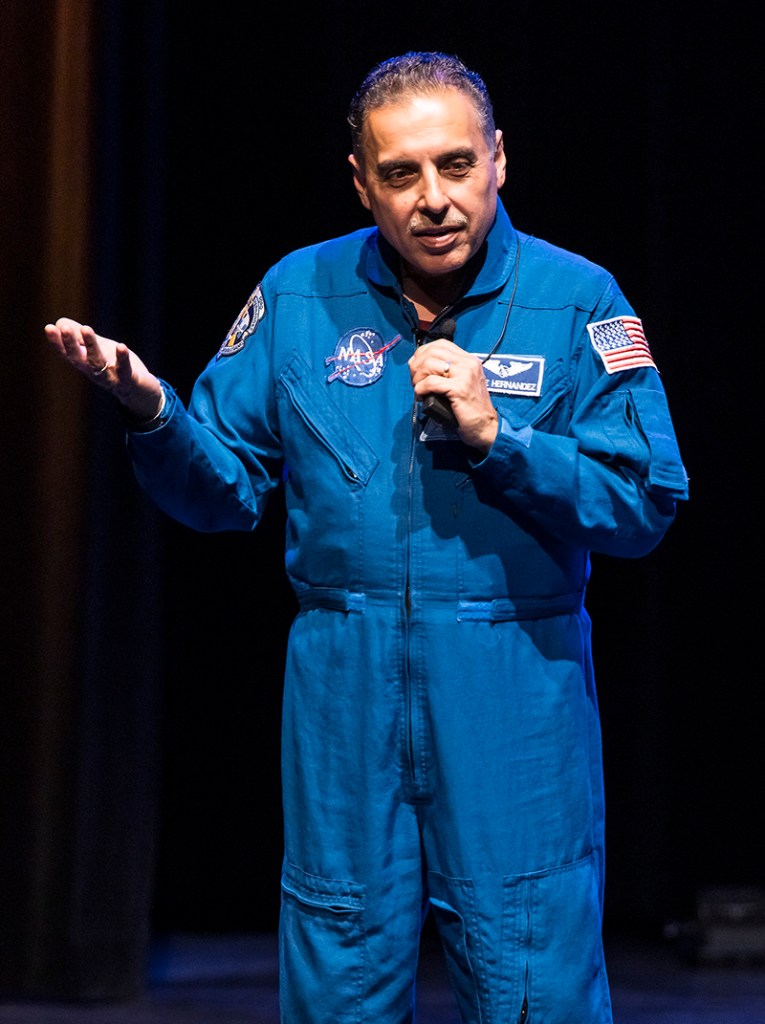
Sharing this story at a UCSB Arts & Lectures presentation on campus, Hernandez explained that he had to translate between Ms. Young and his parents. She explained that she saw great potential in the kids but they were always switching districts. To get her point across, Ms. Young made an horticultural analogy for Hernandez’s father.
“Imagine you plant a tree. Keep transplanting the tree every three months into a new soil. Make sure to keep taking care of it. What happens to the tree in the long run? The tree is not going to die, but you’re sure going to stunt its growth. If it’s a fruit tree, it probably won’t grow fruit. A tree needs to be in one place so its roots can grow deep and its branches can grow big and strong,” Hernandez explained Ms. Young’s analogy.
Ever since that talk, Hernandez noticed a complete shift in his father’s disposition. They remained in the same school district in Stockton, and their three-month break in Mexico shortened to three weeks. This was pivotal for Hernandez, who could finally build a sense of identity and place.
Hernandez recalls being 10 years old and seeing astronauts on television — he told his father he wanted to be one. His father responded, “You wanna be white?”
Unshaken by this challenge, Hernandez graduated from the University of the Pacific and UCSB with degrees in engineering.
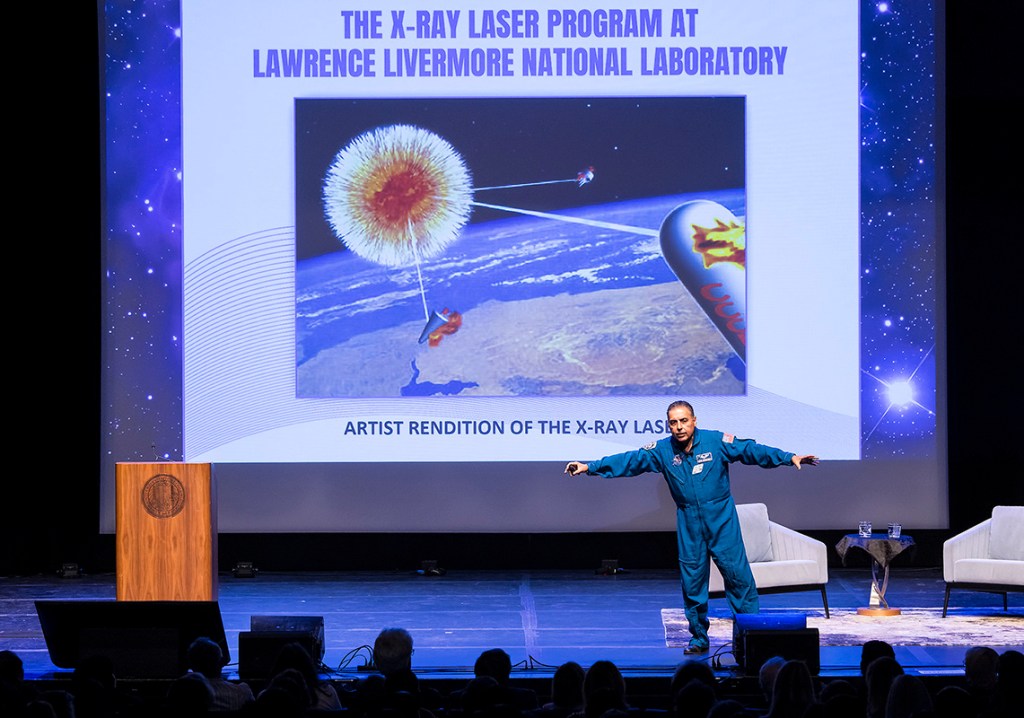
He took a job at the Lawrence Livermore National Laboratory, where he worked on their x-ray laser program for five years. He went on to work at a new project where he co-developed the first full-field digital mammography system for the earlier detection of breast cancer, ushering in the era of computer diagnosis, a breakthrough discovery in the field.
For each year at the laboratory, he continually applied to NASA as an astronaut and was repeatedly rejected.
After several rejections, Hernandez recalls a pivotal conversation with his wife where she inquired, “What do they have that you don’t have?”
From that moment on, Hernandez made it his mission to differentiate himself from other candidates. He researched what qualifications he was lacking and took action. For Hernandez, this meant obtaining his pilot’s and scuba diving license.
However, the rejection letters continued to roll in. Hernandez decided that he needed to take a job that would push him further out of his comfort zone. He accepted a role through the Laboratory where he worked in a nuclear non-proliferation arena in Russia. In this role, he learned Russian and worked closely with intelligence.
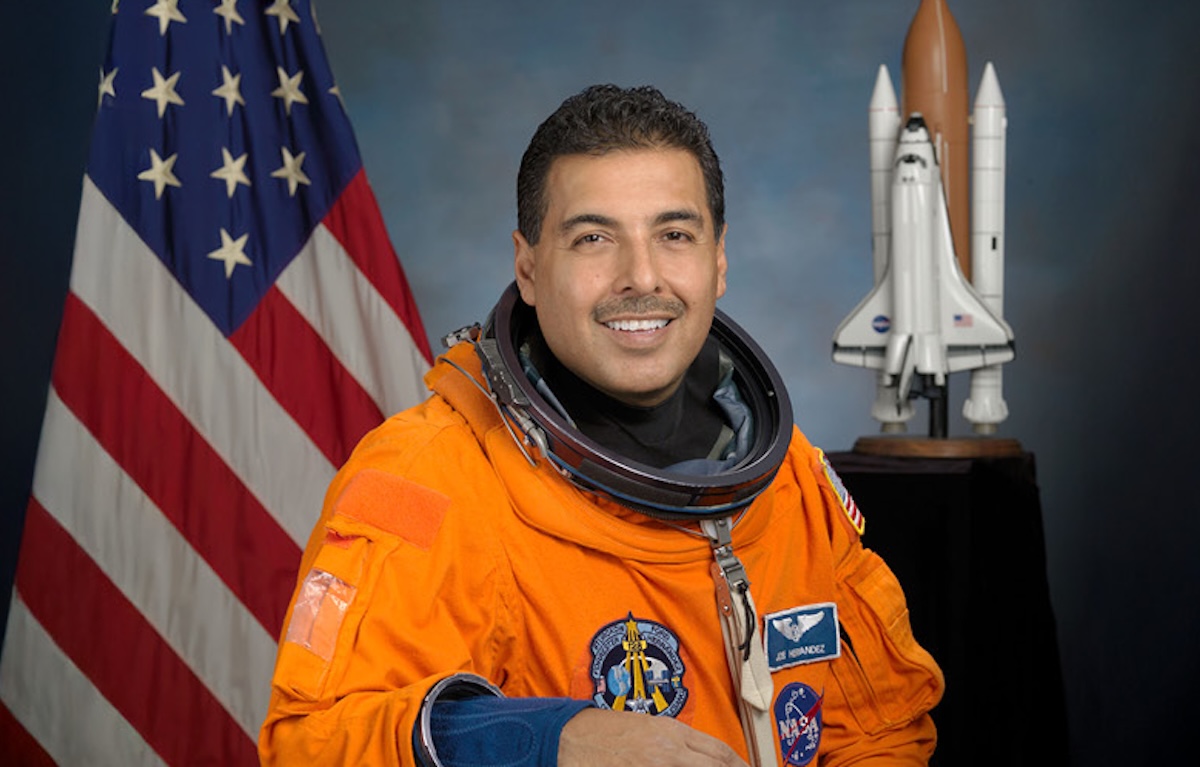
After applying 12 times, Hernandez was finally accepted into NASA’s 19th class of astronauts.
For the next two years, he was an astronaut candidate (“ascan”). With oral, written, and simulator tests, every Friday, being an ascan was “like being in finals for two years in a row,” Hernandez said.
Between 18 months of intense water and cold weather survival training, wilderness survival training, and underwater simulations, Hernandez and his crew were ready to journey to space.
He embarked on the STS-128 mission, where he and his crewmates compiled a lighthearted montage of them performing necessary duties on the craft and goofing off.
Beyond going to the moon and back, Hernandez also owns the vineyard where he picked grapes as a child, as a full circle moment. Most recently, he wrote a Netflix original about his life, A Million Miles Away.
Between outer space and the vineyards of Northern California, Hernandez has truly dabbled in all things that life has to offer. With a humorous disposition, Hernandez’s story stands as an uplifting narrative of the trials and tribulations he has endured through his life and the character it has built along the way.






You must be logged in to post a comment.