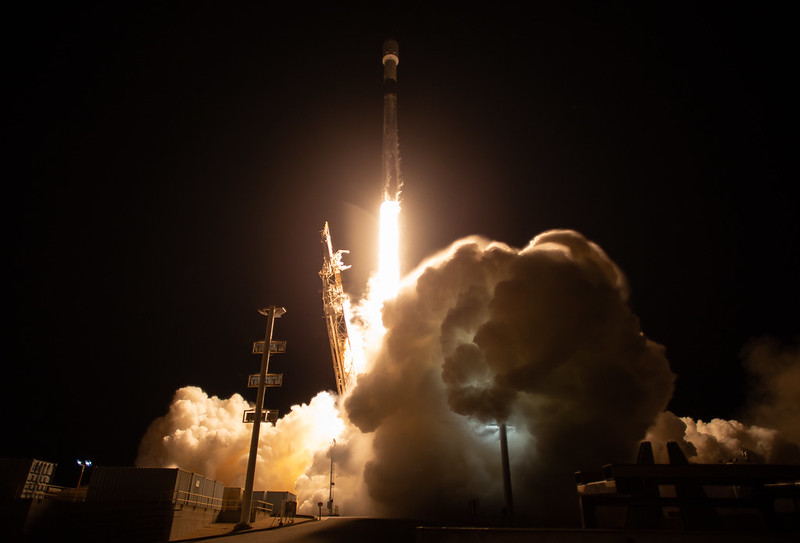
The California Coastal Commission voted 9-0 on Thursday to oppose a U.S. Space Force plan to nearly double the number of SpaceX rocket launches from Vandenberg Space Force Base. The state agency charged with protecting California’s expansive coastline cited unanswered questions about the environmental and community impacts of the proposed expansion.
“The sonic booms and their impacts on California’s people, wildlife, and property are extremely concerning,” Commissioner Linda Escalante said. “The negative impacts on public access, natural resources, and environmental health warrant our scrutiny under California as a standard of review.”
The plan would raise the ceiling from 50 Falcon 9 launches per year to 95, and allow up to five Falcon Heavy launches annually, along with construction of two new landing zones at the Santa Barbara County facility. In its staff report, the commission said the Department of the Air Force and Space Force had not provided sufficient data on the cumulative effects of the increased launches — from sonic booms and marine debris to possible harm to marine mammal breeding areas and protected coastal zones.
“The simple fact remains that it is a privately owned company engaged in activities primarily for its own commercial business,” the report stated, challenging the Space Force’s position that all launches are federal activities exempt from state permitting. In the meeting and the report, the Commission managed to steer away from the political undertones intertwined with the Elon Musk–owned company this time.
The Calabasas meeting is round two of the Coastal Commission versus Musk, occurring less than a year apart. In October, members rejected an earlier proposal to raise the limit from 36 to 50 launches, a vote that touched off a lawsuit by the SpaceX founder alleging political retaliation — a case still pending in federal court.
That earlier meeting became a flashpoint after several commissioners veered into pointed criticism of Musk’s political affiliations and business practices, prompting Governor Gavin Newsom to publicly defend him. The Space Force ultimately allowed the increase to move forward despite the vote, citing federal authority and national security needs.
Commissioners also expressed frustration that neither the Space Force nor SpaceX attended Thursday’s meeting or submitted updated information since the proposal was first reviewed last year. “There are a number of unanswered questions that make it really quite impossible for us to engage,” said Vice Chair Caryl Hart.
Because the commission lacks authority to block the launches outright, the Space Force is expected to move forward as it did following the October vote, citing federal preemption and national security. Space Force and SpaceX are also slated to begin construction of a second launch site at Vandenberg later this year.
“There’s a possibility of causing irreversible harm to our coastline and our coastal resources,” Commissioner Raymond Jackson said. “We owe it to the public and to the future to insist on data-driven, transparent decision making.”