This article was underwritten in part by the Mickey Flacks Journalism Fund for Social Justice, a proud, innovative supporter of local news. To make a contribution go to sbcan.org/journalism_fund.
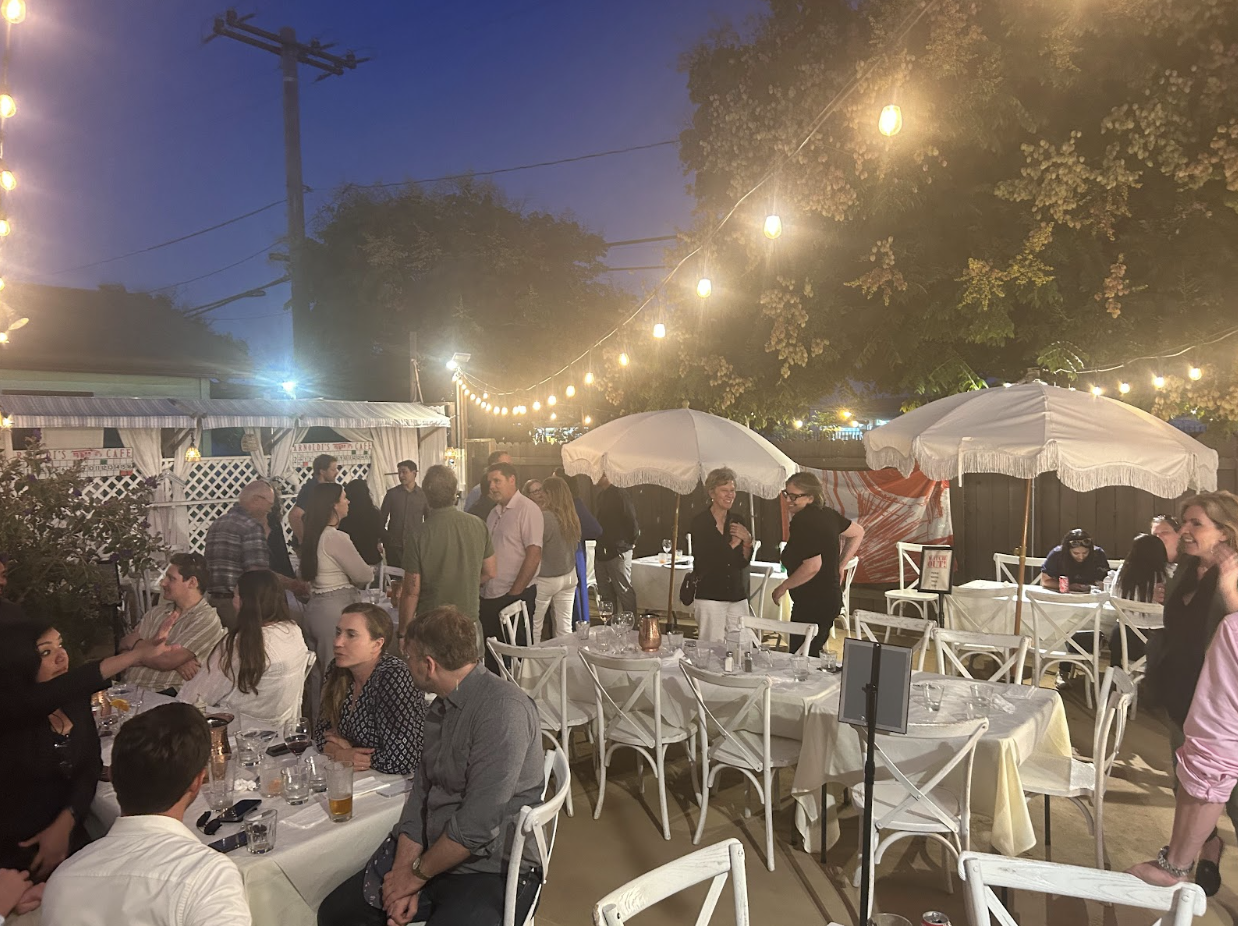
Architects, urban planners, and developers gathered on the patio of Arnoldi’s Café on September 11 to talk about housing — from how to build more affordable units to new legislation from the state. The event, hosted by the American Institute of Architect’s Santa Barbara Chapter, included a panel Q&A with land-use lawyer Beth Collins, real-estate developer Peter Lewis, City Interim Community Development Director Allison DeBusk, and City Interim Principal Planner Rosie Dyste.
Over the chatter of the patio during dinner hour, people asked specifics on how the city planned to build more housing downtown and how it could fund affordable projects.
The state requires Santa Barbara to build a bit fewer than 5,000 units at below-market-rate cost. Interim Community Development Director DeBusk said that without a redevelopment agency, it’s nearly impossible for the city to fund that number of affordable units — an ongoing problem.
Redevelopment agencies operated in California from shortly after World War II until 2012, when Governor Jerry Brown ordered their dissolution due to budget shortfalls. These agencies were allowed to fund urban renewal projects through property taxes.
Developer Peter Lewis raised the question of removing the city’s units-per-acre assessment and instead suggested analyzing projects on their form, size, and height, such that more housing could be put in certain parts of the city.
Attorney Collins discussed recent state legislation as tools to develop affordable housing, especially starter homes, including an optional bill (Assembly Bill 1033) passed last year that allows ADUs (accessory dwelling units) to be sold separate from a main residence. The city, Interim Principal Planner Dyste said, was watching the impacts of this law in other communities as they considered it. Dyste also spoke about the city’s motivations for applying for the state’s pro-housing designation — means to get more funding.