

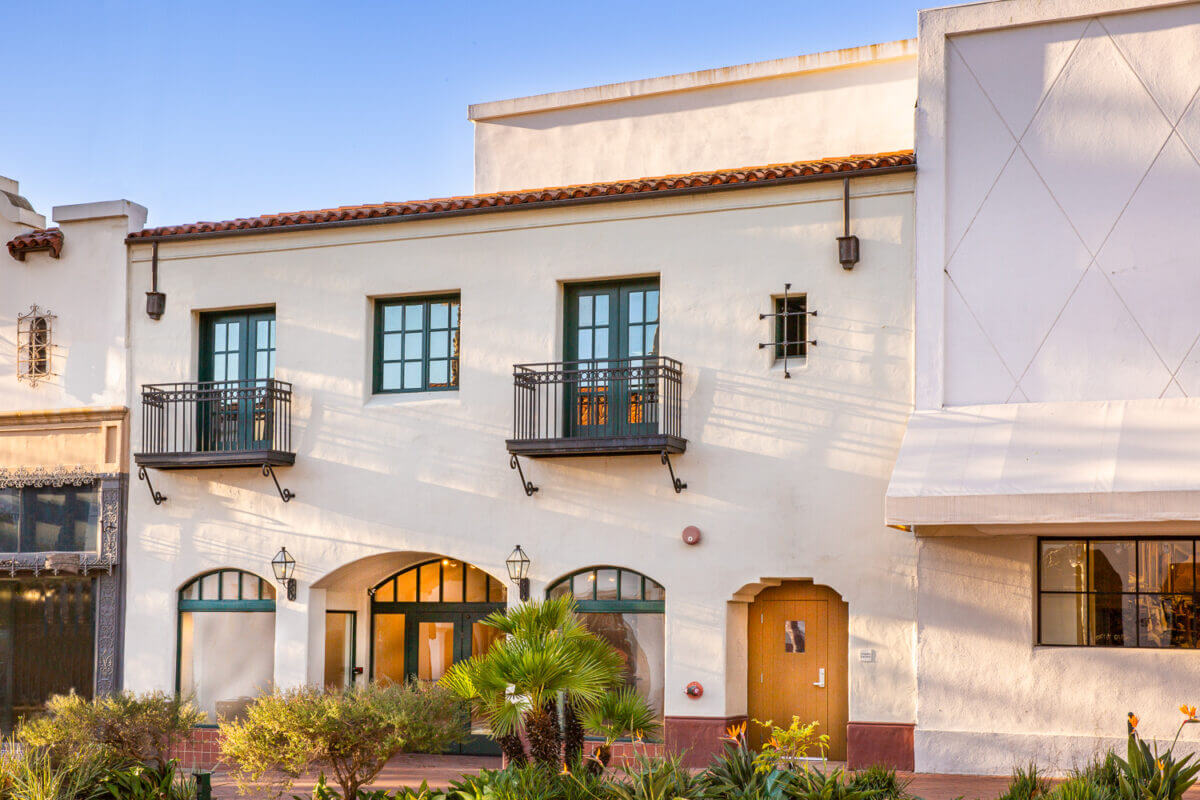
A long-awaited and urgently needed adaptive reuse ordinance comes before the Santa Barbara City Council on Tuesday. We strongly support this measure while emphasizing that keeping our inclusionary housing requirement is key to ensuring it delivers on Santa Barbara’s values of fairness and affordability.
Currently, for projects that convert existing downtown buildings into housing (i.e., adaptive reuse), the council is considering scrapping a requirement that the project either include a modest percentage of affordable units or pay an in-lieu fee. The in-lieu fees are direct contributions to the city’s affordable housing fund and help finance other projects.
To get rid of this requirement would be a serious mistake. Removing inclusionary housing would mark another concession in a series of escalating development pressures, risking a downtown dominated by luxury apartments that are out of reach for the diverse workforce that gives our city life.
An inclusionary policy is key to increasing vibrancy in our city — especially downtown.
Adaptive Reuse Isn’t a Gamble — It’s a Proven Solution
Repurposing vacant offices and rundown hotels that have already undergone design review into new homes just makes sense. It’s efficient, environmentally responsible, and cost-effective. Adaptive reuse preserves Santa Barbara’s architectural heritage, reduces construction waste, and breathes new life into underused spaces.
The ordinance’s existing incentives — unlimited density within the existing building envelope, no open-space requirements, and streamlined review when no exterior changes are made — strike a fair and thoughtful balance. While adaptive reuse has its challenges, it’s a far more efficient pathway to housing than new construction. Reusing existing foundations, roofs, and walls cuts costs, and bypassing design review speeds the delivery of attainable homes — and potentially ownership opportunities — for our local workforce and families.
Development Incentives Must Serve the Community
The city’s inclusionary standards and in-lieu fees are modest. New rental projects only require 10 percent of units to be affordable for moderate-income households, i.e., people earning up to $95,000 for individuals or $109,000 for a couple. These are our teachers, nurses, hospitality managers, city staff, and nonprofit workers, people who keep Santa Barbara running and deserve to live here.
Developers already benefit from substantial flexibility and incentives. For example they are already permitted, under certain circumstances, to pay in-lieu fees instead of building affordable units for both rental and for-sale housing projects. These fees are a fraction of the cost of actually constructing affordable housing.
And now some are seeking additional exemptions. It’s hard to understand how these benefit the people who live here.
Let Data Lead the Way
City staff’s original draft ordinance correctly retained inclusionary requirements as they exist in city law. Now, a majority of council members want to consider adding another significant concession: waiving both inclusionary and in-lieu fees for downtown adaptive reuse projects that have 40 or less units.
Eliminating affordability obligations altogether is unacceptable. Every project must contribute — through units or fees to the Local Housing Trust Fund, our only dedicated source of funding to build affordable workforce housing.
Fortunately, a compromise is within reach. For projects with genuine feasibility challenges, allowing in-lieu fees instead of onsite affordable units is reasonable and addresses some developers’ concerns about managing deed-restricted affordable units, which require ongoing compliance and create a long-term regulatory relationship with the city.
This is already a significant concession: In-lieu fees take years to accumulate, and per-unit amounts fall short of current construction costs. It can take several development cycles before there’s enough funding to build even a handful of homes. Still, allowing in-lieu fees at least preserves the principle of shared responsibility.
Ideally, the city would not be touching the inclusionary ordinance as part of its adaptive reuse ordinance until it had relevant data from the long-awaited financial feasibility and nexus study being conducted by the consulting firm BAE. Data, not developer pressure, should guide future ordinance changes.
Local Residents Add Vibrancy: Their Needs Should Come First
If vibrancy is the goal of adaptive reuse, guaranteeing housing for locals matters. Without a local preference policy, many of these new downtown units will go to second-home owners or remote workers. By contrast, 100 percent affordable projects built with in-lieu funds already prioritize giving units to local residents who live or work here — the very people who sustain our shops, schools, and civic life.
State Bills Have Eroded Affordability — Let’s Not Finish the Job
The State of California has not only weakened local control but also the amount of affordable units required in market rate projects through bills like AB 1893, AB 35/423, and AB 130. If we follow suit, we’ll lose one of the last tools we have to build deed-restricted affordable homes — exactly the households our Regional Housing Needs Assessment data shows have the greatest unmet need.
Santa Barbara is already 95 percent of the way toward its market-rate housing target for 2031 but woefully behind on affordable production. Without inclusionary housing, we’re projected to fall short, leaving the city open to penalties for failing to meet our affordable housing goals that could further erode local control.
A Downtown for Residents Starts with Inclusionary Housing
Adaptive reuse is a tremendous opportunity to create more homes quickly, sustainably, and beautifully — the Santa Barbara way. But vibrancy depends on affordability. Our downtown cannot thrive as a weekend retreat for the wealthy; it must serve residents who live, work, and shop here every day.
Even modest contributions to affordable housing keep that dream alive. Let’s ensure Santa Barbara’s adaptive reuse ordinance continues to reflect our shared values. This Tuesday, join us in reminding the City Council that retaining inclusionary housing in the adaptive reuse ordinance ensures Santa Barbara grows equitably, not just profitably.
Ali Brieske, Dianne Black, Lisa Carlos, Megan Turley, and Whitney Rubison are Santa Barbara community members who support affordable housing.
Correction: The moderate-income information was changed on Sept. 15 to reflect the City of Santa Barbara’s income limits.

