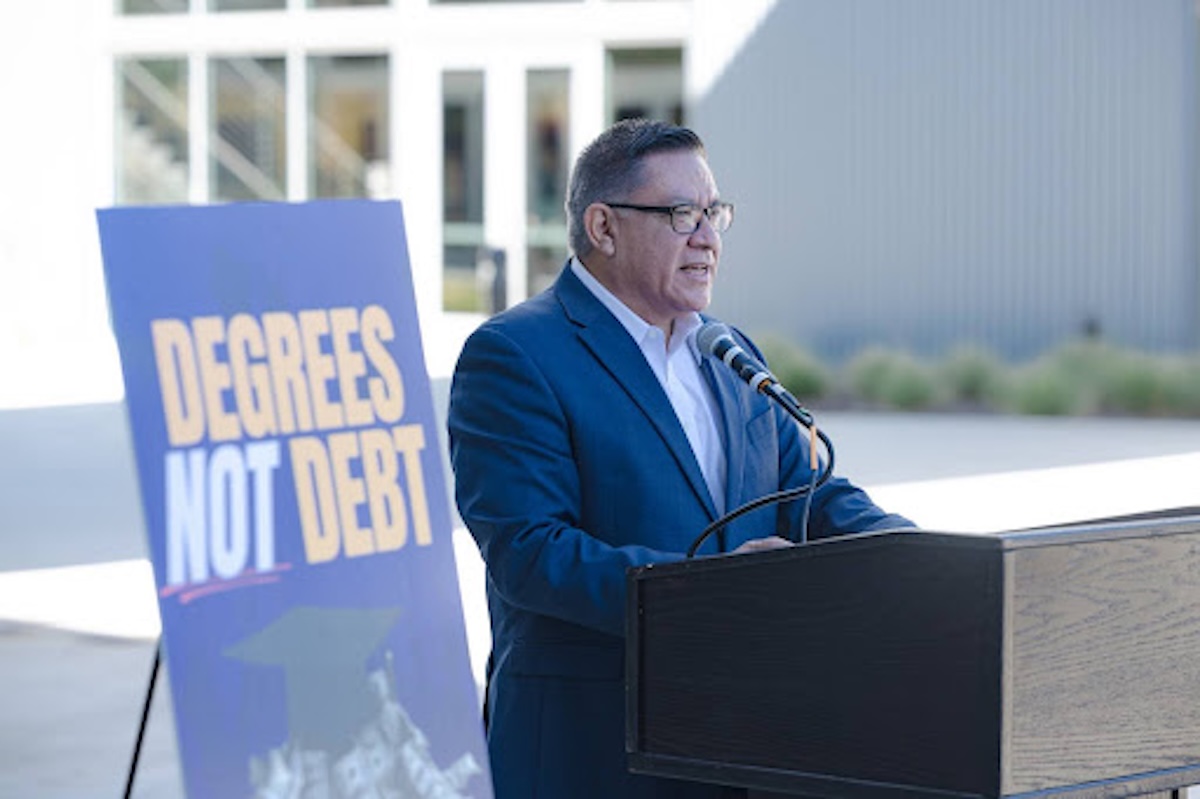
Santa Barbara Congressmember Salud Carbajal is attempting to make college affordable again. Anything helps when combatting American tuition rates that are, on average, 40 times higher today than in the 1960s along with student loan debt that is in the trillions of dollars.
According to Carbajal’s office, the Degrees Not Debt Act would double the maximum Pell Grant award to $14,800, “decreasing the amount of burdensome student loan debt for individuals pursuing higher education,” and would index it to inflation by the 2028-2029 school year.
The Pell Grant is a federal financial award given annually to undergraduate students based on financial need, and currently, the max award is $7,395. About one in three U.S. college students currently rely on Pell grants, but the current max, for some students, only covers a fraction of their annual costs.
Average tuition in the U.S. can range from $12,000 to more than $43,000 a year. Couple that with off campus food and housing costs, which have skyrocketed since 2015, and a student’s financial situation can get extremely tight.
“I firmly believe higher education should be a ladder to success, not a lifetime of financial strain,” said Carbajal. “Today, student debt is holding back millions of Americans from building the lives they deserve, and that’s not acceptable. My legislation will double the Pell Grant award, helping students graduate with less debt and more opportunity.”
At UC Santa Barbara, for example, increasing the Pell Grant to $14,800 would cover the majority of the college’s in-state tuition costs at $14,965.
For the 2023-2024 school year, House Democrats and the Biden-Harris administration worked to increase the maximum Pell award to $7,395, which was $500 higher than the previous year and $900 higher than in 2021 — the largest Pell increases in a decade. Doubling the grant will be a significant jump, and a lofty goal for Carbajal, but it comes at a time that higher education is becoming increasingly more inaccessible.