

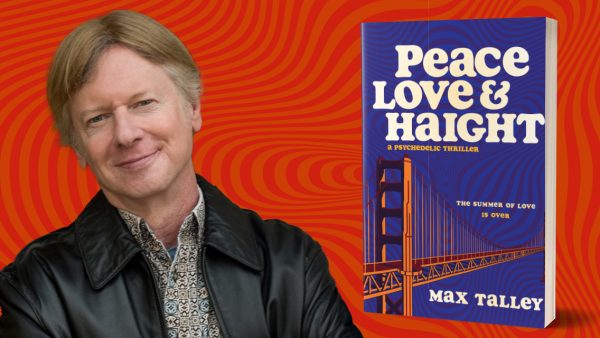
Max Talley’s latest novel, Peace, Love & Haight, captures the essence of a cultural revolution in a vivid chronicle of protagonist Freddie Dorn’s escapades during a focused six-month period, from July to December 1969. Talley says he aimed to combine “crime fiction, literary fiction, and historical fiction” in the tome, which takes readers on a vibrant “trip” through the streets of San Francisco, Oakland, Santa Cruz, Marin County, Los Angeles, and beyond.
Talley’s prose reflects, as he describes it, “a thick stew of music, art, drugs, free love, counterculture.” His detailed descriptions reflect an impressive deep-dive into researching the historical setting, from accurate dates and times, bridges and boardwalks, to streets, sounds, and scents.
Why did you choose to write about this particular era in U.S. history?
I was a kid in 1969, barely starting school. My conservative father bought all the Beatles albums, so my earliest memories are of hearing them. I’m a 20th-century history buff and got interested in that specific era when I was in college during the ’80s. I loved the music, the posters, the youth protests, all the paraphernalia of the ’60s. … The Vietnam War was churning along all through the ’60s. By 1969, vets were returning, sometimes physically or mentally wounded. They were part of the tapestry of what was going on. Perhaps I wanted to show the horrors of the war and the aftereffects on veterans that haunted America — more than 7,000 miles away from the actual battle.
A major theme appears to be the rise and eventual fall of the ’60s Haight-Ashbury hippie era, which culminates in the Altamont free concert in December 1969.
For the novel to succeed as a crime or suspense thriller, I needed the darkness at the end of the 1960s. My intent was not to blame hippies for the excesses. It was the charlatans, the violent cult leaders, bogus religious types, would-be revolutionaries, motorcycle gangs, and street criminals who wanted to take advantage of the times who darkened the initial utopian ideals. I’m pro-hippie, pro-beatnik, and I think the idea of expanding your mind and breaking away from a soulless life based only on making money to acquire goods is still valuable; it’s just much harder to do nowadays economically.
References to music and legendary ’60s musicians are woven throughout. Tell us about your choices of songs, bands, musicians, and art.
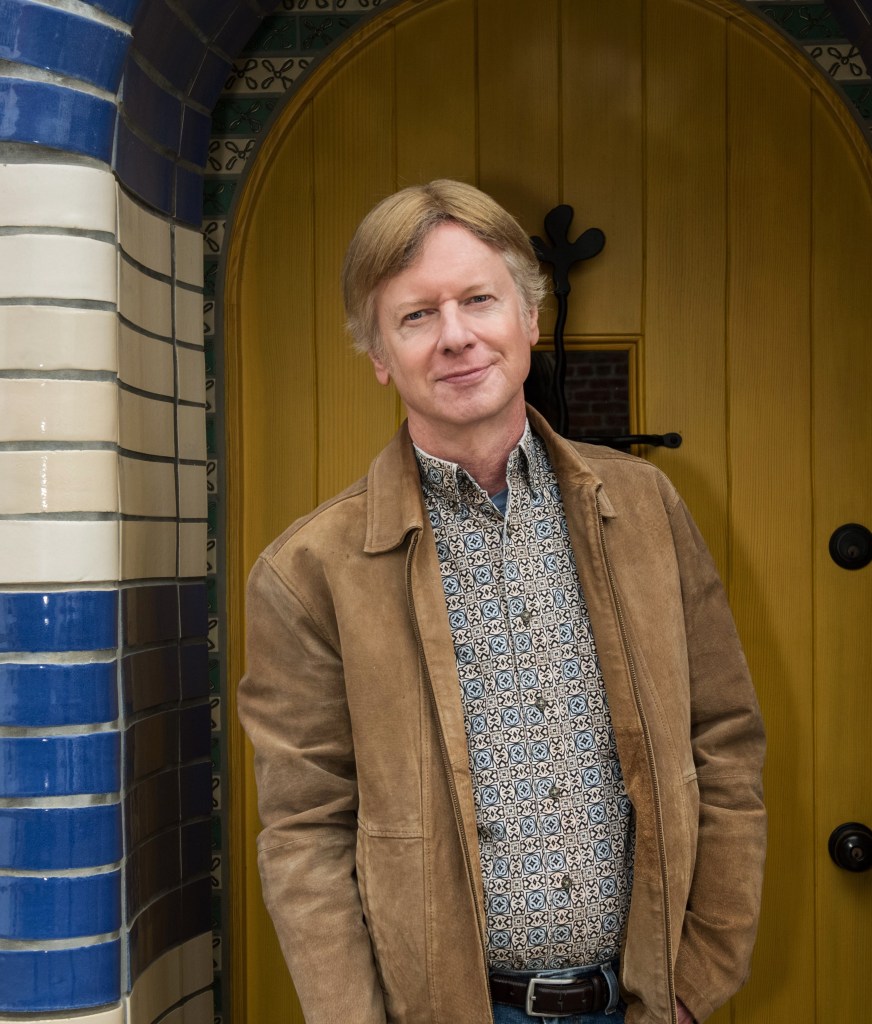
I picked bands I loved, and used songs from 1968 and 1969 for many chapter titles. I seasoned the book to be a thick stew of music, art, drugs, free love, and counterculture, so that a reader would feel immersed in that time. … I used David Crosby, members of The Monkees, etc., because they were there, either in San Francisco or in Laurel Canyon. My love of album cover art and concert poster art led me to mention artists who did that specific work, in connection with protagonist Freddie Dorn running an art gallery on Haight Street.
You teach at the Santa Barbara Writers Conference (SBWC), right?
I first went to the SBWC in 2005 as a student sharing my work. The Conference stopped and restarted, and eventually I started teaching a workshop beginning in 2017. I learned a lot as a student. Not sure you can teach writing, but you can certainly tell people what to avoid doing. I think the annual Conference keeps the fires burning, gets you to finish whatever project you’ve been procrastinating on.
Max Talley (maxtalley.com) will read from Peace, Love & Haight, answer questions, and sign copies at Chaucer’s Books on Tuesday, November 11, at 6 p.m.
Related Posts




Premier Events
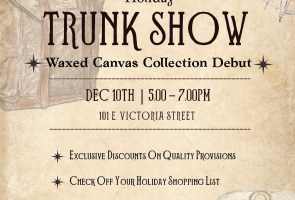
Wed, Dec 10
5:00 PM
Santa Barbara
Purnell Holiday Trunk Show
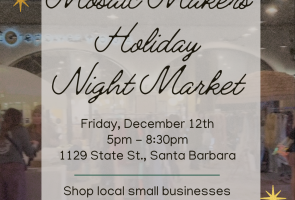
Fri, Dec 12
5:00 PM
Santa Barbara
Mosaic Makers Night Market
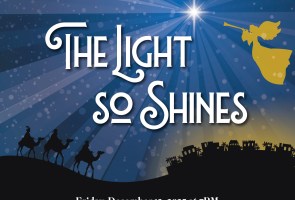
Fri, Dec 12
7:00 PM
Santa Barbara
SB Master Chorale presents “The Light So Shines”
Sun, Dec 21
9:00 AM
Santa Barbara
Free Eye Exams and Eyeglasses For Kids!
Sun, Dec 07
12:00 PM
Santa Barbara
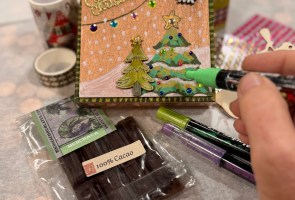
Chocolate & Art Workshop (Holiday Themed)

Sun, Dec 07
4:00 PM
Santa Barbara
Paws For A Cause
Fri, Dec 12
2:00 PM
Santa Barbara
Chocolate & Art Workshop (Holiday Themed)
Sat, Dec 13
2:00 PM
Santa Barbara
Chocolate & Art Workshop (Holiday Themed)
Sun, Dec 14
12:30 PM
Solvang
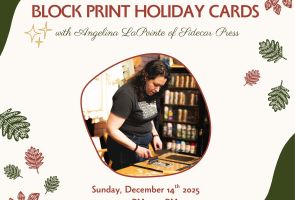
CalNAM (California Nature Art Museum) Art Workshop – Block Print Holiday Cards
Fri, Dec 19
6:00 PM
Santa Barbara
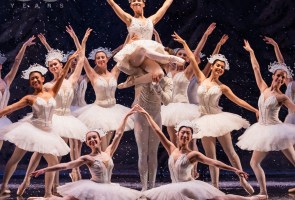
State Street Ballet – “The Nutcracker “
Fri, Dec 19
7:00 PM
Santa Barbara
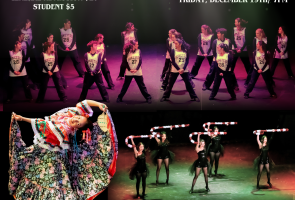
SBHS Annual Fall Dance Recital 2025
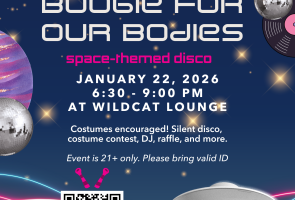
Thu, Jan 22
6:30 PM
Santa Barbara
Boogie for our Bodies
Wed, Dec 10 5:00 PM
Santa Barbara
Purnell Holiday Trunk Show
Fri, Dec 12 5:00 PM
Santa Barbara
Mosaic Makers Night Market
Fri, Dec 12 7:00 PM
Santa Barbara
SB Master Chorale presents “The Light So Shines”
Sun, Dec 21 9:00 AM
Santa Barbara
Free Eye Exams and Eyeglasses For Kids!
Sun, Dec 07 12:00 PM
Santa Barbara
Chocolate & Art Workshop (Holiday Themed)
Sun, Dec 07 4:00 PM
Santa Barbara
Paws For A Cause
Fri, Dec 12 2:00 PM
Santa Barbara
Chocolate & Art Workshop (Holiday Themed)
Sat, Dec 13 2:00 PM
Santa Barbara
Chocolate & Art Workshop (Holiday Themed)
Sun, Dec 14 12:30 PM
Solvang
CalNAM (California Nature Art Museum) Art Workshop – Block Print Holiday Cards
Fri, Dec 19 6:00 PM
Santa Barbara
State Street Ballet – “The Nutcracker “
Fri, Dec 19 7:00 PM
Santa Barbara
SBHS Annual Fall Dance Recital 2025
Thu, Jan 22 6:30 PM
Santa Barbara


You must be logged in to post a comment.