Love and death had a field day at the Lobero Theatre last weekend, on a field of eloquent, Italianate musicality. Yes, it was opera time again, in the form of Pietro Mascagni’s ever-popular one-act verismo classic, Cavalleria rusticana (“rustic chivalry”). The reliably impressive Opera Santa Barbara (OSB) again reminded us of the importance of this challenging medium and the high standards of this 32-year-old cultural institution.
The company has, over its cumulative years, focused and specialized in Italian opera, but this production is actually the only work of Italian descent in the current three opera season — to be followed by Handel’s baroque opera Caesar & Cleopatra and the very American and contemporary piece Elmer Gantry.
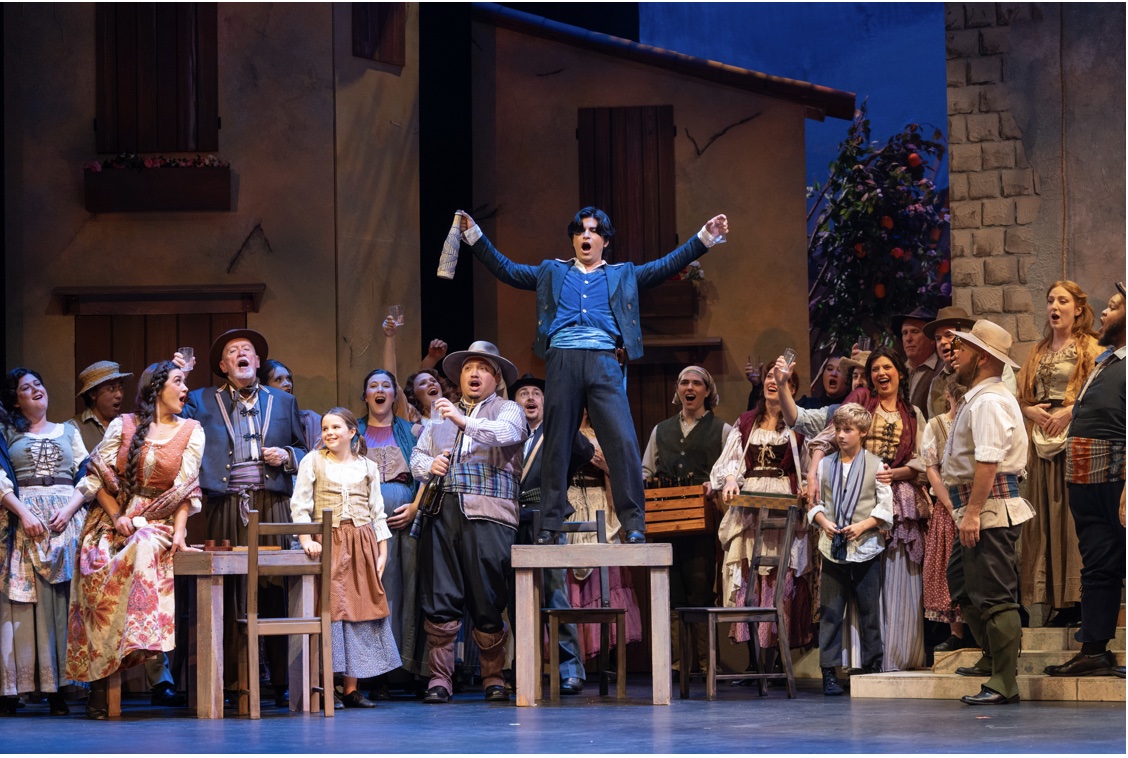
Clearly, though, the company’s Italian trips bear markings of deep connection and assured artistic simpatico. Cultural continuity was woven into OSB multitasking head Kostis Protopapas’s planning here. Rusticana is often served up in double-play fashion with Leoncavallo’s Pagliacci — a so-called “Cav/Pac” pact. Pagliacci opened OSB’s 2024-25 season, in an inventive staging in the domain of Italian neo-realist cinema. By contrast, this rusticana — staged by director Layna Chianakas and outfitted by OSB veteran costumer Stacie Logue — drops us squarely and straightforwardly in the small Sicilian town where the Easter-timed saga of love, betrayal, revenge, and oranges is traditionally placed from the opera’s 1890 origins.
There are also definitively 20th-century cultural echoes embedded in our contemporary appreciation of the opera. In this case, the vintage opera’s inroads to modern pop culture — and source of allure for those not necessarily plugged into opera culture — comes thanks to the Don. The OSB experience cleverly opened with a Marlon Brando impersonator doing theater housekeeping duties on the public address system, referencing the strategic use of the opera’s Intermezzo in the climactic scene of The Godfather Part III. Also in the film, Michael’s son was in a production playing the role of the wayward character Turiddu, mirroring the themes of betrayal and violence in both the opera and film.
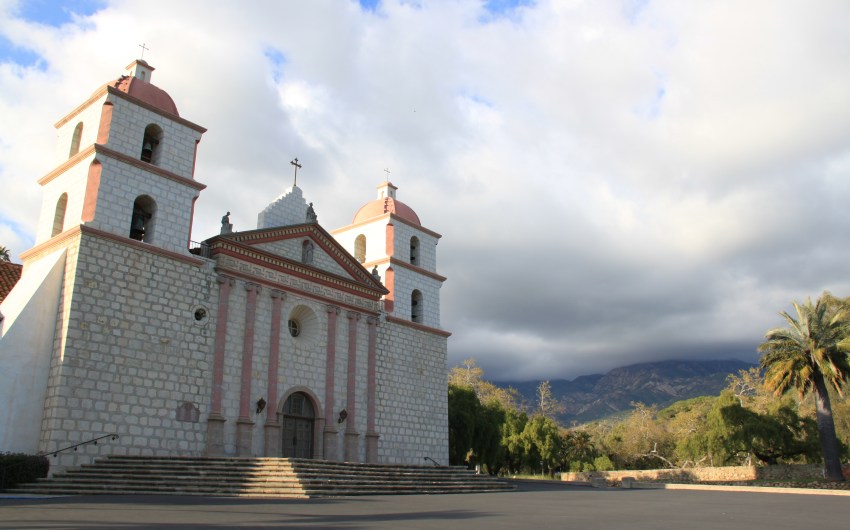
Meanwhile, in Santa Barbara, the looming leitmotif in Daniel Chapman’s set design is a large Catholic chapel, into which villagers enter for supplication and Easter Mass, and as a symbol of moral rectitude in the midst of moral missteps in this rustic outpost. The villagers exit mass to find both glowing community solidarity and an eruption of vengeful violence.
That radical contrast of moods and manners also marks the opera’s two scenes, separated by an intermission. After the rich pageantry of the overture from the orchestra, conducted by Protopapas, village life — and the happy consortium of a strong OSB chorus — bustles with a springtime warmth of spirit. Cut to the angry and hurt Santuzza, revealing to Mama Lucia her suspicion of her husband Turiddu’s infidelity and waning love. The back story: Turiddu returned from military duty to find his fiancée, Lola, now wedded to the “carter” Alfio and has surreptitiously engaged in carnal acts with Lola.
Village gaiety and collective good spirits return after intermission and after church, following the famed orchestral Intermezzo (the opera’s best-known musical portion). Rage flares between the two men, and blades are wielded. Justice will out, and operatic fate will be exacted. It’s not a happy day in Sicily, after all.
OSB’s rusticana was a vocally empowered occasion, fitting the almost melodramatic narrative. Santa Barbara–based Max Potter embodied the betrayed Santuzza with a persuasive emotive power and vocal control, while the Spanish tenor Xavier Prado — the star of OSB’s Zorro in 2024 — was properly bullish and defiant as Turiddu. Sonorous gifts were heard, as well, in the secondary couple in the tale of woe, Todd Thomas as the jovial-turned-vengeful Alfio and Lola, sung with brio by Santa Ynez–based Angeline Petronijevic (who also impressed in the Music Academy of the West’s 2024 production of Ravel’s L’enfant et les sortileges).
Opera is a sight, sound, and staging organism best consumed live and in its fully staged regalia, and OSB once again delivered the goods with passion and panache.