

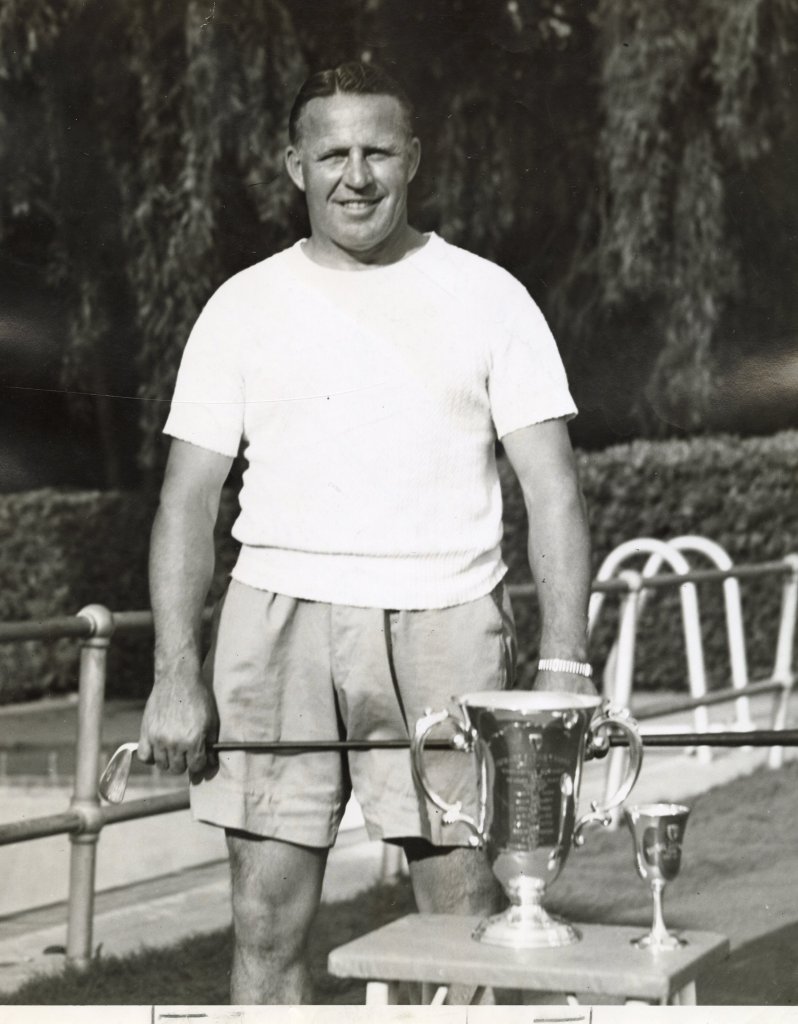
At the foundation of the storied history of Santa Barbara High School athletics is Dons football coach Clarence Schutte.
In the pre–World War II era of Southern California high school football, Santa Barbara High was a dominant force led by Schutte and his innovative approach to the game.
In his new book, Clarence Schutte: A Dons Football Legend, Hall of Fame Santa Barbara sportswriter John Zant strings together timeless firsthand accounts of when the Dons reigned supreme and Schutte commanded the gridiron with an iron fist.
As Santa Barbara High commemorates its 150th anniversary, Schutte’s accolades come into focus. The school appeared in eight CIF Championship games, winning three of them at the highest level of competition during Schutte’s tenure.
In detailing Schutte’s time as football coach and athletic director of Santa Barbara High, Zant offers a vivid view into the school’s history with firsthand accounts — including from Schutte himself — based on the Clarence H. Schutte Testimonial Dinner at El Paseo in 1970, which Zant covered.
Santa Barbara High traditions such as Ye Ole Gang, which began in 1974 to celebrate the traditions Schutte established to support the school’s programs, are still going strong today.
In commemoration of the 100th anniversary of Schutte’s debut season at Santa Barbara High, Zant began a series of stories in 1996 about the Schutte years in the News-Press. Those stories are reprinted in the book in their entirety.
No punches are pulled as Schutte is depicted as both a mythical and deeply human figure. He was a proud man who starred in football at the University of Minnesota, scoring three touchdowns in the Golden Gophers’ 20-7 upset of Illinois and football legend Red Grange in 1924.
One of Schutte’s endearing qualities was his willingness to embrace diversity. He was decades ahead of his time, allowing the first African American player, Thomas Pruitt, to join the Santa Barbara High football team in the mid-1920s.
Zant seamlessly reveals the complicated man that Schutte was, including his World War II service and the menacing presence he could be to those he categorized as enemies.










You must be logged in to post a comment.