
Just one day after the federal government reopened its doors for business last week, the Department of Housing and Urban Development announced a dramatic reversal in how it funds programs designed to help homeless people get off the streets.
Right now, roughly 90 percent of $4 billion in homeless grants the feds distribute to local governments goes to underwrite the cost of providing permanent housing for roughly 170,000 people. But as of next year, that percentage will plumet to no more than 30 percent.
In Santa Barbara County, this translates to a drop from $3.42 million to just $1.1 million for permanent housing.
How that will play out, like many of Trump’s edicts, has yet to be deciphered. But late last week, during the second annual gathering of 300 homeless service providers, nonprofit representatives, and county employees toiling in this domain, the subject most certainly came up.
Commenting on the change, Kelsey Buttitta, public information officer for Santa Barbara County stated, “Staff is working with the providers and the Continuum of Care Board to determine whether clients can be shifted to other funding sources or programs can be reclassified to keep people housed.”
Under the proposed change, what’s referred to as “continuum of care” funding can now only be spent to provide permanent housing for homeless individuals for up to two years.
Buttitta estimated that as many as 255 individuals were served by last year’s infusion of federal funds and placed in either “permanent supportive housing,” which typically involves an array of “wrap-around services,” or what’s known as “rapid rehousing,” which typically involves getting people who recently lost their housing back under a roof.
She added that it remains unclear whether the county would be receiving more or less federal funding this coming year, but she said the county should know sometime late this December. Should the county receive less, she said, it would add significantly “more complexity” to the county’s challenge. “But,” she added, “it will not diminish our determination to provide an optimal solution.”
County homeless administrator Joe Dzvonik added, “We are working feverishly on this now and over the coming weeks; we will have a strong approach that we hope minimizes impacts.”
This shift — as sudden as it is dramatic — reflects the Trump administration’s abiding hostility to the “housing first” approach, the reigning orthodoxy among homeless care providers for at least 15 years now. That approach holds that people tend to recover from their various addictions and mental health challenges better when they have a roof over their heads rather than waiting for them to stabilize and recover first before getting them indoors. Instead, Trump and his administration have pushed hard for more aggressive enforcement, clearing out homeless encampments, requiring work and treatment, and increasing funding for more short-term shelters that place a premium on addiction recovery and mental health treatment.
Trump’s critics have called this approach not just cruel and punitive, but long proven ineffective. Trump’s secretary of HUD, Scott Turner, said the status quo lacks accountability and fails to promote self-sufficiency. The current approach, he said, “perpetuated homelessness through a self-sustaining slush fund.” He derided Democratic senators who have opposed the change as supporters of “the homeless-industrial complex.”
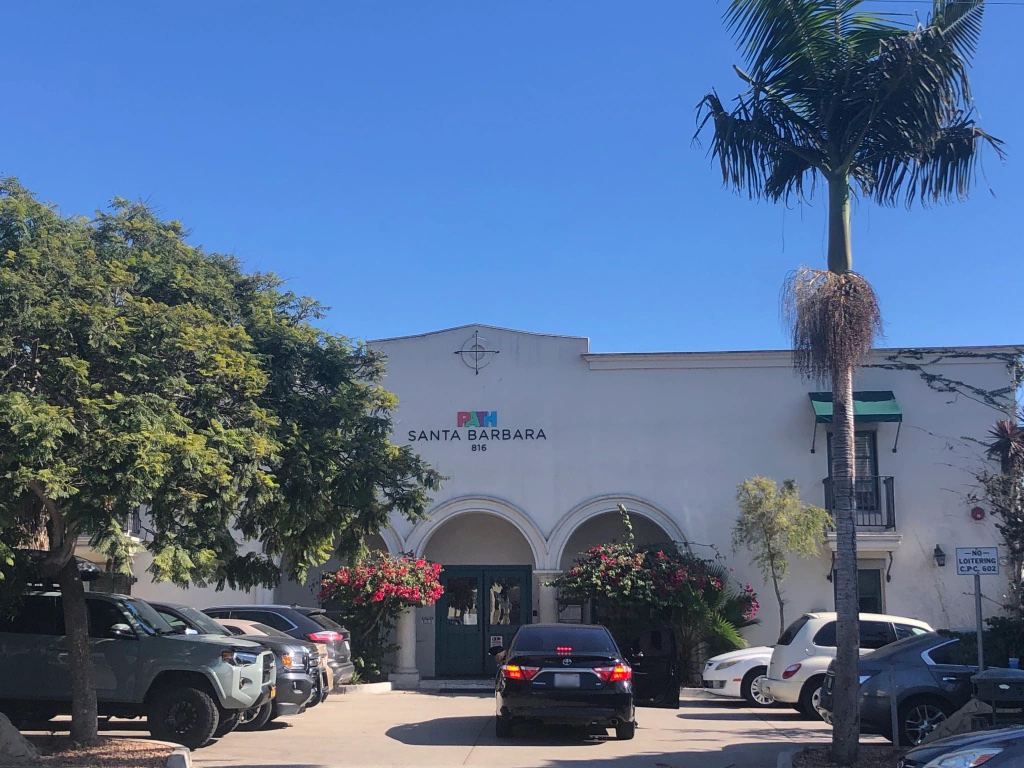
New Operator for PATH Shelter
In separate but related news, the Santa Barbara City Council voted Tuesday to approve a six-month operating contract with the Santa Ana–based homeless shelter operator Mercy House Living to run Santa Barbara’s long beleaguered 100-bed Cacique Street homeless shelter.
That facility — long the source of neighborhood friction and much political frustration — has been owned and operated since 2015 by People Assisting the Homeless (PATH). The hope was always that PATH, which runs a statewide network of homeless facilities, might have been able to tap into Santa Barbara’s fertile donor base to stabilize operations at the Cacique Street location, known as Casa Esperanza when owned by a prior and even more beleaguered operator.
Mercy Living dates to 1988 and boasts operations in six California counties and one county in Arizona. The organization’s website claims Mercy Living facilities helped 9,043 distinct homeless people in the past year and got more than 4,000 off the street.
While there’s been significant disquiet among local homeless care providers that City Hall hired an outside operator, Anthony Valdez, a high-ranking city administrator who was recently hired and placed in charge of homeless issues, waxed rhapsodic about the quality of care, level of staffing, and neighborhood outreach Mercy exhibited at a Bakersfield shelter it ran. Valdez made these remarks at a Monday-night Zoom meeting with Eastside residents long skeptical about any promises made by shelter operators. Valdez worked as a city administrator in Bakersfield before just taking the job here.
Among the seven local stakeholders enlisted by City Hall to evaluate the four applications submitted, Mercy did not place first; city officials say, however, it earned the highest number of total points from that committee.
City Hall is in the process of buying the Cacique Street shelter — the focal point of much loitering and hanging out by shelter residents and their friends — outright from PATH. A price has been agreed upon.
In addition, City Hall is interested in securing an adjacent property — now the site of a parking lot — to transform into a tiny-home village.
City officials have repeatedly noted that the Mercy contract is only for six months. To the extent any grand and expansive plan for the shelter emerges, this will enable City Hall to submit requests for bids for that in the meantime. But before City Hall can purchase the PATH shelter, the county Board of Supervisors — which has helped fund the shelter operations over the years — will have to sign off on a change of deed language, which currently limits the sale of the property to only nonprofits.
Related Posts









Premier Events

Thu, Feb 26
11:00 AM
Montecito
La Casa de Maria – Lunch and Learn

Sun, Mar 08
6:30 PM
Santa Barbara
6th Eco Hero Award Brock Dolman & Kate Lundquist

Tue, Feb 24
7:00 PM
Santa Barbara
Banff Mountain Film Festival World Tour: 2 Nights!

Wed, Feb 25
4:00 PM
SANTA BARBARA
Career Exploration Fair: For Teens & Young Adults

Wed, Feb 25
5:00 PM
Isla Vista
Forward Ever Backward Never

Wed, Feb 25
6:30 PM
Santa Barbara
Creative Exploration

Wed, Feb 25
8:00 PM
Santa Barbara
Salvidoria, Orangepit!, & Magnetize at SOhO

Thu, Feb 26
1:00 PM
SANTA BARBARA
Shocking History of Electricity in Santa Barbara

Thu, Feb 26
7:00 PM
Santa Barbara
Anniversary Screening – Connectivity: “Chulas Fronteras”

Thu, Feb 26
7:00 PM
Santa Barbara
Beautiful Borders: Texas-Mexico Crossings in Film

Thu, Feb 26
7:30 PM
Santa Barbara
An Evening with The Mends & Redfish at SOhO

Fri, Feb 27
2:30 PM
Santa Barbara
Opera Santa Barbara presents “Caesar and Cleopatra
Thu, Feb 26 11:00 AM
Montecito
La Casa de Maria – Lunch and Learn
Sun, Mar 08 6:30 PM
Santa Barbara
6th Eco Hero Award Brock Dolman & Kate Lundquist
Tue, Feb 24 7:00 PM
Santa Barbara
Banff Mountain Film Festival World Tour: 2 Nights!
Wed, Feb 25 4:00 PM
SANTA BARBARA
Career Exploration Fair: For Teens & Young Adults
Wed, Feb 25 5:00 PM
Isla Vista
Forward Ever Backward Never
Wed, Feb 25 6:30 PM
Santa Barbara
Creative Exploration
Wed, Feb 25 8:00 PM
Santa Barbara
Salvidoria, Orangepit!, & Magnetize at SOhO
Thu, Feb 26 1:00 PM
SANTA BARBARA
Shocking History of Electricity in Santa Barbara
Thu, Feb 26 7:00 PM
Santa Barbara
Anniversary Screening – Connectivity: “Chulas Fronteras”
Thu, Feb 26 7:00 PM
Santa Barbara
Beautiful Borders: Texas-Mexico Crossings in Film
Thu, Feb 26 7:30 PM
Santa Barbara
An Evening with The Mends & Redfish at SOhO
Fri, Feb 27 2:30 PM
Santa Barbara

