

Santa Barbara Unified is rolling out a new one-on-one reading assessment across all its elementary schools, aiming to catch early literacy challenges before they calcify. Starting in the 2025-26 school year, all K-2 students in the district will take mCLASS, a state-approved screener that identifies foundational reading skills and potential indicators of dyslexia.
“Our goal is to make sure every student is reading by 3rd grade,” said Denise Alvarado, the district’s executive director of elementary education. “This tool helps us identify gaps early and adjust instruction in real time.”
The district selected mCLASS from a list of state-approved screeners, in compliance with a new California law requiring early literacy assessments for all K-2 students, for its hands-on approach. Unlike computer-based tests, mCLASS is administered face-to-face between teacher and student, with each skill taking about a minute to assess. “That one-on-one time is critical,” said Casie Killgore, principal of Franklin Elementary. “It helps us not only diagnose but also build relationships.”
Each child’s results are immediately uploaded to a teacher dashboard, which then groups students by areas of need — such as phonemic awareness or decoding. Teachers can track which kids are progressing and which ones aren’t. “This lets us stop guessing,” said Alvarado. “If 10 students in a class are all struggling with vowel sounds, that’s not a kid problem. That’s an instructional issue.”
Progress monitoring happens every few weeks for students who score below grade-level benchmarks. At Franklin, Killgore said the system has already helped flag three students who weren’t showing growth — the same three whom teachers had already raised red flags about. “It was validating to see everything align,” she said. “Sometimes testing doesn’t match what you’re seeing in class. This one did.”
For 3rd grade — the earliest level at which the CAASPP (California Assessment of Student Performance and Progress) tests reading skills — 44.23 percent of students met or exceeded standards in the 2024-25 school year. That’s a slight increase from 42.83 percent in 2023-24. While the upward trend is encouraging, the overall percentage remains relatively low. The question now is whether 2025-26 will show further gains — and how effective the new mCLASS screening will prove to be.
Beyond diagnostics, the platform also provides downloadable activities for parents and built-in lesson plans for teachers. Instructional coach Marlin Lehman called the tool a game-changer. “You can sort your class by skill gaps, form small groups instantly, and even get lesson suggestions,” he said. “It streamlines everything.”
While this is the first year of full implementation, Alvarado said every elementary school hit a 95 to 100 percent completion rate on the initial round of assessments. Kindergarten testing will be phased in gradually.
“We’re not trying to overtest 4-year-olds,” said Killgore. “They still need to learn to zip their jackets and make friends. But by 1st grade, we want to make sure every student is on a path to read to learn, not just learning to read.”
Teachers, principals, and district staff were all trained on both administering the tests and interpreting the results. Parents will receive detailed reports and at-home activities beginning with the winter round of testing.
“This isn’t about labeling kids,” Alvarado said. “It’s about meeting them where they are and helping them grow.”
Patty Aguilar, a 1st-2nd grade teacher, reported that while she too had a learning curve in figuring out the test and how to efficiently use it, now she is enjoying its effectiveness. “It shows me exactly who needs help with what. It’s not just efficient — it’s empowering.”
While it’s too early for longitudinal results, internal progress reports from Franklin Elementary show significant improvement across classrooms, including among English learners and students flagged for intervention.
Ultimately, mCLASS is just one tool — but it could be a powerful one. “Reading by 3rd grade is everything,” said Killgore. “This helps us get there.”
For more information on mCLASS, visit SBUnified.org/literacy.
Related Posts


Premier Events

Sat, Mar 07
2:00 PM
Santa Barbara
Autobiography of a Yogi, the Legacy of Yogananda

Sun, Mar 08
6:30 PM
Santa Barbara
6th Eco Hero Award Brock Dolman & Kate Lundquist
Mon, Mar 09
6:00 PM
Santa Barbara
ART 4 GRIEF Support Group

Sat, Mar 14
7:00 PM
Santa Barbara
Red, White, & Blues II: The American Songbook
Sun, Mar 15
3:00 PM
Santa Barbara
Red, White, & Blues II: The American Songbook
Sat, Mar 07
12:00 PM
Santa Barbara
Spring 2026 Healing Arts Faire
Sat, Mar 07
7:00 PM
Carpinteria
The Magic’s In the Music

Sat, Mar 07
7:30 PM
Goleta
UCSB Arts & Lectures Presents Arturo Sandoval Legacy Quintet

Sat, Mar 07
7:30 PM
Goleta
Jazz Concert with Wayne Bergeron
Sun, Mar 08
10:00 AM
Santa Barbara
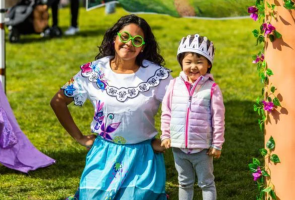
Fairytale Weekend at the Zoo

Sun, Mar 08
1:00 PM
Santa Barbara
SB Craftivists “Resist with Love KNOT Hate Knit-In
Sun, Mar 08
4:00 PM
Santa Barbara
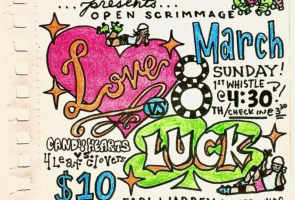
Brawlin’ Betties: Love v. Luck Scrimmage

Sun, Mar 08
7:30 PM
Santa Barbara
SBAcoustic Presents Natalie Gelman & Mark Legget
Mon, Mar 09
6:30 PM
Santa Barbara
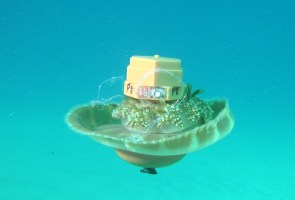
Science Pub: Cyborg Jellies Exploring Our Oceans

Thu, Mar 12
6:00 PM
Santa Barbara
Poetry, Typewriters, and Collage Workshop
Sat, Mar 07 2:00 PM
Santa Barbara
Autobiography of a Yogi, the Legacy of Yogananda
Sun, Mar 08 6:30 PM
Santa Barbara
6th Eco Hero Award Brock Dolman & Kate Lundquist
Mon, Mar 09 6:00 PM
Santa Barbara
ART 4 GRIEF Support Group
Sat, Mar 14 7:00 PM
Santa Barbara
Red, White, & Blues II: The American Songbook
Sun, Mar 15 3:00 PM
Santa Barbara
Red, White, & Blues II: The American Songbook
Sat, Mar 07 12:00 PM
Santa Barbara
Spring 2026 Healing Arts Faire
Sat, Mar 07 7:00 PM
Carpinteria
The Magic’s In the Music
Sat, Mar 07 7:30 PM
Goleta
UCSB Arts & Lectures Presents Arturo Sandoval Legacy Quintet
Sat, Mar 07 7:30 PM
Goleta
Jazz Concert with Wayne Bergeron
Sun, Mar 08 10:00 AM
Santa Barbara
Fairytale Weekend at the Zoo
Sun, Mar 08 1:00 PM
Santa Barbara
SB Craftivists “Resist with Love KNOT Hate Knit-In
Sun, Mar 08 4:00 PM
Santa Barbara
Brawlin’ Betties: Love v. Luck Scrimmage
Sun, Mar 08 7:30 PM
Santa Barbara
SBAcoustic Presents Natalie Gelman & Mark Legget
Mon, Mar 09 6:30 PM
Santa Barbara
Science Pub: Cyborg Jellies Exploring Our Oceans
Thu, Mar 12 6:00 PM
Santa Barbara

