
This article was underwritten in part by the Mickey Flacks Journalism Fund for Social Justice, a proud, innovative supporter of local news. To make a contribution go to sbcan.org/journalism_fund.
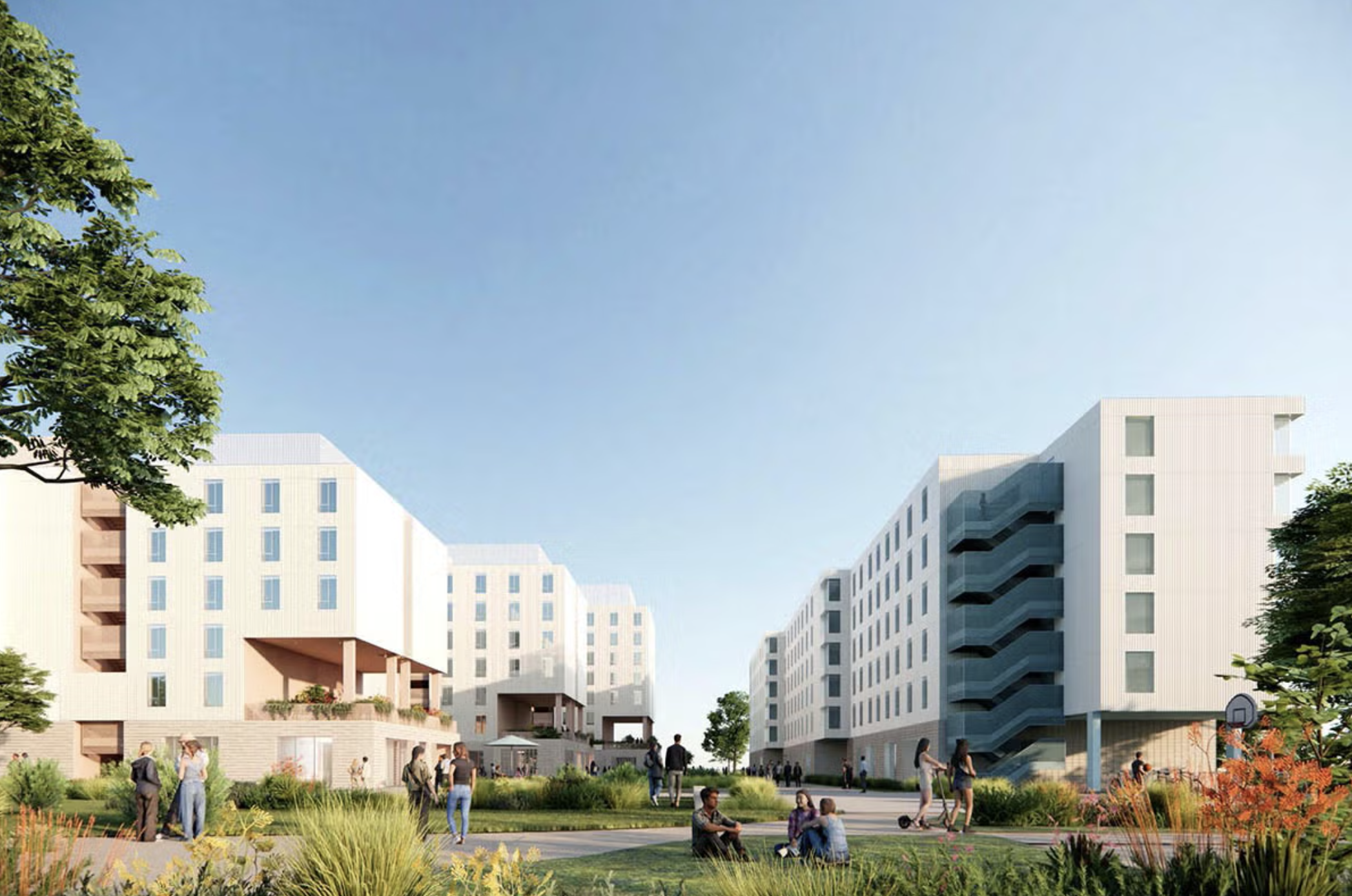
Just two years after Santa Rosa Residence Hall opened on UC Santa Barbara’s campus in 1954, the Santa Barbara News-Press called it “ultra-modern” and “handsome.” Today, the two-story residence hall is slated for demolition. As part of its efforts to build more student housing, the university plans to replace the dorm and add three apartment buildings along with it — what it’s calling the East Campus Student Housing project. Now, UC Santa Barbara says the project will head to the California Coastal Commission for approval.
“We know that on-campus living helps students develop intellectually and socially while having easier access to campus resources, research opportunities and classrooms,” Willie Brown, associate vice chancellor for the university’s housing, auxiliary and dining enterprises, said in a November 21 news release.
The Numbers
Currently, Santa Rosa Residence Hall houses 575 residents in triples. That’s well above the dorm’s design capacity of 412 bed spaces. The replacement residence hall will stand at six stories tall (63 feet) and include those design-capacity 412 beds, spread across singles and triples, according to the project’s environmental review document. The document says the apartments would also include two apartment units for live-in staff.
The project’s environmental review document also includes details on the three proposed apartment buildings — eight, seven, and six stories tall — that will stand perpendicular to the new residence hall. These apartments will include some studios (92), but will predominately be 2-bedroom units (296) with two beds in each room. All told, the apartment buildings would provide 1276 new beds.
The project will reduce the number of parking spaces in the area by four total, and completely remove the student parking. The project will include bike rack space for each resident.

Where Students will Go
The project’s final environmental impact report says that as construction crews build the dorm, the student population that would generally live there will be distributed among other residence hall facilities by doubling and tripling up.
The Coastal Commission’s Role
UCSB’s campus and Isla Vista are located in the coastal zone, a state-defined boundary that stretches along the coastline from California’s northernmost to its southernmost border. The state’s Coastal Commission, a government board that regulates land and water use, must approve the project.
The commission hasn’t agendized the review of the East Campus project; UCSB did not respond to a request for comment in time for the publication of this story.
UCSB’s Housing Crunch and Its Long Range Development Plan
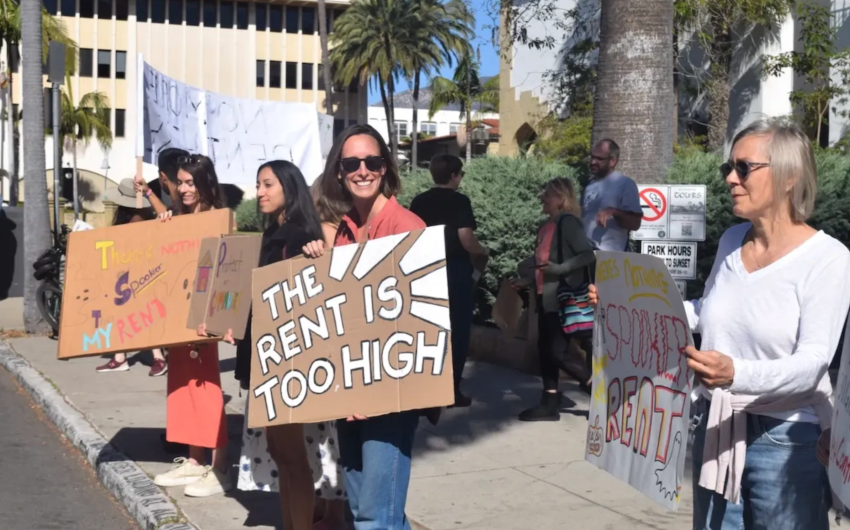
Housing at or near UCSB is in short supply, with high rents and crowded units common in Isla Vista, where many of the school’s undergraduate students live. Students are not guaranteed on-campus housing after their first year.
As UCSB has increased enrollment over the past several decades, the university has published long-term plans (called Long Range Development Plans) outlining how much housing they will build to accommodate the growing student body. In 2024, the university settled lawsuits with both Santa Barbara County and the City of Goleta over failing to build 5,000 beds promised in its 2010 Long Range Development Plan to keep up with its increased enrollment.
Around the time Goleta and Santa Barbara County filed their lawsuits, UCSB was working to develop Munger Hall, an approximately 4,500-person megadorm financed by billionaire Charles Munger. The dorm drew criticism from the public because the majority of the rooms lacked windows. After Munger’s death in 2023, UCSB pivoted away from Munger Hall and instead toward the redevelopment of its East Campus, along with building the San Benito Housing project, a 2,240-bed housing complex on Stadium Road.
The beds created in the East Campus Student Housing and San Benito projects will allow the University to reach its 2010 Long Range Development Plan goal.
“These are the largest capital projects UC Santa Barbara has ever undertaken and both will be campus gems,” Renée Bahl, associate vice chancellor of Design, Facilities & Safety Services, told UCSB’s The Current, in its November 21 news release.
Other Housing
The San Benito housing project is on-schedule, and on-budget, the university reported in its November 21 news release. UCSB says that San Benito will have an all-electric grid, which will include solar thermal collectors for hot water. It will also include bioretension basins, which can collect and help purify stormwater runoff. The East Campus Student Housing Project will also include an all-electric design and will heat water with solar energy.
As for Ocean Road, the proposed 540 housing units for faculty and staff, although the UC Board of Regents approved the project to move forward in 2022, the university has not yet started construction.
Related Posts

Premier Events

Mon, Mar 09
6:00 PM
Santa Barbara
ART 4 GRIEF Support Group

Sat, Mar 14
7:00 PM
Santa Barbara
Red, White, & Blues II: The American Songbook
Sun, Mar 15
3:00 PM
Santa Barbara
Red, White, & Blues II: The American Songbook
Mon, Mar 09
6:30 PM
Santa Barbara
Science Pub: Cyborg Jellies Exploring Our Oceans

Thu, Mar 12
6:00 PM
Santa Barbara
Poetry, Typewriters, and Collage Workshop
Thu, Mar 12
6:30 PM
Santa Barbara
An Evening of Wild Hope: PBS Film Screenings
Thu, Mar 12
7:00 PM
Santa Barbara
Lights Up! Presents: “The Addams Family”

Fri, Mar 13
6:00 PM
Santa Barbara
GLOW X: A High-Definition Neon Experience
Fri, Mar 13
7:00 PM
Goleta
Peace Event
Sat, Mar 14
7:00 PM
Santa Barbara
The Vada Draw
Sat, Mar 14
7:00 PM
Santa Barbara
Lights Up! Presents: “The Addams Family”

Sat, Mar 28
All day
Santa Barbara
Coffee Culture Fest
Mon, Mar 09 6:00 PM
Santa Barbara
ART 4 GRIEF Support Group
Sat, Mar 14 7:00 PM
Santa Barbara
Red, White, & Blues II: The American Songbook
Sun, Mar 15 3:00 PM
Santa Barbara
Red, White, & Blues II: The American Songbook
Mon, Mar 09 6:30 PM
Santa Barbara
Science Pub: Cyborg Jellies Exploring Our Oceans
Thu, Mar 12 6:00 PM
Santa Barbara
Poetry, Typewriters, and Collage Workshop
Thu, Mar 12 6:30 PM
Santa Barbara
An Evening of Wild Hope: PBS Film Screenings
Thu, Mar 12 7:00 PM
Santa Barbara
Lights Up! Presents: “The Addams Family”
Fri, Mar 13 6:00 PM
Santa Barbara
GLOW X: A High-Definition Neon Experience
Fri, Mar 13 7:00 PM
Goleta
Peace Event
Sat, Mar 14 7:00 PM
Santa Barbara
The Vada Draw
Sat, Mar 14 7:00 PM
Santa Barbara
Lights Up! Presents: “The Addams Family”
Sat, Mar 28 All day
Santa Barbara


You must be logged in to post a comment.