
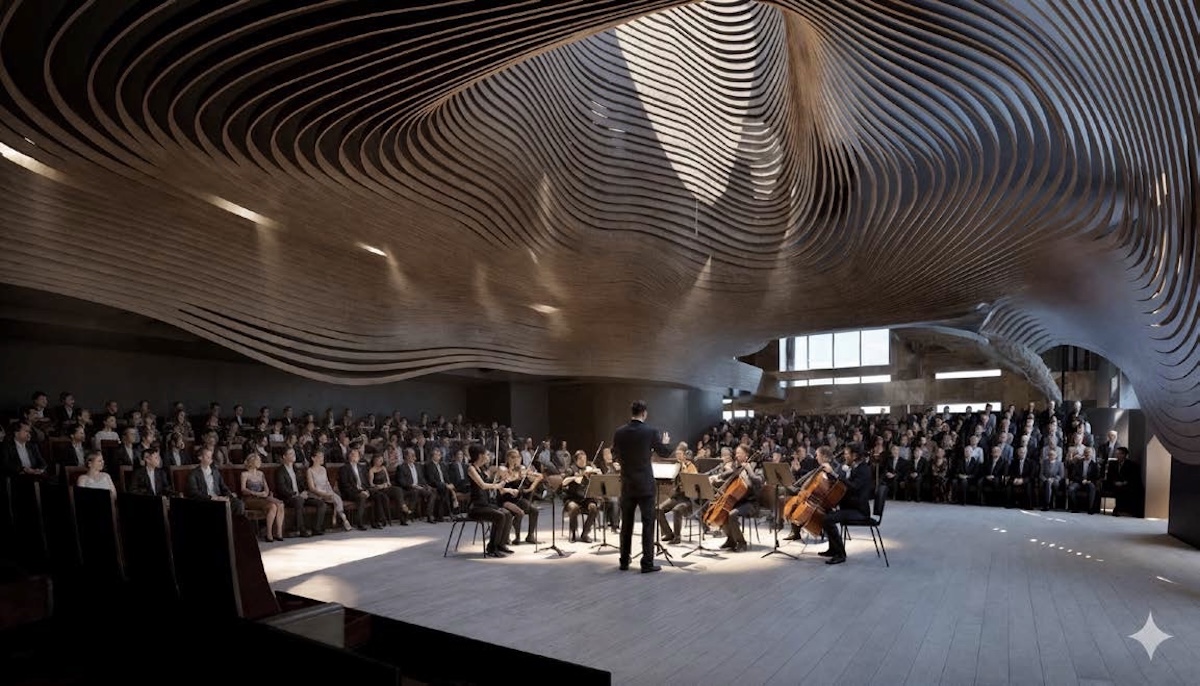
Few superlatives were spared by members of the City of Santa Barbara’s Historical Landmarks Commission — typically best known for their blunt criticisms — of the Music Academy of the West’s plans to transform the three-story building at the corner of State and Canon Perdido streets into a humming, throbbing hub of musical instruction and performance.
“Fantastic,” and “exciting” were two of the plaudits most frequently tossed about at last week’s commission meeting. One commission member went so far as to say the Music Academy’s addition to downtown’s abundance of artistic, musical, and theatrical venues should qualify State Street as one of the truly great streets of the entire West Coast. (Right across State Street, the Santa Barbara International Film Festival is putting the finishing touches on its dramatic reimagination of what used to be the Fiesta 5 movie theater.) All agreed that the radical musical makeover proposed for one of downtown’s conspicuously vacant properties would give downtown a surge of new energy, not to mention a torrent of music students, teachers, world class performers, performances, and, of course, audiences.
While the commission took no formal action, the commissioners gave their tacit and implicit blessings to the Music Academy’s plan to exceed the city’s 45-foot height limit by installing a new stairway and elevator tower that will rise 56 feet off the ground. For the city’s height limit to be waived, the City Council must first designate the Music Academy proposal a “community benefit” project and is scheduled to review the matter on December 16.
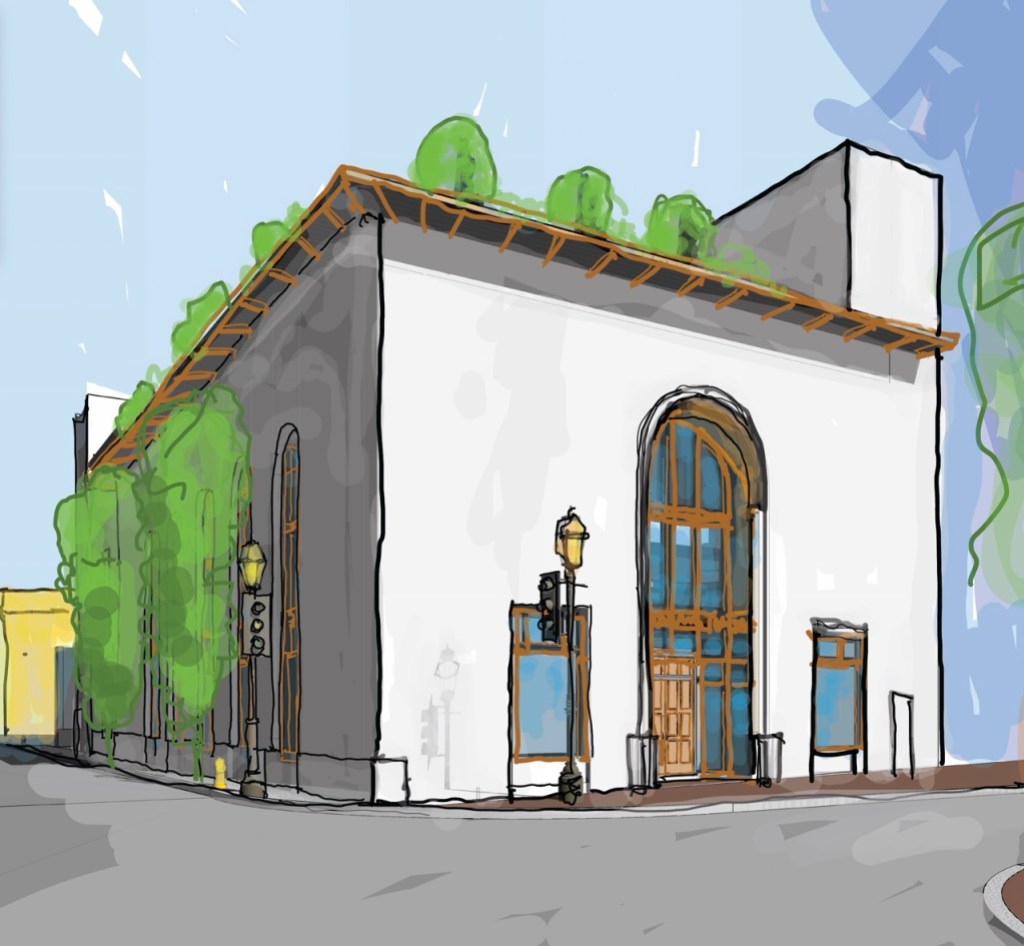
For all the enthusiasm expressed for the idea of the project, the commissioners also had more than a few sharp words for some of the specifics of the preliminary architectural sketches submitted. While the changes proposed to the building’s exterior were mostly minimal, they were still too much for many of the commissioners. A new front window — more than one story high, narrow, and arched at the bottom instead of at the top — really rubbed many the wrong way. Others wanted the adjacent city paseo integrated much more invitingly into the plans. The exterior renderings, they said, were too modern, too contemporary, and not nearly El Pueblo Viejo, Spanish Colonial, or Santa Barbara enough.
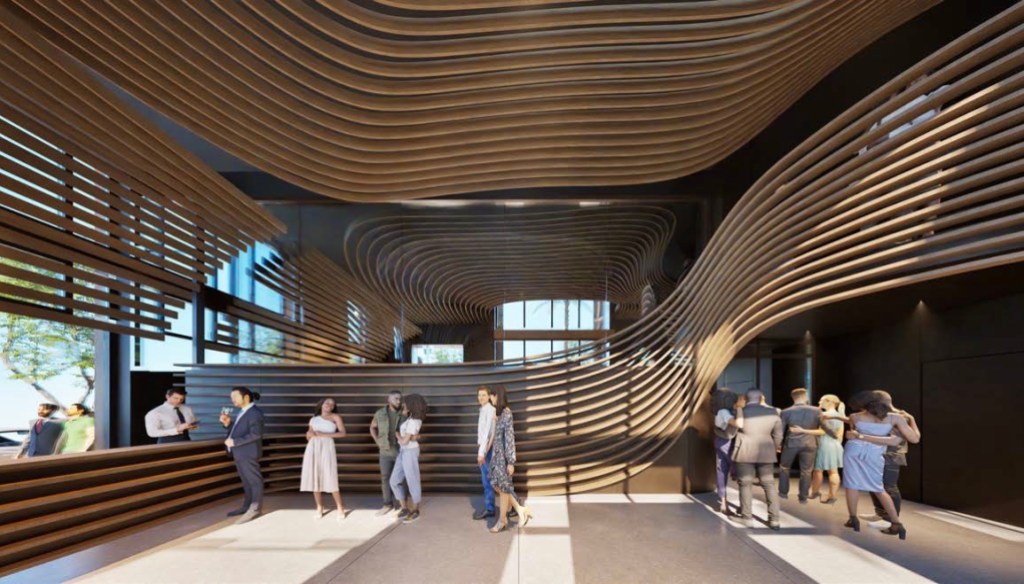
Most outspoken was commissioner Ed Lenvik, who said the initial draft was “not respectful of the history of what this town is.” But even Lenvik, perhaps the most outspoken and old-school traditionalist on the commission, said the project was great. All raved about the interior’s visually swirling but acoustically engineered design reminiscent of L.A.’s Disney Concert Hall. Hovering over the ground level performance and rehearsal hall is a massive oculus — a giant, eye shaped skylight — that will transmit light from the rooftop to the first-floor chambers.
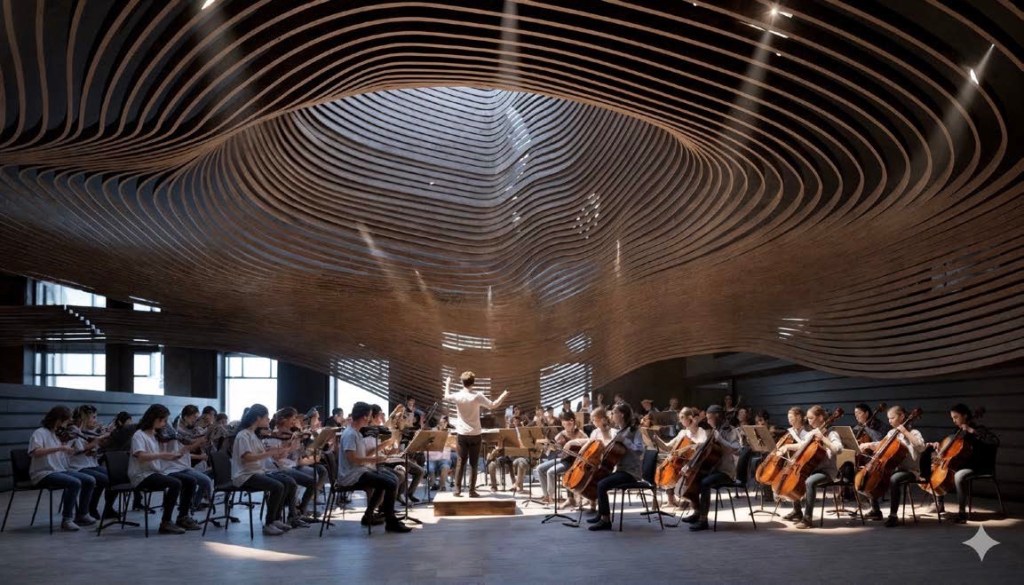
The main thing, however, is the acoustics. The space is designed to acoustically accommodate somethings as big a 90-piece orchestra and as small and intimate as a string quartet.
For the Music Academy — a world-class musical enterprise long sequestered behind the iron gates of its Montecito estate — the proposed move downtown marks a dramatic reach-out to the community at large. New CEO Shauna Quill, a recent arrival from New York City, said as much.
“We have this vision to get beyond those gates,” she told the commissioners.
Quill said the plan was to provide high-quality music education for people “zero to 100.” As presently planned, she and the Music Academy are planning to use the State Street location to carve out nine teaching studios, four practice rooms, a large ensemble percussion studio, a recording studio/podcast studio, a performance hall capable of accommodating a symphony orchestra, and a rehearsal hall. The cherry on top, of course, is the 3,000-square-foot rooftop lounge.
Most recently, the site — 901 State Street — was home to Forever 21. Since that store closed, plans were launched to build a 22-room hotel on the site, but those fizzled. For a brief moment, the previous property owner toyed with installing a multi-story cannabis emporium in the property, where product could be grown, sold, and ingested and imbibed in a lounge-like setting. That idea, however, was killed even prior to its arrival.










You must be logged in to post a comment.