
Federal agents raiding schools and abducting children sounds far-fetched. But considering the recent trends of immigration enforcement nationwide, California officials are treating this as a real possibility.
The California Attorney General’s office has released updated guidelines for school staff, students, and families on what to do should Immigration and Customs Enforcement (ICE) try to step onto school grounds. It is intended to expand and standardize protections for students and families across the state, clarifying requirements for districts, county offices of education, charter schools, and even community colleges.
Meanwhile, ICE activity has only intensified across the Central Coast. Santa Barbara County schools have been proactive in pursuing protections for immigrant families and updating related procedures for staff.
While the state cannot directly interfere with or control federal immigration enforcement, it does not have to assist in it. New state laws intend to make it as difficult as legally possible for ICE agents to conduct enforcement operations at schools and daycares. One law, Safe Haven Schools, limits campus access and protects student privacy. Another, the Family Preparedness Plan Act, clearly outlines caregiver processes so students can remain enrolled and supported if a parent is temporarily detained or deported.
State laws prohibit agents from entering nonpublic spaces, such as classrooms, without a warrant; prohibit personnel from disclosing student information, i.e. documented status, to anyone; require educational institutions to inform students and families of their rights and notify families if ICE is on or near campus; and lay the groundwork for the continued care of children to help immigrant families plan for potential separations.
On December 1, Attorney General Rob Bonta updated the state’s guide for safe schools — originally released in 2018 — to include these laws, the newest of which Governor Gavin Newsom signed in September and October. They will officially go into effect on January 1, 2026.
“Approximately 133,000 undocumented children attend California’s public K-12 schools, and many more have parents or relatives who do not have legal status,” Bonta’s office said in a news release.
Officials are not treating the threat of ICE on school campuses as a mere hypothetical. Various scenes are unfolding right now. State Superintendent Tony Thurmond previously reported that federal agents had urinated on school playgrounds, detonated flashbangs near campus, and attempted to contact children without a warrant.
Santa Barbara teenagers have been approached by strangers in cars. Local nonprofit 805 UndocuFund has noted “growing normalization of aggressive enforcement tactics” and escalating “visible presence of ICE in public and private spaces” in the region. A few weeks ago, agents were spotted conducting operations at Santa Barbara City College. And according to 805 UndocuFund’s Rapid Response Network, there were 58 ICE arrests across Santa Barbara and San Luis Obispo counties over the holiday weekend.
Santa Barbara County school districts view the updated guidelines as reinforcements to their existing practices. North County schools, where immigrant populations are higher, remain especially vigilant.
Caasi Chavez, spokesperson for the Lompoc Unified School District, said the district is participating in statewide workshops and updating school safety plans and internal policies accordingly. The district will immediately notify families in the event of any immigration enforcement activity on or near a school campus and is offering training in spring to ensure staff understand and can practice the updated procedures.
Similarly, the Santa Maria-Bonita School District is continuing to work with community partners and monitor the latest recommendations from the state to ensure every school site is “a safe and welcoming place for all students and their families irrespective of their citizenship or immigration status,” said public information officer Samantha Scroggin.
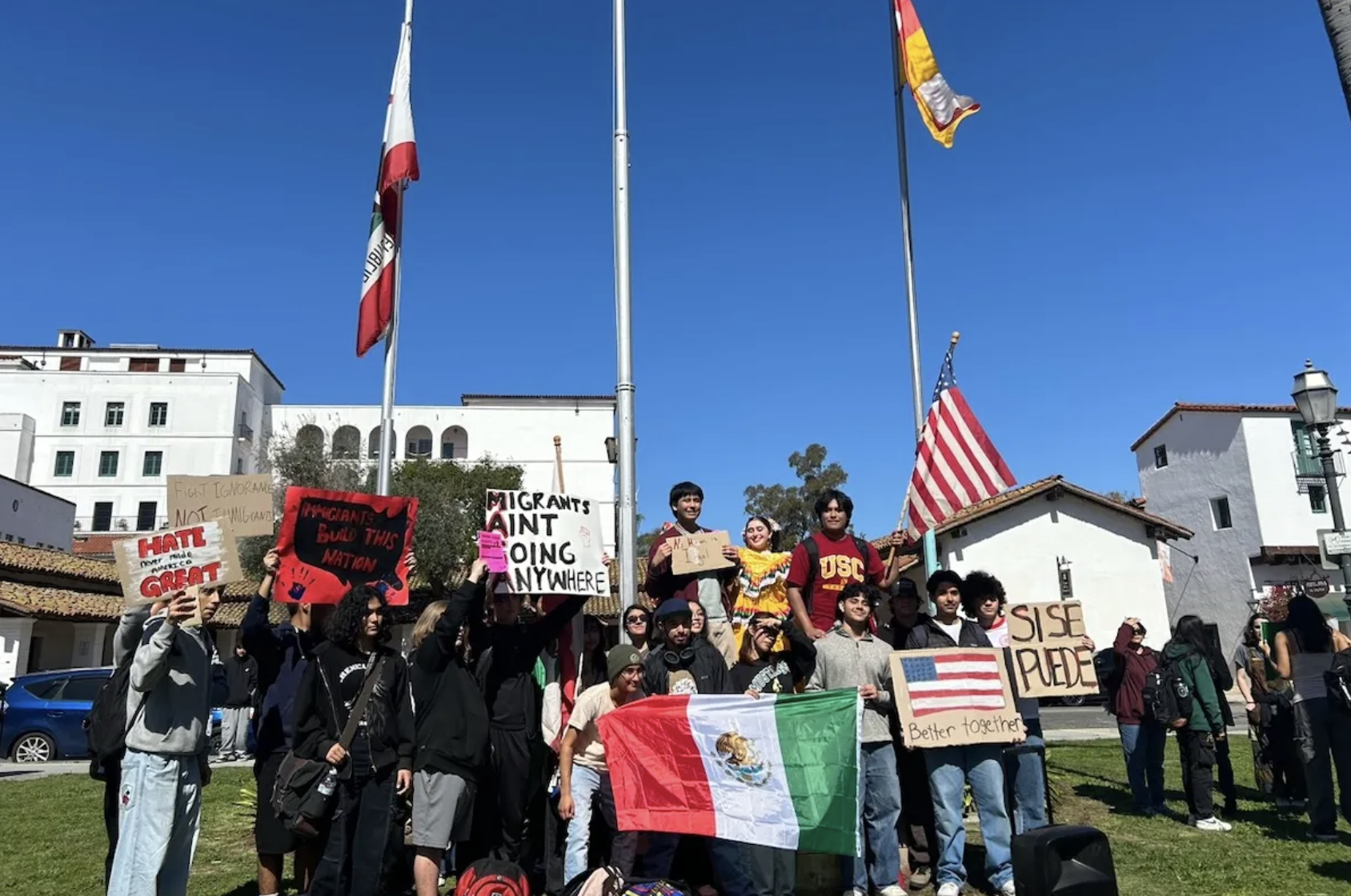
High school students around the county have repeatedly expressed fears of ICE agents coming after them or their relatives. When hundreds of Santa Barbara High School students walked out of school in March in protest, they said ICE’s actions in the community have left them “terrified.”
Hearing students’ concerns, the Santa Barbara Unified School District has enacted policies similar to those of the state’s earlier this year. The district is also working developing a crisis response team and collaborating with community partners to identify safe spaces and resources for immigrant families.
The district’s new in-house legal counsel “revised and strengthened some of the resources available to employees and staff around protocols, scripts for how to handle ICE, signage in front of buildings, and an outside immigration attorney was brought in to answer questions from the community.
Although other districts in the state, such as Los Angeles Unified, have seen noticeable declines in attendance due to ICE activity, Santa Barbara schools have not reported similar drops. Scroggin said students in Santa Maria-Bonita, for example, are “attending school at high rates, and families are accessing resources through our family resource centers.”
However, Santa Barbara Unified has seen declines in enrollment by students classified as “newcomers,” or non-U.S. born students enrolled for three or fewer years in any U.S. school. Since the 2024-25 school year, that number dropped by 64 students, from 326 to 262 in the 2025-26 school year.
The Santa Barbara County Education Office is supporting individual school districts by creating model safety plans and training materials.. “This is about protecting students’ rights to a free public education, providing clarity for staff, strengthening family communication and preparedness, and ensuring California schools remain safe and free from disruption,” said County Superintendent Susan Salcido. “These laws do not change federal immigration authority, but they clearly define and protect the right of schools in California to educate, maintain privacy, and support student safety and learning.”
To view the state’s guidelines in full, visit oag.ca.gov/system/files/media/school-guidance-model-k12.pdf.
Related Posts






Premier Events

Mon, Mar 09
6:00 PM
Santa Barbara
ART 4 GRIEF Support Group

Sat, Mar 14
7:00 PM
Santa Barbara
Red, White, & Blues II: The American Songbook
Sun, Mar 15
3:00 PM
Santa Barbara
Red, White, & Blues II: The American Songbook
Mon, Mar 09
6:30 PM
Santa Barbara
Science Pub: Cyborg Jellies Exploring Our Oceans

Thu, Mar 12
6:00 PM
Santa Barbara
Poetry, Typewriters, and Collage Workshop
Thu, Mar 12
6:30 PM
Santa Barbara
An Evening of Wild Hope: PBS Film Screenings

Thu, Mar 12
7:00 PM
Santa Barbara
Lights Up! Presents: “The Addams Family”

Fri, Mar 13
6:00 PM
Santa Barbara
GLOW X: A High-Definition Neon Experience

Fri, Mar 13
7:00 PM
Goleta
Peace Event
Sat, Mar 14
7:00 PM
Santa Barbara
The Vada Draw
Sat, Mar 14
7:00 PM
Santa Barbara
Lights Up! Presents: “The Addams Family”

Sat, Mar 28
All day
Santa Barbara
Coffee Culture Fest
Mon, Mar 09 6:00 PM
Santa Barbara
ART 4 GRIEF Support Group
Sat, Mar 14 7:00 PM
Santa Barbara
Red, White, & Blues II: The American Songbook
Sun, Mar 15 3:00 PM
Santa Barbara
Red, White, & Blues II: The American Songbook
Mon, Mar 09 6:30 PM
Santa Barbara
Science Pub: Cyborg Jellies Exploring Our Oceans
Thu, Mar 12 6:00 PM
Santa Barbara
Poetry, Typewriters, and Collage Workshop
Thu, Mar 12 6:30 PM
Santa Barbara
An Evening of Wild Hope: PBS Film Screenings
Thu, Mar 12 7:00 PM
Santa Barbara
Lights Up! Presents: “The Addams Family”
Fri, Mar 13 6:00 PM
Santa Barbara
GLOW X: A High-Definition Neon Experience
Fri, Mar 13 7:00 PM
Goleta
Peace Event
Sat, Mar 14 7:00 PM
Santa Barbara
The Vada Draw
Sat, Mar 14 7:00 PM
Santa Barbara
Lights Up! Presents: “The Addams Family”
Sat, Mar 28 All day
Santa Barbara

