
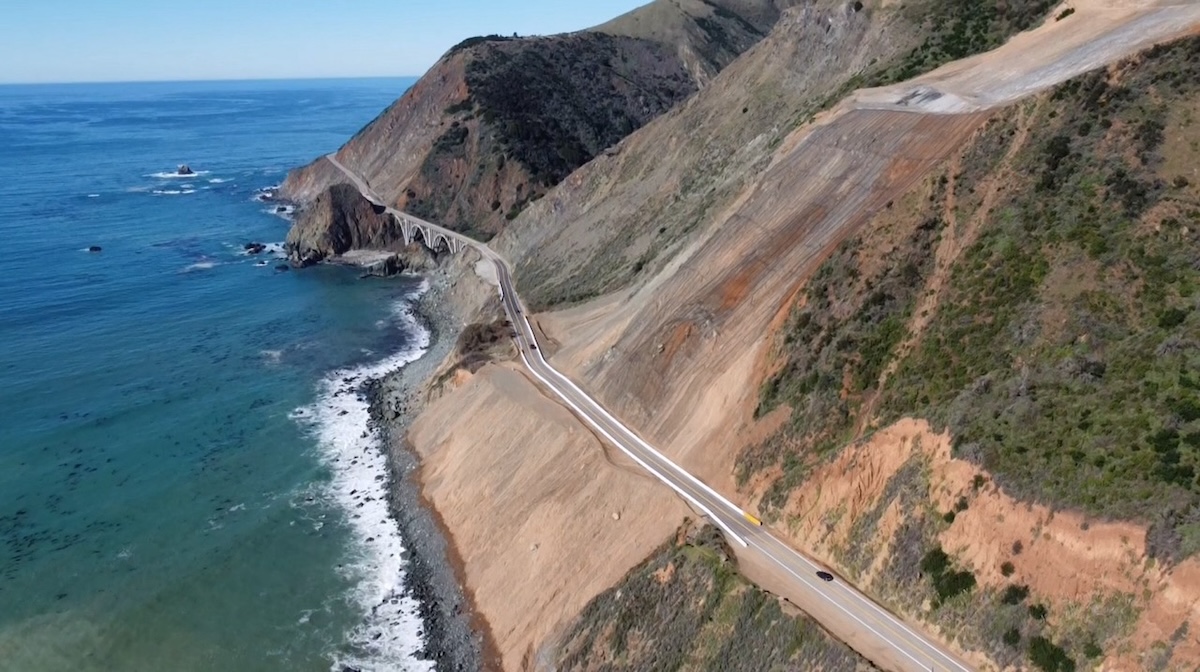
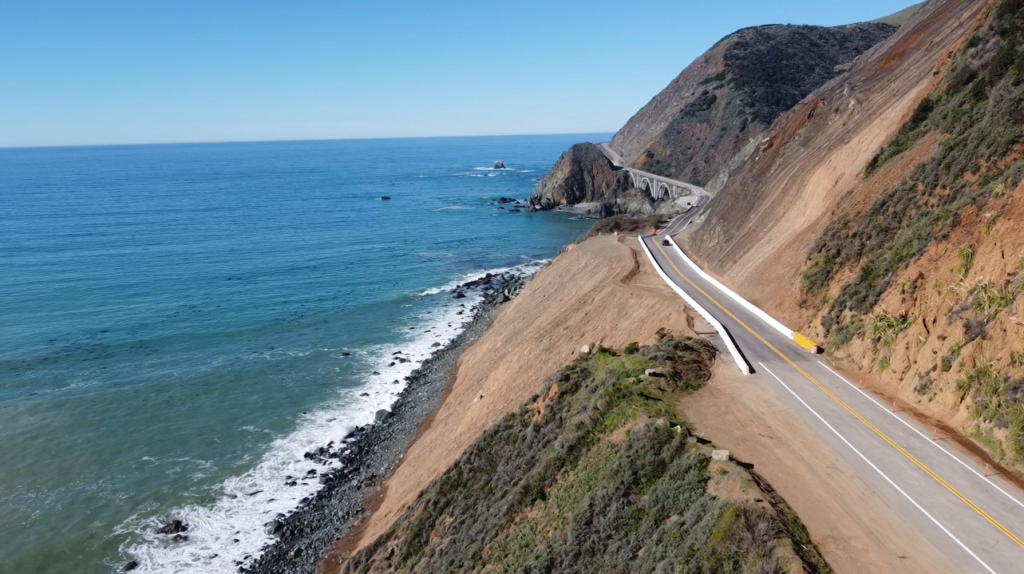
After years of closures and detours, Highway 1 through Big Sur reopened Wednesday, restoring one of California’s most iconic routes nearly three months ahead of schedule.
The reopening, announced January 14, reestablishes uninterrupted travel between Carmel and Cambria for the first time in almost three years, following extensive repairs at Regent’s Slide and Paul’s Slide — two massive landslides that severed the highway in January 2023 and again in February 2024.
“We have this ribbon of highway that runs right on the edge of the continent,” said Kevin Drabinski, public and legislative affairs representative for Caltrans District 5. “And we do our part to keep that highway open because it’s so vital to residents and businesses on the coast.”
For Santa Barbara and the Central Coast, the news landed with particular resonance. The closure had cut off a vital economic and recreational artery linking Southern California to Big Sur’s campgrounds, surf breaks, trailheads, and small businesses.
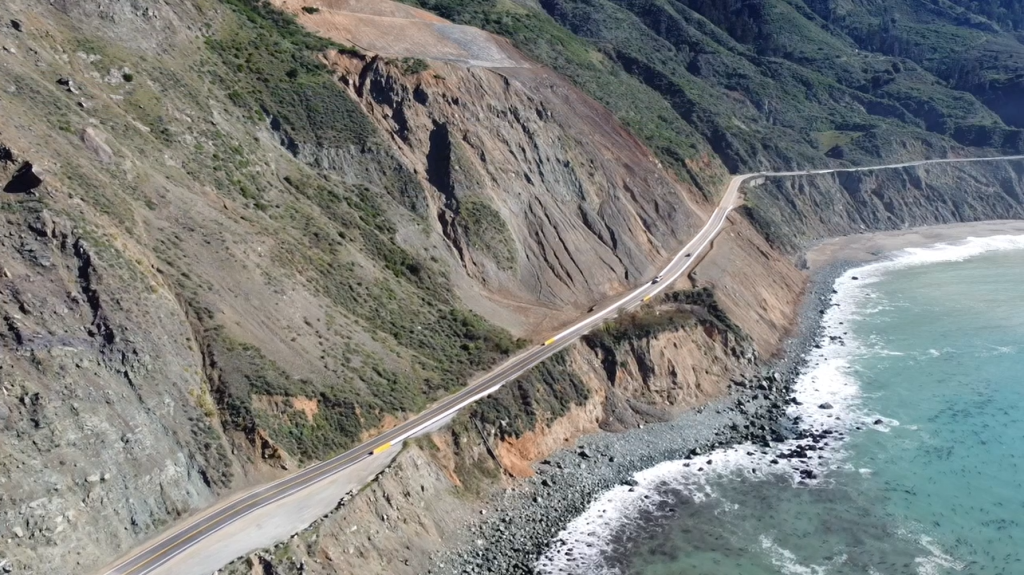
Caltrans had projected a reopening date of March 30, but crews completed the work nearly 10 weeks early, aided by favorable weather windows and rapid progress following the last major storm events.
And how did people react on opening day? Traffic returned almost immediately. In the first two hours after reopening, Drabinski said motorists passed through honking, waving, and shouting thanks to the crews still stationed along the route.
The project, estimated at $82.6 million, was anything but routine. Regent’s Slide sits on a steep, unstable slope that experienced near-continuous movement during construction — including another significant slide in August 2024 that forced crews to retreat higher up the mountain.
“You can’t work in front of a slide or below a slide,” Drabinski said. “You always have to be above it.”
To keep workers safe and productivity moving, Caltrans deployed remotely controlled bulldozers and excavators, removed roughly 6,000 cubic yards of debris, and reinforced the slope with thousands of steel bars drilled up to 60 feet deep.
The result, Drabinski said, was threefold: no major worker injuries, a stabilized slope, and the restoration of what he called “the economic lifeline for local residents and businesses on the coast.”
As for whether the repairs will withstand pounding waves, heavy rain, and the constant pull of gravity, Drabinski said Caltrans has done as much as possible in a region where landslides are a defining feature of the Santa Lucia Mountains.
“We live with slides on the Big Sur coast,” he said. “They’re an inherent geologic feature. The geological survey has mapped about 1,500 slides in the area.”
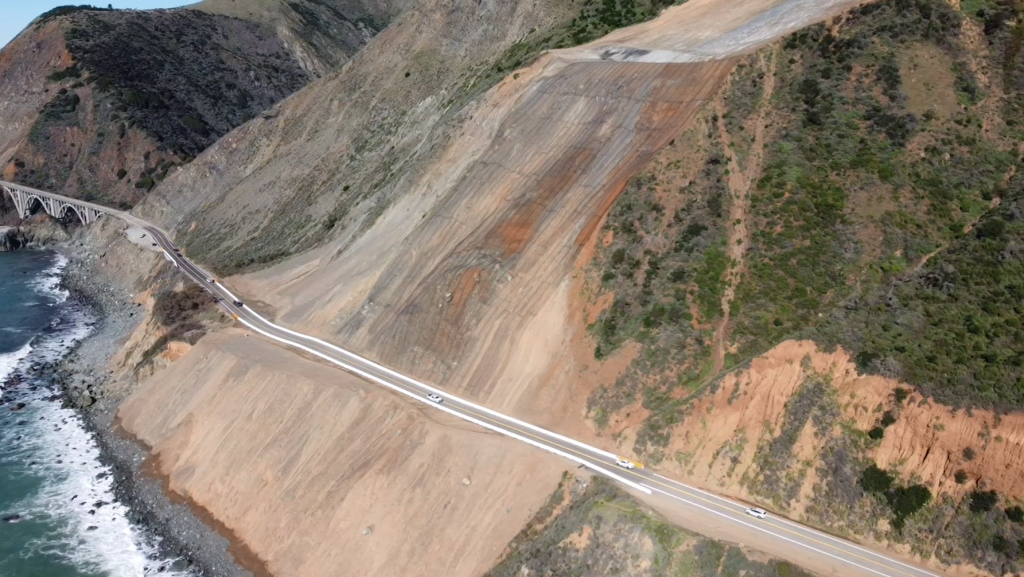
Caltrans, he added, focuses heavily on prevention — clearing culverts, scaling rock faces, and proactively removing loose material.
For UCSB students and outdoor groups, the reopening is cause for celebration, restoring easier access to one of the most striking stretches of coastline in the world.
“As an Excursion Club staffer, I am beyond stoked about the Big Sur highway reopening,” said Maya Kaye, a second-year staff member with the UCSB Excursion Club. “These 71 miles are some of the most stunning coastline that California has to offer, and now we can freely travel up and down them.”
Not only does the reopening restore access to a legendary strip of road, it also reconnects travelers to the outdoor opportunities the highway links together.
“The reopening also makes Central California outdoor adventure much more accessible, saving the drive time to iconic spots like Pfeiffer Campground and the town of Carmel by almost 2 hours from S.B.,” Kaye said.
For Caltrans, the moment marks a hard-won victory.
“These were really challenging conditions,” Drabinski said. “But we left behind a stable slope — and reopened a highway that means a great deal to a lot of people.”





You must be logged in to post a comment.