

Stay up-to-date with all things film fest by subscribing to our Dispatches from SBIFF newsletter featuring
daily reports of what happened last night, and previews of what’s next at the
Santa Barbara International Film Festival. Subscribe here.
Santa Barbara Independent is a proud sponsor of SBIFF’s Audience Choice Award.
Don’t forget to vote for your favorite films.
Fleeting Impressions Dept.
At last night’s buzzed-about SBIFF Virtuoso Awards spectacular at the Arlington — which festival head Roger Durling dubbed the festival’s “half-time show” — there were waves of giddy excitement on the street and in the house, mixed with some retroactive sighs of disappointment that Jeremy Allen White (JAW) was a no-show. The Bear-ish faux Bruce, after all, is the official badge boy image on the media’s badges, being paraded all over town. (My wife keeps staring at my badge: I have to say “eyes are up here!”) The least JAW could do is pop by Santa Barbara.
That disappointment was counterbalanced by the thrill of seeing Teyana Taylor — the hugely talented and most beautiful SBIFF tribute subject this year — encased in an extravagant, long-trained white dress. The sight of her was the polar opposite of the deliciously wicked Aunt Gladys from Weapons, as played with villainous glee by veteran honoree Amy Madigan. (See Leslie Dinaberg’s report here).
Pop Music’s Zelig Story
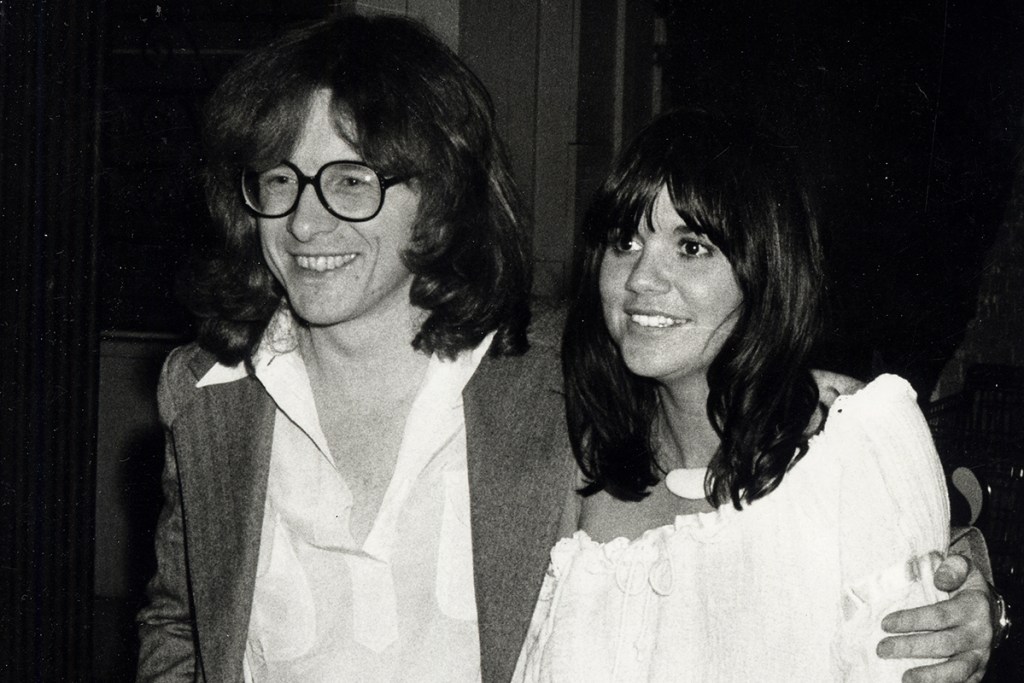
There are a lot of boomer music history docs making the rounds in recent years, and many circling the L.A. scene of the ‘70s — some of which have wound up in SBIFF programs. But there is something deeper and richer about the new Everywhere Man: The Lives and Times of Peter Asher, impressively assembled by Dayna Goldfine and Dan Geller. Their material is drawn partly from Asher’s own memory lane, traipsing song and personal history show, and much more. As explained in a post-screening Q&A, the filmmakers secured admiring testimonials from artists not typically given to interviews, including James Taylor, Linda Ronstadt, Carol King, and Paul McCartney, so great is their fandom for the witty Brit who would be king of pop producers.
The film opens, in fact, on a local note, with Asher in the Montecito home of Steve Martin. As the title suggests, Asher was one of pop history’s true “everywhere” figures, a Zelig-like character who landed in historic hot spots over the course of decades. One major distinction from Woody Allen’s right place/right time character Zelig: Asher literally helped shape the music in our collective unconscious.
He started as an unlikely pop star (with Peter and Gordon) and a habitué of the Beatles orbit. Sir Paul dated his actor sister, Jane Asher, and hung around the Asher home, writing such songs as “A World Without Love” for Asher’s duo. He became a business ally as an A&R for Apple Records and ran the Indica bookstore and gallery, where John Lennon fatefully met Fluxus artist Yoko Ono. Through Apple, Asher signed the young James Taylor, whose career he steered into its still-active eminence as a supreme singer-songwriter.
Along the way, Asher actually helped establish the careers of specific L.A. studio musicians — whose names he included on the back of Taylor’s Sweet Baby James, a credit-giving strategy unprecedented in pop but borrowed from the jazz world. As Asher said, he first dreamed of becoming a producer when Peter and Gordon first recorded at Abbey Road: “You get to hire musicians who are better than you, and boss them around.”
The Asher doc is in stark contrast to the party-centric doc at the festival, If These Walls Could Rock, which explores rock-star excess at the Sunset Marquis. In Everywhere Man, the music is front and center, as it has been for Asher since the early ‘60s. That message is delivered loud and clear through this illuminating doc. As a postscript, there is the matter of Mike Myers basing Austin Powers on the swinging ’60s-era Asher, although, as he says to Twiggy in the film, “I didn’t voluntarily choose bad teeth and glasses.”
Worldly Directions
Sunday afternoon’s International Directors Panel at the Arlington had a double SoCal significance. Not only did the panel participants represent the complete list of current Oscar contenders, but in a case of local déjà vu, all have appeared in the prodigious 2025 season of Cinema Society meetings at the Riviera (which hosted a whopping 61 screenings with celebrity appearances last year).
Onstage, along with world cinema-savvy Durling as moderator, were Kaouther Ben Hania (The Voice of Hind Rajab); Oliver Laxe (Sirât); Kleber Mendonça Filho (The Secret Agent); Jafar Panahi (It Was Just an Accident); and Joachim Trier (Sentimental Value).
The Secret Agent gets my vote as one of 2025’s masterpiece works, a thinking person’s thriller with a dizzying blend of political and cultural references steeped in ‘70s life in Brazil, set into Filho’s cinematic crazy quilt of an invention. For one thing, the film somehow juggles the fates of some 60 characters.
Filho commented, “We have different films from different countries here, and I believe that each and every film gives you access to the faces of each culture. When I see an American film, I’m really looking for the faces that make up one idea of the United States. And that’s how I feel in terms of making my films in Brazil. My country is incredibly diverse, with indigenous, European, and African heritage. And I think it’s one of the most beautiful aspects of Brazil as a nation, as a culture, is the diversity of faces.”
He also discussed the elusive and haunting nature of memory, a recurring theme in his film. “My country still deals with what happened during the dictatorship in Brazil. I really think that if you remember things, particularly politically charged historical incidents, you can be accused of remembering. Cinema is a great tool for memory and also for amnesia. The way we remember things in our lives is nonlinear.”
It was Just an Accident — up for Oscars in both the international Feature Film and Best Original Screenplay categories — is the latest in a string of brilliant, creatively personalized films from the Iranian Panahi, who was jailed in Iran for his politicized films, and surreptitiously continued his artistic life — check out This is Not a Film, Taxi and No Bears. His new film deals with post-traumatic stress over interrogation tactics and the larger issue of Iranian tyranny on a citizen level, in a gripping and also humor-flecked way.
At the Arlington, he spoke about the seeds of his new film, from his memories of his time in prison and the experience of “Sometimes the writing of the script begins when you’re not writing it,” he said, through an interpreter. “The script writing has started when you are not putting it down on paper yet. And this is not just true inside prisons. This is also true if you go out shopping, when something catches your attention or stays in the back of your mind. In fact, it was the voice [his interrogator] which stayed in my head and I did not know then that, one day, that that voice will have a function. I had promised myself that I will do something for my friends, for my fellow inmates who were left in prison.”
He also discussed the careful balancing of culpability in the film, particularly the even-handed back-and-forth of accusations with the suspected interrogator character. He reasoned that “the socially engaged filmmaker is trying to document realities. All these particular elements together make up the realities of this story. And my effort was to bring humor into the story up until the last 20 minutes of the film, so that the audience could easily follow.”
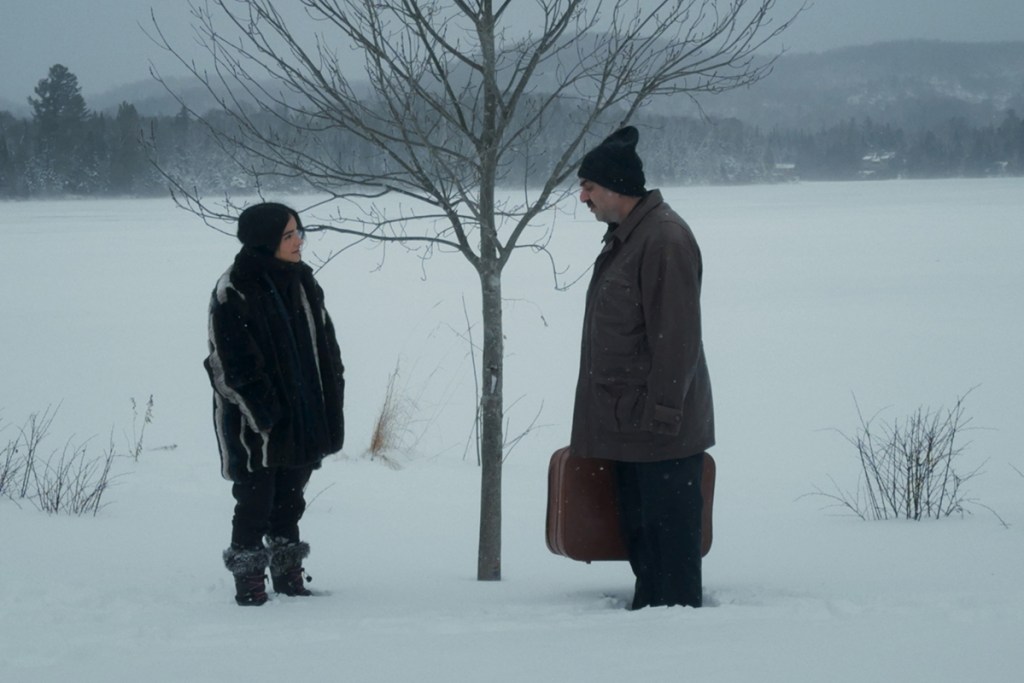
Speaking of Iranian cinema, SBIFF, going back to the Phyllis de Piccioto–directed era, has long had a strong stake in celebrating festival-grade cinema from Iran, a tradition that continues this year. Sunday’s schedule featured not one but two adventurous and outside-the-box films from Iran — the minimalist Mortician and go-ahead-shit-what-is-this-person-doing-only-one-per-customer, and the absurdist, stage play–like Sunshine Express, a strange late-night bite at the Riviera.
Interestingly, Abdolreza Kahani’s film Mortician takes its place with another notable recent film about Iranians in Canada, Universal Language. That film, about Iranians in Winnipeg and graced with Aki Kaurismaki–like dry humor, rightfully wound up on some 2025 “best of” lists. Mortician tells the deceptively simple tale of an Iranian immigrant who washes bodies in preparation for Islamic funerals, and who falls into the life and impending self-planned death scheme of a famous singer in hiding, under a death threat from the Islamic regime.
We are drawn intimately into their world and their heightened situation through Kahani’s vocabulary of tight shots and a dreamlike economy of means. Atmospheric music patches — by the film star Golazin Ardestani (Gola), an actual musician — appear only sporadically, their effect enhanced by rarity. Production values are raw, including some obvious imbalances in the sound mix, but that instability adds to the undercurrent of fear and vulnerability imposed by the tyrannical thumb of the current Iranian regime — even half a world away.
Brutal reality butts up against poetic sensibilities in this striking film. And when we say auteur, it’s not just a casual buzzword: Full-service filmmaker Kahani wrote, directed, shot, edited, and handled other duties in the project, qualifying him as possibly the hardest-working DIY artist at SBIFF 2026.
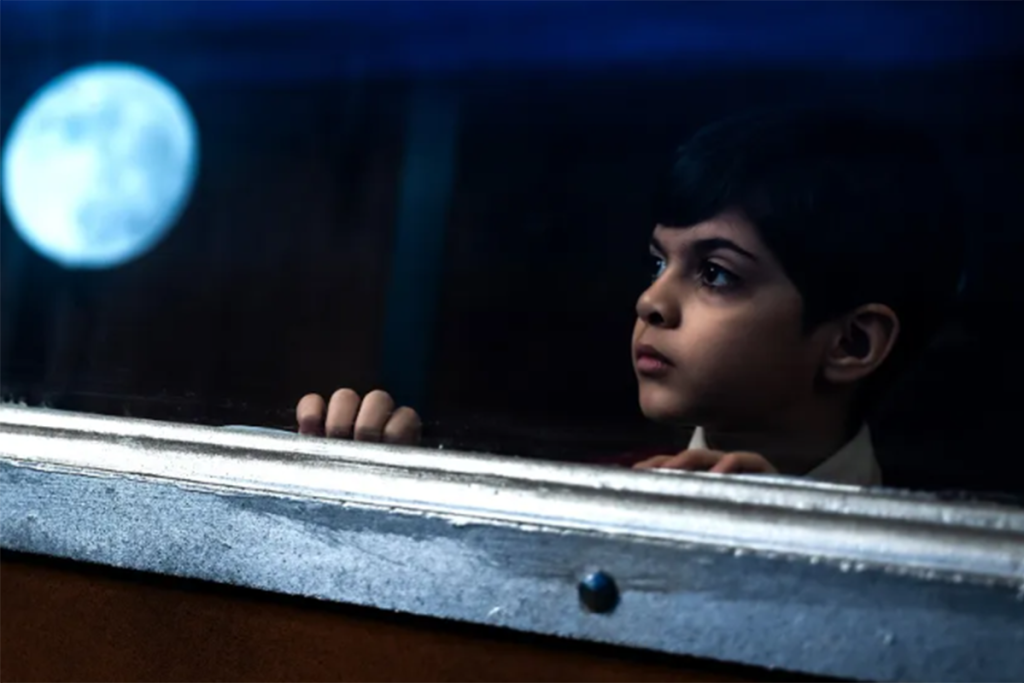
Although the sets and sites of writer-director Amirali Navaee’s Sunshine Express are also dogmatically minimalist — taking place in a few train cars — the film is a different cinematic animal. What plays out is a variation on the reality-tinged irrationality of Eugène Ionesco’s plays; the milieu finds a demographically varied group of passengers assigned to play roles in a game, a ride to the utopian isle of Hermia, whose rules we never quite understand. As the film progresses, creating a hypnotic microcosm for the viewer, as in Mortician, aspects of real-world oppression intrude on the more poetic and humane elements before us.
We may not fully understand the film’s secret language, but we feel it, and our curiosity lingers beyond the viewing experience. Well, at least until the next handful of films push it back in our memory bank.
Last Wording
When asked about his documentary about movie theaters, The Picture of Ghosts, Kleber Mendonça Filho waxed poetic about the importance of movie places — including the historic Arlington. “I believe in film-going experiences,” he said. “Strangers somehow meet, even if they don’t talk to each other. They share a space, and its a communal space. It’s not so different from the way we deal with our own house with our own home, only with our friends. I thought of that when I saw Sentimental Value.
“The house changes, and we all change, and that’s how I feel about the great moving process from the past. Each movie palace has its own history. I come to this place. I look at the architecture, and you [Durling] tell me that the first test screening for Gone with the Wind took place in this place. We’re immediately talking about tens of millions of people that have come into this place starting early in the 20th century.
“This is a place of congregation. This is not a religious place. But it can be religious depending on how you describe your relationship to cinema. So these places, I think they are incredibly important for life in society. And this is why I think we all should fight to keep the cinema-going experience alive.”








You must be logged in to post a comment.