
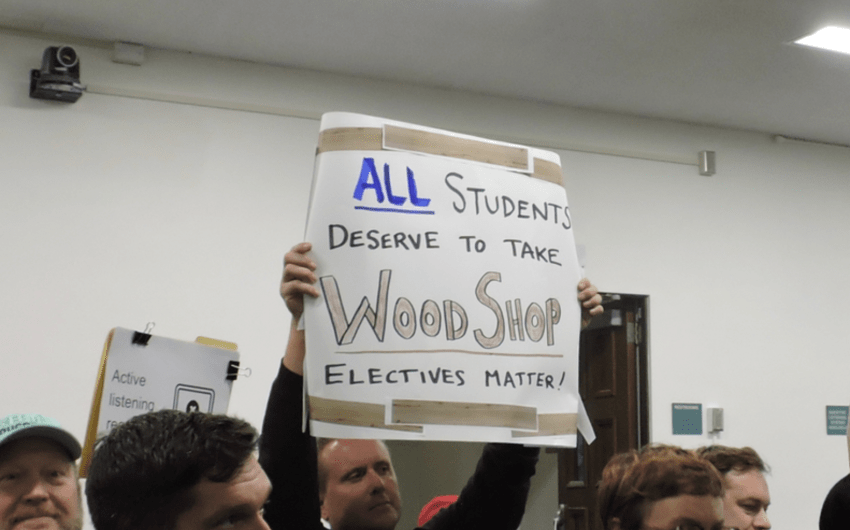
What happened to woodshop?
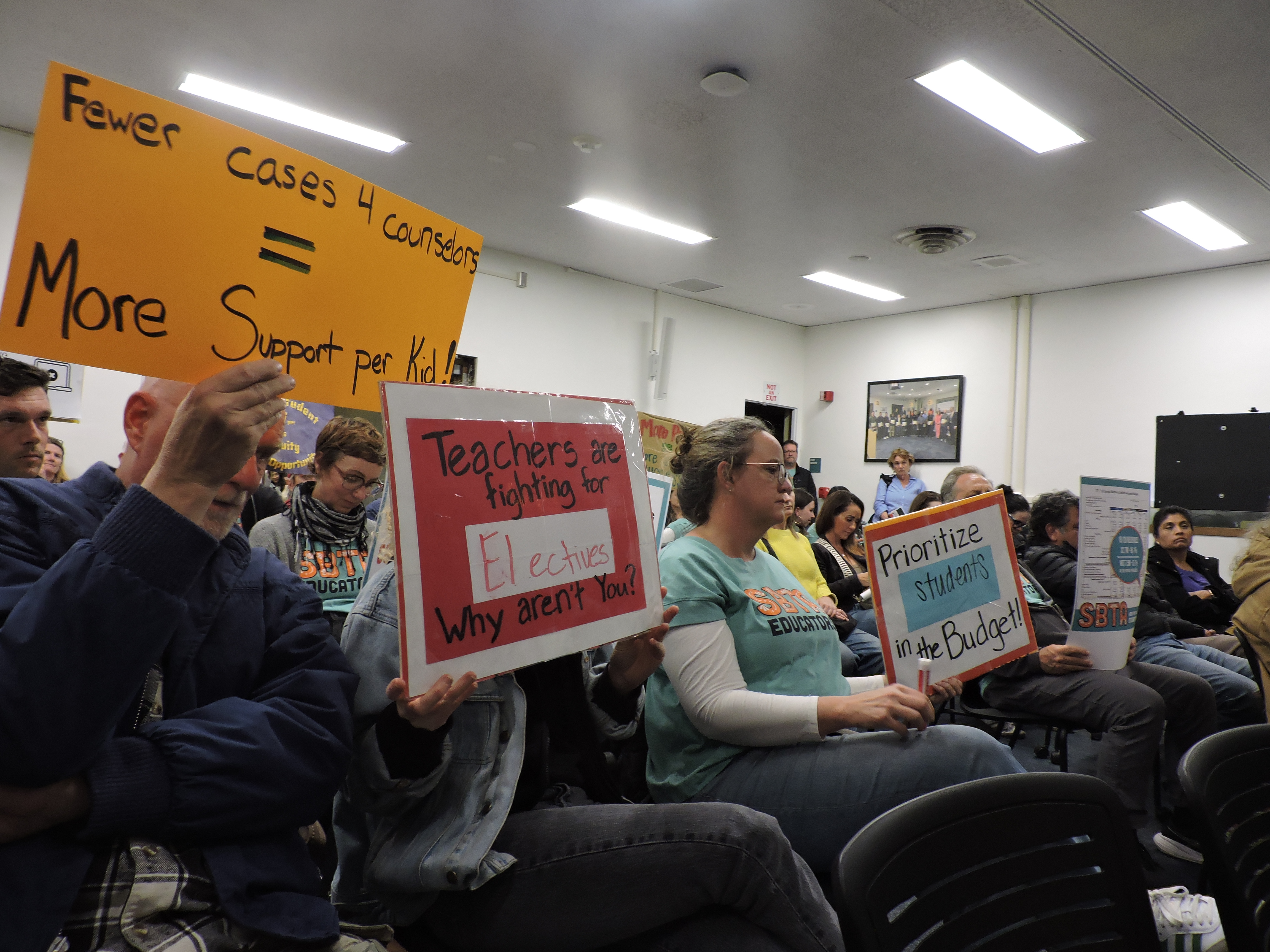
This, and other questions about the disappearance of once-ubiquitous electives, dominated the Santa Barbara Unified school board meeting on Tuesday. Teachers packed the board room, showing up in favor of longer school days so more students can make pottery and play music.
At issue was whether to add back a seventh period to the junior high schools to make room for these classes. The board met the idea with overwhelming support.
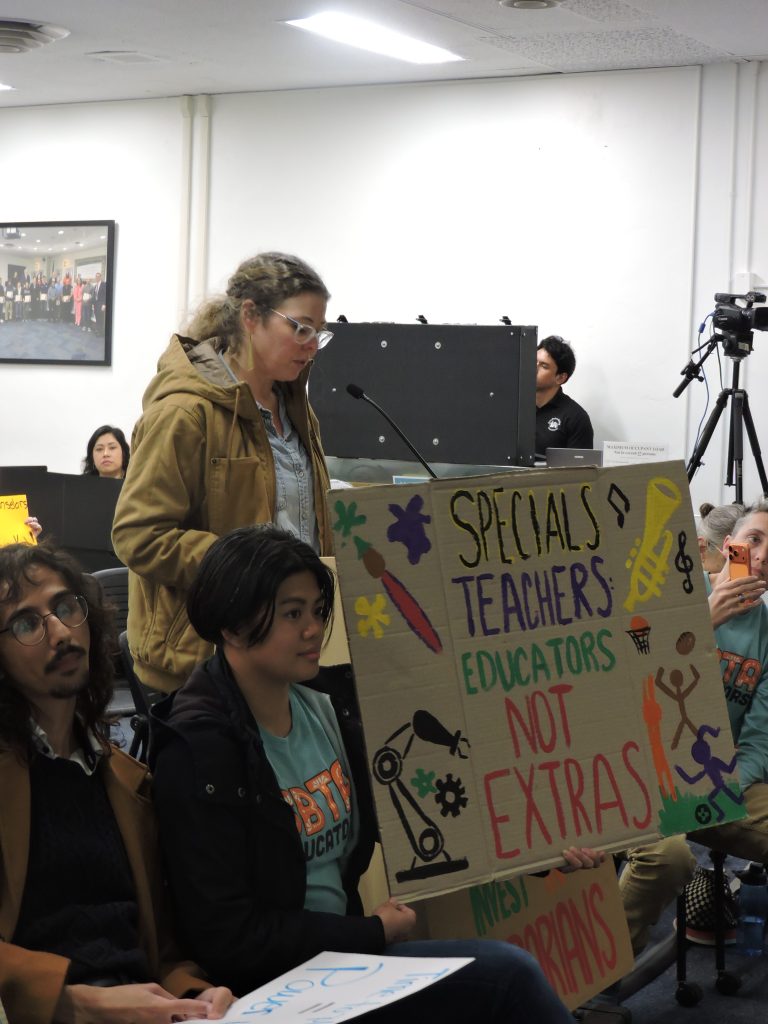
“Enrollment continues to be an issue for the district,” said Briana Serrato, a parent. “Continued cuts to music and the arts are driving factors for [parents] to send their students outside of the district. Students are going from having art, STEAM, and music weekly in elementary to being lucky to have even one of those in their junior high career.”
Multilingual learners and students with disabilities are usually the ones who get the short end of the stick — they get saddled with extra requirements, such as supplemental English classes, which leave no room for electives.
That is unfair, teachers said. If students want to take these classes, many have to do so before or after school. It’s also dependent on the school’s staffing and course offerings. It’s inequitable, teachers argued.
“It should not depend on a student or family’s ability to get them there early or let them stay late,” said York Shingle, president of the Santa Barbara Teachers Association. “It should be our system that is taking care of these kids and providing the opportunity.”
Santa Barbara Junior High, for example, offers electives such as jazz band and journalism. But of the students who take additional support classes — including multilingual learners and students with disabilities — there are 176 with no elective at all. Zilch.
A presentation from junior high principals showed that this is a common picture across schools: Students are missing out on classes that can become lifelong skills and hobbies if they only had the access.
Student engagement at all junior highs is jarringly low, too, at only 27 to 36 percent, according to district surveys.
La Colina Junior High teacher Haley Silva painted the board a picture. She just began teaching intro to sewing to 7th graders, a new class at the school.
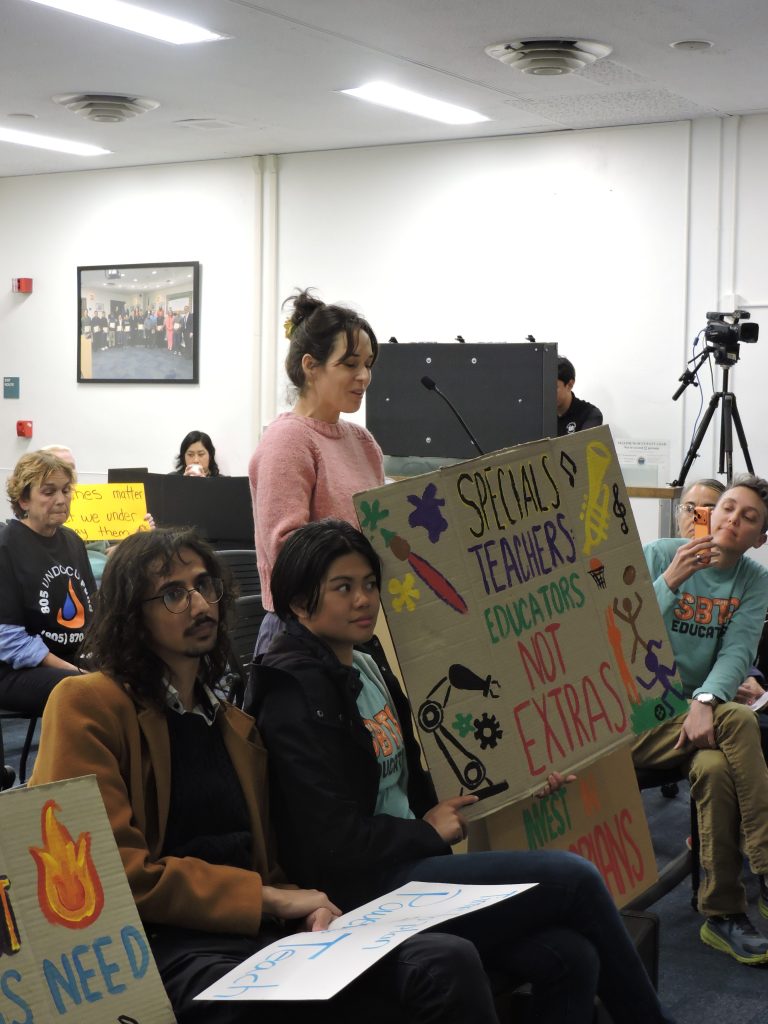
“They [the students] tell me, ‘It is the best part of my day. It is the reason I want to come to school,’” she said. “It feels pretty good when students are saying this about the class that I’ve been trying to get on the schedule for three years. So I know that new class offerings take time because I have done it.”
Rich Lashua, the last remaining full-time performing arts teacher at the junior high level, has long advocated for the return of a seventh period.
“Three years ago, I naively walked in here hoping to solve this problem before my son hits 7th grade,” he said. “He’s going into high school this fall. How many other kids have missed out on opportunities for the past 19 years and counting?”
The seventh period at the junior highs was cut around 20 years ago.
“How many other teachers unions in California are trying to have a longer day right now?” he asked.
One parent, Janet Munoz Emery, came to the meeting with her daughter, who had her oboe in her hands. “Music was not just an elective. It was my refuge,” she said.
“For the students standing here today, music is where they have found their identity, their passion, and their voice. A seven period is not just an added class; it’s an extended opportunity.”
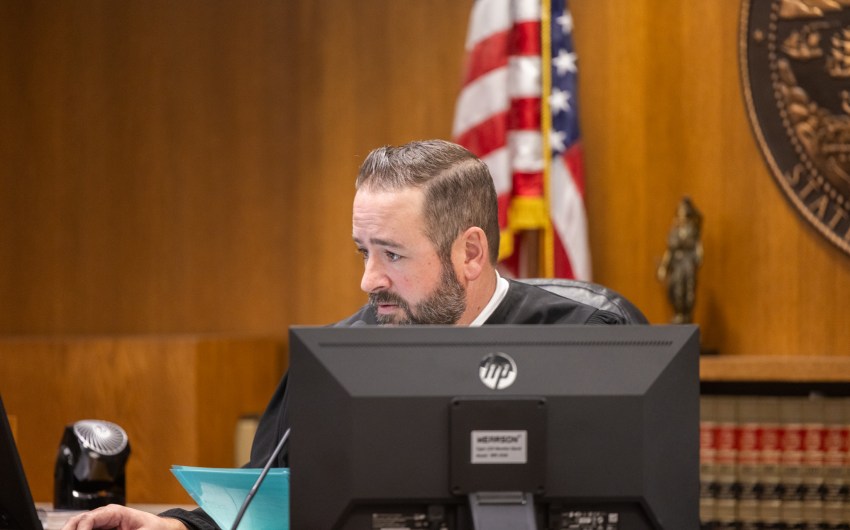
But this was one of those rare board items that had everyone in the room on the same page. During meetings in the heat of past teacher negotiations, they would be lucky to be on the same chapter. Negotiations have begun again, and the seventh period was at the top of the teachers union’s list of proposals, among other asks.
While the district declined to make the seven-period day a bargaining topic, as teachers originally requested — the reasoning being that it impacts students’ schedules, rather than working conditions — it did put it on the board’s agenda for discussion. And boardmembers were all but gung-ho for it, save for some reservations about costs, students’ stamina, staffing, and transportation (i.e., bus schedules).
They were presented with options: sticking to the status quo; adding a seventh period to just a few schools as a pilot; or pushing forward to full implementation across all schools.
Ultimately, the board was on board, but wanted some questions answered. With a cost of about $1.5 million for all junior highs to have seven periods, there will need to be some trade-offs. Boardmember Celeste Kafri likened it to canceling a Netflix subscription to afford math tutoring.
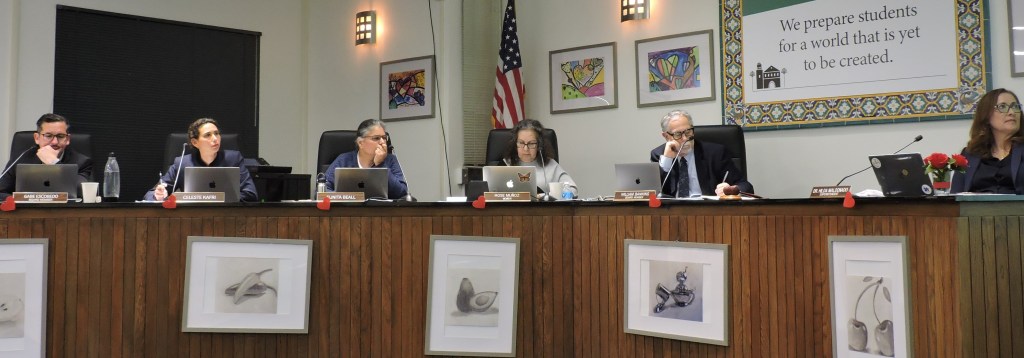
Boardmember Sunita Beall asked the junior high principals in attendance if they saw any downsides to adding a seventh period, to which they answered simply: “no.” It’ll cost money, she acknowledged, but “What is our budget for?” she said. “It’s for our students.”
Boardmembers Gabe Escobedo and Bill Banning were supportive but noted the complexities of changing the junior high master schedule, and the wrinkles and road blocks they’ll likely meet in pursuit of it. There will be no simple fix or fell swoop implementation. And the discussion comes at a time when the district is facing a multimillion-dollar budget deficit.
“This is a rhetorical question, but what happened 20 years ago when it [the seventh period] went away?” Banning said. “It was probably because of funding. And now, we’re low on funds and we’re trying to bring it back.”
Junior high is a “tough nut to crack,” Escobedo said. It’s a tough place for kids to find belonging while they are figuring themselves out and navigating different challenges.
“This would add more opportunities for that belonging,” he said. “This is one part of the solution, but we still need to do a lot more in junior high spaces.”
The board ultimately settled on asking staff to come back with a feasibility study at the next board meeting to guide potential implementation — either at a few pilot schools or all schools— by the next school year. They also asked staff to conduct future surveys with students and parents on the topic.
“We usually talk a lot about adults,” Escobedo said, “so I’m really proud we spent so much time talking about students tonight.”
Related Posts







Premier Events
Fri, Mar 06
2:00 PM
Santa Barbara
Music & Meditation SB – Concert March 6, 2026

Sat, Mar 07
9:00 AM
Carpinteria
El Carro Park Cannabis Career Fair – Carpinteria
Sat, Mar 07
10:00 AM
Santa Barbara
2-Day Expressive Painting Creative Workshop

Sun, Mar 08
6:30 PM
Santa Barbara
6th Eco Hero Award Brock Dolman & Kate Lundquist

Mon, Mar 09
6:00 PM
Santa Barbara
ART 4 GRIEF Support Group

Wed, Mar 04
6:00 PM
Santa Barbara
Chaucer’s Book Talk and Fundraiser for the Wilderness Youth Project (WYP)

Fri, Mar 06
7:30 PM
Santa Barbara
An Evening with Steep Canyon Rangers

Fri, Mar 06
8:00 PM
Santa Ynez
Funk Band Kool & The Gang at Chumash

Sat, Mar 07
12:00 PM
Santa Barbara
Spring 2026 Healing Arts Faire

Sat, Mar 07
7:00 PM
Carpinteria
The Magic’s In the Music

Sat, Mar 07
7:30 PM
Goleta
UCSB Arts & Lectures Presents Arturo Sandoval Legacy Quintet

Sat, Mar 07
7:30 PM
Goleta
Jazz Concert with Wayne Bergeron
Sun, Mar 08
10:00 AM
Santa Barbara
Fairytale Weekend at the Zoo

Sun, Mar 08
1:00 PM
Santa Barbara
SB Craftivists “Resist with Love KNOT Hate Knit-In

Sun, Mar 08
4:00 PM
Santa Barbara
Brawlin’ Betties: Love v. Luck Scrimmage
Fri, Mar 06 2:00 PM
Santa Barbara
Music & Meditation SB – Concert March 6, 2026
Sat, Mar 07 9:00 AM
Carpinteria
El Carro Park Cannabis Career Fair – Carpinteria
Sat, Mar 07 10:00 AM
Santa Barbara
2-Day Expressive Painting Creative Workshop
Sun, Mar 08 6:30 PM
Santa Barbara
6th Eco Hero Award Brock Dolman & Kate Lundquist
Mon, Mar 09 6:00 PM
Santa Barbara
ART 4 GRIEF Support Group
Wed, Mar 04 6:00 PM
Santa Barbara
Chaucer’s Book Talk and Fundraiser for the Wilderness Youth Project (WYP)
Fri, Mar 06 7:30 PM
Santa Barbara
An Evening with Steep Canyon Rangers
Fri, Mar 06 8:00 PM
Santa Ynez
Funk Band Kool & The Gang at Chumash
Sat, Mar 07 12:00 PM
Santa Barbara
Spring 2026 Healing Arts Faire
Sat, Mar 07 7:00 PM
Carpinteria
The Magic’s In the Music
Sat, Mar 07 7:30 PM
Goleta
UCSB Arts & Lectures Presents Arturo Sandoval Legacy Quintet
Sat, Mar 07 7:30 PM
Goleta
Jazz Concert with Wayne Bergeron
Sun, Mar 08 10:00 AM
Santa Barbara
Fairytale Weekend at the Zoo
Sun, Mar 08 1:00 PM
Santa Barbara
SB Craftivists “Resist with Love KNOT Hate Knit-In
Sun, Mar 08 4:00 PM
Santa Barbara


You must be logged in to post a comment.