
With its sunny days and south-facing coast, Santa Barbara County is well positioned to harness solar energy. On Wednesday, the county’s Planning Commission discussed proposed updates to the rules for different solar power projects. Commissioners and members of the public focused on potential impacts to agricultural land, what level of review certain projects may require, and fire risk.
Presently, solar panel projects in the county fall into two main buckets. Utility-scale solar facilities (like solar farms) are only permitted in a 600-acre area in the Cuyama Valley. Smaller solar projects are allowed throughout the county, provided they follow state rules.
At Wednesday’s Planning Commission meeting, county staff presented a tier system to define and regulate solar power development.
“The amendments include development standards for solar that become more rigorous as project size increases,” Supervising Planner Whitney Wilkinson said.
Smaller-scale projects would fall into tiers one or two. Tier 1 projects, like adding a roof-mounted solar energy system, wouldn’t require planning permits. Tier 2 projects — small solar energy systems put on already developed land, like a solar canopy over a parking lot — would be allowed with a zoning clearance.
Larger solar projects would fall under Tier 3 and Tier 4. Only certain parts of the county would allow these larger projects. Tier 3 projects would include “community scale” solar energy facilities, that is facilities up to 30 acres in size. Tier 4 would cover larger, utility-scale solar facilities. Both Tier 3 and Tier 4 projects would require environmental review for each project.
Agricultural Land Conversion
Where would utility scale solar projects go? Both public commenters and commissioners had questions and concerns.
One public commenter, Claire Wineman of the Grower Shipper Association of Santa Barbara and San Luis Obispo Counties, said the association had concern that the new policies may convert agricultural land in the county’s coastal valleys.
“Flat farm land in the coastal valley is exceptionally special and worthy of protection,” Wineman said.
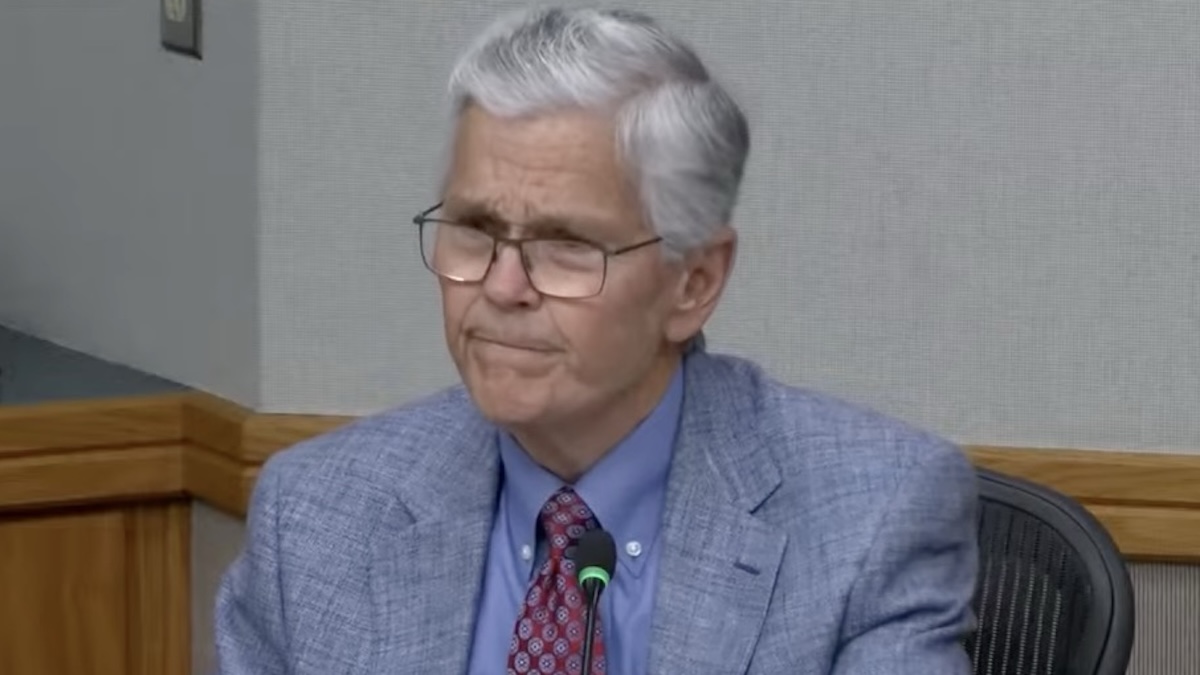
Fourth District Commissioner Roy Reed also brought up the impact of the new solar policies on agricultural land. He said he thought projects that fall into the tier 1, 2, and 3 category are largely beneficial but had issues with Tier 4 projects
“I think they could be transformational for a lot of our wonderful ag[ricultural] properties in this county, particularly for our range land,” Reed said.
He proceeded to ask questions to better understand the scope and scale the new regulations would allow.
The county said about two-thirds of the county’s agricultural land falls under the Williamson Act — a voluntary program wherein land owners that keep their agricultural land for agriculture receive property tax benefits. For land under this act, only a certain portion could be used for solar energy. For land not under the act, these limitations do not apply.
Santa Barbara County’s 2019 Strategic Energy Plan found that agricultural and rural land had a much larger capacity for solar power generation than urban areas.
Batteries and Fire Risk
Fifth District Commissioner Vincent Martinez asked several questions on battery storage. Batteries store energy generated by solar panels. Martinez asked if the Santa Barbara County Fire Department had the training and equipment to manage a fire.
County officials referenced the battery fire at Moss Storage Facility, the world’s largest battery storage plant, in Monterey County last year. During that fire, toxic plumes of smoke prompted the evacuation of 1,500 people from the nearby area.
County Fire Marshal Fred Tan said that technology in developing lithium ion batteries is changing. Newer batteries can withstand heat up to nearly 500 degrees, compared to the ones in Moss Landing, which hit their limit at about 185 degrees. Further, he said, the newer batteries are stored outside in cabinets designed to mitigate the fires. He said the cabinets monitor the air temperature; if the cabinets hit a certain temperature, they can be shut off remotely.
Tan said County Fire had trainings to mitigate events that could cause a fire, as well as a policy in place on battery storage systems.
Alternative Plans
The county provided three alternative options to the tiered system. The first would maintain the current status-quo, with utility-scale solar projects only permitted in a 600-acre swath of the Cuyama Valley. The second would reduce the amount of land that could be converted on properties under the Williamson Act. The third would prohibit Tier 4 projects in the coastal zone. The Gaviota Coast Conservancy, a nonprofit dedicated to preserving this stretch of coastline, favored alternative three.
Clean Coalition’s Recommendations
Ben Schwartz, the policy director for the Clean Coalition, a nonprofit focused on renewable energy policy and development, spoke during public comment. He outlined some of the seven points the coalition, alongside the local nonprofit Community Environment Council, submitted as a letter to the county regarding new solar policies.
Those points included advocating for less permitting for some projects, and clear distribution of information.
Commissioner John Parke said he favored integrating the recommendations with the exception of one, which said energy storage (battery) projects that meet Tier 1 requirements should be allowed in all zones; he said this suggestion seemed too broad. Chair Reed also favored incorporating several of the recommendations, with the exception of the fourth.
Parke said he wanted to consider other questions, including whether there should be a cap on the amount of land dedicated to solar projects, and made a motion to continue the conversation at a later date. Ultimately, the commission voted unanimously to continue the discussion to May 4, instructing county staff to incorporate several suggestions from the Clean Coalition and Community Environmental Council.
Related Posts







Premier Events

Sat, Mar 14
7:00 PM
Santa Barbara
Red, White, & Blues II: The American Songbook
Sun, Mar 15
3:00 PM
Santa Barbara
Red, White, & Blues II: The American Songbook
Sat, Mar 28
7:15 PM
Santa Barbara
Santa Barbara Stargazing Tour

Tue, Mar 17
5:30 PM
Santa Barbara
SB Independent’s Annual St. Patrick’s Day Stroll 2026

Thu, Mar 19
6:00 PM
Santa Barbara
Chaucer’s Book Talk & Signing: Elizabeth Gilchrist

Sat, Mar 28
All day
Santa Barbara
Coffee Culture Fest

Sat, Apr 18
11:30 AM
Goleta
The Santa Barbara Independent Backyard Brunch
Sat, Mar 14 7:00 PM
Santa Barbara
Red, White, & Blues II: The American Songbook
Sun, Mar 15 3:00 PM
Santa Barbara
Red, White, & Blues II: The American Songbook
Sat, Mar 28 7:15 PM
Santa Barbara
Santa Barbara Stargazing Tour
Tue, Mar 17 5:30 PM
Santa Barbara
SB Independent’s Annual St. Patrick’s Day Stroll 2026
Thu, Mar 19 6:00 PM
Santa Barbara
Chaucer’s Book Talk & Signing: Elizabeth Gilchrist
Sat, Mar 28 All day
Santa Barbara
Coffee Culture Fest
Sat, Apr 18 11:30 AM
Goleta

