
Jumping into Regenerative Wine
Santa Barbara County Vintners
Join Global Effort to Fix Farming
By Matt Kettmann | Photos by Macduff Everton
April 23, 2026
It’s an unseasonably sunny and warm February morning in the Santa Ynez Valley, where about 50 winemakers and farmers are standing in a circle under the shade of a giant peppercorn tree. They’ve gathered at the deLanda Vineyard on the edge of Los Olivos to learn more about the One Block Challenge, a global effort to encourage vintners to adopt regenerative agriculture techniques in their vineyards.
“Everybody is listening,” explains vineyard consultant Jordan Lonborg about how much the world is excited about the hope of regenerative ag, which seeks to farm more in tune with rather than against nature, specifically by focusing on the health of the soil and surrounding ecosystem. “Everybody is paying attention.”
Few industries so far pay as much attention as viticulture. It’s where I first heard the phrase “regenerative farming” uttered more than a decade ago — at this very vineyard, in fact, when I was writing about its owners David and Anna deLaski, of Solminer Wine Company. In recent years, it’s become almost ubiquitous in talks about any kind of farming, and it’s hard to go to any vineyard now without seeing evidence of livestock, cover crops, and composting — all three of which are critical parts of regenerative farming.
The One Block Challenge — run by the United Kingdom–based nonprofit Regenerative Viticultural Foundation — began last year just up the coast in Paso Robles, where Lonborg was in charge of the vines at Tablas Creek Vineyard when it became the country’s first to be Regenerative Organic Certified. Then, the 1BC, as it is known for short, quickly expanded into Napa, Texas, South Africa, and New Zealand, with Sonoma and Temecula in the current crosshairs. The underlying goal is to have 10 percent of all vineyards across the world be regeneratively farmed by 2035.
Lonborg is now part of the team at Coastal Vineyard Care Associates, which for decades has managed the most estates in Santa Barbara County, and his new job includes spreading the regen gospel further and wider. “Regenerative farming is continual improvement,” he told the crowd. “You’re never done.”
Unlike organic and biodynamic farming, which each feature rather strict rules, regenerative strategies can be adjusted and adapted to each individual vineyard based on what works and what doesn’t. You don’t have to immediately bring sheep in to graze your vineyard, for instance, and even the guiding principle of not tilling the land is more flexible than rigid.
“The only thing you need to be dogmatic about is not being dogmatic,” said Lonborg, reflecting the flexibility that’s making this approach so popular so quickly.
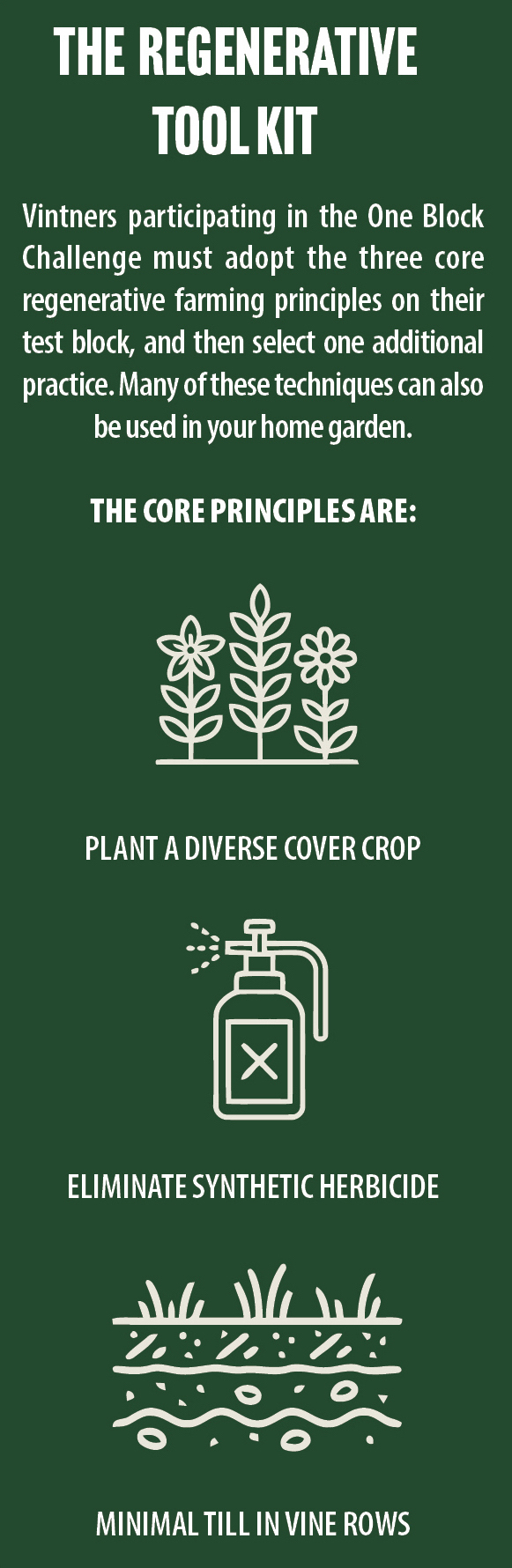
The “challenge” is for vintners to select one part of their vineyard — it can be just a row of vines, or an acre, or 10 acres, or everything — and then farm it according to the three fundamental regenerative principles, plus one additional technique from a list of seven in the toolkit. The additional step is conducting simple tests at regular intervals to evaluate how it’s going. About half of the February morning meeting was dedicated to demonstrating these field tests, which track soil compaction, water infiltration, and biodiversity amounts.
“If you aren’t collecting data, you have no basis for making decisions,” emphasized Jennifer Becker, a wine marketing veteran who volunteers as communications director in the United States for the RVF. Tracking results through scientific observation is a key tenet of the 1BC, and another reason why many bottom line-minded vintners are interested in regenerative’s results-based strategy.
Receiving those results was one of the only hangups with the first 1BC in Paso Robles, where plenty of vineyards signed up but not as many turned in the data. “It doesn’t mean anything without it,” said Lonborg during the testing demo, encouraging Santa Barbara’s incoming 1BC class to follow through on that front.
Of the 50 or so people who gathered in late February, more than 15 vineyards signed up for the 1BC by the mid-March deadline and a few vineyard management companies are also involved. Though some of the baseline test deadlines have already passed, there is still a chance for more vintners to sign up if interested.
To give a sense of what these vintners are going through, here’s a look at three 1BC participants with very distinct histories, challenges, and solutions. I plan to revisit some of these projects throughout the year and profile some others as well in the months to come.
For more information on the One Block Challenge or the Regenerative Viticulture Foundation, see regenerative
viticulture.org.
Solminer Wine Company: The Original Adopters
When Solminer’s David and Anna deLaski bought their three-acre Los Olivos vineyard in 2012, the dominant style of farming in Santa Barbara County — and pretty much everywhere else in California — was tight and tidy, with the ground regularly disced and the weeds shaved nearly bald.
“At that time, everything was tilled, and rows were clean,” said David, who came to wine after a career as an electronic music producer. They remembered thinking, “Okay, I guess that’s how it’s done.”
But they wanted to farm more organically, and they pushed their vineyard managers in that direction. “They were scared,” said David, citing fears over lower yields, potential vine disease, and potentially harder work. “We were willing to take that risk,” said Anna, who is originally from Austria. “That’s why I came to California: People were open to change.”
That change came fast, and the deLaskis applied their organic, biodynamic, and regenerative desires to an additional two acres that they planted on the adjacent property, becoming Santa Barbara County’s first Regenerative Organic Certified (ROC) vineyard in 2021. Though they ditched the official ROC designation two years later, their deLanda Vineyard is still farmed in that manner and remains certified organic.
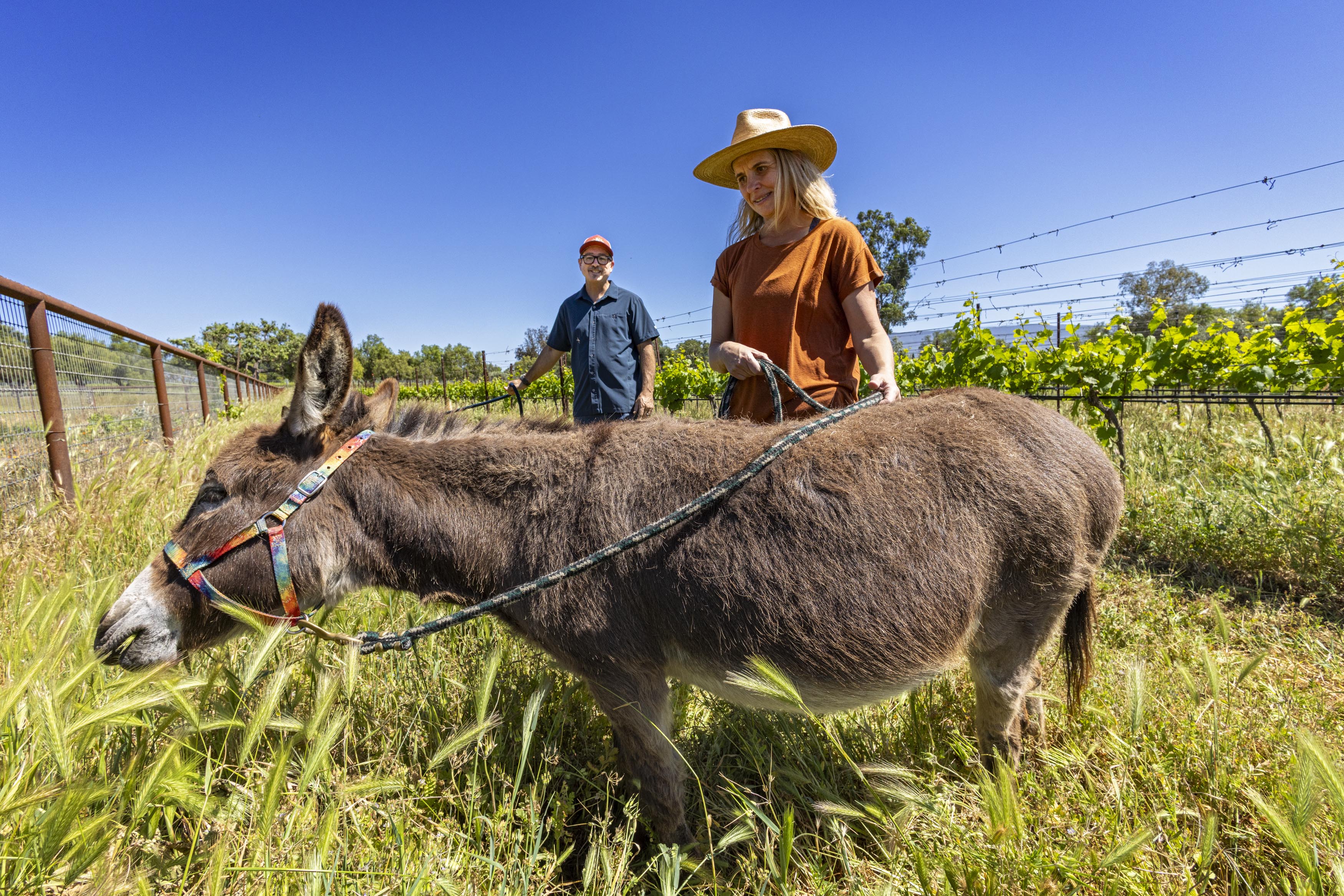
Using a team of babydoll sheep to graze, a pair of miniature donkeys to make compost, and hedgerows and flowers as a pollinator garden, the deLaskis are considered the region’s regenerative viticulture pioneers. They’ve seen how much changes when the earth is not ripped apart each year — they had no erosion from the recent storms, for instance — and continue to learn with the vintages.
The first year of no-till was a little disturbing, as the weeds grew taller than their son, Linus. “But that changes — there’s a succession,” said Anna, describing how the groundcover morphed to be more manageable. “We are working with the ecology again. We are working with nature. Conventional farming looks at everything else growing near your vines as bad, but that’s not true. Not everything is your enemy.”
That mentality became pervasive across Santa Barbara’s leading vineyard managers. “There’s been a total change in mindset,” said David. “Now, ground cover is good.”
The deLaskis are savvy at getting help with grants for pollinator plantings and more from the Community Environmental Council, and they encourage others to do the same. “Real change comes when you give farmers money to do positive things,” said Anna.
They’re also tweaking the right balance of everything, such as their fluffy sheep. They thought they needed 40 at first, but now have 18, and believe even just 10 would be fine. “More is not better,” said Anna, referring specifically to the sheep, but really reflecting their understanding of how regenerative farming really just removes barriers to letting nature and vines do what they’ve always done.
“You tickle the system,” she said, “and the system does its own thing.”
Our Lady of Guadalupe: Testing Extreme Terroir
There are many reasons why “conventional” farming took over after World War II. But a basic one is that the development of earth-manipulating machines and pest-fighting chemicals made growing more crops in more places much easier. And in the case of wine — where planting vineyards in extreme conditions is believed to produce more interesting fruit — this technological progress made planting in such locations actually possible.
Take Our Lady of Guadalupe (OLG), a 133-acre vineyard clinging to the crumbly hills that overlook the city of Lompoc. The property — which is owned by David Phinney, who started and sold successful NorCal-based brands such as The Prisoner and Orin Swift — straddles the western boundary of the already very cool and windy Sta. Rita Hills. Planted on chalky, diatomaceous earth–laden soils, the vines compete directly for water with the weeds, which, if left unabated, also cause both short-term and long-term trouble for the grape clusters and plants, such as mildew and trunk disease.
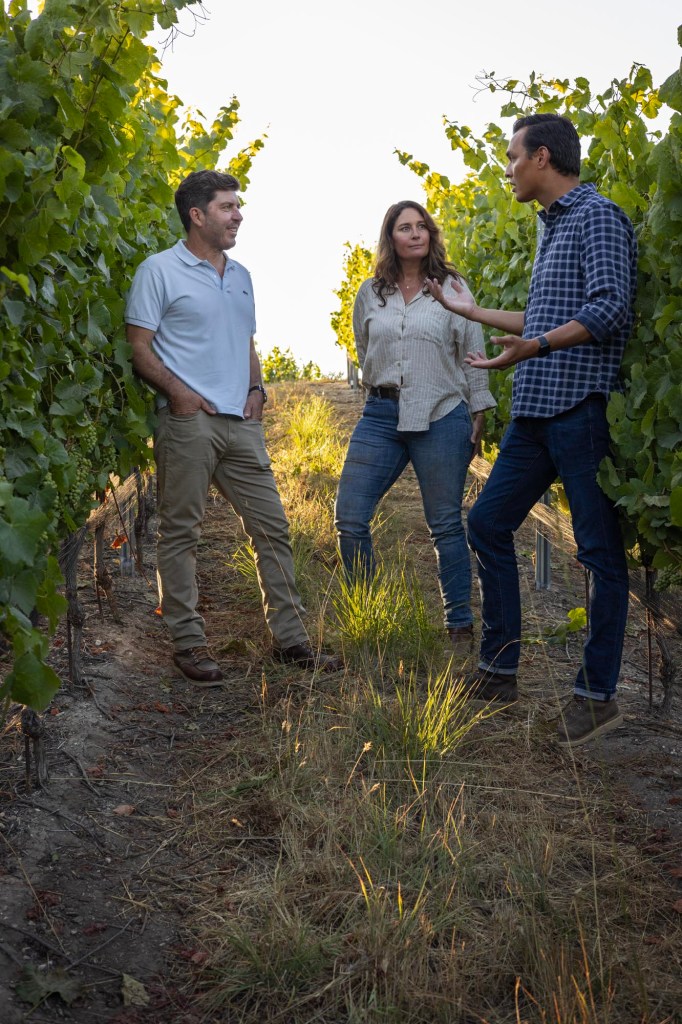
The vineyard was developed by vineyard manager Amy Warnock, who graduated from UCSB in 1998 before falling deep into the wine business. “Sustainability is driving our decisions, but it’s also about wine quality and making sure that we are economically feasible,” explained Warnock, whose degree is in environmental studies. “We can’t just pick one of those buckets. You have to pay attention to all three branches of sustainability — social, economic, and environmental — for them all to work.”
Warnock already employs many organic practices at OLG, and hardly tills at all because she doesn’t want those powdery soils to blow away in the wind. The real challenge for going full regenerative here is a matter of size and slope.
Their one mechanical weed cultivator simply cannot cut down all the ground cover across 133 acres fast enough. Even if it could, there are certain slopes that the machine cannot safely approach. That leaves herbicide as the most effective tool to keep those weeds at bay.
This year, when one of their grape customers — they sell about half of the fruit to other wineries — asked if they could farm a block without any herbicide at all, Warnock saw an opportunity. “The One Block Challenge is what gave us the push,” she said.
She picked a nearly three-acre section — one of 54 blocks across the property — entered it into the challenge, and started farming according to the regenerative toolkit, including grazing sheep. They’ve already run the required tests, which only took an afternoon.
“We’re excited to track the progress and see if there is any difference in soil microbiology or of different grasses that grow voluntarily,” said Warnock, who’d like to enlist more blocks if everything pencils out. “In the ultimate scenarios, we’d do all 133 acres without herbicides. But even if it ended up narrowing herbicides down to the five blocks that give us so much trouble, that’s a pretty good improvement.”
Babcock Vineyards: The Experimental Lab
Sheep, chickens, ducks, geese, goats, cattle, and even alpaca are animals that have been used in vineyards across the world to munch the weeds, eat bad bugs, and aerate and fertilize the soil with their steps and shits. Could horses do the same thing?
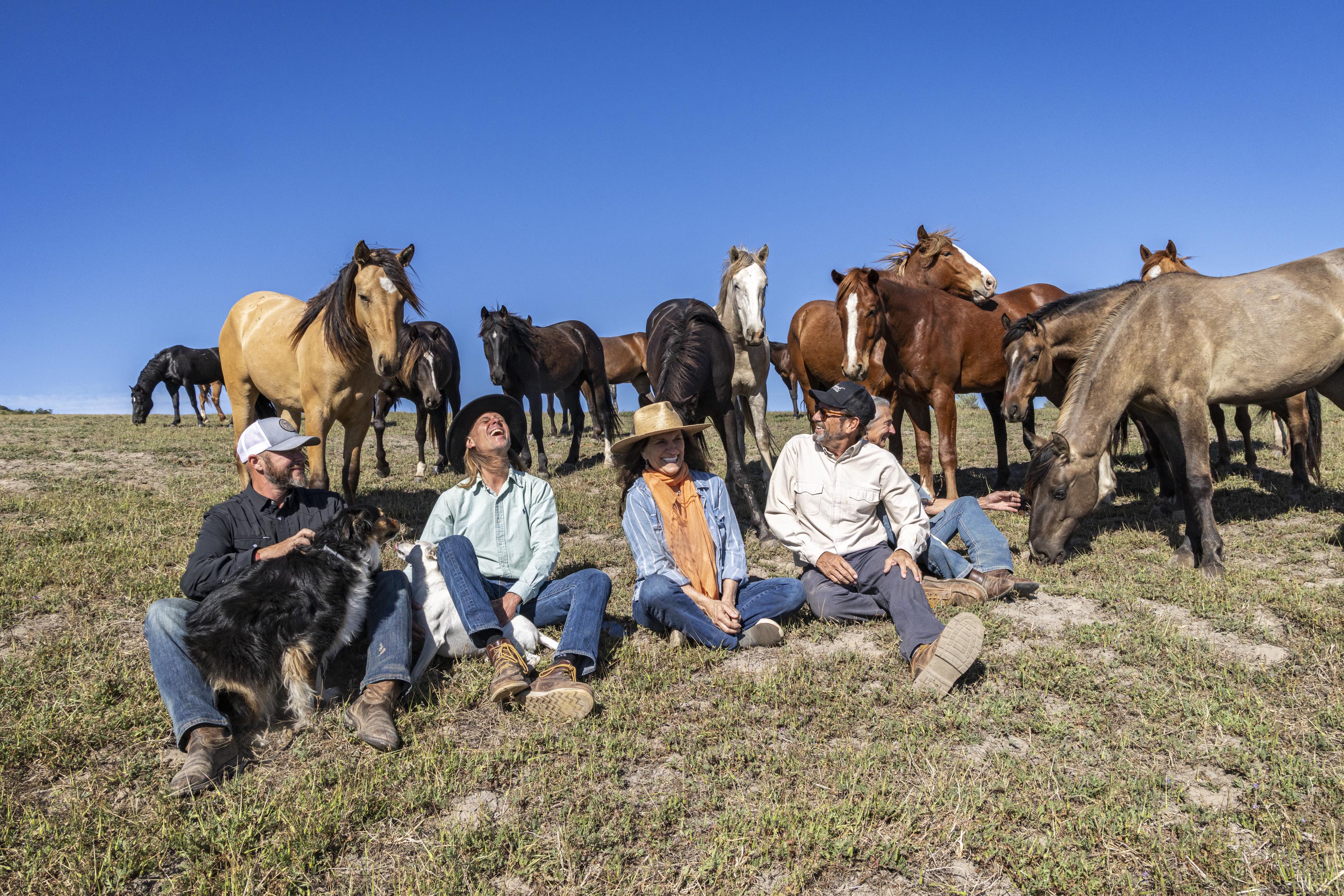
That’s what veteran vintner Bryan Babcock and the team from Return to Freedom Wild Horse Conservation (RTF) are pondering on his Sta. Rita Hills property, where his family started growing vines in 1978. There are now 40 wild horses — saved from their pending slaughter by RTF after they were captured on federal land in Arizona — frolicking in the meadows above his winery on the northside of Highway 246.
Rather than grazing amid the vines, the horses pasture on parts of the property where vines have already been ripped out. The estate was ravaged by pests over the decades, long ago by phylloxera and more recently by Pierce’s disease, a sharpshooter-spread bacterial scourge that remains a significant worry for the region.
“The reality going forward is that more and more people are giving up,” said Babcock, pointing to other struggling examples on the slopes nearby. His remaining vineyard acreage is just a couple acres, down from a peak of about 80. He once made 25,000 cases of wine a year, and that’s dropped to just 5,000, mostly from purchased fruit.
The hope is that the horses’ heavy hoof prints create effective water-catching pockets in the earth and that their steady fertilizing enhances the microbiology of the soil. That’s what is happening at a once-desolate property near San Luis Obispo’s Perfumo Canyon, where RTF-introduced wild horses rejuvenated the landscape, according to RTF founder Neda DeMayo.
“The ecosystem and biodiversity exploded,” said DeMayo. “The insects are so loud.” Her longtime ranch manager Aaron Thayne agreed, explaining, “Springs that used to go out during June and July are now year-round.”
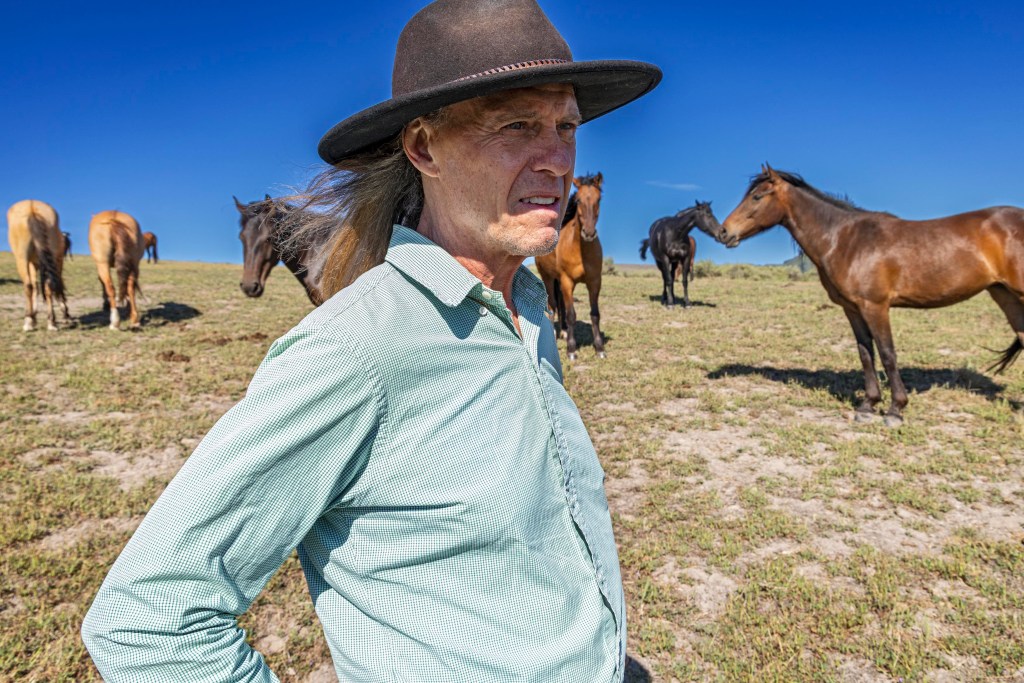
The Babcock connection was fostered and in part funded by Duke Richardson, who has long ties to the region, and equestrian Annalee Knutson, who works with RTF. Thayne started mapping out the management plan across 95 acres last fall, and the horses were brought to the property earlier this year. Based on his years of landscape management experience, Thayne doesn’t see why horses wouldn’t be as effective as any other hoofed animal in restoring this landscape.
“It’s not about the number of animals or which species,” he explained. “It’s the amount of time that they spend in one place.” He’s installing fencing across the property to move the horses around throughout the year — as he expected, they aren’t showing any interest in actually eating the vines that they have open access to — and there are periods when they will be much closer to the tasting room itself.
That may be an auxiliary benefit. “Many customers just don’t want a great wine,” said Babcock. “They want an experience.”
He believes there is a chance that, with the horses creating healthier soils, his property’s natural immune system could improve enough over time that it would overcome the pressures of Pierce’s and other vine diseases in the future. Maybe he’d even replant if all went well and the soils were laced with strong mycorrhizal networks.
“We might have a vineyard that we don’t have to irrigate, where the soil is healthy and we are more resilient to disease,” he said. “The potential is mind-boggling.”
After years of developing concepts and techniques of his own under such names as “integrated nature” and “agresthetics” (which casts farming as a work of art), Babcock’s vision for his estate’s potential role in a regenerative future doesn’t stop at horses. “We are trying to turn our entire property into a regenerative farming laboratory,” he said.

Mindset Regeneration & Resilience Symposium:
June 8-10
This three-day symposium at Cambria Vineyard in Santa Maria is bringing together leading voices in regenerative agriculture from across California and beyond to push the movement forward across the Central Coast. Though aimed at wine industry professionals, Mindset is open to anyone who’s interested in hearing informative and inspirational conversations about this increasingly popular style of farming.
Included among the 25 speakers are John Kempf of Advancing Eco Agriculture, Kelly Mulville of Paicines Ranch, Mimi Casteel of Hope Well Wine, author Obi Kaufmann of The California Field Atlas, and Mindset founder Anna Brittain, who formerly ran Napa Green. Tickets for the event are $349 if purchased before May 1 and $399 onward, which includes all classes, workshops, and a final wine tasting afternoon.
For more details and tickets, see agmindset.com.
Want to Sign Up?
Vintners who are interested in signing up for the One Block Challenge can do so at any time. Sign up at regenerativeviticulture.org/resources/rvf-initiatives/one-block-challenge, and to view or register for future events, see regenerativeviticulture.org/events.
The Regenerative Tool Kit
The additional list of practices to choose from is:
- -Apply compost/compost-
biochar blend for soil and plant health - -Synthetic-free agrochemical program for pest and disease
- -Integrate animals (e.g. sheep, cattle, chickens, geese, pigs)
- -Include pollinator species in your cover crop mix
- -Leave alternate rows seeded with pollinator mix standing all season
- -Plant a hedgerow adjacent to the vineyard block
- -Install songbird/raptor/owl/bat boxes
Wanna play along?
Here are some other ways to incorporate regenerative farming at home.
- -Woodchip/hay mulch to cover soil
- -Using compost tubes (buried buckets with holes that are filled with food scraps)
- -Pitchforks rather than rototiller to loosen soils
- -Burying weeds and clippings right back into the garden




You must be logged in to post a comment.