

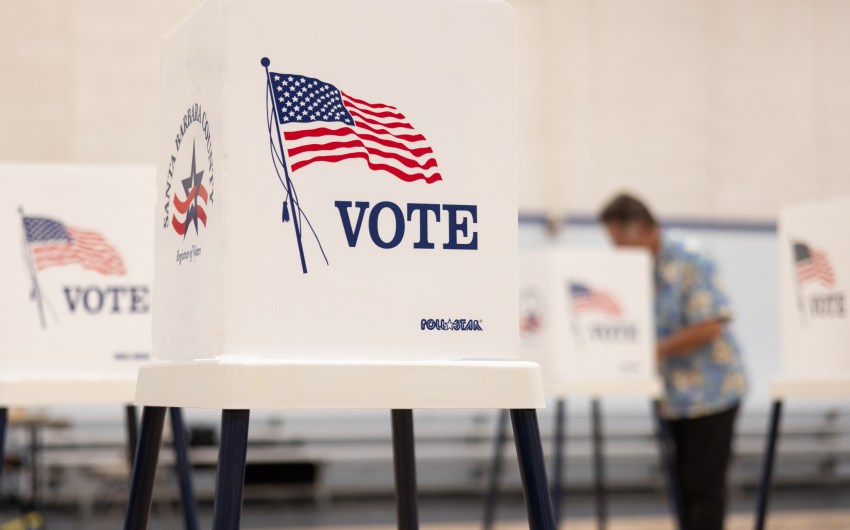
Generally one to bank my ballot early, I vacillated between my choices for governor before casting my vote on the last day of California’s primary. Still, I was glad for an excuse to take my 4-year-old to vote in person. This year of all years, I wanted him to experience the civic spirit of democracy’s Election Day temples in school gyms, public libraries, and rec centers that we so carelessly call polling places.
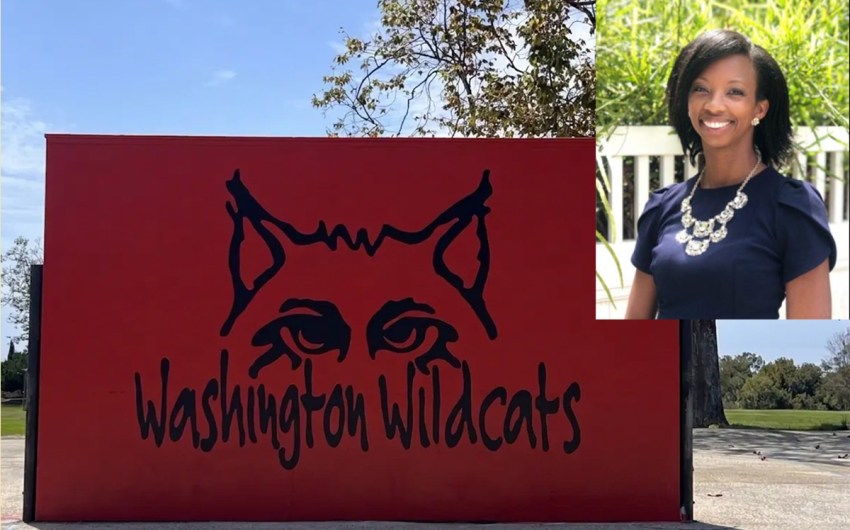
Executive indecision notwithstanding, there was one box I was hell-bent on ticking: Melinda Greene for Santa Barbara County Clerk, Recorder, and Assessor.
I realize my ardor for a rather perfunctory-sounding position requires some explanation. But, I assure you, this office is more important than you may think, no matter where you live.
In addition to determining property values and issuing marriage licenses, the Clerk in Santa Barbara is responsible for administering elections. The office’s outsized importance assumes that much more weight these days when headlines constantly beat the drum over the ongoing assault on democracy through gerrymandering wars, rage-fueled algorithms, and the fire hose of corporate PAC money.
But, if I am to be honest, I might not have paid much attention to the County Clerk election during Red Hat Term I, when their attempts to overthrow democracy seemed rather impersonal, a kind of Mussolini-style, spaghetti-at-the-wall voter suppression. But they made it personal this time around.

At the very moment I filled in Greene’s bubble, balancing my 4-year-old on my hip, the Senate debated the SAVE Act.
Under the guise of “election integrity,” this piece of legislative subterfuge would require millions of women — myself included — who changed their name when they got married to pay for updated IDs. Combined with its in-person registration requirement, the SAVE Act spelled cataclysm for women’s participation in democracy.
And that was precisely the point of the SAVE Act.
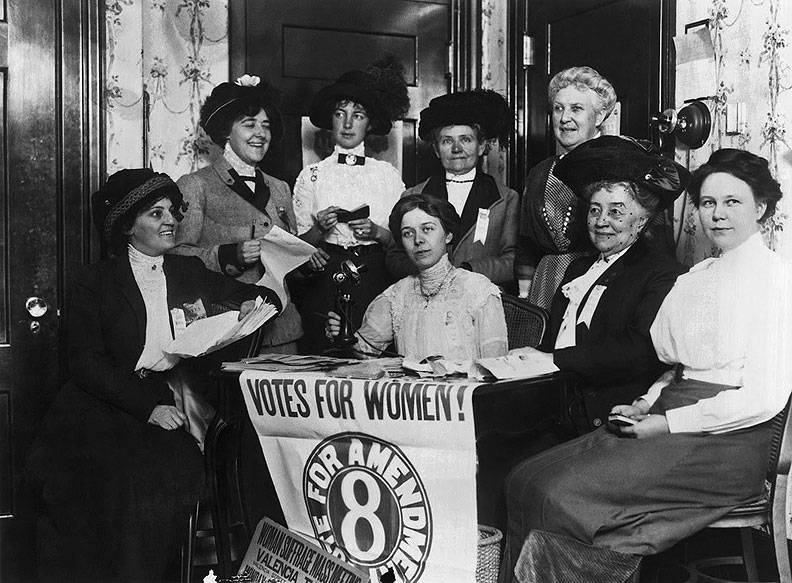
It is also par for the course, historically speaking, since powerful, wealthy men backed by unscrupulous corporations have tried to steal women’s votes since before we even had the right to vote. We needn’t stray outside of the Golden State for proof, where in 1911 the liquor industry attempted to overturn California’s ballot measure on women’s suffrage.
While average anti-suffragists confined themselves to arguing that enfranchisement itself endangered election integrity since women weren’t qualified to have a voice in government, alcohol conglomerates ginned up a scheme to overstuff ballot boxes with “Nay” votes. Wise to their plan, suffragists deployed an army of poll watchers who identified more than 3,000 fraudulent ballots.
Never willing to say die, corporate-owned anti-suffrage newspapers erroneously reported the amendment’s defeat before the votes were counted. But once the ballots were in, women’s suffrage carried the day.
As a women’s historian, I was unsurprised when the Gravitron of American politics started another rotation. Two days after California’s primary polls closed, the Senate finally killed the SAVE Act. Right on cue, the Red Hat in Chief began screaming that California’s election had been rigged — well before the votes had been counted.
By now, I hope it’s clear that undermining elections is a prelude to attempts at depriving women of their vote.
It may appear we’ve gotten nowhere. And yet, Melinda Greene.
Though the Framers were too myopic to imagine that a woman would be elected County Clerk, it is exactly this office that they designed as the last, best defense of democracy. In ceding local elections to municipalities, they made it almost impossible for a would-be king to seize control over the means by which we cast our votes.
More than the capacity required to carry out its duties, Greene — who I’m pleased to announce has won the election — possesses the vision to transform her office into a nexus where Santa Barbarans can come together as citizens, and maybe experience some of that civic spirit usually reserved for polling places.
She pledged to reopen the Santa Maria elections office, restore removed ballot drop boxes, and create social media accounts to quickly disseminate election information. But perhaps most impactful is her plan to combat election lies by creating transparent, public documentation of exactly how votes are counted and accounted for. As she said, “If people could see, step by step, how their ballot is tracked and protected, I think that would go a long way toward rebuilding trust in the process.”
As a CPA with 30 years of experience in the Santa Barbara government, Greene is more than qualified to design this system that, if implemented correctly, could be replicated nationwide.
This is not a flashy ploy to garner attention. It is, at its core, the very definition of local government — and that is exactly what this moment requires. Greene’s grassroots vision for expanded access to and legible transparency of elections is, very simply, the antidote to American authoritarianism and the silver bullet we need to restore democracy. For one, I am not the least surprised that a woman, a mother, and a career civil servant is the one to see a path forward through these dark times.









You must be logged in to post a comment.