
A Journey to Mexico City,
to the World Cup,
and to My Culture
How One Man Stood in the Rain with His Family to
Watch His National Team Make History
By Diego Melgoza | July 9, 2026
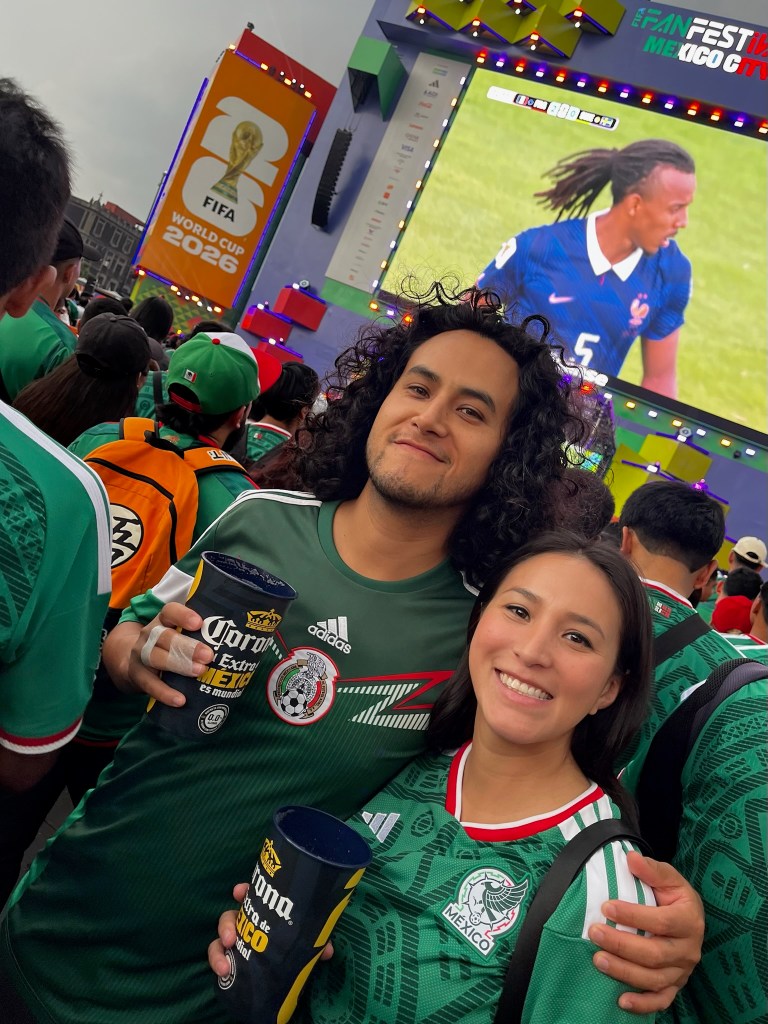
¿Y si vamos a México?
The Mexican fútbol (soccer) national team had just won its second World Cup game against South Korea and was set to play the Czech Republic in its third game after going undefeated in the group stage. At 10 a.m., I was at the offices of the Santa Barbara Independent, where I work as a graphic designer, when my sister suddenly called. “¿Y si vamos a México a presenciar el mundial?” (“What if we go to Mexico to experience the World Cup?”) she asked. Mexico’s unofficial World Cup anthem, “Hasta Que Te Conocí”by Juan Gabriel, began playing in my head, and I knew I had to be in my home country to support this once-in-a-lifetime experience.
The Journey to
Mexico City
¡Mexica al grito de guerra! (Mexican at the cry of war!) When the Mexican National team battles the world to earn glory on Mexican soil, one has to respond to the cry of war. Unfortunately, our battle squad — my sister, her husband, and me — was not able to find a way to get there in time for Mexico’s third group-stage game. However, Mexico’s incredible performance in that game gave the country hope, including my family and me. After Mexico finished the group stage undefeated, my family knew it was time to book our flights to see the round-of-32 knockout-stage game against Ecuador.
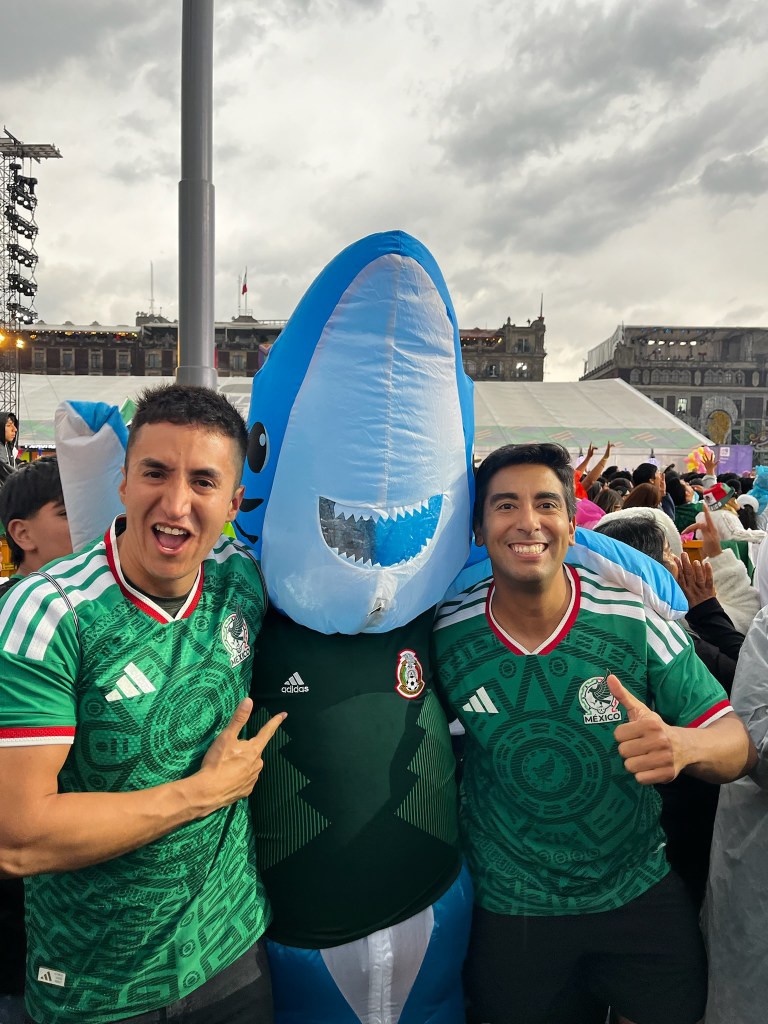
Arriving in Mexico City
The journey to my México lindo y querido (Mexico, beautiful and beloved) was long and filled with anticipation. There was a feeling of nostalgia to see the vastness of my city from up in the air. When I landed at around 6 a.m., the warmth of my people greeted me, and I knew I was home. The rain-season humid soil smelled like Mexico City’s summertime. As I was walking out of the airport, I saw a huge banner with the faces of Mexican players Edson Álvarez, Santiago Giménez, and Raúl Jiménez, all screaming in emotion. Their gigantic faces looked at me as if they were welcoming me to Mexico — the World Cup was in motion!
As I rode through the city in my Uber, I saw people wearing fútbol jerseys and people selling fútbol merchandise from every country competing in the World Cup. “How has the country’s energy been during the games?” I asked my Uber driver. “Kids are missing school,” he told me, “and people are missing work when La Selección [Mexican National Team] plays.” Indeed, Mexico City comes to a stop when La Selección plays, and his words unlocked my first World Cup memory.
It was during the 2002 Korea–Japan FIFA World Cup, and I was in the 2nd grade. I remembered arriving at my school when Mexico was playing Italy at 6 in the morning. My school, like many others throughout Mexico, had installed a giant screen on the school patio to witness history. Start them young, some would say.
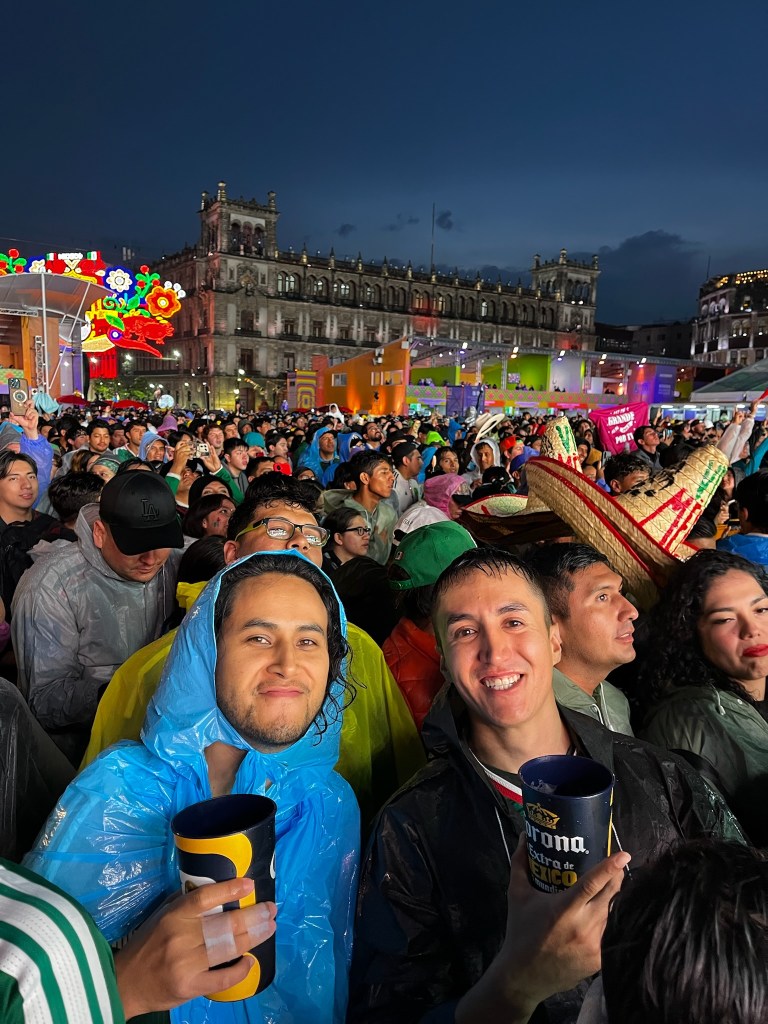
This Mexican fútbol passion rooted in childhood is culturally inherited. This same passion is what inspired my sister, brother-in-law, me, and many other Mexicans living outside Mexico City to make the journey and witness the energy of Mexico as it plays in the Cup. This social phenomenon called the World Cup allows one to feel joy, anger, and sadness, all in a few minutes during one play — the human experience.
Kickoff at El Zócalo
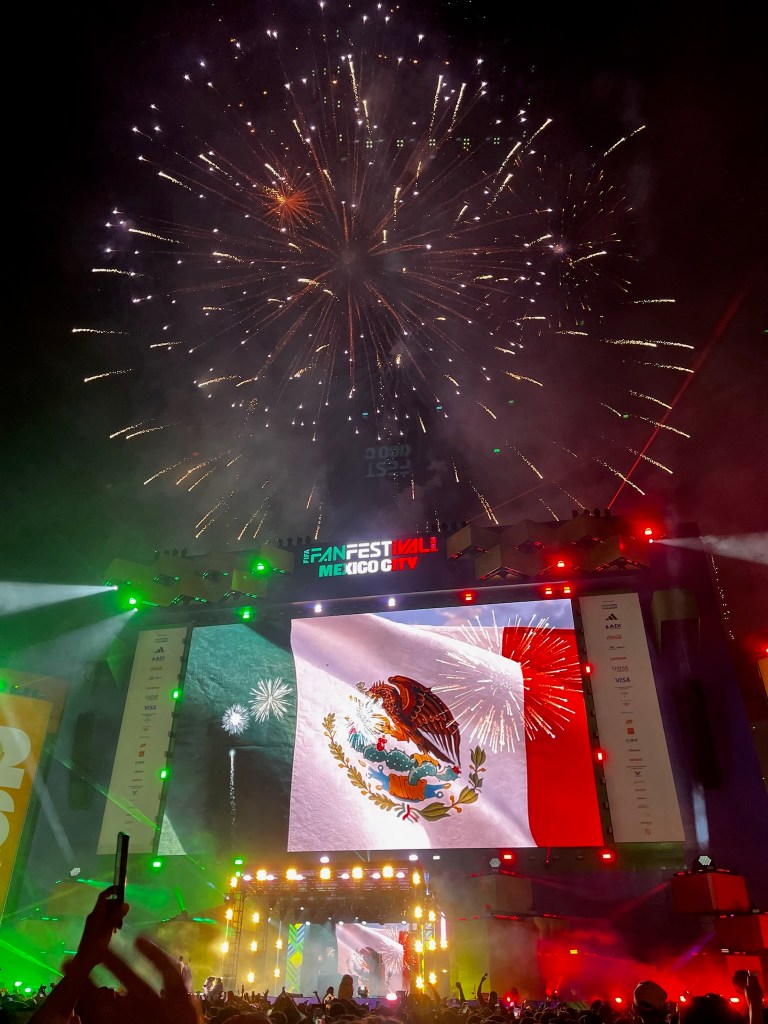
My final squad for the Mexico–Ecuador game included my sister, my brother-in-law, and two of his cousins from Toluca, Mexico. We chose to experience this historic moment together at el Templo Mayor del fútbol FIFA Fan Fest in Zócalo. As we arrived, a sea of people in green Mexico jerseys greeted us, all coming to support El Tri (Mexico’s National Football Team).
The eloteros filled the air with the smell of burning elotes (corn), and despite heavy rain from Tlaloc, the Nahuatl deity of rain and thunder, our spirits remained high. A huge screen was broadcasting the match, and I felt a wave of collective excitement and pride. Like the childhood memories of my first World Cup, this moment united everyone present in a shared cultural experience.
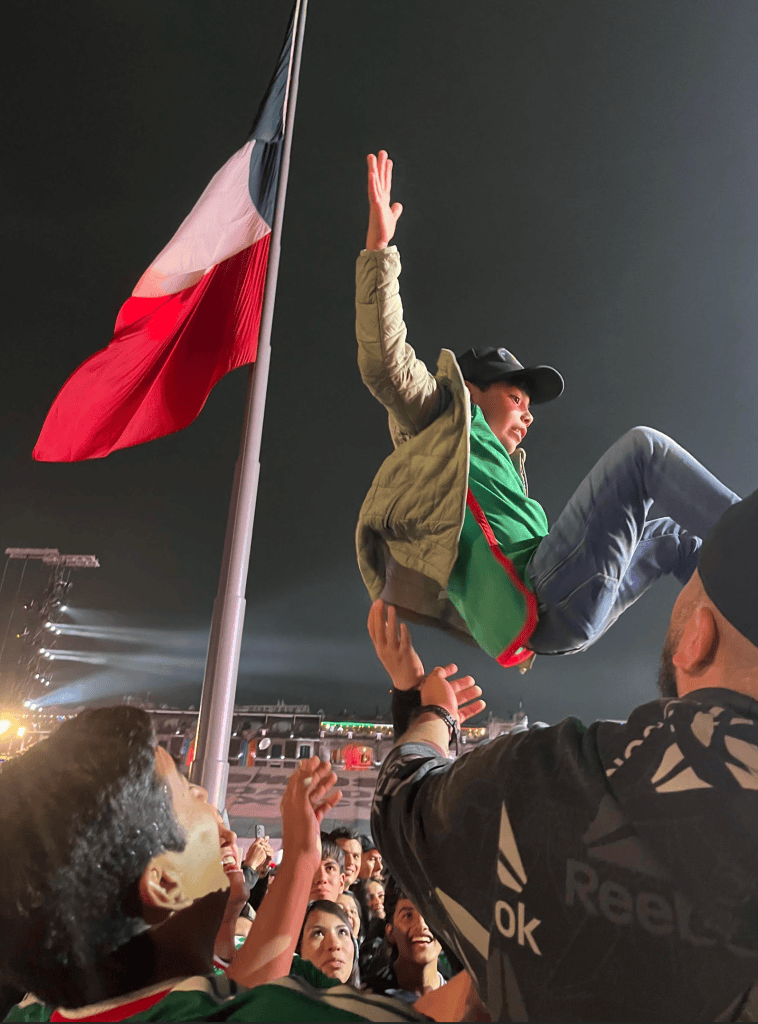
Tlaloc’s heavy thunderstorm delayed the game, and the anticipation only built. My squad and I waited under the rain for the game that would mark Mexico’s destiny. Sound frequencies began coming from the speaker, carrying Mexican ska, and the mosh pit opened up. The disorder and potency of Mexican passion created an atmosphere of madness. People were being tossed in the air while fans screamed, “¡Qiere volar, quiere volar!”(“They want to fly, they want to fly.) I myself flew with them.
After a few hours of pure Mexican insanity, it was finally time for the game against Ecuador. Immediately, all rain-protection gear — umbrellas and raincoats — disappeared. Mexico was ready for battle.
The game began with energy and support from my brothers in green. Everyone was screaming and cheering as Mexico attacked. In the 22nd minute, Mexico scored the first goal! We all lost control and began jumping, resembling heavy raindrops crashing to the ground. El Tri delivered the second winning goal, the referee blew the final whistle, and a green ocean of people began walking outside the Fan Zone on the way to El Ángel de la Independencia to celebrate Mexico’s victory.
El Ángel de la Independencia
When my squad and I arrived, moving through a crowd of thousands at the Sevilla Metro station, El Ángel was filled with an immense crowd all gathering for the same purpose: to celebrate our country advancing in the Cup. People began singing the songs of Mexico, such as “Cielito Lindo.” The celebration was electrifying, and my family and I ended up surrounding a Mexican norteña band playing classic songs that everyone knew the lyrics to. In that moment, I couldn’t help but think about the possibilities of Mexico winning the Cup — ¿Y si si? (What if?)
However, this experience goes beyond winning or losing a trophy. It goes beyond the World Cup. It was a journey, in a way, to reconnect with my Mexican familial and cultural roots. It was just the perfect excuse to amplify the sense of cultural belonging, which, in my opinion, is part of what the World Cup is about. “¿Y si vamos a México?” was never a question; it was a must-do!
Santa Barbara Celebrates the World Cup
Soccer Fans Show Up in Droves to Cheer On Their Teams in World’s Biggest Tournament





You must be logged in to post a comment.