
Getting Older Is Inevitable,
Becoming an Elder Is a Choice
A Hand Gesture I Do Without Thinking,
60 Leaders in a Santa Barbara Workshop,
and What a $10 Encyclopedia Taught Me About the
Difference Between Growing Old and Growing Up
By Mark Sylvester | July 23, 2026
Read more from our 2026 Active Aging Guide here.
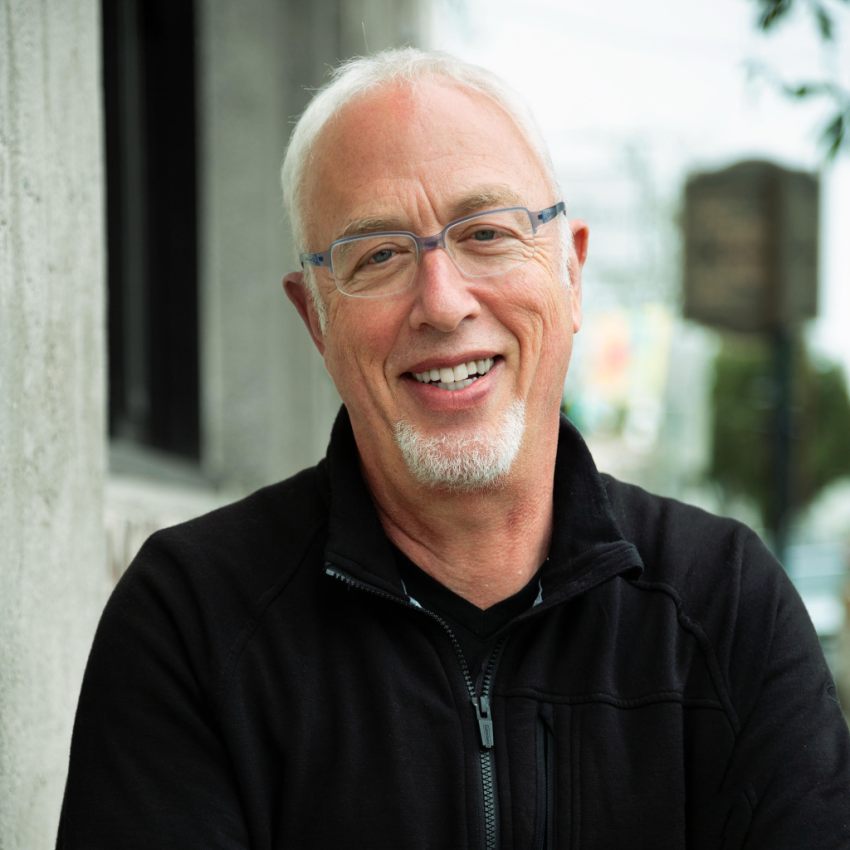
I do this thing with my hands. I don’t know exactly when it started, but it happens naturally now, usually one-on-one, usually when I’ve been talking to someone long enough to know they’re ready to hear it. I slow down. I look at them. I raise my right hand slightly, palm open, and I say: “Some people get older.” Then I bring my left hand up, level with the right, and I say: “And some people get elder.” Then I stop. I let it sit there between us. And I’m an elder.
What happens next is the thing I’ve been thinking about for weeks now. Their eyes don’t move. They hold, right on mine, and I can see something happening behind them, a small recalibration, a quiet sorting. They’ve never heard it put exactly that way. Neither had I, until I found myself saying it. I’m still figuring out what that means.
I get tired. But I’m not tired. If you understand the difference, then you understand everything I’m trying to say.
Sixty Leaders and a Question I Couldn’t Shake
Last week, I helped lead a workshop in Santa Barbara. Coastal Intelligence, the AI think tank I cofounded with Jim Sterne and Mike Wald, ran its first public workshop. Sixty organizational leaders in the morning. Five afternoon classes on everything from AI-accelerated goal mapping to grant writing to brand voice. Mike taught. I moved through the room, chimed in, listened. I was the oldest person there by a meaningful margin, Jim close behind me.
I was comfortable in that role in a way I haven’t always been. There’s something that happens when you stop trying to be the smartest person in the room and start being the most useful one. People came to find me between sessions, and they wanted to talk about what came next for them, not about AI at all: their lives, their organizations, their sense of purpose. After one of those conversations, walking back across the room, I realized I’d just done the hand thing again. And I started wondering, is this true? Or is this just a Mark thing?
The People Who Defaulted Into Stopping
Here’s what I mean by that question. I genuinely worry about imposing a framework on people who’ve made a different choice. Not everyone who is 65 or 70 wants to be an elder. Some people have worked hard for decades and have earned the right to sit quietly on a porch somewhere and let the world spin without them. That’s not a failure. That might be exactly what they want.
But I’ve started to notice something in conversations, a particular quality in certain people that I can only describe as low-grade grief. They say “I used to” a lot. They talk about their work in the past tense, as if a door closed behind them that they didn’t realize was closing. They’re not at peace. They’ve just stopped. The world told them it was time to stop, and they believed it. That’s the person I’m talking about when I do the hand thing. I’m not talking about the person who chose a quiet chapter. I’m talking about the person who defaulted into one.
Because here’s what nobody tells you: after 50, 60 years of living, you have something that cannot be replicated, compressed, or downloaded. You have judgment, not opinions. The ability to recognize a pattern because you’ve lived through 17 versions of it. The capacity to see what matters because you’ve watched the things that don’t matter fall away. That’s not nothing. That is, in fact, everything.
A Swap Meet, $10, and 27 Volumes
I need to tell you about a swap meet and a 1925 World Book Encyclopedia. I was somewhere between 10 and 12. My mother paid something like $10 for 27 volumes, one for every letter of the alphabet, plus an extra. She handed them to me like she was handing me a gift she wasn’t quite sure about. I took them like I’d been waiting for them my whole life. I didn’t read it as a school project, and nobody asked me to. I read it because every page led to the next one, and I couldn’t stop wanting to know what was on the next page.
There was an illustration I still see clearly when I close my eyes: a cutaway drawing of the construction of the New York City subway system, side profile, cross-section, all the layers of the earth and the infrastructure carved through it, with little figures of workers scattered in for scale. I had never been to New York. I had no particular reason to care about subway construction. But I stared at that illustration for a long time, and something in me said: “More of this, please.”
I didn’t have a word for it then. Now I do: curiosity. Not interest, not enthusiasm, but the specific hunger to understand how things work, why they are the way they are, what’s on the next page. That hunger is the reason I dove into technology when technology was new. It’s the reason podcasting caught my attention when it was barely a word. And it’s why I’m here now, at this particular moment in history, completely consumed by artificial intelligence, not as a tool but as a phenomenon, as something that is changing what it means to think.
I get tired. But I’m not tired. If you understand the difference, then you understand everything I’m trying to say.
Curiosity Is the Engine
Here’s what I’ve come to believe about curiosity: it is the engine of elder. You can get older without it. Millions of people do. The calendar turns, the body changes, the career winds down, and somewhere in there, the questions stop — not all at once. It happens gradually, like a radio losing signal. You stop asking “I wonder” and start saying “I suppose.” You stop leaning forward and start settling back.
But if you hold onto the curiosity, if you keep asking what’s on the next page, something different happens. You accumulate. Every year adds a layer of context. Every mistake adds a data point, and the hard things you lived through become stories you can pass to someone younger, standing at the start of their own hard thing. That’s what an elder is, not a mentor. There’s an important difference. A mentor teaches you the specific moves — an elder talks about what matters. A mentor says, “Here’s how you write a grant proposal.” An elder says, “Here’s how you decide which battles to fight.” The elder operates at the level of values and judgment, not tactics and skills. Tactics change. Judgment doesn’t.
The Simple Secrets
I’ll tell you something I say now, when I’m with someone young enough to need to hear it. I once read something I’ve never been able to shake, and I say it slowly, because I want them to have time to take it in. There are very simple secrets to life: have someone to love; have something to do; have something to look forward to. I look at them when I say it. I don’t rush past it. Those three things have held up for me across every decade, through every version of my life. They don’t require money, status, or success. They require intention, and showing up, and a kind of curiosity about what comes next that never quite runs dry.
That’s the elder’s job. Not to have all the answers, but to hold the right questions. Not to tell people what to do, but to point at what matters. It’s to take 60 years of lived experience and distill it down to the things that are true across all the specific details that are different for everyone.
If someone repeats those three things 10 years from now, at a dinner table, to a child, in passing, because they heard them from me, then I will have caused a small ripple in the universe. That’s enough. That’s more than enough.
Mark Sylvester is a co-founder of Coastal Intelligence, an AI think tank and consultancy based in Santa Barbara, and the creator of IdeasOut™, his platform for thought leaders. A version of this article was originally published on Sylvester’s Substack, Through Another Lens.


You must be logged in to post a comment.