
Jazz Dreams Live on State Street
One Couple’s Grand Passion
Is a High Note for Our Town
By Nick Welsh | Photos by Ingrid Bostrom
July 30, 2026
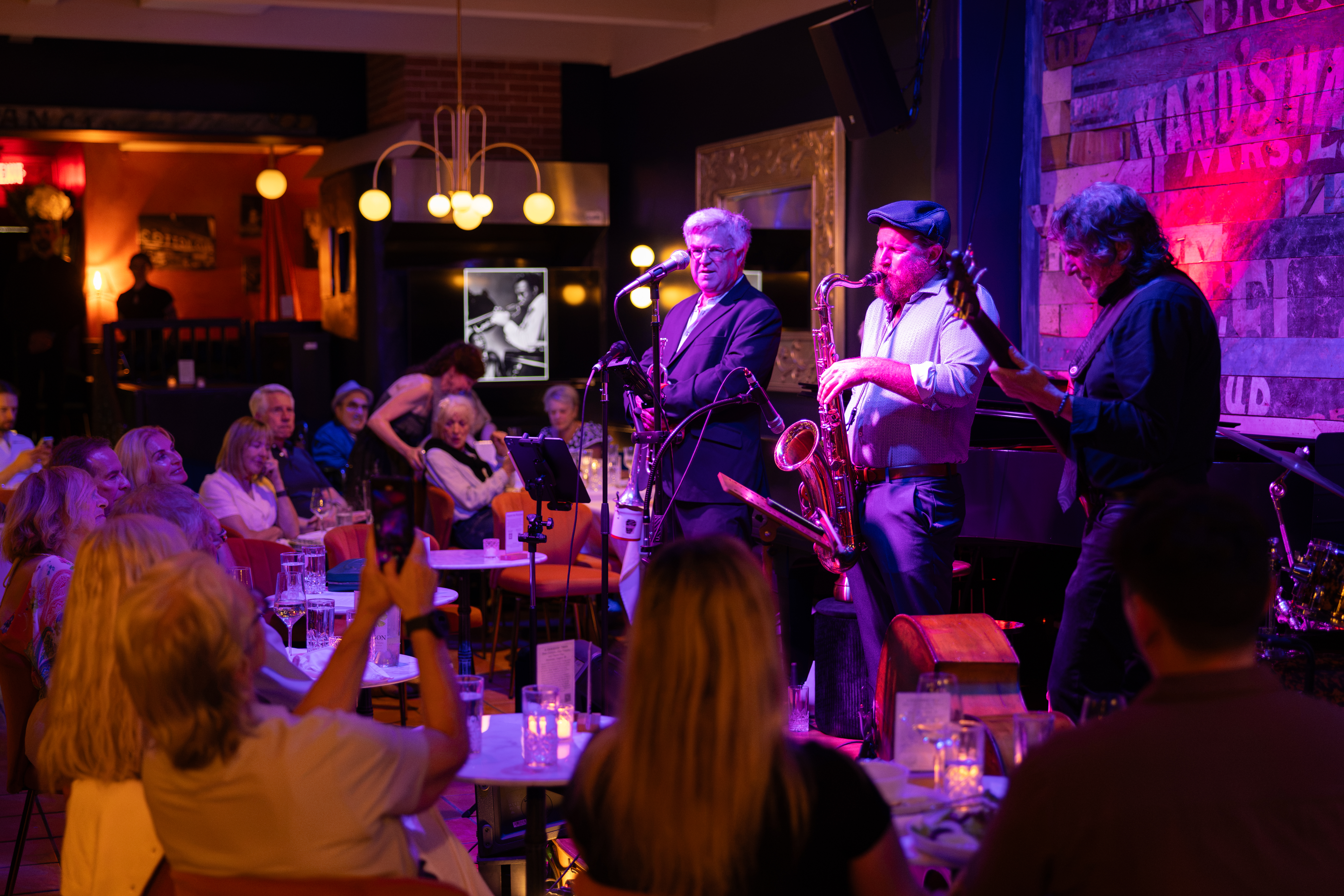
Some piano players, the expression goes, tickle their ivories. With Brian Mann, it’s obvious the ivories are tickling him.
My favorite part is when he hits the tail end of a solo. That’s when Mann starts slouching to the right, getting lower, closer to the keys. He’s on the prowl for exactly the right note. You think of a brown pelican swooping in low over the water in search of prey. Mann has already played the hell out of the piece. Buckets of knuckles have been duly sacrificed. Now, he’s looking to bring it down. Which note? As he deliberates, he slouches lower still. Finally, he pounces. A single high note from the upper register. “Boink!” There’s a hint of vinegar to it. Then another, just a few keys up the food chain. “Ploink!” A whiff of attitude. There’s a joke getting told. But what’s the punchline? These single notes just hang and hover, like snowflakes defying gravity. Where are the spider webs that hold them aloft? Even after all these years, Mann can’t believe it. He starts to grin. From the side, you can see the outlines of his cheeks rise on his face. It’s like watching the sun wake up.
Even before I met Mann — pianist and accordionista — he’d saved my bacon. About 33 years ago, I held the peculiar distinction of being the town’s only accordion whisperer, enabler, and wannabe. Mann was one of about 30 people who responded to a newspaper ad I’d placed, asking, “Are you now or have you ever been an accordion player?” Then as now, I saw the accordion not as an instrument to be scorned, mocked, and derided, but a key common denominator unifying much of the great world music. Celtic, conjunto, Cajun, klezmer, and zydeco, all spring to mind.
For all my accordion enthusiasm, I did not play. So, when all 30 respondents showed up in person, I had no idea what to do next. Mann did. He took over. Not only was he an exceptional player, but he proved an accomplished teacher as well. His father, it turns out, had run an accordion academy out of Santa Ana through whose doors a combined 4,000 students flowed a year. Mann not only taught students how to play there — he taught teachers how to teach.
Among the accordion players who showed up — squeeze boxes in tow and bellows billowing — some had been playing 30 years, others barely three weeks. Every variant and mutant of the instrument was on display. Mann was brisk and no nonsense. He exuded command. But he was also warm and welcoming. When he smiled, you felt it. Immediately, he understood who and what he was working with. Just as fast, he figured out how to blend our discordant mess of incompatible skills into a coherent musical mass.
What sparked this gathering was that year’s Solstice Parade up State Street. Mann taught everyone to play “Proud Mary” and the impossible-to-pronounce “Thus Spake Zarathustra.” Some players rode the float up State Street; others walked. Mann walked and played, using his accordion as a conductor uses a baton. I pushed.
No one would be quitting their day job, but the march was a success. Enough so that several players were moved to continue the accordion march on their own for a few more years. Mann went back to making music. Lots of it. He played accordion, piano, and keyboards all over town. He composed TV commercial jingles for cars and trucks.
Now, Mann is busy trying to save State Street’s bacon, though he would never describe it in such heroically grandiose terms. Joining him in this endeavor is Jenna Berg, his wife and get-shit-done co-conspirator in raising a seriously joyful ruckus downtown. At a time when city planners, urban agitators, and the usual multitude of downtown stakeholders are urgently seeking new ways to enliven State Street, the magic-word marching order has been a unanimous “Activate!” They got the memo. Just a few months ago, they opened a bona-fide jazz club and restaurant, located on the 1200 block, cheek-by-synergistic-jowl to their neighbor The Granada Theatre.
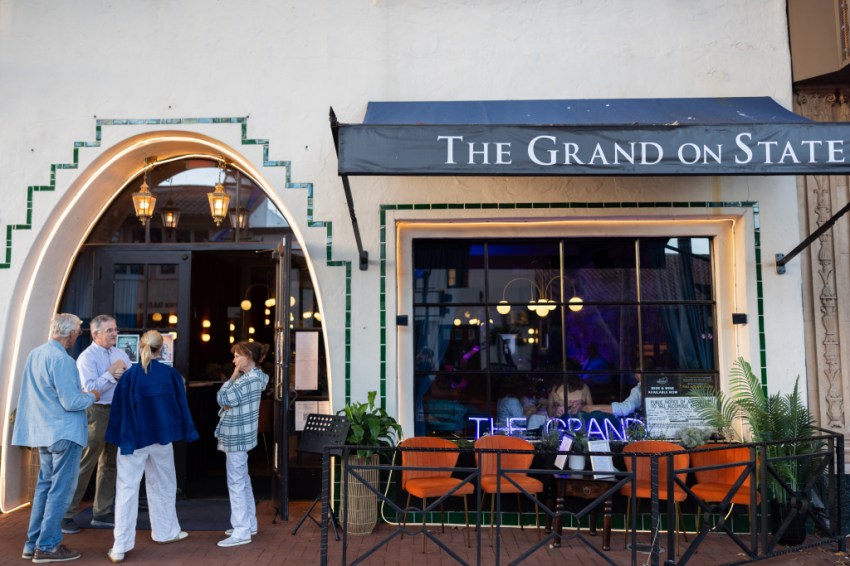
The space is not all that big. “Intimate” is the adjective that comes to mind. Berg and Mann call it “The Grand on State,” a name partially inspired by the new Steinway Grand that provides the musical hearth for the thriving jazz destination they are working to create.
Initial indications are encouraging. The music is for real. The food is delicious. The vibe is lively — unexpectedly romantic, even. The Grand is a great date night, first or otherwise. While the Silver Tsunami dominates so many S.B. music venues, the Grand manages to draw from a surprisingly mixed generational pool that seems to defy gravity. While the prices are reasonable, they’re not exactly cheap. It’s a $25 cover to get in the door; it’s $35 to get a reservation for a table, maybe more depending on the performer. A night out adds up. But as Berg and Mann stress, the musicians need to get paid. And, they add, concert tickets anywhere else will cost more. But anywhere else, they add, won’t be nearly as, well, intimate.
Or, as Berg likes to frame it. “The Grand is not a show. It’s an event. It’s a production. It’s a performance. It’s an experience.”
Admittedly, that sounds like some pretty hype. It also happens to be accurate.
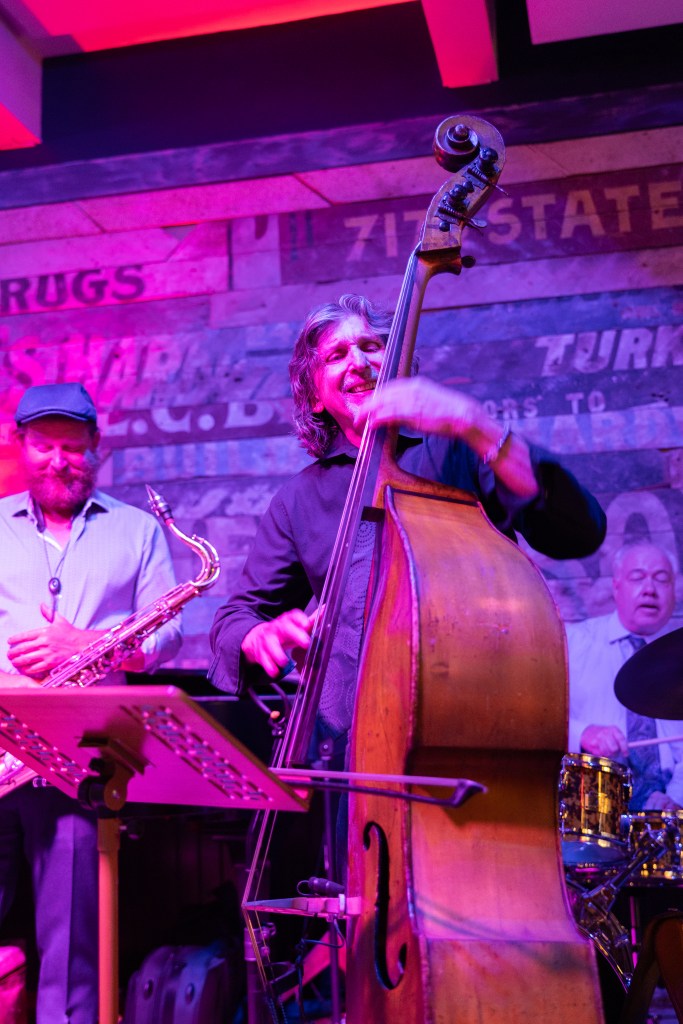
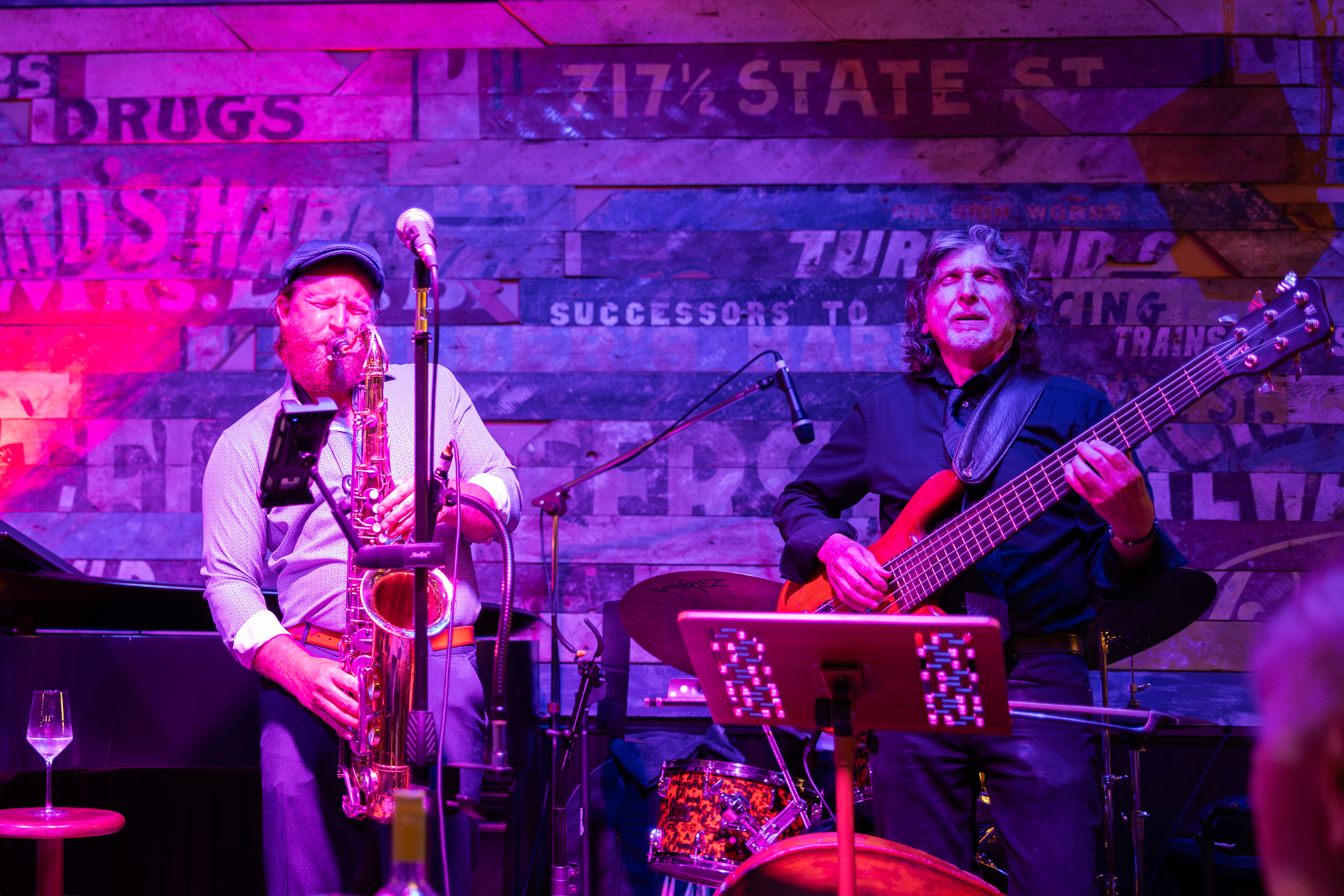
Mann functions as creative nucleus to the club’s house band, The Grand Band. The lineup tends to shift from night to night, but typically it includes Randy Tico on bass, a forever firmament is Santa Barbara’s musical constellation. An eighth-generation Santa Barbaran, Tico is the first musician Mann met when he moved to Santa Barbara in 1992. They’ve been playing together ever since. Singer Leigh Vance has also been performing with Mann and Tico seemingly since forever, and is a key part of the mix. Vance practically grew up on stage — cutting her teeth in Vegas with her two sisters — and can shift stylistic gears with ease and authority. Colin Richardson, a bee whisperer and honey maker by day, plays a creamy West Coast sax and sings in a Chet Bakerish way; James Mooy provides both heat and light on the trumpet. And Dick Weller demonstrates how to swing without thrashing on the drums.
“I get to play with and listen to all these great musicians I love,” Mann said. “What could be cooler than that?”
The club name also hints at a high-toned, more formal vibe they hope to encourage. It’s a place that invites guests to dress up. Women do. On summer nights, there’s no shortage of summer dresses, long and flowing or tight and clingy. Men, well, they dress how men dress. When playing, Mann wears a bow tie and tuxedo jacket with black sneakers and black Levis that bunch out like accordion bellows around the ankles; he moves a little like Charlie Chaplin. Also sporting the more formal attire is Grand Band bassist Tico.
Theirs is not the tinkle-tinkle sound common to some piano bars. There’s too much meat on the bone. The Grand Band offers classic, straight-ahead American Songbook jazz from the late 1950s and 1960s when mad improvisers ruled the roost, but melody lines and precise arrangements were not forsaken. It’s the sort of jazz that alternates from lush and breathy to wet and growly, where drummers swing with brushes and trumpet players blow with mutes. It’s a tight, intimate space. You can almost hear the piano sigh. It’s about the tender suspense of notes not played. It’s way too small and tight for soul-searching, hair-on-fire, free-form, ecstatic, screech-honk horn blowing.
But make no mistake, the Grand Band can kick.
There’s more to the Grand than the house band. It also offers a restaurant presided over by a quietly ass-kicking French master chef, Marguerite Cerredo. They gave her the freedom to create her own menu. “I like the music. I like the vibe. I can tell they’re good people,” Cerredo said. “They’re trying to create memories. That’s what the food is for. To have an experience.” Cerredo grew up in a family that sang all the time. “That’s how we expressed our emotions. We didn’t talk about them.” Every once in a while — about 10 times now — Cerredo gets to come out of the kitchen, step up to the mic and belt out “La Vie en Rose” with much of the same sultry gravel as Édith Piaf.
The Grand is also all about snagging as many hot-chopped touring musicians on their way from Los Angeles to San Francisco. Or even some of the ones living closer to home, such as high-octane sax player Tom Scott — better known for his work with Joni Mitchell — who happens to live in Santa Paula. Coming soon are drummers Peter Erskine and Ernie Watts, big names in the jazz universe.
“If you create an environment and an ambience where audiences really listen, then musicians will want to come,” said Tico. “And our audiences come to really listen.”
It’s a real jazz club.
That means unscripted things happen there. Like the time some hotshot saxophone gunslinger just happened to be hanging by the front door in the middle of a set and brought his horn along. Jim Buckley, the club’s volunteer maître d’ and jack of all trades, pounced, grabbed the guy, brought him onstage, and he proceeded to burn the house down. Or when, after a night of Mahler at the Granada, some Santa Barbara Symphony musicians showed up, their trumpets in tow, and jammed. Or some genius 17-year-old violin prodigy from the Music Academy let everyone know he was also a top-flight jazz piano player.
Surprise is always a possibility.
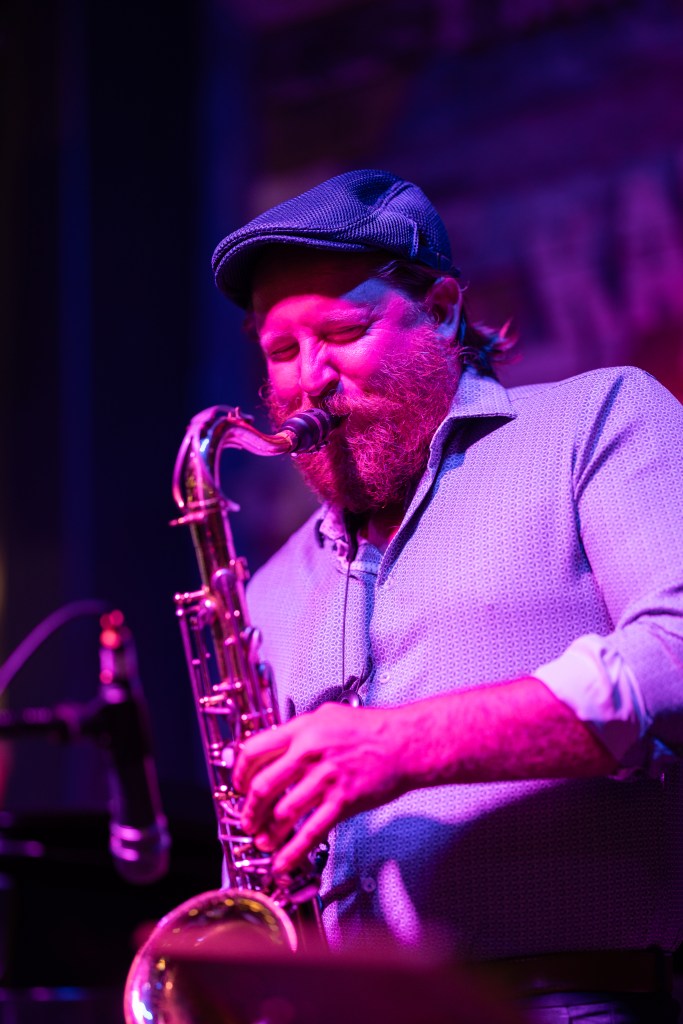
Buckley — in real life a writer and longtime voice of the Santa Barbara Foresters — put it, “There’s a club like this everywhere in the country. For 30 years, we haven’t had one. Now we do.”
The only thing missing, really, is a liquor license. What? Jazz without martinis? The liquor license is reportedly in the works. In the meantime, beer, wine, and champagne will have to suffice.
Other clubs have offered safe haven to jazz performers over the years and still do: SOhO, Roy, the all-too-intermittent Piano Kitchen, the seemingly always open Red Piano, the Lion’s Tale in the Montecito Inn, to name a few. But these are not exclusively jazz spots. Back in the 1960s, Santa Barbara boasted a full-on jazz club called the Spigot on upper De la Vina, frequented by the luminous likes of Louis Armstrong, then as close to international jazz royalty as existed. For the glorious blink of an eye, Santa Barbara had a downtown club called Jazz Hall, by Victoria and Anacapa, but it was too much a labor of love to survive the shark-infested waters of downtown commerce.
For years, Mann and Tico, along with vocalist Vance, enjoyed a steady perch playing regular gigs at El Encanto. But when El Encanto sold a few years back, the new owners decided to move in a different direction that did not include them.
And that’s how this whole thing started.
Enter Jenna Berg.
Berg is a human whirlwind who wears red lipstick and favors cowboy boots. At a recent show, Mann introduced Berg — who prowls the room all night long — likening her energy output to that of a nuclear power plant. This being Santa Barbara, someone objected she should be solar-powered instead. Mann demurred. “That would require 50,000 square miles of solar panels.” It was only a slight exaggeration.
A native of Minnesota, the daughter of an IBM executive, Berg earned a philosophy PhD in electrical engineering from Duke and secured a fellowship from the Kellogg Foundation, which pushed her to dream bigger than she imagined and allowed her to spend several years hunkered down in the same Mexican village from which the Zapatistas were waging armed resistance against the Mexican government. A social justice advocate affiliated with Witness for Peace, Berg was right where she wanted to be. Among her many roles was to teach women of the village the rhythm method as a form of family planning. Ironically, that’s when she got pregnant with the first of three children, all now thriving adults. She spent time in Nicaragua back when dictator Daniel Ortega was still admired by the progressive left and it was the time of “Small Is Beautiful and Appropriate Technology,” and Berg emerged as a tech geek working for an 80-acre farm in North Carolina, doing pioneering research on water efficiency techniques.
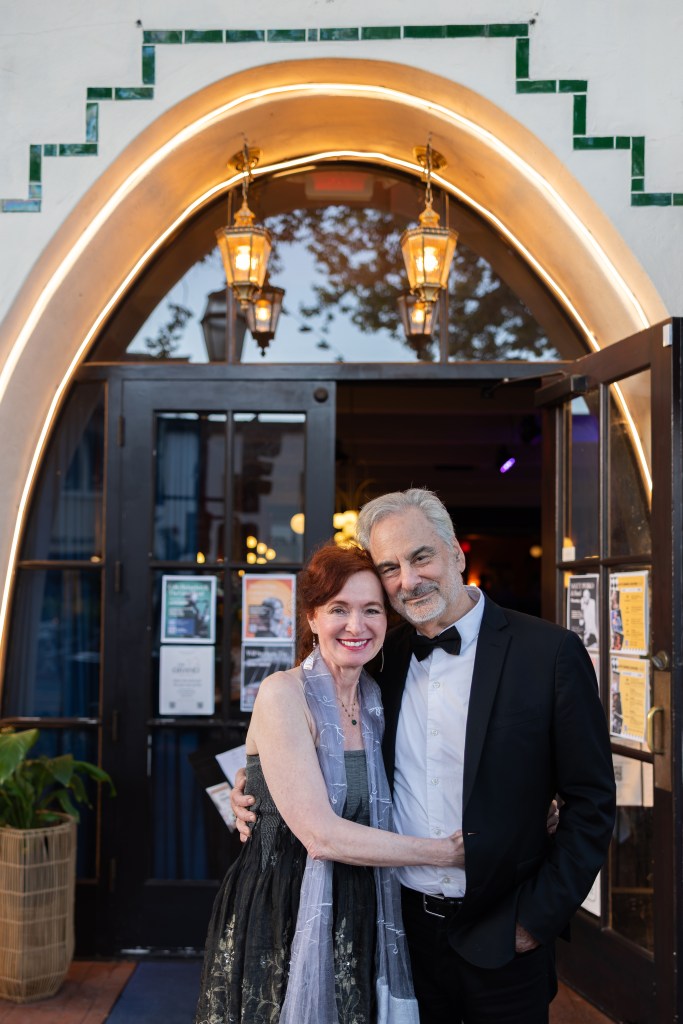
Entrepreneurial, adventurous, and headstrong, Berg has never been one to paint within the lines. She has been in pursuit, she said, “of a life that sings.” That doesn’t necessarily make it an easy life. Just a lived one.
In the early ’90s, Berg packed her kids in the family car and drove from North Carolina on a meandering cross-country trek in search of the future. She would find it in Santa Barbara when her car happened to get stuck by Alice Keck Park Memorial Garden. She laughs telling this — who didn’t move here only after their car broke down?
After arriving, Berg managed to land a high-level government job with the County of Santa Barbara. A quick study with a techno turn of mind, she applied her ingenuity and acumen to concocting a job application platform that allowed government agencies to post job openings, collect applications, partially vet the applicants, and allow applicants to track where they were in the process. This was in the early days of the internet. Harnessing the world wide web to process massive dumps of critical personnel data was not really on anyone’s radar — it got on Berg’s. The sailing was not always smooth, but she figured it out. Berg would eventually start a brand-new business of her own — JobAps. That was in 1998. With government perhaps the single biggest employment sector in the nation — at last count 23 million people work public sector jobs — the demand for such services would seem to be perpetually unquenchable. Financially, it’s been a grand slam.
Enter Brian Mann.
It’s as if nature and nurture ganged up on Brian Mann to make sure he’d turn into a great musician. He had no other choice. At age 4, Mann began taking accordion lessons from his father, Milton Mann, himself a former child accordion prodigy. Mann’s father, a child of the Depression and of Jewish immigrant parents from Eastern Europe, had his own radio show by age 15, The Jewish Hour. Later, this Jewish child of immigrants would cut records and play with some of the most popular cowboy swing bands in the country. Hollywood heartthrob Errol Flynn would hire Mann’s father to play his private parties. During World War II, he was stationed at El Toro military base in Orange County, where he found himself teaching other servicemen how to play music. When the war was over, Milton Mann stopped playing and took up teaching. Big time. He opened what would become one of the biggest accordion schools in the country. With 21 studios, the school taught as many as 4,000 students a year. The money was in the lessons. The bigger money was in accordion sales. Milton Mann did it all, working six days a week, maybe seven.
At age 3, Mann remembers his father prodding him repeatedly to properly pronounce the word “harmonica” — an instrument which Mann was then playing with happy abandon. Mann struggled to say it right. “I got impatient. He got impatient,” Mann recalled. “I finally said, ‘I can’t say it, but I can play it,’ ” Mann said. “That became my life motto.”
By 5, Mann was taking piano lessons. By age 12, he was made part of the family business. “I’d go door to door, knocking to see if anyone was home and asking if there were any schoolchildren I could talk to.” Mostly, he’d be greeted with blank stares. If interest was expressed, Mann would make a pitch highlighting the benefits of a music education. “I was canvassing for prospects,” he said. It was thankless work.
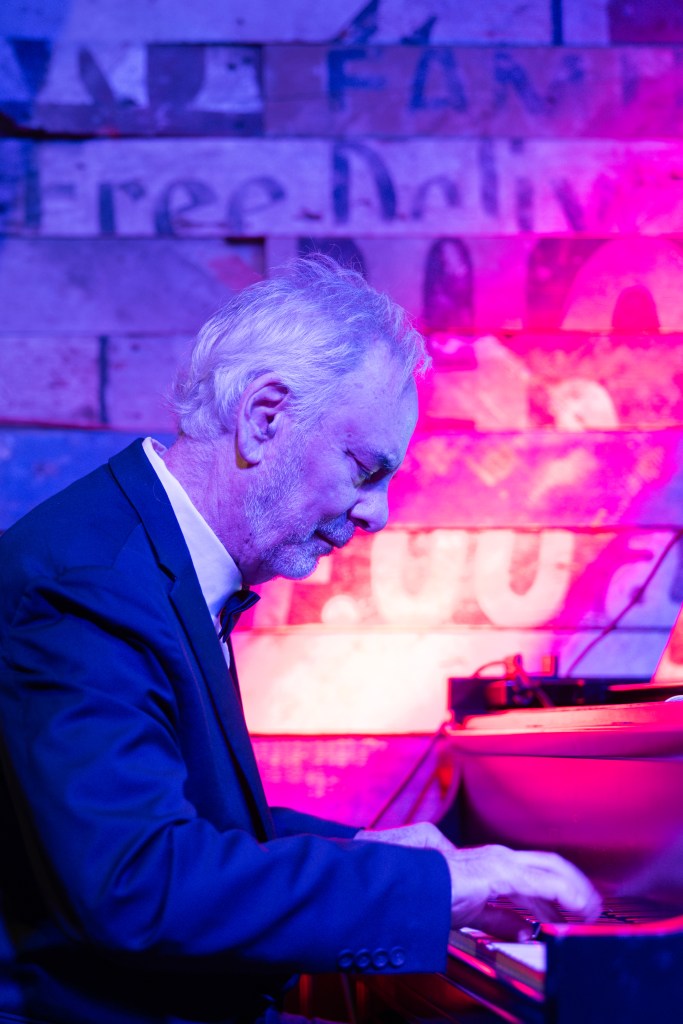
By 15, he was playing parties and gigging; in high school; he had a couple of bands. By 16, he was playing in a Latin jazz band and performing in bars. By 17, Mann was teaching accordion students at his father’s school. Not long after, he was teaching the teachers. “My dad gave me these jobs. It was good,” he said. “I loved watching him work, how hard he worked lifting all those accordions.”
It was around this time that Mann first got bit by the jazz bug in the form of famed piano virtuoso Oscar Peterson.
Mann attended USC for a year, then jumped to Cal State Fullerton. He studied music. His big break came playing in teen mega heartthrob Bobby Sherman’s band. Girls went berserk at his concerts, nearly dragging Sherman and his band members offstage. For Mann, it was nutty and fun.
He moved on to play with Kenny Loggins. That was in 1977. For four years, he exploited the sonic possibilities offered by no fewer than seven keyboards on behalf of Loggins, now a Santa Barbara mainstay. For a while, the Loggins band fronted for Fleetwood Mac, so Mann got to hang out and chew the fat with Stevie Nicks. It was a heady existence. Later, it would be Michael McDonald. Then David Lee Roth, and for six years, he toured with jazz-fusion-infused Larry Carlton.
All that touring took a toll on the family. In 1986, Mann pulled the plug on the road work. He did studio work instead. He started the Jingle Company, composing and producing ad music and songs for kids’ shows such as Jay Jay the Jet Plane. “I had to stop thinking and acting like an instrumentalist and start thinking like a composer and writer,” he said. He found himself writing a lot of car commercials. That may not have been his thing, but it kept him off the road and home with his two kids.
In 1992, he moved to Santa Barbara, where he met Leslie Boyd. They were married for 34 years, until her death from cancer.
Berg and Mann met courtesy of happenstance and synchronicity. Jenna was one of the founding members of the Lights Up! teen theater company. One of her kids happened to be involved with a theatrical production that Kenny Loggins also happened to be involved with. She was told her daughter might benefit from some piano lessons. Kenny Loggins happened to know a great pianist and teacher — Brian Mann.
The rest, as they say, is history. The two are now approaching their third wedding anniversary.
The lightbulb moment for what became the Grand started for Berg not long after El Encanto pulled the plug on Tico, Mann, and Vance. Yes, they found other gigs to play. But there was no grand piano. “Brian had to schlep hundreds of pounds of equipment in and out and up and down,” she lamented. “And he’s playing an electric keyboard. That’s fine, but it’s electric. It’s not a real piano.”
Loose talk began to bubble up about finding a place of their own. Talk turned into dreams. Dreams turned into action. Buckley told them all they were crazy. “Fortunately, they didn’t listen to me,” he said. If Berg was on board, she said she insisted on three-year commitments from each of the other founding five — Berg, Mann, Tico, Vance, and Richardson. All had experience in fomenting a more expansive sense of Santa Barbara arts community. All saw the Grand in such terms. “I see this as a cultural survival center,” said Tico, almost as much a community arts ambassador as he is a musician. All five said they were committed. As far as we know there, was no cutting of hands and exchanging of blood. But all five declared they were all in.
Then they had to find a property. One next door to the Arlington Theatre looked enticing, but it turns out the bathroom wasn’t ADA-compliant. They stumbled onto the current site — happily shoehorned in between the Granada and a new art gallery. Yes, five restaurants have come and gone in recent years: Namaste, Bedda Mia, Tupelo Junction, Mollie’s, and Marcello Ristorante. Alarmingly, by Santa Barbara standards, that’s not all that alarming. It’s a tough business.
“We know we knew nothing going into this,” said Mann. “It’s going to take money and time to do the learning. But Jenna is a great learner. She really knows how to learn.” She’s also got serious business chops, and resources, and ideas.
Already there’s talk about selling sustaining memberships. Many people have already come forward wanting to help. The club has about 15 volunteers, Buckley being the most obvious. There’s talk of opening up for brunch. Or hosting private events. Maybe one day, Berg ruminated, there might be philanthropic support for keeping cultural venues, such as a jazz club, open on State Street.
On paper, it seems like a heavy lift, especially late in life. Why not just go to Europe and cruise down the road with your elbows out the window? Jenna Berg’s answer? That isn’t “a life that sings.” The club is. She’d rather try her hand at magic, she said. “Do you know what the definition of magic is? It’s working your ass off and making it look easy.”
The Grand on State Visiting Artist Series
By Jim Buckley
The Grand on State has been mostly featuring amazing local artists, with a few special guests, but a packed house on July 22 for acclaimed vocalist Roberta Gambarini signaled the start of The Grand’s Visiting Artist series. In the months ahead, jazz fans have a lot more to look forward to. Ernie Watts (Tonight Show Band, Charlie Haden) will be leading a quintet at 7 p.m. on August 8, featuring Jeff Elliott on trumpet, Randy Tico on bass, Tom Gastineau on piano, and Dick Weller on drums. On August 29, drummer Peter Erskine, a Grammy winner and Modern Drummer Hall of Fame member (jazzbos will remember his work with Weather Report and on more than 50 albums with 40 years of jazz greats) heads a trio that includes pianist Alan Pasqua and bassist Darek Olés. On September 9, an incredible treat: Trumpet master Terell Stafford arrives from New York City to perform a tribute to Miles Davis. McCoy Tyner calls Stafford “one of the great trumpet players of our time.” Pianist Tamir Hendelman leads a trio performing the music of the great Bill Evans on October 16. More performances are coming in November and December. Watch the Visiting Artists section on The Grand’s website for more information. The Grand is currently open Thursday-Saturday evenings, see thegrandonstate.com.




You must be logged in to post a comment.