
A Different Odyssey in the Making
Documentary Highlights the Odyssey to
Break Free from the Criminal Justice System
By Izadora Hamm | Photos by Clarissa Koenig
August 19, 2026
Where do you go when there’s no place to call home — or when home isn’t necessarily a place you want to return to?
What, for that matter, is considered home at all?
For more than a decade, those questions have followed Michael Morgan.
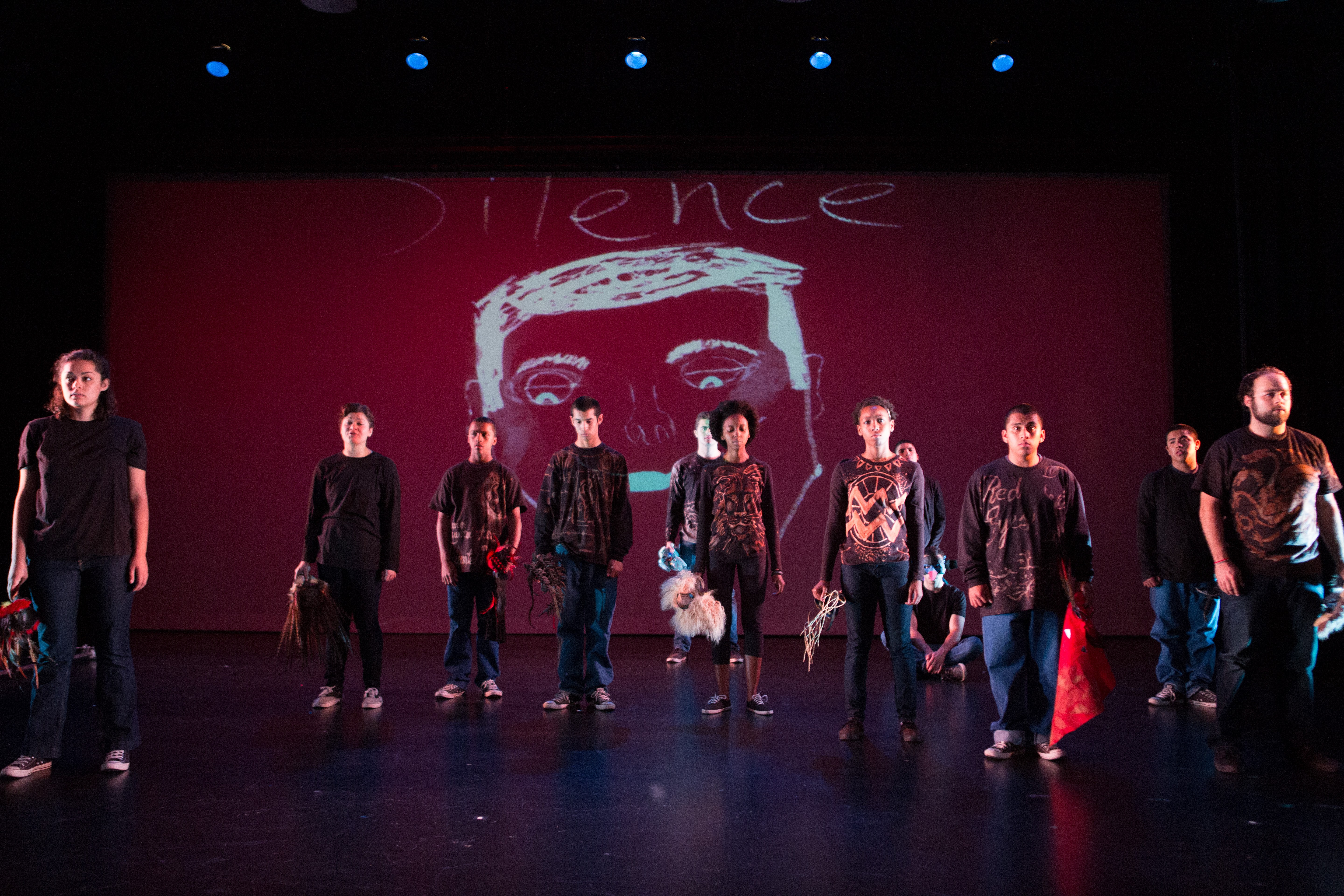
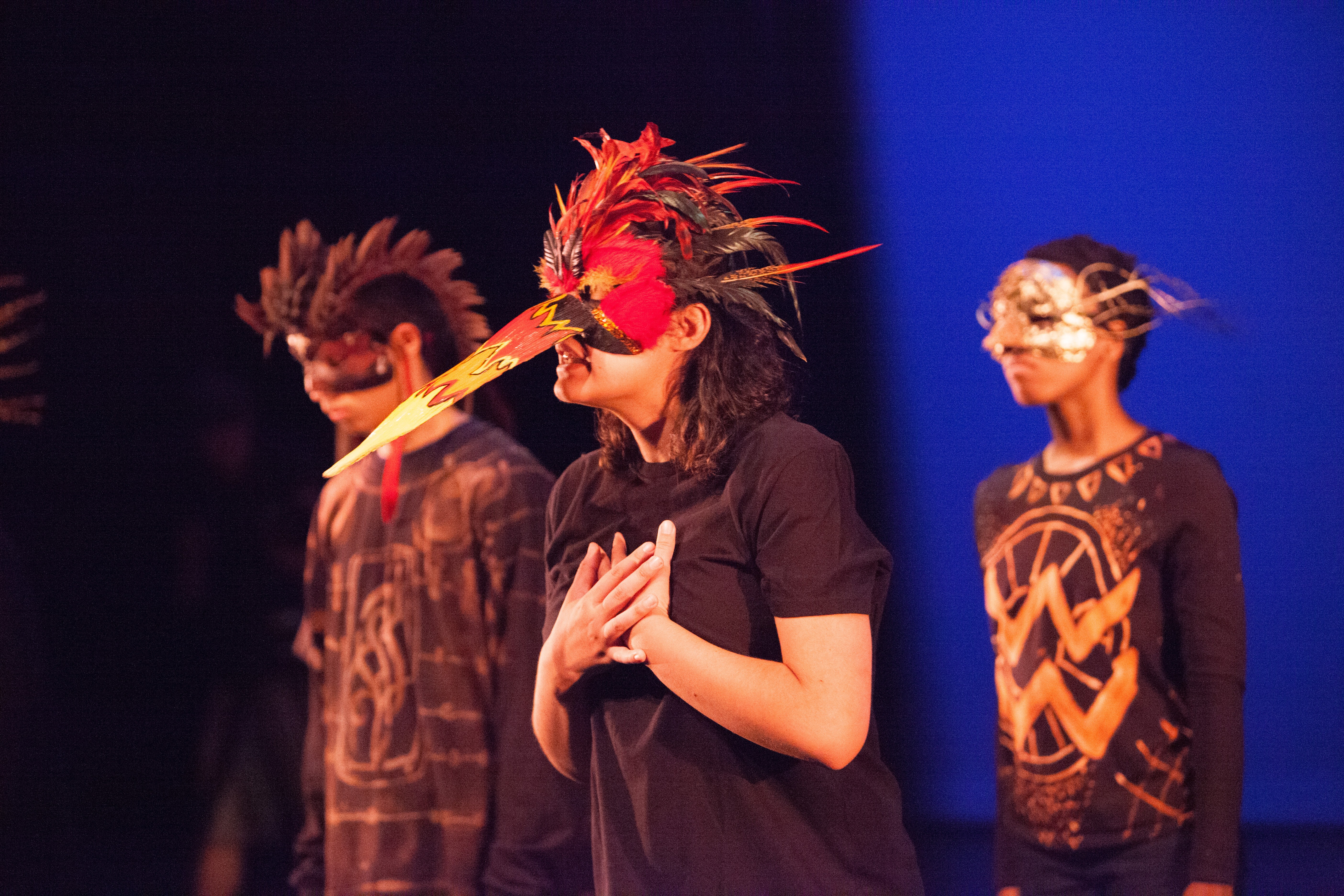
A UC Santa Barbara professor of voice and speech, Morgan has been bringing together UCSB students and incarcerated youth to create and perform their own adaptation of Homer’s Odyssey.
The Odyssey Project began in 2011, when Morgan partnered with Los Prietos Boys Camp, a minimum-security juvenile detention facility, giving the theater program a chance to connect with young boys who had been trying to outrun fate.
At the center of Homer’s timeless epic is Odysseus, a Greek hero returning home after the Trojan War. His grueling journey to Ithaca stretches on for years as he faces storms, monsters, temptation, and other obstacles that repeatedly keep him from reaching his family in a classic story that also inspired Christopher Nolan’s summer blockbuster film The Odyssey.
For Morgan, that struggle to return home offered a clear parallel to the young men he was working with — individuals who would eventually leave detention and have to find their way back into their communities or build lives for themselves elsewhere.
“They’re just kids. They all have potential; they have dreams; they have abilities,” said Morgan.
When filmmaker and producer Mark Manning saw Morgan’s work, he was fascinated by the idea of using theater as an intervention tool — but it was the young men themselves who ultimately drew him in.
“We started filming the theater program in 2014,” Manning said. “His technique and way with the boys really impressed me and I started to see a really powerful story unfolding.”

Now, more than a decade later, four of the young men who participated in the program are at the center of a documentary Manning and Morgan have been developing since those first days of filming. Over years of rehearsals and a performance at Center Stage Theater, again and again, they saw evidence of young people with curiosity, dreams, childlike interests, and an appetite to do something different with their lives.
The problem, they came to believe, was not a lack of potential. It was the weight of the circumstances surrounding them and the feeling that their identities had already been written for them: How could they be anything different?
The gravitational pull of drugs, racism, gangs, family expectations, and the loyalty to your home is a strong one. Theater became a way to interrupt that narrative — even temporarily — and allow the young men to see themselves and one another differently, clearly, honestly.
During the 2014 production that would eventually become part of the documentary, one of the young men brought contraband onto the UCSB campus. It was a painful reminder of the circumstances the program was up against, and of how difficult it could be to break patterns that followed the young men beyond the walls of detention.
When no one came forward to take responsibility, the entire project was nearly shut down. Eventually, someone stepped in, and the group was able to move forward.
For Morgan, reconvening brought a renewed sense of purpose — they had made it through another obstacle.
The experience itself began to feel like an odyssey. “Clearly, I had no control over what I was dealing with — the prison officials could have just cut it dead,” Morgan said. “When we got back together, there was a sense of renewal, refreshment, and the energy was so high, so strong.”
They would face another disruption when an important member left after being released from custody, forcing them to scramble to find someone to replace him.
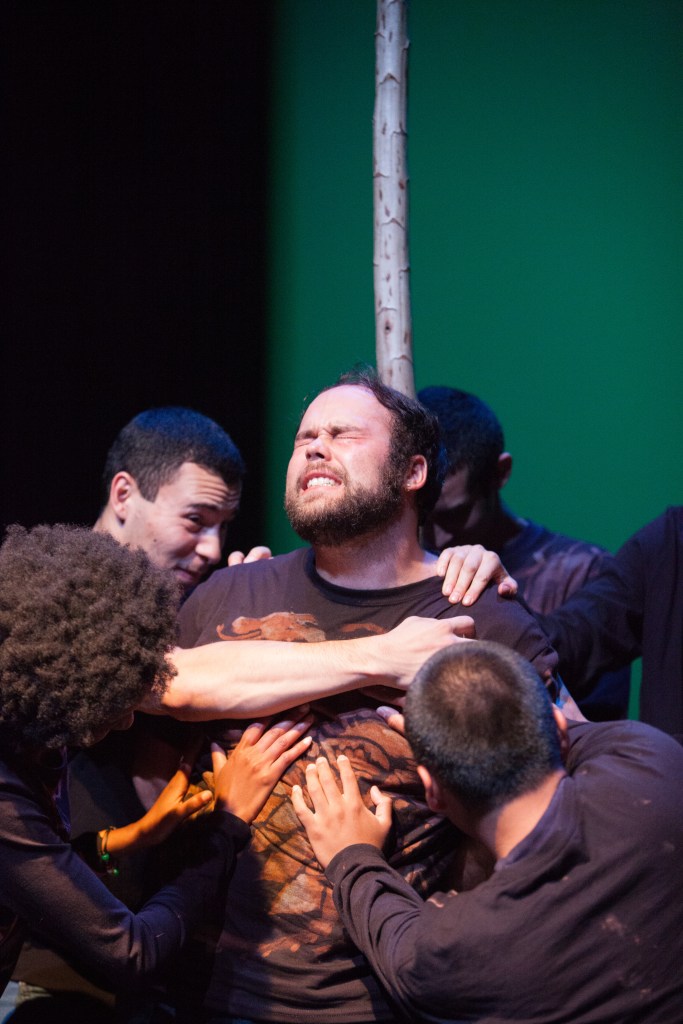
The young man who stepped into his shoes was soft-spoken and uncertain about whether he could carry the role, but watching him take on the part became another memorable chapter.
However, that awareness of a lack of control became part of a larger question: What happens when the systems shaping a young person’s future are forces that they have little power to change?
The documentary eventually widens its lens beyond the theater program and toward the criminal justice system itself. That shift becomes particularly personal through the story of the young man who stepped into the role of Odysseus.
He would eventually face an 18-year mandatory prison sentence after being charged with multiple felonies, a punishment that became a central focus of the film. The documentary used his case as an examination of California’s Racial Justice Act (RJA), which was designed to give defendants a way to challenge convictions or sentences when racial bias can be shown in their arrest, trial, or sentencing.
A local campaign rallied around the young man’s case, and renowned defense attorney Robert Sanger, who previously represented Michael Jackson, became involved in the effort. Attorneys studied sentencing disparities in Santa Barbara County and filed a motion under the RJA. Despite the mandatory nature of the young man’s sentence, the effort ultimately helped reduce his prison term from 18 years to 17 months.
“Our community saved his life,” Manning said.
Four years after its passage, fewer than 12 RJA cases have been successful, highlighting the deeply entrenched racial bias within the system. The law has faced resistance at nearly every level, limiting its ability to address the racial disparities it was designed to confront.
The documentary’s impact campaign will seek to bring greater attention to the act, while connecting audiences with organizations and ways to get involved.
“I think one of the things we do is we dehumanize the other so we can be oppressive, turn our heads, and not care as much,” Manning said. “The ability to get to know these guys humanizes an important issue. It opens the door for people to care.”
That sense of humanity is also part of why the four men are not simply subjects of the documentary. They now have equity shares in the film and a say in how their stories are told.
In the play, going home does not necessarily mean returning to the place you came from. It means finding a place where you can live differently, and “home” itself can mean something different.
“Home is a place within you,” Morgan said. “And if you could find that place, you could withstand a lot of challenges — from the spiritual to what’s in your heart, to what your essence is.”
That idea has stayed with both Morgan and Manning as the documentary has stretched across more than a decade, but the original theater program has changed along the way.
Los Prietos Boys Camp closed in 2024, and the program eventually moved to the Ventura Youth Correctional Facility. At one point, the course continued online during the COVID-19 pandemic. Morgan and his students also worked with incarcerated youth through other programs, including Fresh Lifelines for Youth in the Bay Area. Unfortunately, the UCSB course was last offered in 2025 after the university discontinued it amid budget cuts.
The intimate classroom model — up to eight UCSB students working alongside up to eight incarcerated students — was central to the project. Manning said the relationships formed between the groups were often as important as the theater itself.
For the UCSB students, it could be startling to recognize the privileges and opportunities they had that the incarcerated students did not. But the students also found common ground since they were simply young people in a room together, learning lines, rehearsing scenes, and getting to know one another.
As the documentary enters its final months of production, Manning sees the project reaching beyond the film itself.
There is an impact campaign intended to bring the story into educational settings and communities. The team also participated in the Getty Villa’s Odyssey Remix in Los Angeles, a day of lectures and presentations examining the ancient epic from different perspectives.
Their larger goal is not simply to tell the four men’s stories, but to make a deeply ingrained issue feel human and immediate — to break down the sense that racism and inequality are problems so large that an individual can do nothing about them.
“If you give people something to do, which is the impact campaign, opening hearts — amazing solutions, amazing organizations — their lives get better too,” Manning said.
The documentary is now nearing completion, and the story that began with a group of young men rehearsing The Odyssey at UCSB has become something much larger.
That story is still, in many ways, an odyssey.
It is about trying to find where home is — where it could be — about the systems and circumstances that can make that journey harder, and about what happens when people are given the chance to see one another not as statistics or labels, but as people, as kids.
The ancient poem has survived for thousands of years because its questions remain familiar: Where do we belong? What does it mean to return?
And, after everything that has happened along the way, what does it take to finally come home?
For more information and to view the Getty presentation, see conceptionmedia.net/the-odyssey.





You must be logged in to post a comment.