
The Maoist Collective That Changed Santa Barbara Media
The Beginning, End, and Enduring Legacy
of the ‘Santa Barbara News & Review’
By: George Thurlow | August 27, 2026
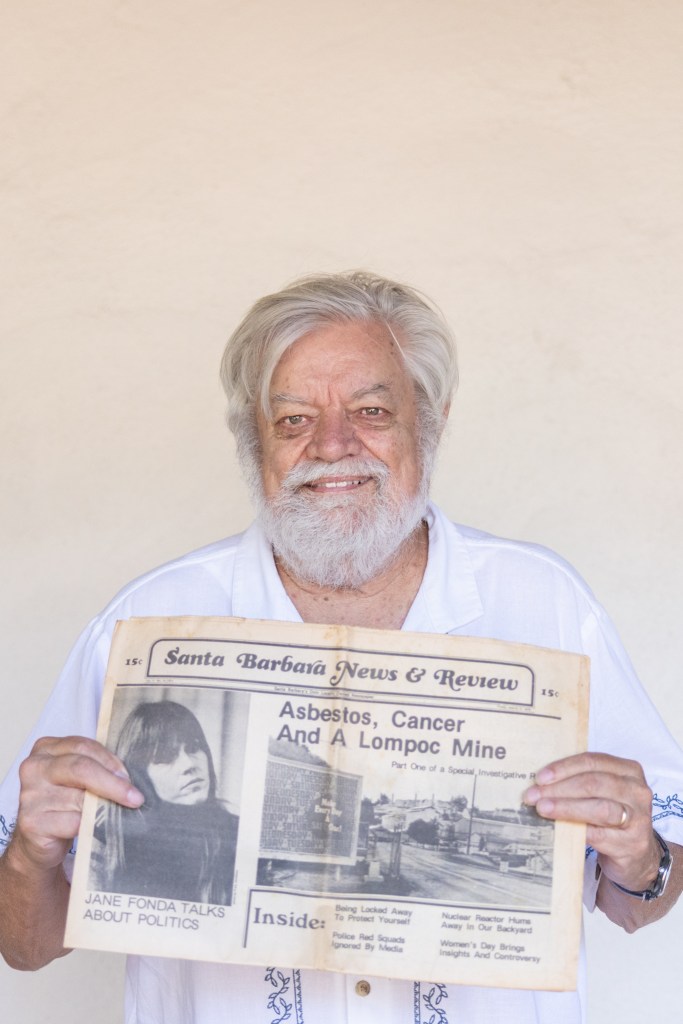
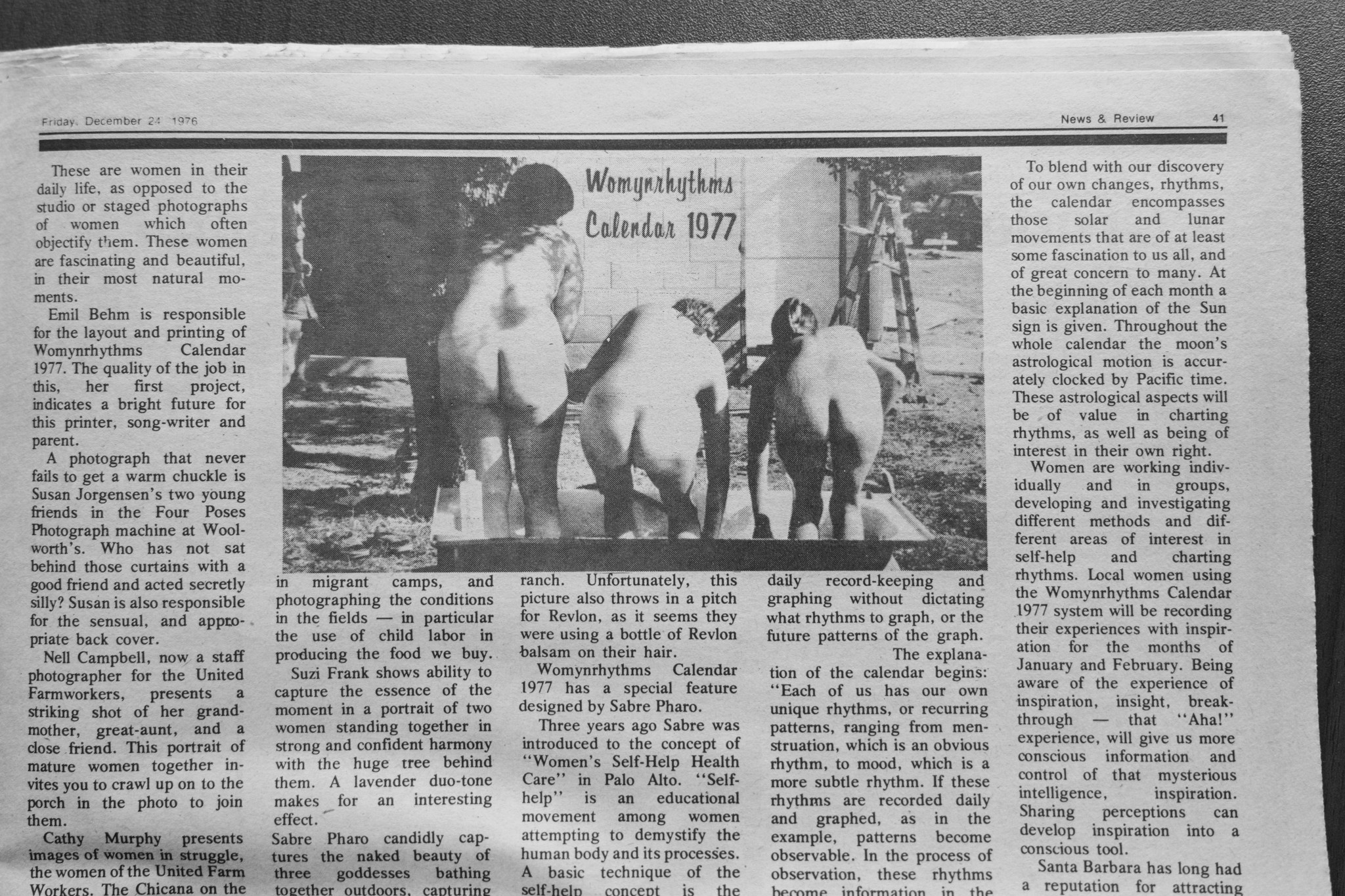
It all began in a commune on the Mesa that called itself the Cauliflower Collective, named after the vegetable that resembles a raised fist. The Collective was made up of veterans of previous political newspapers, including the vocally anti-war UCSB campus paper El Gaucho and the unabashedly radical Strategic Hamlet.
Members of this group raised chickens, rabbits, goats, and a squatters’ garden on SBCC land, but they were focused on one big project: launching a newspaper that built community and progressive politics.
Its name, the News & Review, came from long discussions about appealing to a broad audience. It was intended to “seek legitimacy,” said cofounder Jim Gregory, and represented “a neutral-sounding, respectable brand,” explained John Seeley, another cofounder. Other founders included El Gaucho editor Becca Wilson, activist Denise Kessler, and activist funder Richard Parker, with the steady advice of UCSB sociology professor Dick Flacks.
Out of these meetings and a $5,000 grant from political philanthropist Stanley Sheinbaum, the Santa Barbara News & Review was born.
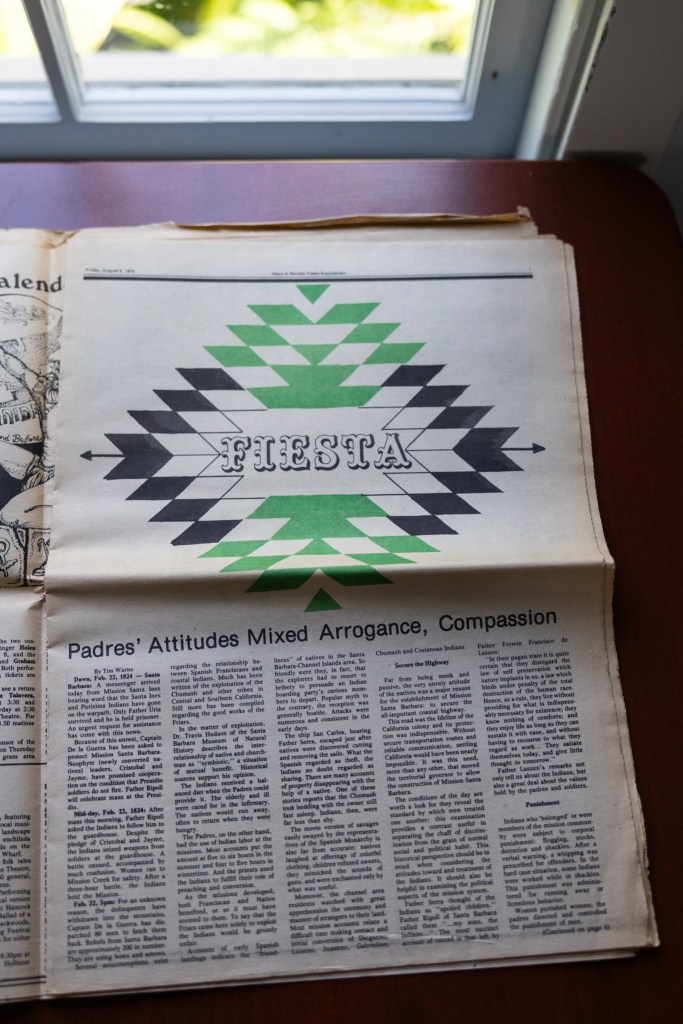
It would go through many evolutions and was constantly filled with internal strife, but it became a force for progressive change in Santa Barbara, influencing politics and culture in a historically Republican stronghold. The News & Review’s first issue was in February 1972 and, in 1986, it became the Santa Barbara Independent, which is celebrating its 40th anniversary this year.
Early Aspirations
The News & Review was unique in the United States in its structure, its self-governance, and its editorial principals.
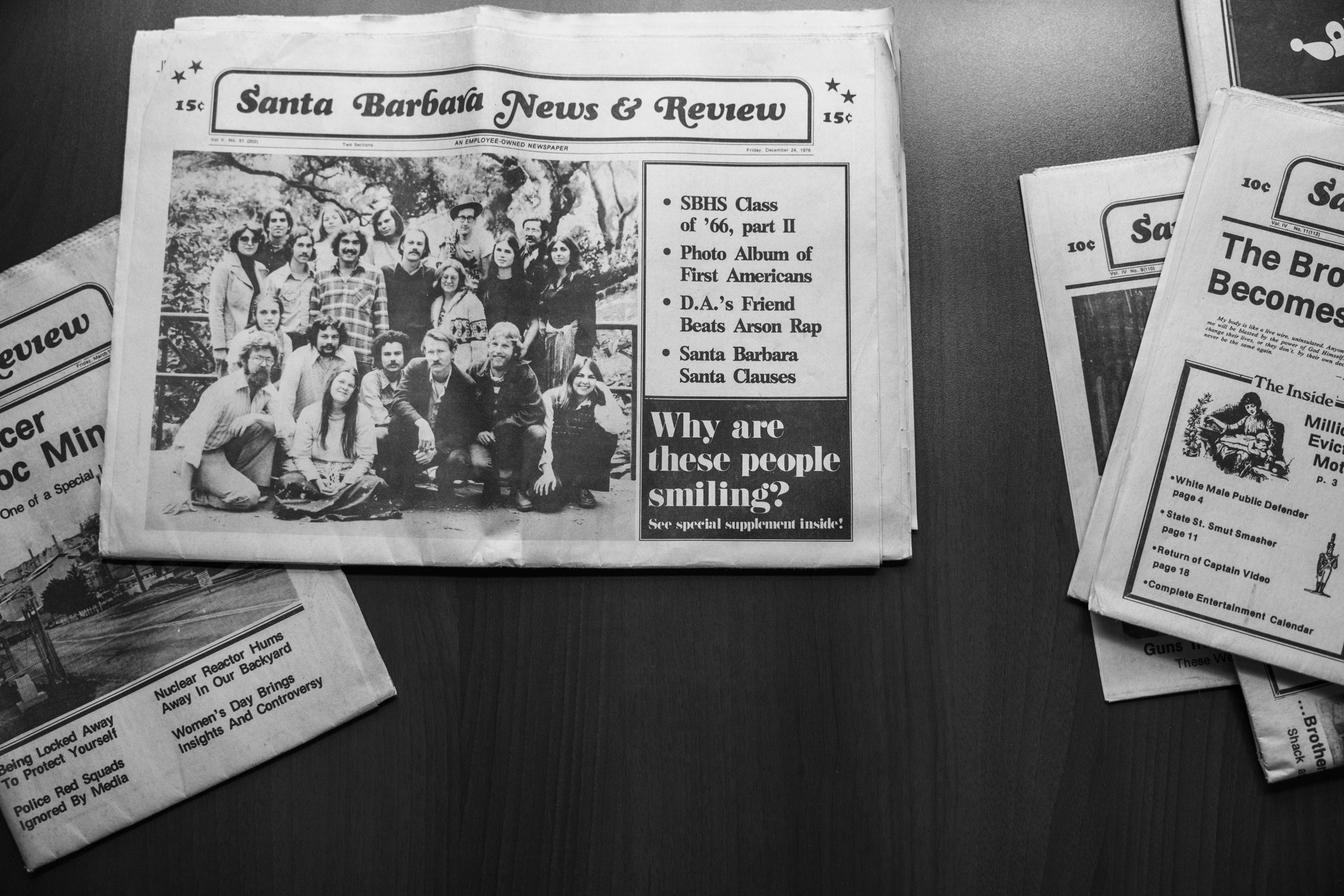
The paper was formed as a collective, in which each worker received a “share” for every six months of full-time employment, all under the legal umbrella of a nonprofit trust. The day-to-day decisions were made by the staff, which met several times a week to hash out everything from story assignments to work schedules.
At the time, at least one of the founders marveled that “for better or worse, the News & Review will remain a collectively operated, community newspaper.” It would be “impossible” to ever sell the paper, another staffer proclaimed.
It took on the powerful Santa Barbara daily, the News-Press, which routinely ran biased stories about anti–Vietnam War activists proclaiming in headlines, “Destruction Seen as Militants Goal.” Seeley declared the News-Press was nothing more than a “stenographer for the Sheriff’s Department” that used aggressive tactics to shut down political protests at UCSB and in Santa Barbara.
Progressive papers were not new to town. Isla Vista had produced numerous versions, such as Probe, Argo, Journal, Daily Planet, Viewpoint, Survival Times, Wildflower, Initiative, Strategic Hamlet, and Town Crier. While some had a huge impact, like the Probe’s investigation of corruption at the county, none survived. Meanwhile, across the U.S., hundreds of alternative newspapers were launched in the 1970s, but almost all eventually sank.
The News & Review’s first permanent home was in a carpet cleaner’s warehouse on Nopal Street. It was just a block away from Pat’s Liquor Store, where one of the brothers kept a handgun behind the counter — used fatally on a robber years later. It was where the iconic Seeley taught the staff how to drink Yukon Jack, and dinner was often a big bag of tortilla chips from the nearby La Tolteca tortilleria.
Controversial Content and Committed Creators
The News & Review sprinted out of the gates. In its first issue of 1972, an editorial promised to address community problems and educate the community, to the city’s potential. Later that year, it published an exposé of the Sheriff’s Office, and the next year, it covered bribery allegations against a prominent county official.
At a time when there were few women in newsrooms, the News & Review produced an inspiring list of female editors, writers, and reporters, including:
Joan Walsh, who’d become a national reporter for National Public Radio and The Nation, and a commentator on CNBC and CNN.
Karen Stabiner, author of seven nonfiction works covering food and restaurant culture, education, and healthcare, and a contributor to the largest newspapers in the U.S., including the New York and Los Angeles Times.
Deborah Redmond, who joined the collective at age 16 and became a masterful managing editor.
Diane Alters, who became an editor at the Denver Post, Sacramento Bee, and Boston Globe before joining the faculty at Colorado College.
Suzi Parker, who’d write for major newspapers and Ms. Magazine, and is now an investigative reporter in Arkansas and author of the book Sex in the South: Unbuckling the Bible Belt.
The men at the News & Review also took their journalism nationwide:
Tim Crews — who broke a window on Nopal Street with his fist when editing did not go well — became an icon of fierce public interest journalism in rural Northern California, winning numerous awards for his coverage of rural police tactics, even spending five days in jail for refusing to name his sources.
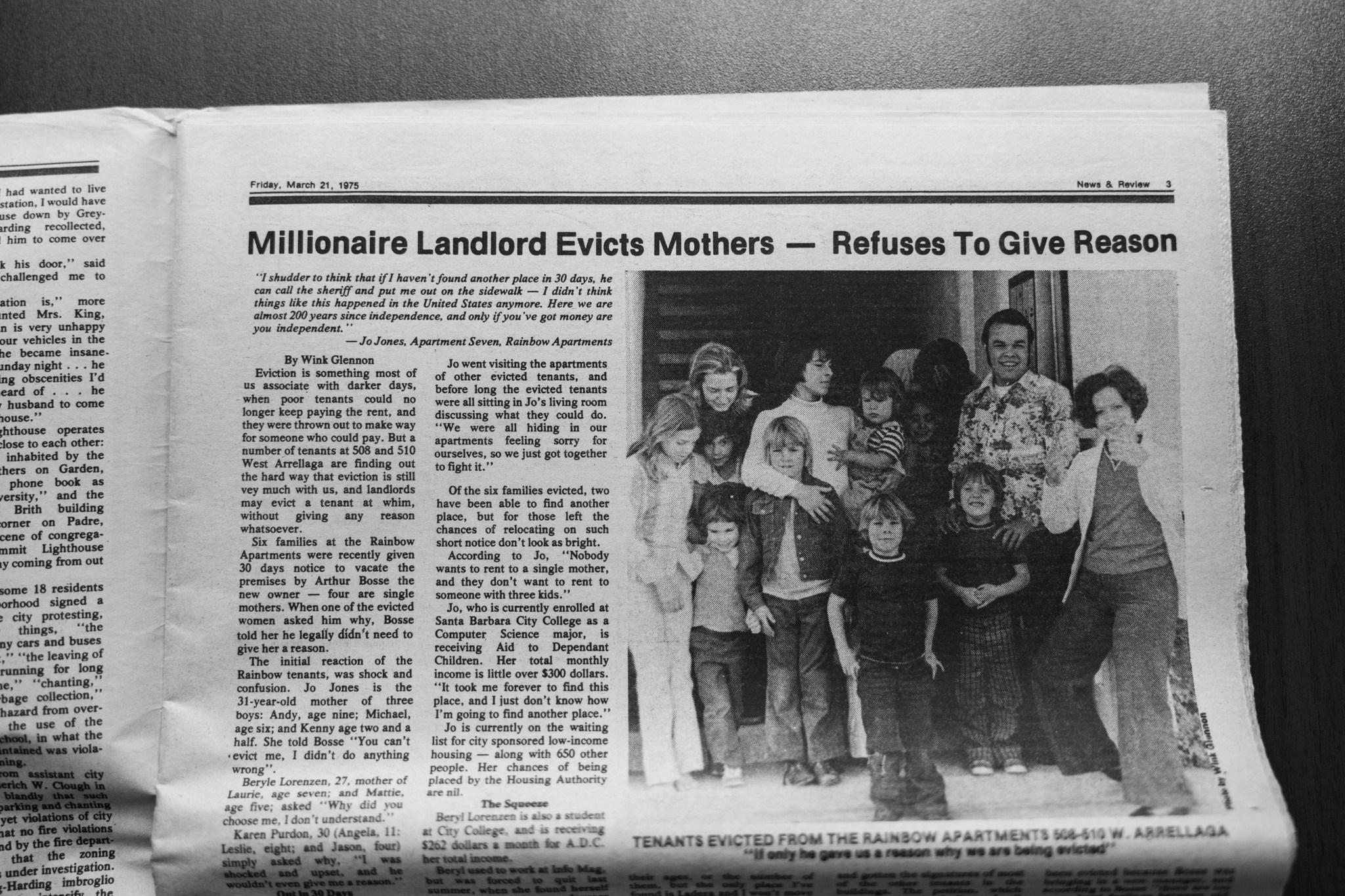
Wink Glennon, an influential editor of the paper in the ‘70s who went became a children’s books publisher.
Bobby Gettlin, who was hired by Washington D.C. investigative reporter Jack Anderson and wrote a controversial book arguing that Richard Nixon was framed by U.S. intelligence agencies.
John Hurst, who, as an L.A. Times investigative reporter, wrote an exposé about Secret Service agents selling their specially marked SS ammunition to gun enthusiasts on the black market.
Jim Gregory, who became a professor at the University of Washington and wrote books on the Dust Bowl diaspora and the Seattle general strike.
Charles Rappleye, who was news editor of the L.A. Weekly, and wrote books about the Mafia and about slaves during the Revolutionary War. This “resolute investigative reporter,” wrote his L.A. Times obituary, was “interested in telling stories of the overlooked in Los Angeles.”
Richard Parker, who cofounded Mother Jones magazine and wrote the definitive biography of economist John Galbraith while teaching at Harvard.
This News & Review team published a number of major stories in those early days, among them:
Bob Gettlin’s audacious investigation in 1976 of the La Vista Club for the Sightless. Unable to otherwise report on this nonprofit run by a local couple, Gettlin took a job there as a dishwasher. He found corruption, diversion of clients’ funds, and, worst of all, the use of a closet to house 79-year-old blind client Joe Romero. Gettlin’s piece led to a major investigation by the state Attorney General and the eventual closing of the club.
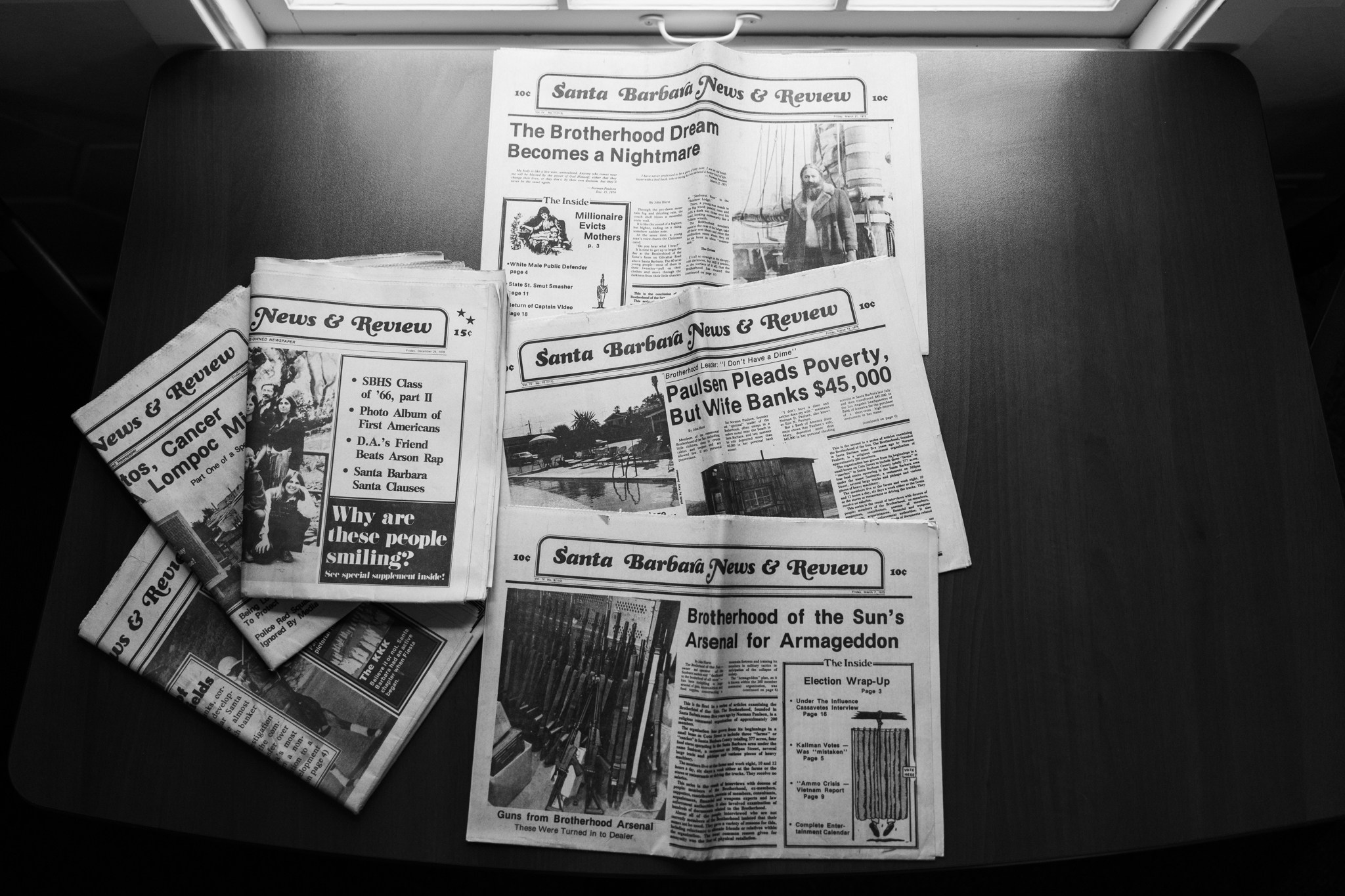
Just as bold was John Hurst’s months-long investigation of a Santa Barbara icon: the Brotherhood of the Sun and its picture-pure Sunburst grocery stores, whose workers were as wholesome and ebullient as anybody would find. Hurst found that commune members were turning over their private bank accounts to cult leader Norman Paulsen, who was using the funds to amass a vast arsenal of guns and ammo at a secret compound in the Santa Ynez Mountains. The story shocked the health food community, and even involved the cops interrogating a News & Review reporter accused of impersonating a police officer. He was released after several hours of questioning.
A tip from a Santa Barbara pulmonologist led to a deep look at the Johns Manville plant in Lompoc and its extensive use of asbestos to mix with diatomaceous earth mined there. The News & Review examined hundreds of death certificates in the basement of the County Courthouse and found an unusual tie to mesothelioma, a rare and often fatal disease of the lungs caused by the deadly exposure of asbestos fibers. The Columbia Journalism Review cited the report as one of the first in the country documenting the negative health effects of asbestos exposure.
In a similar vein, Patricia Cooney looked into the mysterious deaths of two young men at the Infomag tech plant in Goleta, Juan Beltran and Hector Perez, and found they were exposed to all types of chemicals, including vast amounts of WD-40, without masks. The state Division of Industrial Safety inspected the plant and found 27 health and safety code violations.
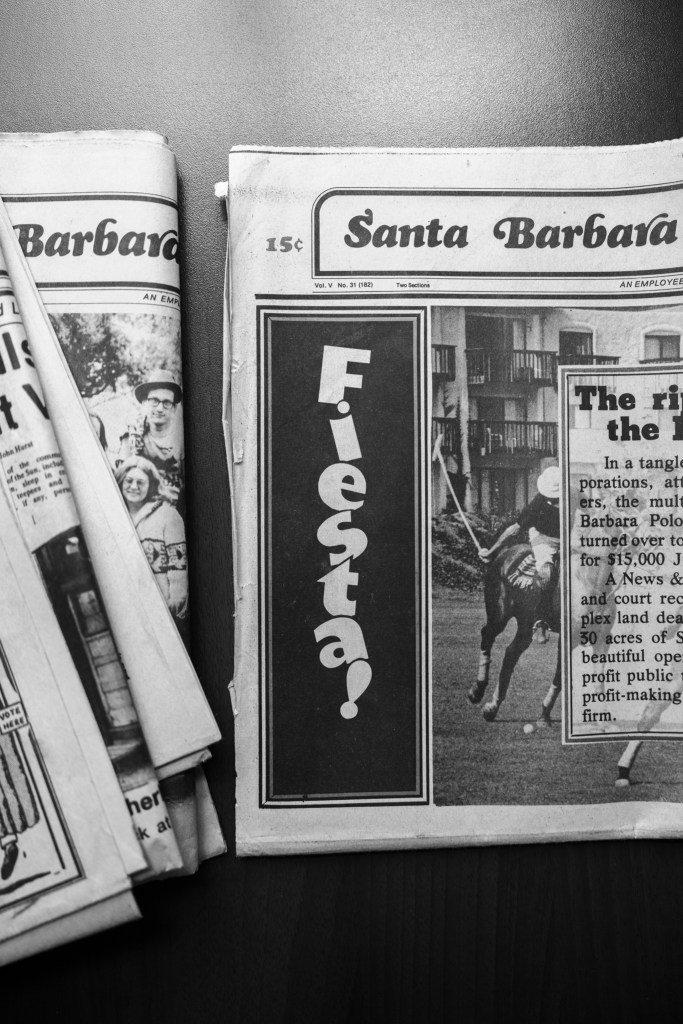
A story that upset the Santa Barbara elite detailed how the Carpinteria polo fields were going to be quietly taken over and turned into condos by some of the rich polo players in Santa Barbara. The effort failed and the polo fields remain.
There were also the fun stories, such as going after Mayor David Shiffman after he had a police scanner and radio installed in his private vehicle in order to monitor police communications.
And there was, of course, legendary UCSB professor Harvey Molotch, who wrote a wonderful politics column called City Lights under the pen name Carl Maven.
Not Easy Being Idealistic
In her review of the News & Review’s first 10 years, Joan Walsh spent a lot of time talking about all the conflicts at the paper. Most were rooted in the News & Review’s unique form of organization known as “Rotation.”
In recognition of their egalitarian, some would say Maoist inspirations, the Rotation’s goal was to discourage hierarchies — or, more specifically, avoid a newsroom run by a clique of (mostly male) reporters, editors, and writers that exploited the production and advertising grunts.
Ruther reflecting those Maoist leanings, there was even a “Rotation Committee” that met once a year to reassign reporters, editors, and production staff. One good reporter was told to sell advertising in Isla Vista; another very good reporter got the downtown sales assignment.
Process soon became more important than content. And too few recognized that advertising sales would be the lifeblood of alternative newspapers and magazines.
Star reporters like John Hurst just shook their heads and ignored the dance. Others like Jeff von Kaenel, a brilliant ad sales person, just fumed over the procedures and processes. He went on to save the Chico News & Review from bankruptcy and founded the Sacramento News & Review and Reno News & Review.
The News & Review’s biggest mistake was charging for the paper. As one staffer put it: “Why would you put an ugly plastic box around your beautiful newspaper and then force your reader to find a quarter in their pocket?”
The cofounders eventually conceded that staffers were correct in pushing for a free publication, but all that held the enterprise together in those early days was the revenue from subscription and newsstand sales. Even then, staff were at one point paid just $35 a week.
The tide was already turning nationwide. Alternative papers from Chicago to Boston started giving away their papers for free, recognizing that real revenue was in advertising, not from quarters dribbled into beat up newspaper racks.
The News & Review finally went free, but not before enduring several financial crises.
Merger Makes the Indy
In 1980, the News & Review’s leaders decided the ownership of the paper had to be changed to keep the paper afloat with new capital. They called for an auction, which attracted offers from a partnership headed by Marianne Patridge, one from Jeff von Kaenel and his successful Chico News & Review, and one from former editor Eric Mankin.
Besides her journalism pedigree — including key positions at both Rolling Stone and the Village Voice — Partridge offered something that nobody could refuse: 10 percent of the stock in the paper to the News & Review’s equity shareholders. Mankin offered a payout in five years while vonKaenel’s legal counsel worried about IRS consequences.
“It is our opinion that the beneficiaries of the trust should be rewarded for the 12 years they have invested in keeping this weekly alive,” wrote Partridge in her bid. “A substantial percentage of equity would also insure that the trust would maintain an active role in shaping the destiny of the News & Review.”
Partridge’s bid, backed by News & Review cofounder Richard Parker and New York investment advisor Rick Grand Jean, won the day. But it was a bitter day for many. Deborah Redmond, who started working at the paper when she was 18 and later married von Kaenel, said her husband was “devastated” by the outcome, feeling that many of their “friends” had “betrayed” them.
By 1985, the paper was again in financial straits. A financial document circulated at the time showed the News & Review had $57,000 in assets but $88,000 in liabilities, including $26,000 in loans and $31,000 owed the printer. It had not paid staff for weeks and it was unclear if payroll would ever be met.
A major reason was due to an aggressive new player in town: The Weekly, an entertainment newspaper that was scooping up a worrying share of the News & Review’s advertisers. A classic garage startup with little overhead, The Weekly was founded by UCSB grad and part-time waiter Randy Campbell.
Rather than continue fighting until their mutual deaths, the two papers decided to join forces in 1986 to form the Santa Barbara Independent.
In negotiations that led to decades of acrimony among the owners, Campbell held out for 51 percent of the shares of the newly created newspaper. And that 10 percent given to the beneficiaries as part of the first News & Review sale evaporated due to a clause in the merger that required all of the new partners to put up capital. Those shareholders couldn’t muster the $5,000 to keep their shares.
Despite all of the News & Review’s internal feuds, constant turnover, and meager pay, that Maoist-inspired newspaper managed to blossom into today’s Independent, which thrived. As major, multimillion-dollar alternative newspapers in big cities such as Boston, New York, San Francisco, Los Angeles, and Phoenix withered and died in the 2000s, the Independent booked page after page of advertising, tallying six-figure profits in the boom years.
More importantly, the Independent consistently wins statewide awards annually, and sometimes national ones, for its reporting, writing, photography, art design, and columns. And it’s produced superstar writers such as Nick Welsh, the best political columnist in California today, if not the entire United States.
It has good blood.
The former publisher of the Santa Barbara Independent from 1994 to 2006, George Thurlow started his 35-year newspaper career at the Santa Barbara News & Review, where he rotated through jobs as copyreader, production staff, production manager, Isla Vista advertising salesperson, City Hall reporter, and ultimately editor. He supported himself with an overnight doughnut-making job at UCSB.




You must be logged in to post a comment.