
The Santa Barbara Independent
Endorsements for the General Election,
November 3, 2026
Our Choices for National, State,
and Regional Offices, and the Propositions
By Indy Staff | October 8, 2026
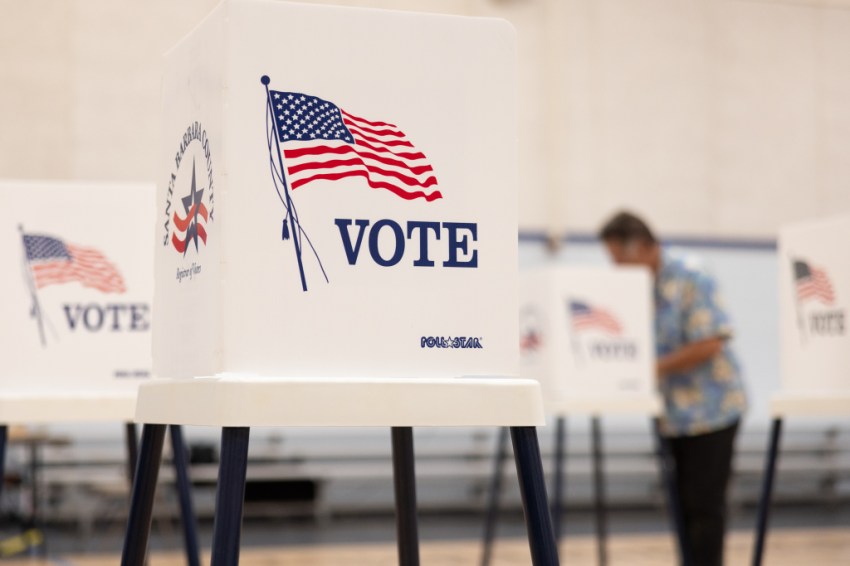
This is the first of two installments of the Independent‘s endorsements for the midterm elections. As always we do not endorse in every race or on every issue, but only those we feel sufficiently confident to recommend to our readers. Ballots began mailing this week, and election officials say that some could take as long as two weeks to reach all mailboxes. If you are registered but have not received your ballot within that timeframe, you can call the elections office at 1-800-722-8683 for help.
Whether you agree with our suggestions or not, please vote. It matters.
STATE
Statewide Ballot Initiatives
Voters will confront 14 ballot initiatives. Most have to do with money and taxation; others have to do with how elections are carried out. Some are exceptionally hard to make out. If you don’t understand, chances are that’s not an accident.
Prop. 1: Yes
Prop. 1 authorizes $11.25 billion in bonds for affordable housing programs that will reportedly subsidize the construction of 40,000 multi-family rental units, 2,500 units of farmworker housing, 1,200 beds for university students, and housing for 2,100 veterans. It also authorizes $200 million in housing grants to tribes.
Prop. 2: Yes
The state budget reserve cap will double from 10 percent to 20 percent so that when times are especially flush, the state will be allowed to set aside a larger amount for when times are tight.
Prop. 3: Yes
Makes permanent the tax increase first approved in 2012 on the top 2 percent of state taxpayers. If Prop. 3 loses, the state will lose $5 billion to $15 billion a year in tax revenues. Roughly 40 percent of that money would go to schools and community colleges. If Prop. 3 loses, the top 2 percent of the state’s tax payers will reap a tax break of $5 billion to $15 billion a year.
Prop. 4: Yes
Would repeal California’s existing prohibition against the state using funds collected from the public to underwrite the cost of running for office. Right now, the state’s Campaign Reform Act bars this from happening. If Prop. 4 passes, it does not mean that publicly funded campaigns will automatically start. It means that the barrier blocking this from being considered will be removed.
Prop. 5 (Amends State Constitution to Change Recall Process for High Statewide Offices): Yes
This one requires some squinting, but we recommend a yes. Right now, when successful recall campaigns are launched against sitting governors, for example, their replacement is chosen in the same election. Typically, these are circuses with far more clowns than conductors. Typically, hundreds of candidates are involved, many one-time wonders looking only for the 15 minutes of fame to which they think they’re entitled. Prop. 5 takes all the fun out of this, requiring a whole new special election to select the replacement for whichever candidate got recalled. This one can be argued both ways, but when possible, we prefer to err on the side of sanity.
Prop. 37 ($25 Billion Middle-Class Home Loan Program): Yes
If approved, Prop. 37 would authorize the sale of $25 billion in bonds, the proceeds to be a loan to help middle-class would-be first-time homeowners to be able to make a 17 percent down payment for a home valued at no more than $1.5 million. We wonder just how far that $25 billion will go and how many people will actually be helped, but any response to the state’s housing crisis will require scatter-shot solutions. And this is one.
Prop. 38 ($8 Billion Bond for Immunology Research): No
If state voters approve Prop. 38, they will be all but guaranteeing that the measure’s biggest financial backer will be granted half of the $8 billion in bond dollars the measure secures for cutting-edge research in cancer, dementia, and immune disorders. While the measure does not mention Gary K. Michelson, founder of the California Institute for Immunology and Immunotherapy, it does list very specific requirements that only Michelson’s Institute can satisfy. Michelsen has donated $8 million to pass Prop. 38. The proposition’s remaining $4 billion will be available to a wider field for competition, but if Prop. 38 passes, state taxpayers will be on the hook for annual payments of $500 to $600 million a year for 25 years. We have no reason to question the scientific expertise of Michelson’s institute, but we do know a sweetheart deal when we see one. While such research is absolutely essential, the arrangement, originally exposed by CalMatters, underscores the extent to which special interests have usurped the proposition process. California reformers passed that process100 years ago to protect the citizens of this state from those very special interests. Vote No on Prop. 38.
Prop. 39 (Requires Government-Issued ID to Vote): No
Prop. 39 was hatched by those subscribing to a floridly paranoid conspiracy theory popular in certain circles that the Democratic Party is allowing undocumented immigrants into the county to exploit their votes. For those suffering such hallucinations, we would strongly suggest psychiatric attention. For everyone else, we urge you to vote no on Prop. 39. It is dangerously and sloppily written and purports to solve a problem that simply does not exist.
Even the right-wing Heritage Foundation, after examining the results from 200 federal elections, concluded that at most 15 votes out of 10 million cast in seven states over several decades were cast by non-citizens. Another study — this one of election results in 42 jurisdictions in 12 states of the 2016 election — concluded that .0001 percent of the votes cast had been cast by non-citizens. Needless to say, no outcomes were remotely altered.
If passed, Prop. 39 would amend the state’s very Constitution. It would require county election officials to “use best efforts” to verify that all registered voters are U.S. citizens by availing themselves to “government data.” Ominously, what those “best efforts” are and what that “government data” would be are conspicuously not specified. And it gets worse. Voters will be required to show various forms of government-issued identification to cast their ballot. What kinds of ID would be required are not specified.
In California 2.7 million voting- age residents do not have a driver’s license. Another three million have expired licenses or licenses from other states. Typically, these individuals are younger, poorer, and not white. One need not be a rocket scientist or brain surgeon to these connect dots such as these. Prop. 39 is bad for the country, the state, and you.
Prop. 40 (One-Time Wealth Tax on Billionaires): No
The division of wealth throughout the United States has grown morally grotesque. Under the Trump administration, it’s become pornographic. Due to the president’s “Big Beautiful Budget Bill,” one trillion dollars will be cut from the safety net from the nation’s poor in order to bestow $1 trillion in tax breaks to the upper one percent.
Prop. 40 is an attempt to buffer this cruel reality by promising to offset the billions in Medicaid cuts with billions generated by a one-time wealth tax on the 220 billionaires calling California home, four of whom reportedly live here in Santa Barbara. How could anyone resist such karmic comeuppance?
Sadly, at its best, Prop 40 is a rhetorical gimmick that can’t possibly deliver on its promises. But it will make a bad situation even worse by creating a completely new category of taxation: a one-time tax of 5 percent on the wealth — not the income — of state billionaires.
Wealth includes all kinds of things that don’t qualify as income: yachts, jets, art and wine collections, business interests, stocks, grand pianos, football teams. However, California’s vast tax-collecting bureaucracy is structured specifically to tax income, not wealth. Incredibly, the fine print of Prop. 40 allows the government only six months to create this new wealth-assessing system.
We are struck by how often the words “maybe” and “probably” show up in the fine print. How much money might actually be raised? How many billionaires might flee the state? How much might state income tax revenues drop? Since California relies upon income taxes — as opposed to real estate assessments — those are threatening questions.
Eventually, some thorny details might get hammered out, but the wheels of government turn even slower than those of justice: A six-month deadline is a practical impossibility; worse, efforts to meet it will generate more litigation than revenue. Little wonder that organizations such as Planned Parenthood and the California Medical Association — which would presumably benefit from Prop. 40 — have come out against the measure.
Of course, the billionaires, presumably terrified of becoming wealth-tax refugees, have raised $200 million to stop the measure. Yes, it’s a gross spectacle. But if the devil is in the details, then Prop. 40 needs an exorcist.
Prop. 41 and Prop. 42: No and No
If billionaires ever wondered why they have such a bad rap, Props. 41 and 42 offer 200 million good reasons why. That’s the amount of money they have already spent supporting these two initiatives they hatched as poison pills just in case Prop. 40, the billionaire’s tax, were to succeed. Prop. 41 would require a special audit before any special tax — such as Prop. 40 — specifically examining all government programs designated for additional funding with the proceeds of that one-time tax. Technically, Prop. 41 might not stop Prop. 40 outright, but it sure would gum up the works if it passed. Prop. 42 is more direct and to the point: If passed, it would flat-out prohibit the enactment of any taxes on personal wealth, which is precisely the new income stream that Prop. 40 hopes to tap into. Currently, California taxes income only, not wealth, which entails such things as art, wine, car collections, business interests, intellectual property and retirement accounts. We don’t support Prop. 40 for a host of good reasons, but this kind of spending is enough to make anyone want to stop being so reasonable.
Prop. 43: No
Prop. 43 would make it harder for voters to approve local special taxes that they — not their local government officials — put on the ballot by raising the percentage of votes required for passage from 50 percent to two-thirds. We will spare you the minutia of applicable state tax and election codes, but the point here is to make it harder for people to tax themselves for specific purposes. Fighting over this one are the usual collection of taxpayer protection and the unions. We are far from thrilled by the hint of higher taxes, but with the federal government now in full retreat from many of its traditional support roles, local governments will have increasingly rely upon their own local resources to weather the local disasters and health-care shortfalls.
Prop. 44 (Requires Community Health Clinics to Spend 90 Percent of Revenue on Services): No
This is yet another high-minded grudge match that drags voters into terrain over which we lack the competence needed to make an even quasi-informed decision. Who doesn’t think money going to medical clinics goes to services rather than administrative overhead? But 90 percent? California has about 2,000 safety net clinics; right now, they are being battered by violent changes in federal health care funding courtesy of Donald Trump’s Big Bad Beautiful Budget Bill. In Santa Barbara, the constellation of health care providers making up our health care universe are reeling. The community care clinics provide the absolute bedrock of safety-net care. However high-minded and lofty such efficiency mandates might seem, this is absolutely not the time for voters to meddle. Our medical world can survive half-assed opinions and knee-jerk reactions; it can’t, however, survive half-assed and knee-jerk votes.
Prop. 45: No
If you think an eight-story monstrosity built right behind the Santa Barbara Mission is a good way to solve Santa Barbara’s housing crisis, then maybe you might also think Prop. 45 is a good way to solve the state’s red tape problem. Otherwise, we urge you to vote no. We will stipulate the problems caused by excessive red tape are real and really infuriating. But anybody claiming to have a simple solution is to be distrusted. Red tape exists in such abundance in Coastal California because Coastal California is too damn beautiful for its own good. Balancing all that beauty with all that infinite demand requires a finesse, delicacy, and wisdom. Prop. 45 is just another one-size-fits-all solution that will not succeed in getting affordable housing built but will definitely succeed in making the coast ugly. Beauty counts. Vote no.
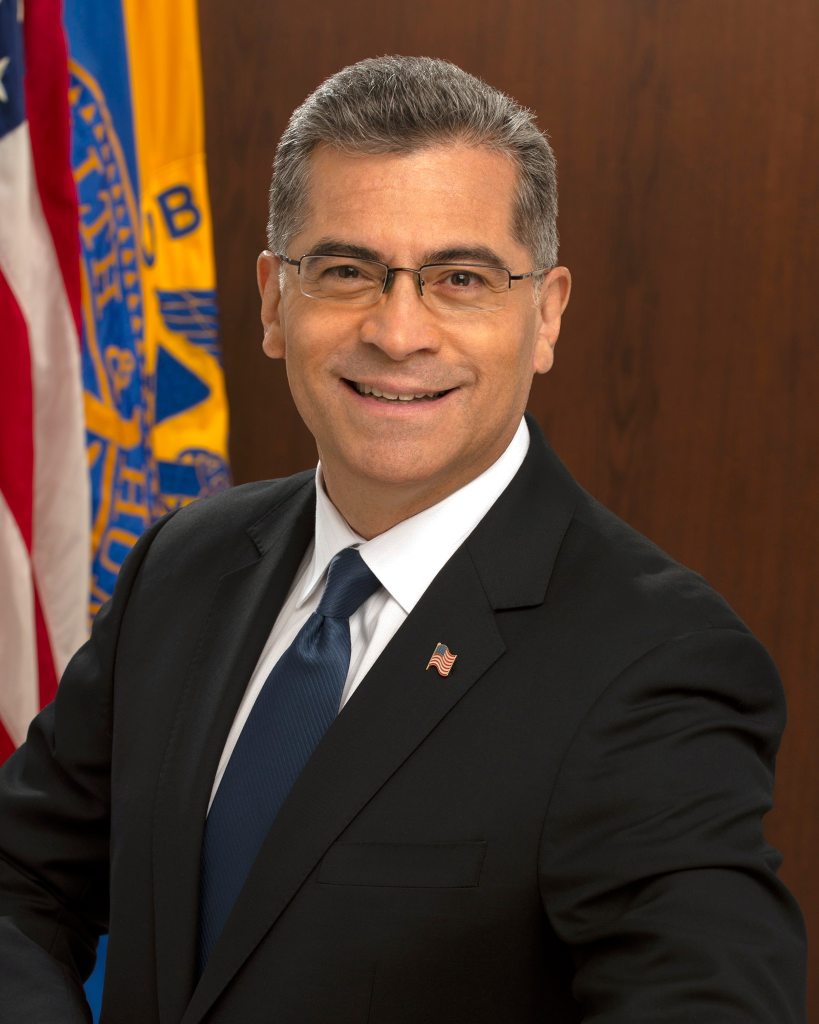
Governor: Xavier Becerra
If only, on occasion, it would be refreshing to seriously consider a candidate for elected office from the Republican party. But we’ve had little opportunity in this century. Certainly not in the case of this year’s gubernatorial election. Steve Hilton, the Republican standard bearer, is at best a MAGA mouthpiece, clever, and verbally nimble, but seemingly untroubled by the mass moral mayhem inflicted by his boss seemingly for no greater purpose than cruelty for cruelty’s sake. We are supporting Becerra mainly because Hilton is so very much worse. We remain troubled, however, by Becerra because of his level of care for unaccompanied migrant children when he ran Health and Human Services during the Biden administration. The New York Times, through an investigative series, exposed how many unaccompanied minors were falling through the cracks and into the hands of labor traffickers. It’s disheartening that he continues to shrug off those questions as mere “Trump talking points.” We might soon find ourselves pining for the good old days of Gavin Newsom. The alleged dialectics of the two-party system has been exposed as a mirage too many times now, but here we are, and Becerra is what is. We sincerely hope he will be much better than we expect.

Attorney General:
Rob Bonta
Attorney General Rob Bonta just launched his 83rd legal action against the Trump administration. If successful, this one could save motorists anywhere from $185 billion to $400 billion. This is money that will otherwise be funneled directly into oil industry coffers as a happy windfall. The Trump administration is now proposing to put the kibosh on the next scheduled improvement in federal fuel efficiency standards. The auto industry regards these standards — the single most effective tool against the proliferation of greenhouse gases aside from the catalytic converter — as an intrusive nuisance. As of 2031, the fuel efficiency required of Detroit would jump from the current 34.9 miles per gallon to 50.4. Detroit says it will cost $60 billion to comply with these new standards. Trump says by freezing this efficiency upgrade, new cars will be on average $1,300 cheaper. But even by Trump’s own math, the average gas price of the same car will be $1,600 more expensive. Even factoring in for inevitable performative theatrics, Bonta has truly outdone himself keeping the Trump White House in partial check. To date, of the 83 legal actions he filed, he has won 21, eight were withdrawn, and in 45, he secured some tentative preliminary relief. Sixty-six remain ongoing.
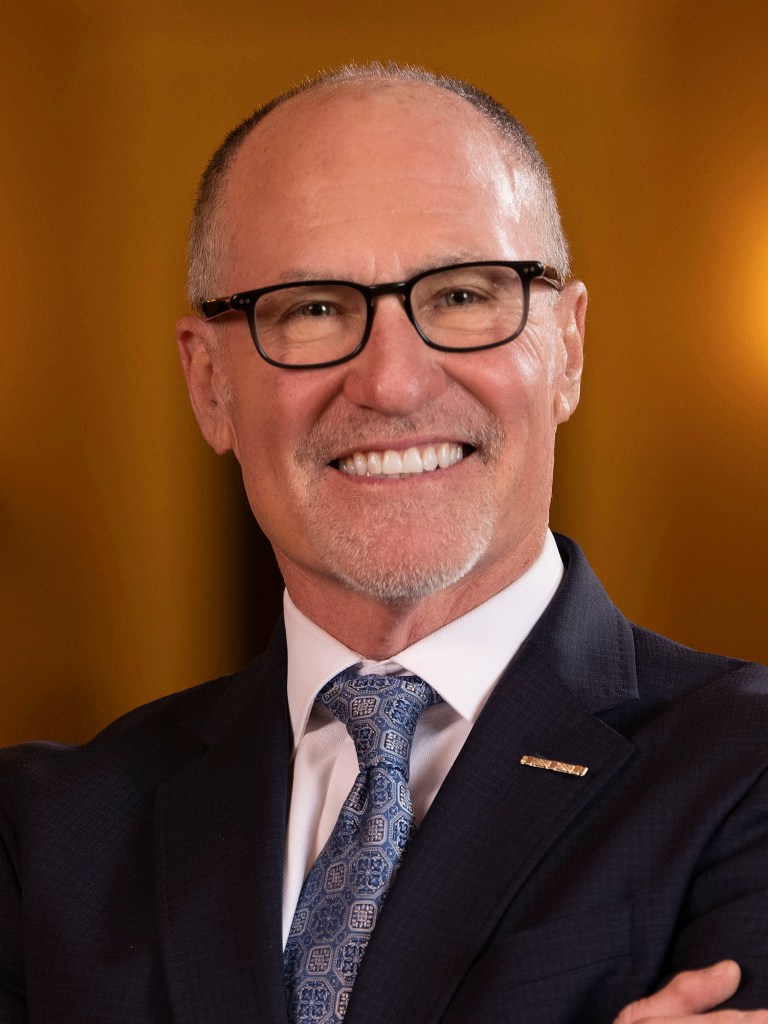
State Assembly, 37th District: Gregg Hart
Gregg Hart has not wasted his time in Sacramento since he was first elected to the California Assembly in 2020. This year, he got an impressive number of bills on the governor’s desk, including one designed to short-circuit White House plans to open the entire California coast to new oil development leasing. His bill prohibits oil pipelines located in state waters from carrying the crude oil pumped from wells in federal waters. (And, no, this bill would not have any impact on Sable Offshore’s ever-embattled project now under development.) The governor signed it into law — and that was not the only one.
Among the bills Hart successfully got signed was another engineered to crack the unfettered autonomy that California’s 58 elected county sheriffs have had on the management of their jails. Hart saw the damage that caused when he was a Santa Barbara supervisor: The county had to foot the bill for jail operations but had absolutely no control over its ever-escalating costs. His new bill allows county supervisors, for the first time, approval over who county sheriffs can or cannot appoint to run their jails.
In 2025, Hart also got a bill passed and signed that gave third-party investigators oversight while looking into the deaths of people in custody. In Santa Barbara — as with many counties — the sheriff is also the coroner. For Hart, that was a conflict of interest that needed to be rectified. That bill takes effect next year.
These are just a few of the bills that Hart has gotten passed, and only some of the issues he has consistently worked to solve. Gregg Hart is a genuine political athlete endowed with rare stamina, smarts, connections, and a moral compass. We are lucky to have him representing us in Sacramento.
Treasurer:
Eleni Kounalakis
Insurance Commissioner:
Ben Allen
NATIONAL

24th Congressional District: Salud Carbajal
When Congressmember Salud Carbajal responded to the looming specter of climate change, he didn’t just shake his fist at the easy target of offshore oil. He worked to get the local fishing community and the Department of Defense on board for a massive, 400-square-mile offshore wind energy project about 40 miles off the California coast, an area known as the Saudi Arabia of wind energy. Three major companies had purchased federal leases. Earlier this year, Trump canceled those leases, offering to return to the companies their hundreds of millions of dollars in deposits but only if they agreed to reinvest it in the development of fossil fuels.
Given the gargantuan challenges confronting us as a species, we need more from those in office than to fulminate about the egregious excesses of Donald J. Trump and his administration. It is, however, a helpful starting point, and Carbajal has done a lot more than that.
Recently Carbajal, a moderate Democrat who has served in Congress since 2016, the same year Trump was first elected, has taken the lead in a number of challenges to Trump’s destructive initiatives and shenanigans. He led a group of 30 members of the Senate and House to remove the Hunt amendment from the massive defense appropriations bill. This bizarre attachment would give Secretary of War Pete Hegseth the unprecedented power to condemn any land in Santa Barbara County — whether under the jurisdiction of the county, the state, or private property owners — that Sable deems necessary for their Santa Barbara operation. Like that of Trump’s excessive new White House ballroom, the pretext is “national security.” After 10 years in Washington, Carbajal has made enough friends in high places that we have credible reason to hope this overweening act of overreach will be exorcised from the bill once Senate deliberations get underway.
Carbajal has been an outspoken advocate for protecting the environment, including introducing legislation to clean up the toxic dumps in the San Pedro Basin, sponsoring a multimillion-dollar upgrade for water systems throughout his district from Los Alamos to Ojai, and working to establish the Chumash Heritage National Marine Sanctuary off the coast. Over the last year, he has taken on Hegseth aggressively when the secretary refused to directly answer if his oath of allegiance was to the Constitution or the president. And Carbajal’s record of constituent service has always been outstanding.
As a matter of existential urgency, we are betting the farm that this November the nationwide effort to take the majority away from the Republicans — who’ve surrendered their spines and souls — in both the House and the Senate will succeed. One important step is to send Carbajal back to Congress. He deserves our support.
REGIONAL
Santa Barbara City Council
Mayor: TBA
District 5: TBA
District 6: TBA
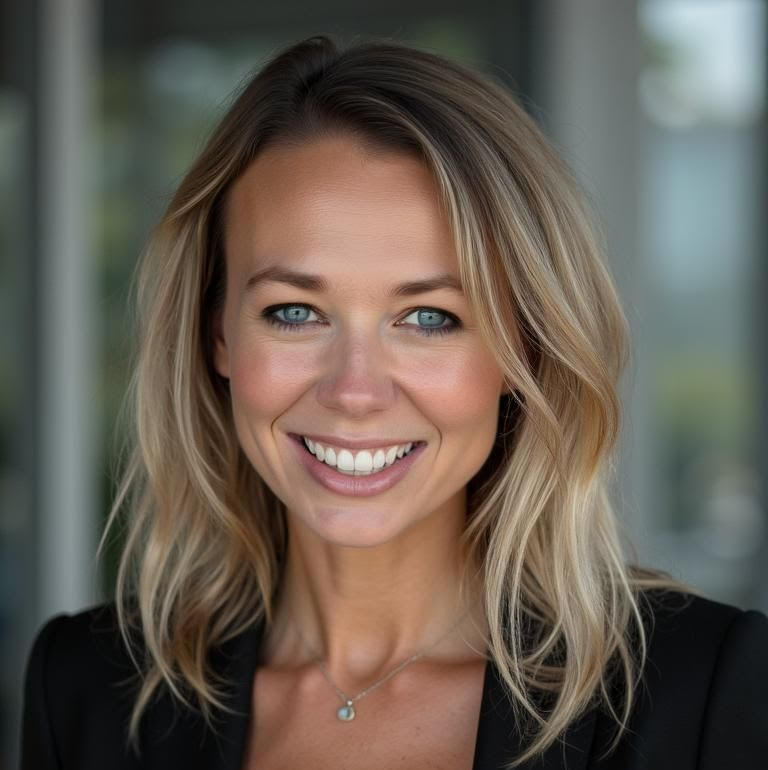
District 4: Devon Wardlow
Of the four candidates now vying to represent Santa Barbara’s District 4, voters are fortunate to have a candidate with the exceptional experience and temperament needed to solve many of the issues that have plagued the council in recent years. That candidate is Devon Wardlow.
For the past five years, Wardlow has served on the city’s Planning Commission — where push comes crashing to shove, where commissioners must balance the city’s insatiable demand for new housing with our collective determination to keep Santa Barbara’s treasured ambience intact. It’s not a job for the faint of heart.
Earlier this year, for example, when the city administrator was urging the commission and council to accept a take-it-or-leave-it deal from new owners of the Paseo Nuevo mall, it was the Planning Commission that first called the developers’ bluff. That courage proved contagious, and the City Council quickly followed suit. Wardlow was a strong voice supporting that action, as she has been on other issues.
She has not been shy to criticize the stream of downtown hotel proposals that kept coming before the commission. Hotels that zoning and previous planning had allowed, but that she believed should have been housing instead. She pressed on, extracting employee housing units out of reluctant hotel developers — often when no one thought it was possible. Importantly, Wardlow has worked cooperatively, civilly, and effectively with her fellow commissioners as they worked through these proposals.
A policy wonk and public affairs specialist by inclination, training, and profession, Wardlow reads the fine print carefully and actually understands its implications. A case in point involves the recent blowup over the rental stabilization ordinance. Wardlow wrote an op-ed explaining that she supports some kind of rent stabilization ordinance, but that the version before this council constituted a serious overreach. And being a policy wonk, she was able to cite the proposed ordinance chapter and verse.
It’s important to note that this election will bring a new mayor and three new councilmembers to the City Council — four votes. That’s the majority. Such a transition could be disastrously jarring. That is why we strongly believe Devon Wardlow should be one of those four new votes. With five years of in-the-trenches experience under her belt, Wardlow will provide the much-needed vision and practical approach needed on the newly reformed council.
Lastly, Wardlow is a progressive but independent thinker. She radiates raw intelligence by the megawatt; ideas and policy lingo pour forth like water from a firehose. And a pragmatic approach to problem solving will inform her votes, rather than any ideology.
Santa Barbara, she likes to say, helped raise her. Her family has a bumpy history, and she moved to Santa Barbara on her own at age 13, lived with her godparents for a while, attended local schools, and by age 14, she was working at restaurants to pay her way.
In person, Wardlow is like a sprinter trapped in the body of a long-distance runner; nobody on that council will outwork her. If you live in District 4, we urge a vote for Devon Wardlow. All of Santa Barbara will benefit.




You must be logged in to post a comment.