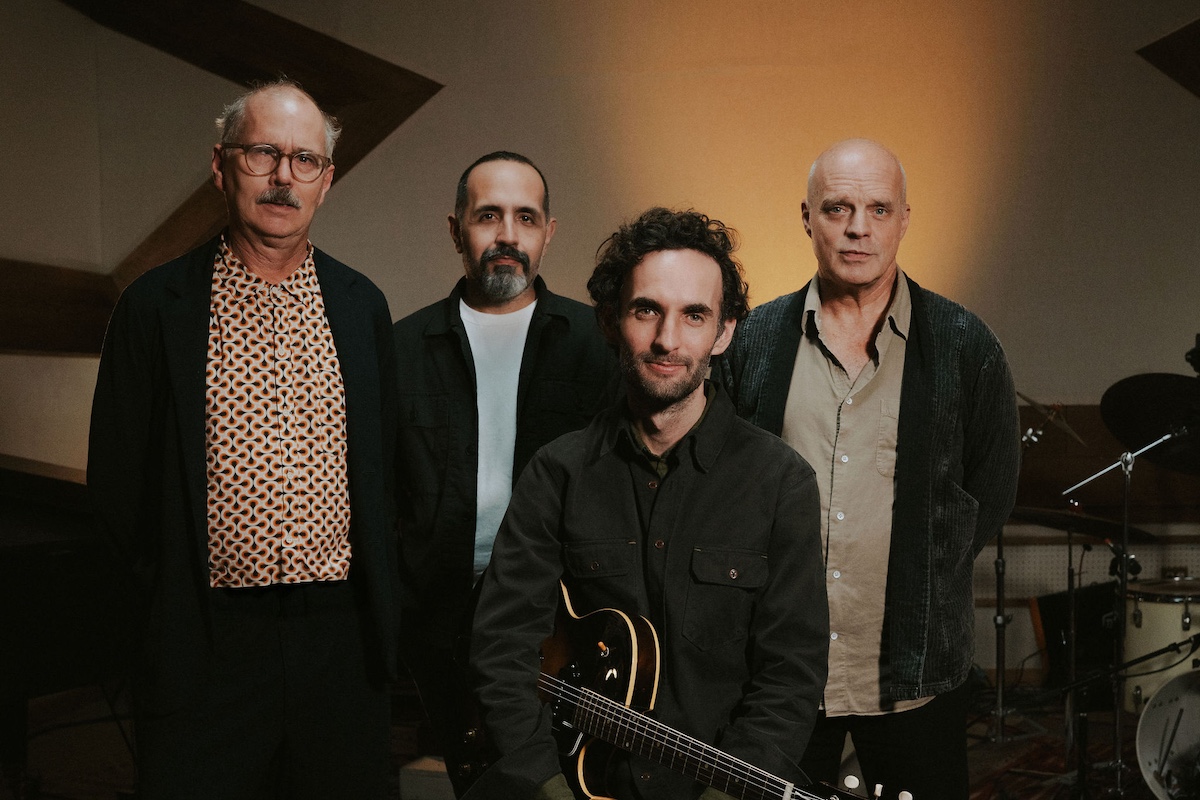
Ladies and gentlemen, introducing Julian Lage. As Julian Lage.
The humble jazz guitar hero’s show at the Lobero Theatre next Thursday, October 22, qualifies as one of the most eagerly awaited jazz events of the year, and to regular “Jazz at the Lobero” goers, he will be a familiar face and sound. We first heard the now 38-year-old in this venue 25 years ago, as a Santa Rosa–born and bred guitarist on tour with vibraphonist master Gary Burton. At the time, Burton’s high-profile hiring of the prodigy resembled Burton’s hiring decades earlier of a young Pat Metheny, before Metheny’s rise to acclaim.
Lage then returned to the Lobero at shows with Santa Barbara–based jazz star Charles Lloyd, including at Lloyd’s 80th birthday show in 2018. And in another high-profile sideman appearance in town, Lage was a surprise sub guitarist for none other than Bob Dylan at his Santa Barbara Bowl show in June, filling in for an abruptly departed former guitarist Doug Lancio.
At last, Lage appears in the hallowed theatre under his own name, with a bold new band alongside John Medeski (of Medeski Martin and Wood fame), drummer Kenny Wollesen (who performed here with Bill Frisell), and bassist Jorge Roeder. The band arrives hot on the heels of a fine new album, Scenes from Above (hear here), his fifth release in as many years in his current record deal with Blue Note Records.
We recently checked in with Lage for an interview, amid a career flow which has found the former prodigy going creatively strong in midstream.
We’ve seen you many times in the Lobero, but not with you as leader. Does performing this particular historic theater have a special meaning for you?
I would say that the Lobero is one of my absolute favorite spaces to play music and to hear music. It goes without saying that it’s one of the treasures of the world and a great honor and privilege to play there — and also to experience all sorts of music in that space. It really can handle and support absolutely anything.
So, I’m looking forward to this.
I’m loving this new album Scenes from Above, and the grouping. Can you tell me about how it came together with John Medeski as your creative ally in Jorge Roeder and Kenny Wolleson? How do you view this latest project in comparison to your other projects?
In many respects, I think of this as an extension of the trio projects I’ve been doing for the last little while — the extension being, like you mentioned, Medeski’s involvement, and he is so paramount to the sound. I think it offers us a different kind of diversity of sound worlds and of music. And it also opens the doors to different kinds of composition and orchestration that maybe weren’t as obvious for a trio situation.
So, it’s kind of like going from a trio to quartet is kind of like going from a trio to a big orchestra because John’s playing organ and piano. It really, it just, I guess it just creates a new sonic world.
Medeski ushers in some nice gospel and maybe New Orleansian colors to the music. Was that a welcome new element to work with for this body of tunes or were they written with this lineup in mind?
This music was definitely written for Kenny, Jorge, and John. I think it’s true Medeski brings his influences, which include gospel, New Orleans, and everything else to the music. So, the songs we chose to record, I would say, were pointedly more spacious to allow for John and everyone to contribute their own sound to it, versus material that might be more premeditated or dictated.
It’s been fascinating to track your moves and evolution through the years. You’re not one to be pigeonholed. Does that reflect a central eclectic nature in you that goes back to your youth?
Great question. I’m not really sure. I appreciate your kind words, though. No, I love music and I think it’s all one big thing. It’s all music. There might be something to the idea that the guitar is an instrument that invites and is welcomed into a lot of musical worlds that might not be obviously connected.
But I would say that’s the nature of a lot of the musicians I love: There doesn’t seem to be clear divisions between styles, and perhaps that’s what you’re speaking to.
This may be a question too big, but who would you put on your shortlist of musical heroes, guitar-wise or otherwise?
I always put Jim Hall at the top. One of my heroes, greatest heroes, is a guitar player, composer, and a band leader — my father, who I started playing guitar with. He is at the top, too. The musicians I get to play with, and my wife and partner, Margaret Glaspy, is at the top. I feel very grateful to be surrounded by so many heroes.
And it’s true — it’s a giant question that it goes so beyond. It’s everybody — Coltrane always and Miles and Monk and all the masters. Wayne [Shorter] … yeah, so many greats.
Speaking of surprises, I was pleasantly surprised hearing you at the Victoriaville Festival, with John Zorn and his “Bagatelles” project, as well as the quartet with Nels Cline and Tom Rainey (originally from Santa Barbara, by the way). Were those both examples of enriching side projects?
Oh yeah, playing with Zorn is a great privilege and I love it. John is one of my dearest friends and greatest inspirations. To play his music is really fun and challenging and also is so much greater than any one project. It’s the music, of course, but as you intimate, it’s the community of musicians who are a part of it, and it’s a real privilege to be a part of. That’s also how I feel with Nels’s world.
You seem to have discovered how to work with the delicate balance of making jazz that is lyrical and accessible, while also embracing changes and chances. Is that a balance you see as an ideal as a musician?
It’s a great question. I’m not sure if I see it as an ideal. I think the music I love and learn from and study from definitely finds a balance that makes sense in and of itself, or unto itself. In other words, that balance might not be the same balance I’ve been working on, but balance of any kind is sort of the dream.
I don’t feel like there’s one way to do it, that’s for sure. But I think jazz inherently is music of the people. [Laughs.] It’s a folklore kind of music. I think of jazz as deeply lyrical and, and when you say accessible, I think of, maybe my word for that would be “communicative.” It’s music that really tells a story and has the power to.
What’s on the horizon for you? Will the group continue, for instance?
Yes, God willing. We are slated to be playing a lot with this band in the coming year. And then there are some other recordings that are in the can that will hopefully be out soon, as well.
Lastly, you’re still young, but do you reflect back on the nature of musical life and trajectory so far? Has it been a satisfying and challenging ride?
I would just say it’s just the deepest, deepest privilege to play music and to be surrounded by those I love, and the beneficiary of such kindness and generosity. I don’t take it for granted at all. And I just look forward to playing in Santa Barbara and to this tour.
The Julian Lage Quartet plays at the Lobero Theatre (33 E. Canon Perdido St.) Thursday, October 22, 7:30 p.m. Click here for more information and tickets.
Related Posts

Premier Events
Sat, Oct 17
9:00 AM
Santa Barbara
Mesa Harmony Garden Fall Plant Sale Continues…
Fri, Oct 23
2:00 PM
Santa Barbara
Music & Meditation: Clarinetist Nancy Mathison & Pianist Antonio Artese
Sat, Oct 24
9:00 AM
Santa Barbara
Mesa Harmony Garden Fall Plant Sale Continues…
Sun, Oct 18
9:00 AM
Santa Barbara
“Move with MADD” Santa Barbara 3K Community Walk & Fundraiser to Prevents Impaired Driving
Sun, Oct 18
11:00 AM
Santa Barbara
17th Annual Asian American Neighborhood Festival
Sun, Oct 18
1:00 PM
Santa Barbara
Lincoln Elementary School 150th All Year Reunion
Sun, Oct 18
3:00 PM
Santa Barbara
Seaworthy Author Talk -Will Sofrin
Sun, Oct 18
3:00 PM
Goleta
Free Concert Offers Journey Through Italian Music

Mon, Oct 19
7:00 PM
Santa Barbara
PFLAG Santa Barbara October Meeting: “Schools and Inclusive Practices – What creates a safe and inclusive school?”

Tue, Oct 20
7:00 PM
Santa Barbara
Get Out the Vote Night @ SOHO, Music Performance by Loyal Defense Workers
Wed, Oct 21
6:30 PM
Santa Barbara
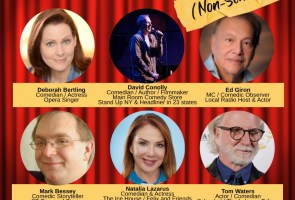
Teflon Comedy/Non-Schtick – Evening of Comedy

Thu, Oct 22
5:30 PM
Santa Barbara
Best Fest: A Celebration of the Best of Santa Barbara® Readers’ Poll 2026
Sat, Oct 17 9:00 AM
Santa Barbara
Mesa Harmony Garden Fall Plant Sale Continues…
Fri, Oct 23 2:00 PM
Santa Barbara
Music & Meditation: Clarinetist Nancy Mathison & Pianist Antonio Artese
Sat, Oct 24 9:00 AM
Santa Barbara
Mesa Harmony Garden Fall Plant Sale Continues…
Sun, Oct 18 9:00 AM
Santa Barbara
“Move with MADD” Santa Barbara 3K Community Walk & Fundraiser to Prevents Impaired Driving
Sun, Oct 18 11:00 AM
Santa Barbara
17th Annual Asian American Neighborhood Festival
Sun, Oct 18 1:00 PM
Santa Barbara
Lincoln Elementary School 150th All Year Reunion
Sun, Oct 18 3:00 PM
Santa Barbara
Seaworthy Author Talk -Will Sofrin
Sun, Oct 18 3:00 PM
Goleta
Free Concert Offers Journey Through Italian Music

Mon, Oct 19 7:00 PM
Santa Barbara
PFLAG Santa Barbara October Meeting: “Schools and Inclusive Practices – What creates a safe and inclusive school?”
Tue, Oct 20 7:00 PM
Santa Barbara
Get Out the Vote Night @ SOHO, Music Performance by Loyal Defense Workers
Wed, Oct 21 6:30 PM
Santa Barbara
Teflon Comedy/Non-Schtick – Evening of Comedy
Thu, Oct 22 5:30 PM
Santa Barbara