
A Time to Thrive
Santa Barbara Middle School Is Where Kids
Grow Up, Take Risks, and Learn to
Lead Their Own Education
By Tyler Hayden | November 19, 2026
Read more from Schools of Thought 2026 here.
Middle school has a reputation problem. Ask adults about those years, and they’ll often remember the awkwardness: changing bodies, shifting friendships, and the exhausting business of figuring out who you are while worrying about what everybody else thinks. “It’s a wild time to be alive,” said Brian McWilliams, head of Santa Barbara Middle School (SBMS). “So, most people run from those years.”
McWilliams and the school, on the other hand, have spent 50 years running toward them. Its premise is that early adolescence deserves an education built around its particular possibilities, rather than a waiting room for whatever comes next. “Junior high often becomes a holding tank between elementary school and high school,” McWilliams said. “You just got to keep them alive. We said no, it’s a time to thrive. We want to slow it down.”
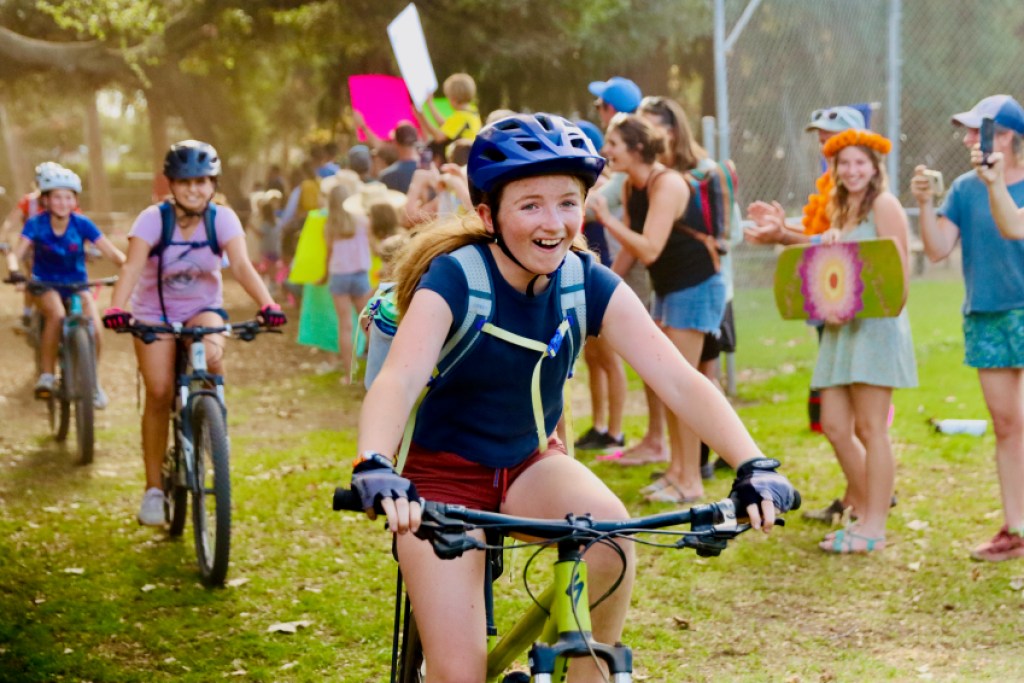
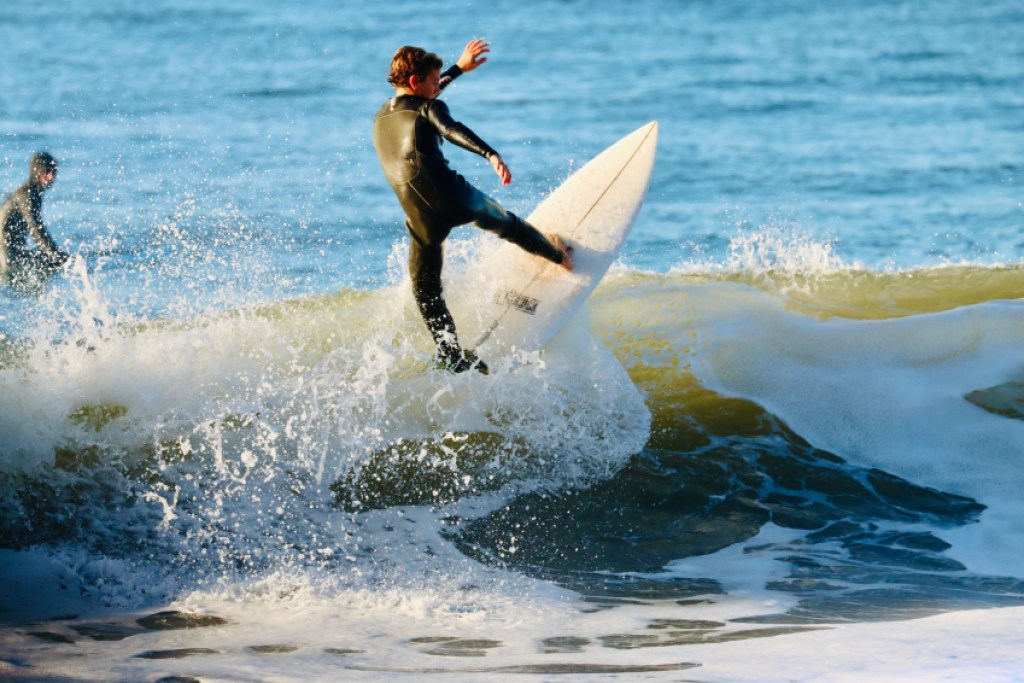
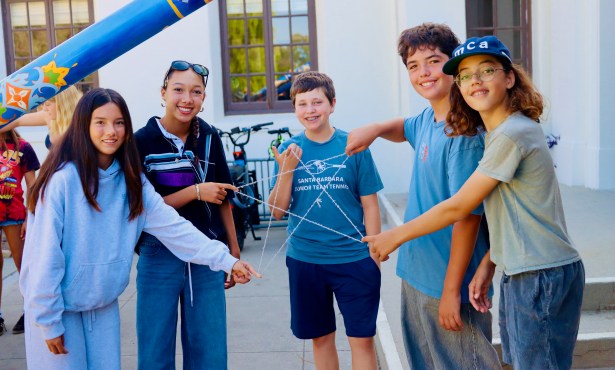
For SBMS, that means studying world history and philosophy, but also riding bikes, paddling kayaks, building fires, and discovering what happens when something difficult turns out to be incredibly fulfilling. The academics and adventures serve a shared purpose: helping students know who they are.
“We make a promise to our kids that when you come here, we’re going to walk every mile with you,” McWilliams said. “We’re going to do every trip with you. We’re going to meet you where you’re at, and we’re going to help you become a young adult who understands themselves.”
McWilliams has spent nearly three decades at the school, beginning as a teacher whose subjects included world history, outdoor education, mountaineering, and surfing. He became interim head in 2008, stayed in the job, and still teaches world history and philosophy. His main ambition is for students to “become a leader of their own education.”
“We believe at this age it’s not too early for our kids to start understanding not just what they learn, but how they learn and really why they learn,” he said. “We don’t have to wait ’til high school and college. These kids can start doing that now.”
McWilliams thinks adults sometimes underestimate that capacity. “If you give them challenges, you give them opportunities, and you let them express themselves,” he said, then students can “find their own genius.”
Those challenges unfold gradually. At SBMS, which serves grades 6 through 9, outdoor expectations grow alongside the students. Shorter bicycle outings give way to extended trips, where students explore the wilderness and learn to build fire. “We really believe there’s value in shared adversity, in calculated and appropriate hardship, and teaching our kids how to do hard things,” McWilliams said.
The same judgment applies to intellectual work, public speaking, or deciding whether conditions are right to continue a ride in the rain. McWilliams wants students to experience effort that produces discovery: a view from a mountaintop, the darkness of a sea cave, the satisfaction of traveling farther under their own power than they thought they could.
“Sometimes discomfort leads to the greatest rewards and epiphanies and understanding of the universe,” he said, “and it prepares them for real life.” He describes the program as a series of rites of passage, acknowledging stages of growing up that might otherwise pass without recognition. “We have to celebrate those stages so they can see it and get credit and build upon it,” he said.
Of course, asking adolescents to take chances also means navigating their intense awareness of one another. Raising your hand can feel risky. Sharing a poem around a campfire may require its own kind of courage. “It’s probably the most hyper-social age of their life,” McWilliams said. “Their friends become the center of their universe, and that’s developmentally appropriate.”
The school tries to make those relationships a source of encouragement. Older students model participation for younger ones, showing that sincerity and individuality earn respect. “They make it cool to share your deepest thoughts or a poem or something you’ve written around a fire,” he said. “They make it cool to be your most authentic self and to be different.”
Teachers have to earn that trust, too. Their relationships with students extend well beyond a single subject or classroom period. “We’re out on the bikes with them. We’re in the kayaks with them. We’re sitting around the fire. We’re in the rain with them,” McWilliams said. “It’s all about developing a sense of belonging.”
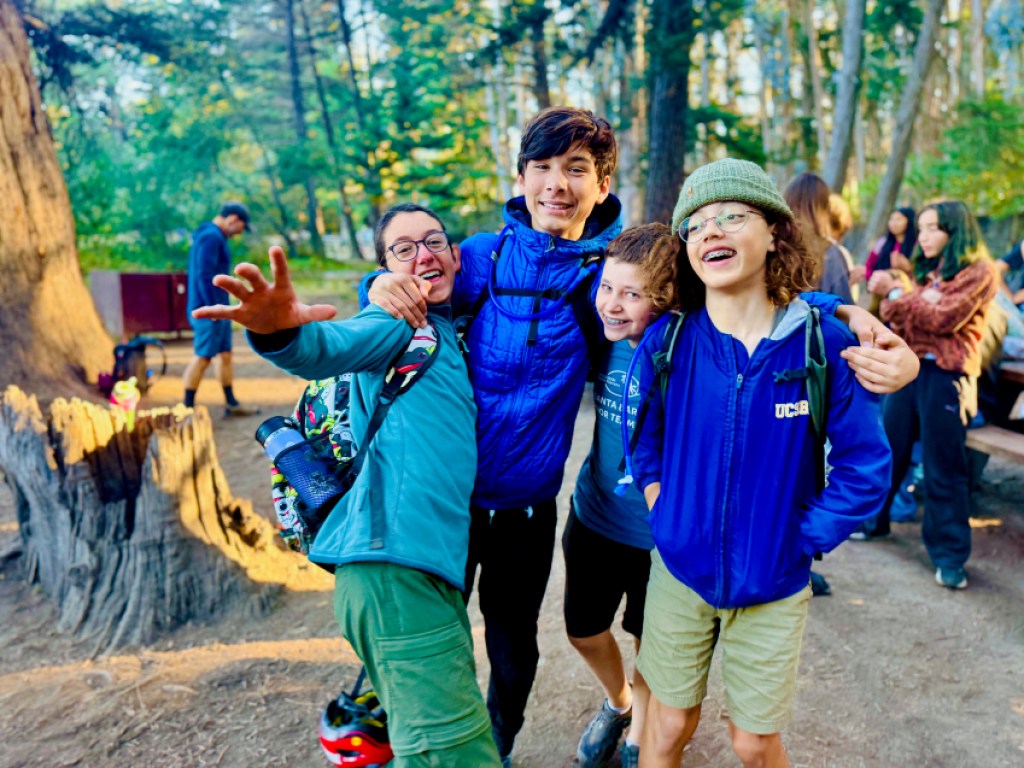
That unity carries into his classroom, where students read Siddhartha and study religious and philosophical traditions. The purpose, he explained, is to help kids understand how different people see the world and consider the qualities they want to develop themselves.
Technology adds another layer to the work. McWilliams has watched devices become an ever-present fact of childhood, changing students’ exposure to the world and parents’ perceptions of its dangers. The school’s response centers on timing and purpose, he said. Which tools should students receive, at what developmental stage, and how they can be used for good, “to blow their mind and deepen their learning?”
Artificial intelligence makes those questions all the more urgent. McWilliams wants students to first establish the foundations of thinking, writing, creating, questioning, testing, and verifying as they learn to manage increasingly capable tools. “As adults, we barely know how to use it,” he said. “We’re learning, and we’re in the wild frontier.” Still, the underlying responsibilities of teaching remain familiar. “You got to know your kids. You got to love them and care about them. You got to experience things with them,” he said.
McWilliams also wants the school’s experiments to reach beyond its own students. He sees opportunities for educators to exchange ideas across public and private schools, from bicycle maintenance and riding clubs to teen journalism. “Because we’re smaller, because we happen to have some more resources, we have a responsibility to learn and grow and share,” he said. And he is quick to credit the broader community. “We live in a great community with lots of great teachers and lots of great schools doing really cool stuff,” he said.
For McWilliams, the work returns to preserving a child’s curiosity while helping it mature. Adolescents need opportunities to struggle, connect, and discover that their own questions are worth pursuing. “If you can bring them back to what is just brilliant and beautiful and curious about the world, and they remember the fun and the joy of learning,” he said, “it’s really easy to teach. It’s really easy to reach them.”
See sbms.org.


You must be logged in to post a comment.