
Earn While You Learn:
Santa Barbara’s Union Apprenticeships
Programs Train Electricians and Plumbers
While Paying Wages and Covering Costs
By Nick Welsh | November 19, 2026
Read more from Schools of Thought 2026 here.
In very rough numbers, a typical liberal arts college student graduates carrying about $35,000 worth of debt. Year one post-graduation, that same student can expect to earn somewhere between $40,000 and $58,000.
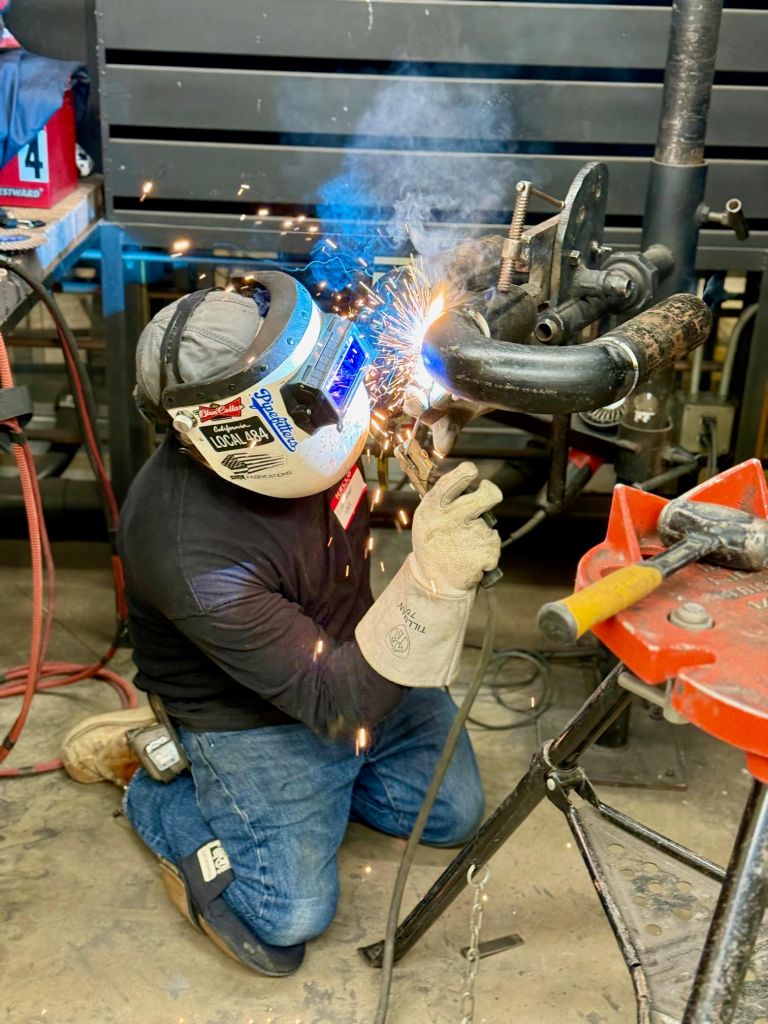
But talk to Gilbert Rea, head of the International Brotherhood of Electrical Workers Local 413, and he’ll tell you about the skilled trades apprenticeship program his union is running to train new electricians. The program requires hard work and a grinding commitment — eight hours a day of on-the-job training coupled with two nights a week in the classroom. And the training period lasts five years.
But here’s the catch. Apprentice electricians get paid as they get trained. “Earn as you learn” is one of the program’s mantras. The other is, “It’s not a job; it’s a career.” The payoff, Rea says, is well worth all the sacrifice. “After five years, you’ll be making about $100,000,” Rea exclaimed.
Even before that, entry-level trainees will be paid 40 percent of the journeyman rate of $61.25 an hour. And every year after, the percentage increases. None of that includes the union benefit package, which bulges with retirement and healthcare benefits. “We’re not rich, but we are in the higher end of the middle class,” Rea says.
Not everyone is cut out for college, Rea acknowledges. But college, he adds, isn’t cut out for everyone either. No one, he cautioned, should confuse the skilled trades as some detour for dummies. Algebra skills are absolutely necessary. So too is literacy in reading blueprints. The cost of all this training does not come cheap — $11,000 a year. But that financial burden is not borne by the trainee. It’s borne by the union and the contractor.
“Five years. No debt,” Rea sums up. “Best of all, you’ll have a skilled trade, and you can take that with you anywhere.”
Even on the phone, Rea exudes an irresistible enthusiasm for his mission. “Where else can you get paid to learn? There has to be some catch, right? It sounds too good to be true. Man, I just love helping make this happen.”
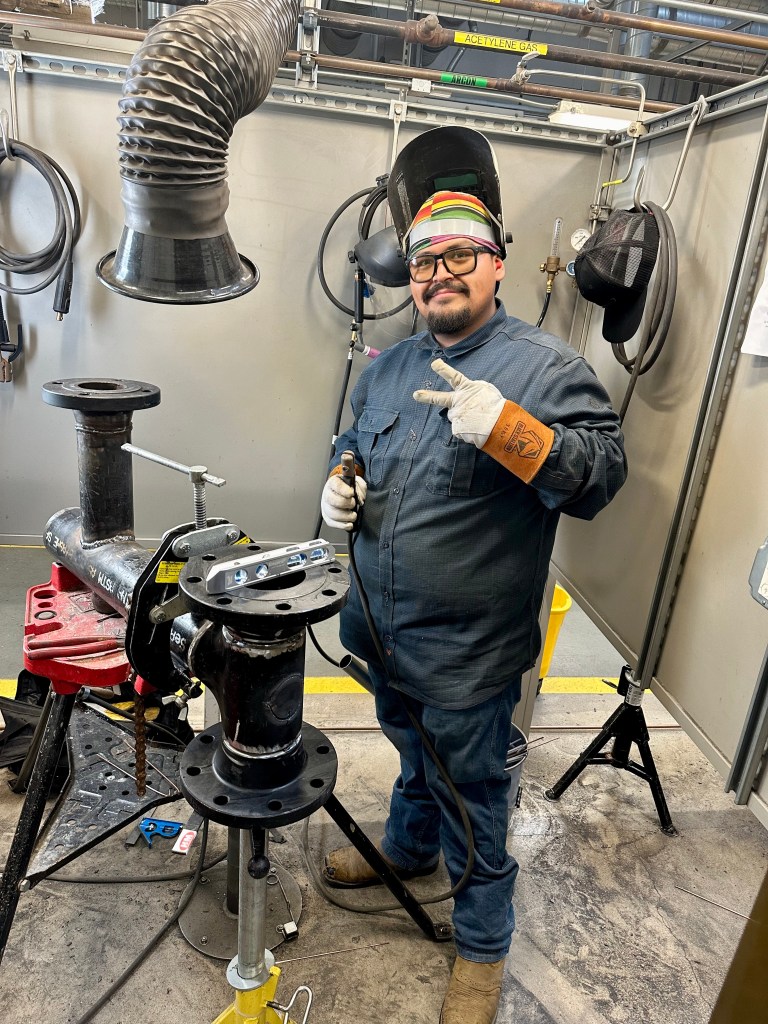
Every bit as evangelical in his zeal is Sasha Stevens, head of the UA Local 114 (United Association of Plumbers, Pipefitters, Welders, and HVAC Service Technicians). Stevens worked 15 years as a non-union plumber before embracing the union way. His non-union pay maxed out at $40 an hour, he said, and he had to pay $800 a month out of pocket for insurance. At a certain age, Stevens said, he recognized there was “no finish line” to his non-union career trajectory. Non-union guys he knew were working into their 70s and sometimes their 80s, he said.
Today, Stevens helps train the apprentices. But to transition from non-union to union work, he himself needed to relearn many of the tricks of the trade he thought he already knew. It was a little scary and intimidating, he said. It was also, he added, inspiring and exciting. Stevens also found a home in the union culture of “brothers and sisters.” Many of the people applying to be apprentices, he said, used to work non-union jobs. “They’re not all kids by any means,” he said. “We have a lot in their 30s. We have college graduates who found their field of study wasn’t really for them. I had one guy who was 62.” Stevens himself got a liberal arts degree in history; he said he wanted to be a teacher. Today, he is.
Driving the demand for new apprentices, say Stevens and Rea, are a couple of new forces at play. Older workers are retiring; there’s a ton of jobs available; to an exceptional extent, construction cranes dominate the county’s skyline; then there is the Project Labor Agreement — also known as a “hire local” agreement — which large government agencies have recently agreed to abide by. These agreements require UCSB, Vandenberg Space Force Base, the City of Santa Barbara, the County of Santa Barbara, and the City of Goleta to sublet major construction projects to union companies.
As with any scholarship program, the apprenticeship program is competitive. You have to want it, Stevens said. You have to earn it, Rea added. To even apply, you need a birth certificate, social security card, valid driver’s license, GED, and at least a C grade in high school algebra. After that, there’s a three-hour test, half of which is devoted to math skills and half is devoted to reading comprehension. Those who pass are then eligible for an oral exam. According to Stevens, 200 applied last year; 30 were accepted.
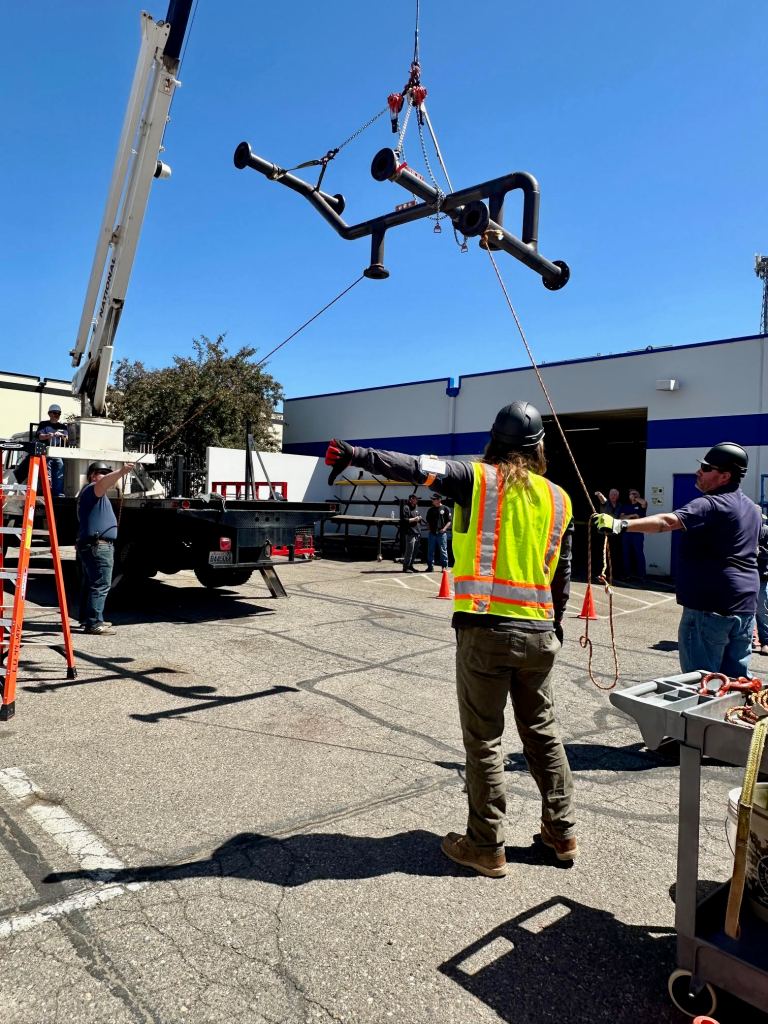
Given how perilously expensive Santa Barbara’s cost of living has become, educational leaders are growing more alive to the possibilities of skilled vocational training. Two months ago, the County Department of Education bused 150 high school students to an apprentice fair and forum up in Santa Maria. Apprentices were on hand to answer questions about the realities and rewards of their work. State Assemblymember Gregg Hart — responsible for the passage of the local Project Labor Agreement requirements — was there to deliver a speech.
Next month, Santa Barbara school board members will discuss plans to transform the long-abandoned armory located between Santa Barbara Junior High and Santa Barbara High School into a high-end hub for career skills. On the drawing boards are 10 to 12 new classrooms. Up in the air is what kind of skills would be taught and how much it would cost to transform the seismically challenged building into a functional teaching space.
As for right now, Rea and Stevens are doing what they can to germinate the next generation of skilled trades workers. The need is there. The generational drop-off is real. Paying people to learn is the way to go. “The whole thing is just plain genius,” gushed Stevens. In the meantime, there’s a third mantra the two union leaders both pointed out. “Electricians and plumbers — we’re the first ones on any project and we’re the last ones to finish,” they said.




You must be logged in to post a comment.