
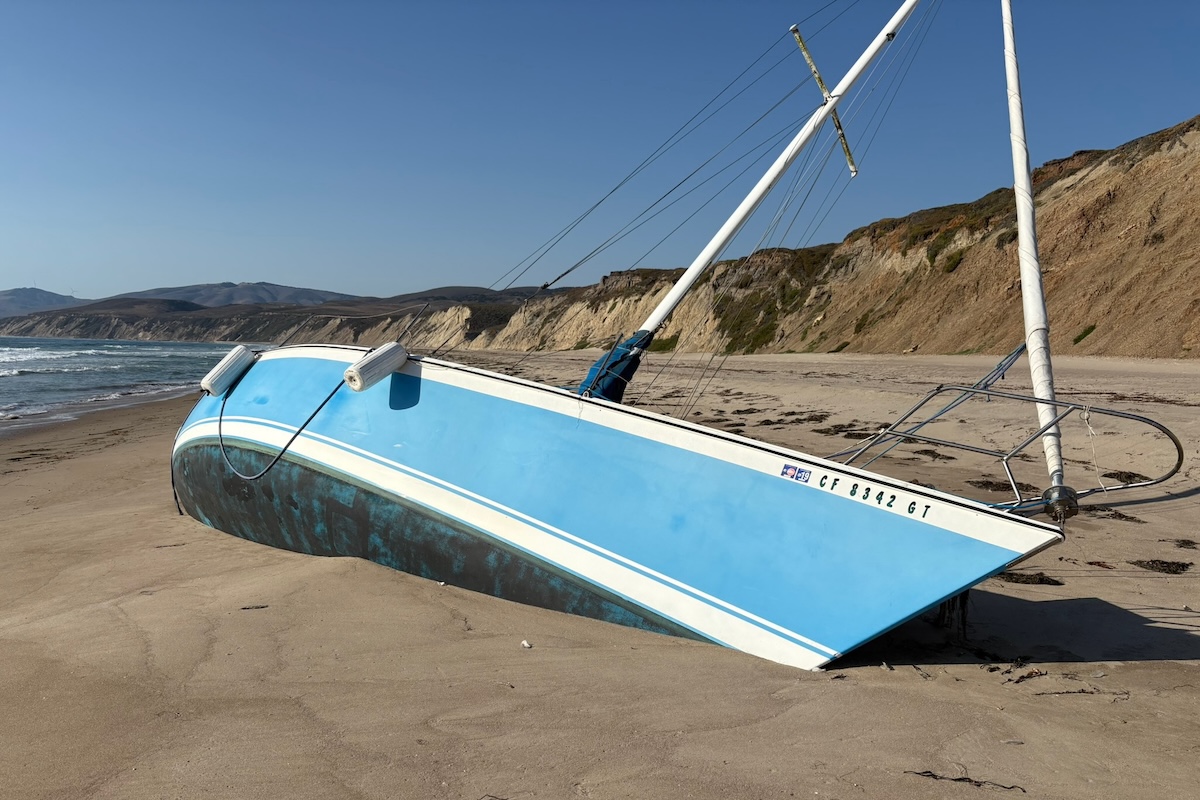
It’s a recurring nightmare for environmentalists and government agencies: Worn down boats wash ashore in environmentally sensitive areas, with nobody to pay to clean them up.
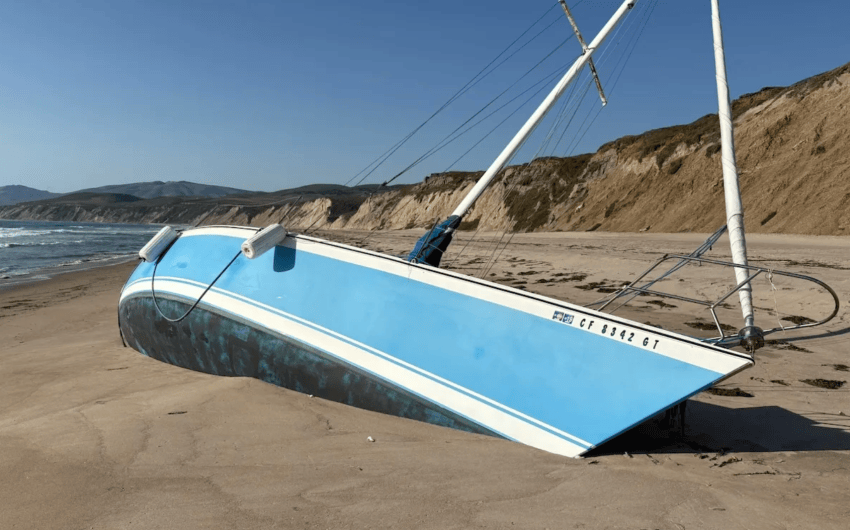
Last Thursday at Point Conception was another such nightmare. A multi-agency crew worked tirelessly to excavate an abandoned sailboat stuck in the sand. It took hours to dislodge the boat — and dispose of all the junk and gunk that came with it.
“I pulled out an eight-gallon fuel canister,” said Harry Rabin, nonprofit Heal the Ocean’s (HTO) field and research advisor. “Wrecks like these pollute, kill everything, and release all this toxic stuff — fuel, lithium batteries — it adds up and does damage. And it keeps happening.”
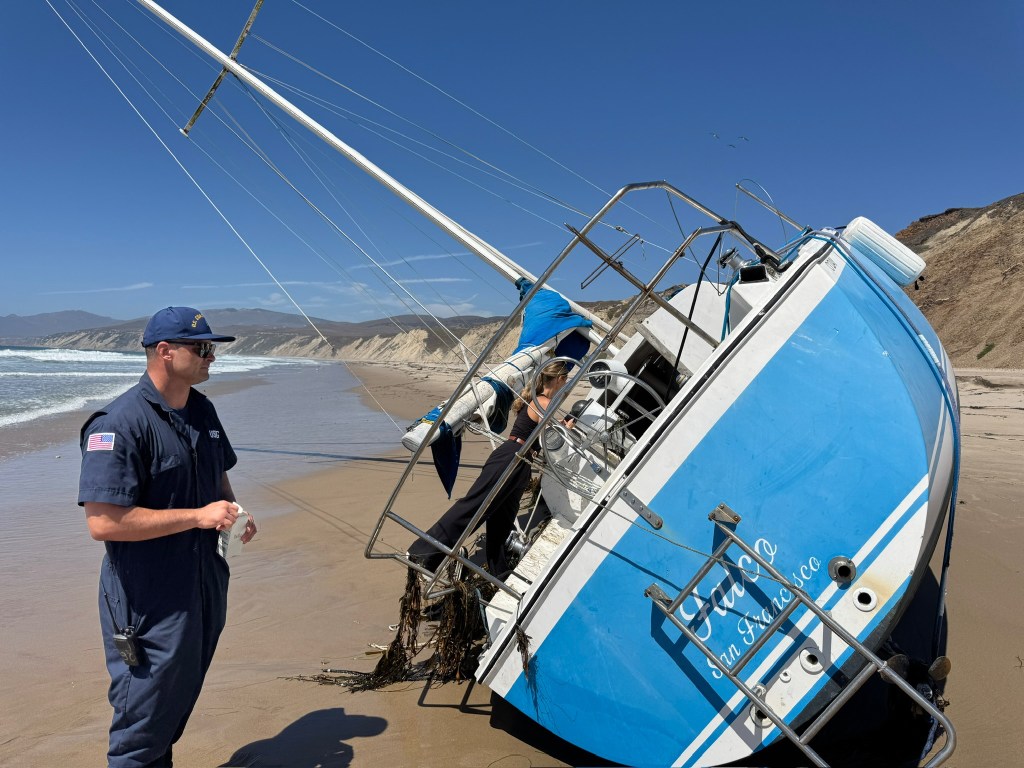
In the case of the Point Conception crash site, the owner was trying to transport the boat, named The Falco, from San Luis Obispo to Santa Barbara County but fouled the propeller. Rabin suspects he was going to try to sell it off when he reached Santa Barbara. It was reported to the U.S. Coast Guard last month and took weeks of planning to figure out how to clean it up.
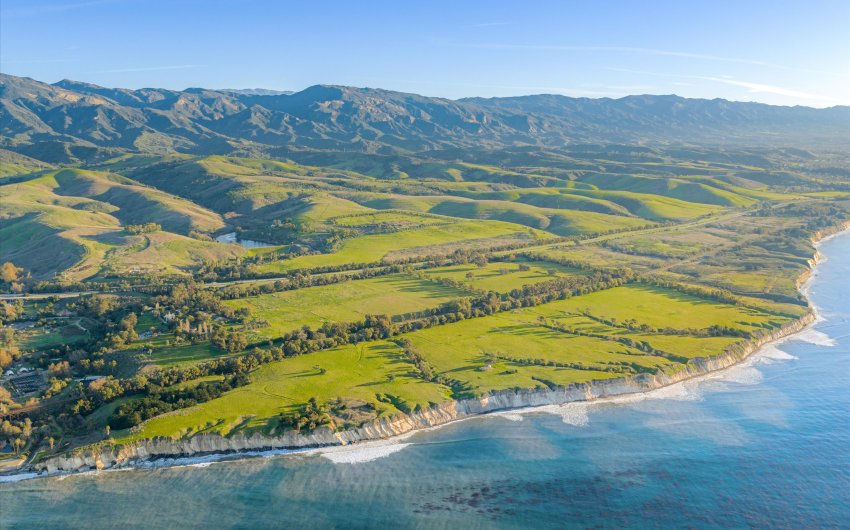
The boat was in a precarious position down a steep, narrow hill, sandwiched between the new Chumash Heritage National Marine Sanctuary, the Jack and Laura Dangermond Preserve, and the Vandenberg Space Force Base land easement — all environmentally protected areas.
Multiple agencies — including the U.S. Coast Guard, California Coastal Commission, National Oceanic and Atmospheric Association, Santa Barbara County Sheriff’s Office, and Marborg — took part in the cleanup effort, spearheaded by Heal the Ocean.
Boat Abandonment
Derelict boats — old and unseaworthy vessels sometimes sold to unhoused individuals to use as floating apartments — keep getting beached in Santa Barbara County.
“It’s a crazy thing, it’s a polluting thing, it’s a safety issue, and it’s a complex political issue as well,” Rabin said. He noted that some unhoused people see it as a better, safer alternative to sleeping on the streets.
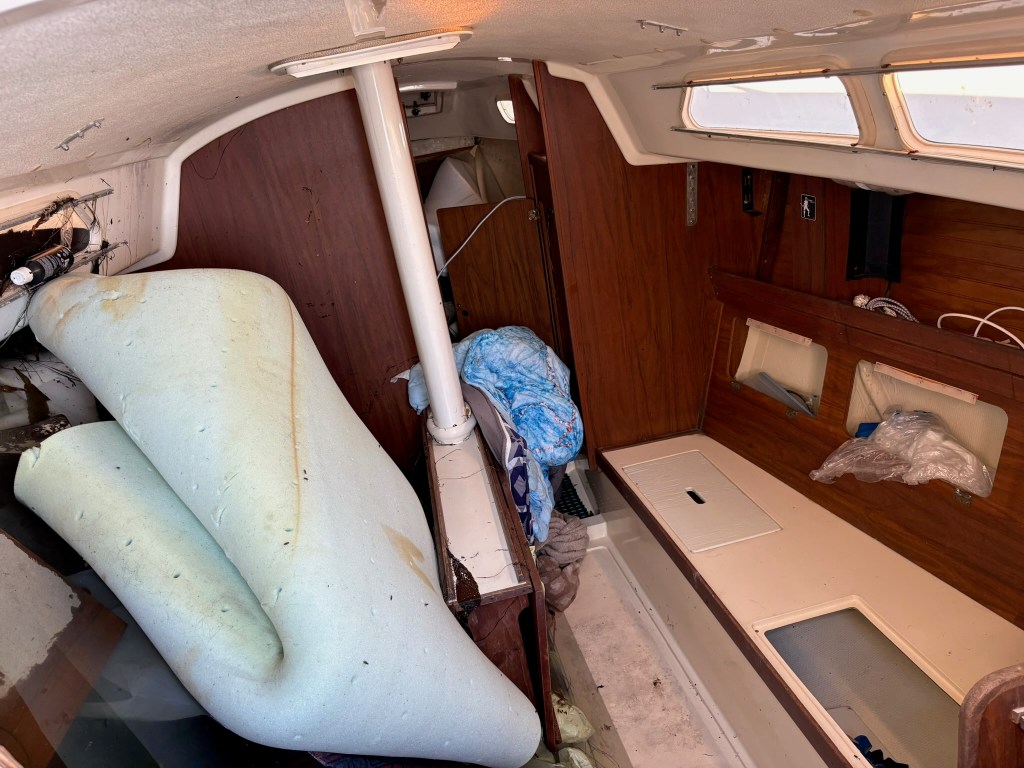
However, when they crash ashore after something like an anchor breaks, nonprofits and taxpayers frequently foot the bill to clean it up before it can wreak havoc on the ecosystem.
“People offloading these boats know how to milk the system. This guy … was able to dump that boat at Point Conception, not have to pay a dime to clean it up,” Rabin said. “There are more of these sitting out there, and they are so foul. I swear, if you got near them and breathed in, you’d get a virus. They are disgusting wrecks, and then some of them come ashore. Who’s paying for it? You know, you and me, and tax money or grants.”
Thursday’s cleanup cost about $22,000 — even with a generous discount from Marborg. Some of it was covered by a grant from the state distributed by the Sheriff’s Office for such cleanups, but a lot of it was bankrolled by HTO, Rabin said.
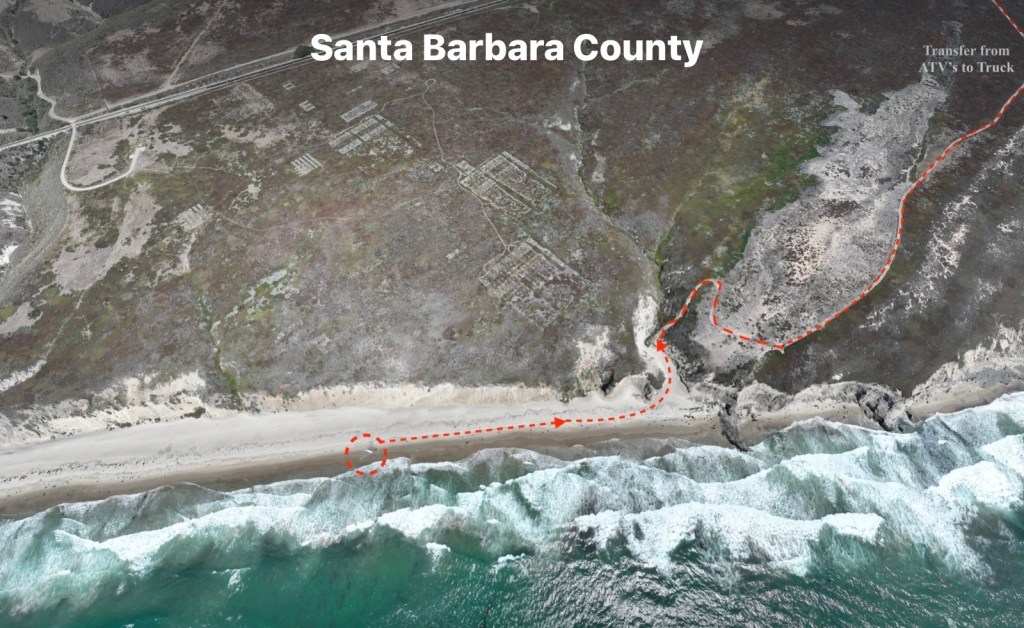
“It was an eight-hour job made quite challenging by the location,” said Brian Borgatello of Marborg Industries. The boat was stuck in the beach’s tidal zone, requiring trucks and an excavator, while having to be careful not to disturb native vegetation along the narrow and steep access route.
“I know that there wasn’t really a lot of funding for this type of work, so we discounted it very heavily to just help out and get it done,” Borgatello said. “Marborg is constantly doing this on the Santa Barbara coast. From Butterfly to West Beach, we do get quite a few.”
Persistent Problems
Point Conception’s cleanup was the fourth in six weeks. Two previously washed ashore on Butterfly Beach, one beached on Los Ochos in Carpinteria, and then this week’s wreck at Point Conception.
“Men with no business operating a vessel, with no insurance and bigger dreams, run them aground on the sensitive coastline, abandon the vessel, get out of dodge, and are never held accountable for their mess,” said Gina Fischer, chief of staff for 3rd District County Supervisor Joan Hartmann. The Falco was the second boat wreck in Hartmann’s jurisdiction in six years. “It’s so frustrating,” she added.
Heal the Ocean, city officials, and the county are doing their best to address the issue. The City of Santa Barbara recently passed legislation, effective January 2026, to require all vessels berthed, moored, or anchored in the Harbor District to provide proof of general liability coverage with a minimum policy limit of $300,000. This applies to all vessels in the harbor as well as all vessels anchored or moored in city waters.
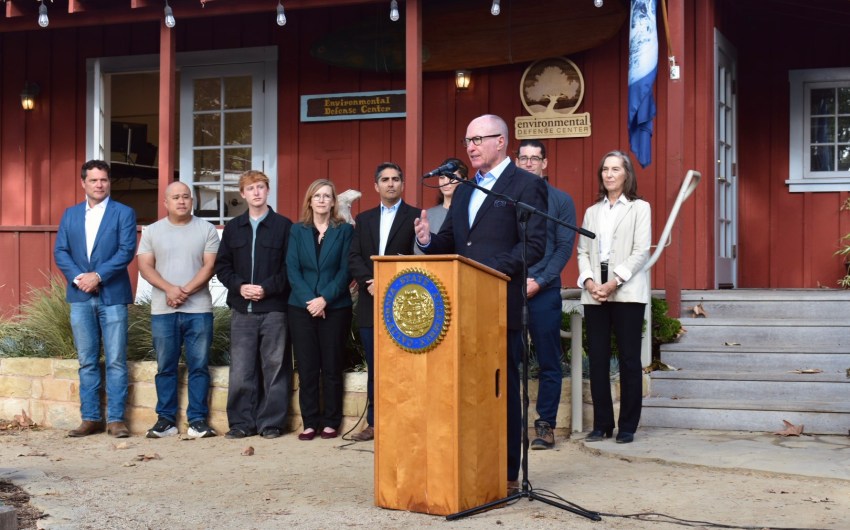
“The insurance requirements include levels of liability that indemnify the city and/or help with costs of demolishing and hauling,” Santa Barbara Mayor Randy Rowse said. “The county’s waters are adjacent to ours, and, while the jurisdiction and responsibility can be confusing, our Waterfront Department, working with HTO, acts proactively to remedy the situation and seek out responsibility after the fact to avoid ocean contamination or public safety issues.”
Rowse said he “relates” to HTO, adding that they “are boots on the ground to prevent further environmental hazards.” The nonprofit has fronted the expenses on more than one occasion, Rowse noted.
“Maritime laws regulating open roadsteads go back to the 19th century, and we are looking for ways to protect our coastline from these floating hazards,” he continued. “We — the Waterfront Department — work closely with HTO and Marborg to move swiftly to reduce public hazards and pollution as quickly as possible.”
The county is trying to figure out a solution too, but questions around the extent of their jurisdiction and methods for enforcement hang in the air. According to Fischer, Supervisor Hartmann would like to see a statewide insurance requirement for vessels.
“We have been working with staff to find some ways to change our county ordinances to stop these boat wrecks,” said 1st District County Supervisor Roy Lee, who has also participated in a few meetings for the Boat Task Force formed in 2022. “At this point, we are still in the exploratory phase, but I think we will find a solution.”
Related Posts


Premier Events

Wed, Oct 14
5:30 PM
Santa Barbara
Free Home Hardening & Firescaping Workshop

Sat, Oct 10
9:00 AM
Santa Barbara
SBNC 1st Annual Health & Wellness Fair

Sat, Oct 10
1:30 PM
Goleta
🌴 Another Day in Paradise at S.B’s Premier Ice Rink

Sun, Oct 11
7:00 AM
Ojai
Flamenco Guitarist Tony Ybarra

Sun, Oct 11
10:00 AM
Santa Barbara
18th Annual Domestic Violence Solutions Brunch
Sun, Oct 11
10:00 AM
Santa Barbara
Free Community Day at S.B. Botanic Garden
Sun, Oct 11
10:00 AM
Santa Barbara
Downtown Classic Car Show Santa Barbara
Sun, Oct 11
11:00 AM
Santa Barbara
Raíces y Sueños: Bilingual Storytime at Santa Barbara Museum of Art

Sun, Oct 11
2:00 PM
Santa Barbara
The Theatre Group at SBCC Presents: “CLUE”

Sun, Oct 11
10:00 PM
Santa Ynez
Inaugural Santa Ynez Art Walk
Mon, Oct 12
6:30 PM
Santa Barbara
Science Pub: Discuss “Ophiolites & Plate Tectonics” with Dr. Rioux
Wed, Oct 14 5:30 PM
Santa Barbara
Free Home Hardening & Firescaping Workshop
Sat, Oct 10 9:00 AM
Santa Barbara
SBNC 1st Annual Health & Wellness Fair
Sat, Oct 10 1:30 PM
Goleta
🌴 Another Day in Paradise at S.B’s Premier Ice Rink
Sun, Oct 11 7:00 AM
Ojai
Flamenco Guitarist Tony Ybarra
Sun, Oct 11 10:00 AM
Santa Barbara
18th Annual Domestic Violence Solutions Brunch
Sun, Oct 11 10:00 AM
Santa Barbara
Free Community Day at S.B. Botanic Garden
Sun, Oct 11 10:00 AM
Santa Barbara
Downtown Classic Car Show Santa Barbara
Sun, Oct 11 11:00 AM
Santa Barbara
Raíces y Sueños: Bilingual Storytime at Santa Barbara Museum of Art
Sun, Oct 11 2:00 PM
Santa Barbara
The Theatre Group at SBCC Presents: “CLUE”
Sun, Oct 11 10:00 PM
Santa Ynez
Inaugural Santa Ynez Art Walk
Mon, Oct 12 6:30 PM
Santa Barbara


You must be logged in to post a comment.