
Santa Barbara Middle School
Cracks the Code
Outdoor Education Is Essential Component of
Whole-Child Approach
By Callie Fausey | November 20, 2025
Read more from Schools of Thought 2025 here.
The middle school years can be known for awkwardness and anxiety. It’s a “messy metamorphosis,” in the words of Brian McWilliams, Head of School at Santa Barbara Middle School.
However, he thinks his school has “cracked the code” on guiding preteens through this often-uncomfortable chrysalis phase, so they can emerge as confident and compassionate individuals ready to take on the world with curiosity and grit.
How? Well, he listed quite a few reasons — small class sizes, intellectual vitality, educating the whole child through a variety of creative arts, electives, and sports — but the catalyst is their outdoor education program.
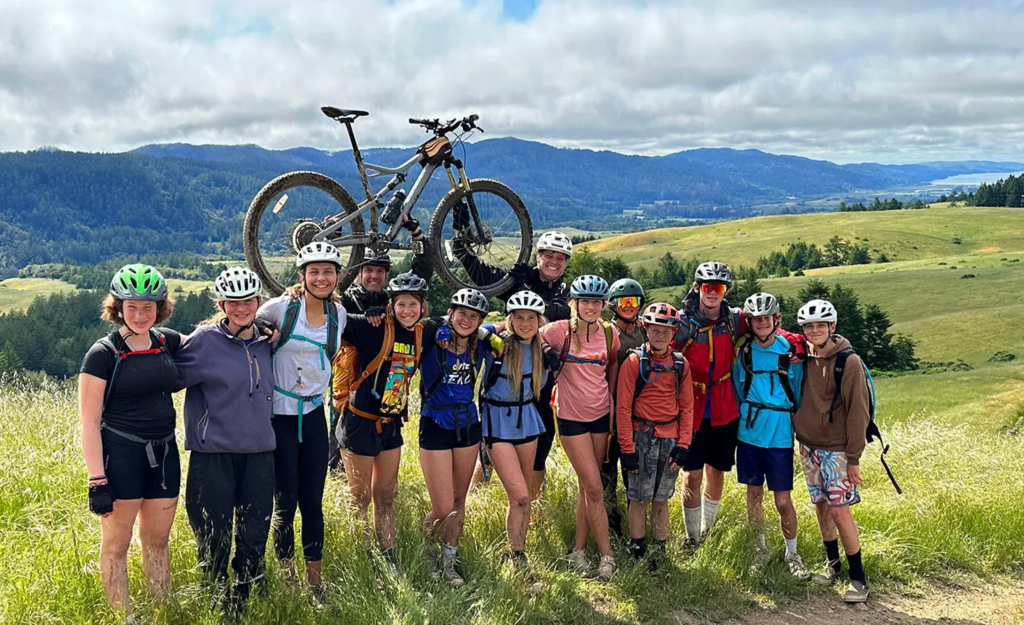
Almost all teachers at SBMS, an independent middle school in Santa Barbara’s lower riviera, spend at least 20 days a year out on the road for customized, age-appropriate expeditions. During these expeditions, their 6th-9th grade students learn how to cook, bike, kayak, create community, and get to know themselves in a way that only comes from authentic outdoor education experiences. And the kicker? No. Screens.
These expeditions really crack the kids open (metaphorically), McWilliams said. It’s about sharing experiences of adversity mixed with moments of wonder.
“When you spend time in the wilderness, having to climb your own mountains and cook your own food and create your own entertainment, you gain a much deeper sense of self and a much better connection to your community and your teachers,” he said. “The teacher-student relationship becomes more authentic. We really don’t see many discipline problems here.”
McWilliams and the school’s teachers are out there with the students, opening opportunities for real mentorship — which, he said, “doesn’t happen in a box; it happens when you’re experiencing real life, real situations.” Even the teachers often learn new things alongside their students, creating a deeper connection that bolsters mutual respect.
“I’ve got kids passing me on their bikes because I’m so slow and it resets the playing field,” McWilliams said with a laugh. “And then, of course, there’s just the value of learning from the outdoors. We’ve been out there for millions of years, and we’ve been indoors for thousands.”
The school’s logo is a diamond within a circle, with each point representing one of those essential parts of the SBMS learning experience: academics, community, outdoor education, and creative arts and sports.
It’s underscored by McWilliam’s three R’s: relationships, resilience, and relevance. Traditionally, Lincoln’s three R’s are reading, riting (writing), and rithmetic (arithmetic) — which, of course, the school delivers as well — but the modern teenage brain is nothing if not resistant to “tradition.” Academics, McWilliams stressed, is about developing intellectual vitality — not how many books a 13-year-old can carry on their backpack.
“We have great teachers who find out what’s relevant for the teenage brain, how they can digest things, how they light up and get excited about something, how they learn more about the problems in the world around them, how they can work towards potential solutions,” he said.
“Kids are curious. They want to know how things work,” he continued. “So we focus on, for example, how do we highlight the most interesting, relevant parts of American history to a teenager that will help them understand our country better?”
Through challenging courses, the outdoor “rites of passage” program, and by celebrating and embracing the middle school years, the kids find that they are “capable of great things,” he said. They discover their true identities.
“We think these are the four years that are maybe the most critical in a student’s life, because this is where they individuate,” he continued. “That’s where they figure out who they are and who they want to be. They can become athletes. They can become rockers. They can become scientist, but most importantly, they become leaders of their own learning”
Learn more at sbms.org.


You must be logged in to post a comment.