

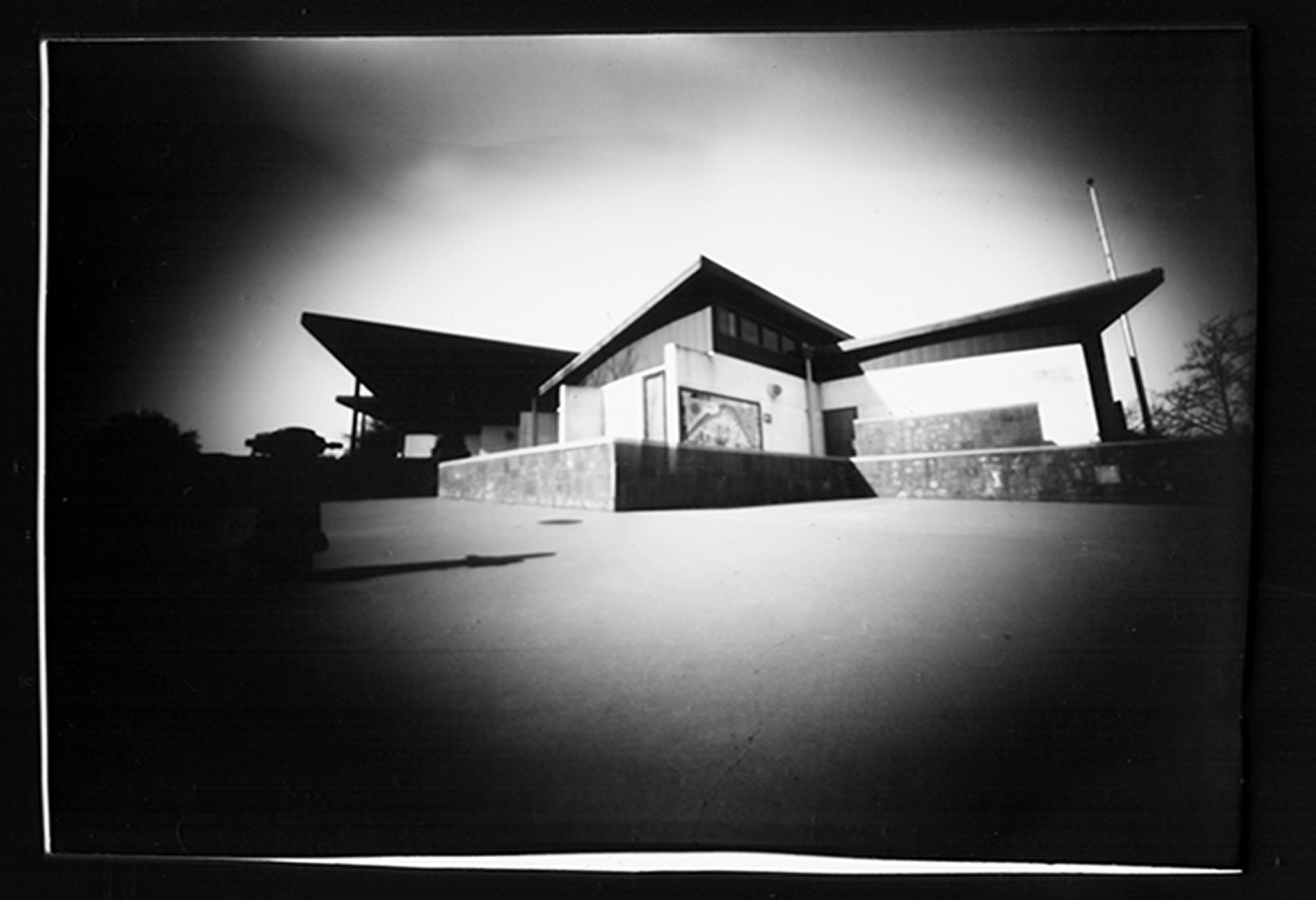
In this age of the easily accessible — too easily — photo op tool of a cell phone, a counter interest is developing for older, funkier, and “analog” photographic technologies. Among these once out-to-pasture tools are Holga/Diana cameras and pinhole cameras, the heir to the ancient camera obscura concept, proudly on display in Lindsay Skutch’s show Pinhole Noir, now on view at the Architectural Foundation Gallery.
(Coincidentally, Jeff Bridges’s Jeff Goes Wide exhibition, now at the Tamsen Gallery, champions his passion for another arcane and archaic camera, the panoramic Widelux F8 camera, which he and his photographer wife, Susan, are trying to resurrect in the form of the new Widelux X model.)
Skutch happened upon the allure of the pinhole, almost by accident. She studied at Brooks Institute and went to produce commercials with some formidable film directors, including Alfonso Cuarón, Kathryn Bigelow, Sidney Pollock, and John Frankenheimer. Thirty-eight years later, the pinhole concept beckoned as an expressive outlet. Given the film and mystery elements contained in this gallery, “Pinhole Noir” is a more than fitting title.
It might be said that she brings a certain cinematic vision behind the imagery in this exhibition. And in a rare occasion, when the actual means of artistic production are not only on view in the gallery but also aid in understanding the venerable ethos and process involved in the images we see here. Her pinhole “cameras” are fashioned from vintage cookie and coffee tins, strategically punctured; to quote Leonard Cohen, “That’s how the light gets in.”
The images here are grainy and fragile, with obscuring effects distancing the pictures from standard, sharp photographic values — as if seen through a glass darkly and unevenly. The effect is enigmatic, turning familiar scenery from around Santa Barbara and California into mysteries.
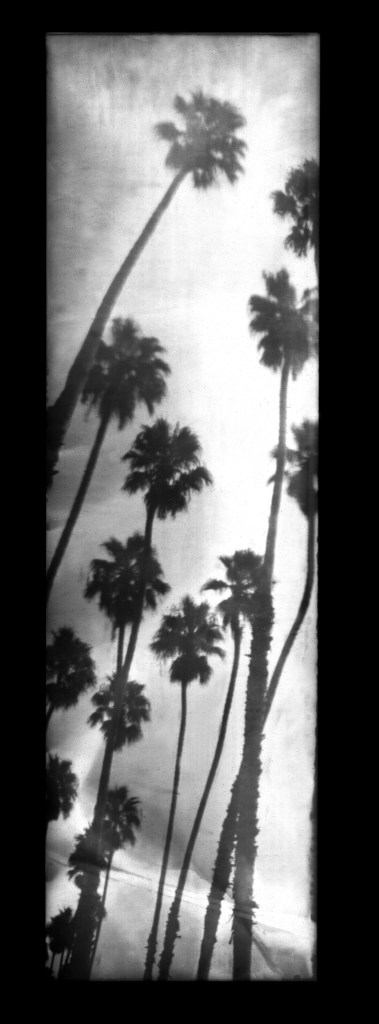
At times, the unstable images seem akin to negative prints themselves, so it is not too jarring to suddenly find a set of negative images on one stretch of wall. Among other things, these images alter what we know about the Goleta Beach palm trees or the well-known pyramid-shaped tomb at the Santa Barbara Cemetery.
Visual transformative results of the system include the “iris shot,” as seen in early silent films — including those produced out of the influential Flying A Studios on Santa Barbara’s own Mission Street. The most commanding of pieces graced with the “iris shot” effect is a shot of the Isla Vista Elementary School, which emerges as both an account of that specific structure and a formal investigation into the secret life of Modernism, in our 805 midst.
Fogged-over layers and scrims on depictions of the Arlington Theatre and the San Francisco Tenderloin almost evoke an atmosphere of seismic anxiety, their archival appearance triggering memories of the 1925 and 1906 earthquakes, respectively. The Santa Barbara pier is seen in a small panoramic horizontal shot with an uneven focus resembling the appearance of early photography, and a certain built-in wistfulness. And a strange, lean vertical view of palms at Goleta Beach runs counter to the Chamber of Commerce–approved cliché of color palm images representing our town as a bastion of “American Riviera” leisure.
In a humble way, Skutch’s pinhole adventure has led her to approach the ideal of many instances of fine art — to allow the artist and her observer to see the world in a new way.
Pinhole Noir by Lindsay Skutch is on view at the Architectural Foundation Gallery (229 E. Victoria St.) through May 30. See afsb.org. There will be an artist talk on Saturday, April 25, 2-3 p.m.
Related Posts

Premier Events
Fri, Sep 11
2:00 PM
Santa Barbara
Music & Meditation SB with Robert DeMaine, cello
Sat, Sep 12
9:00 AM
Santa Barbara
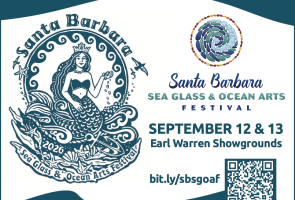
Santa Barbara Sea Glass & Ocean Arts Festival
Sun, Sep 13
9:00 AM
Santa Barbara
Santa Barbara Sea Glass & Ocean Arts Festival

Fri, Sep 11
5:00 PM
Santa Barbara
Romeo & Juliet at Elings Park

Fri, Sep 11
7:30 PM
Santa Barbara
Planned Parenthood CCC After-Hours Event!

Fri, Sep 11
7:30 PM
Santa Barbara
Selah Dance Collective: “Beethoven’s Tango” and “The Stranger”
Sat, Sep 12
9:00 AM
Santa Barbara
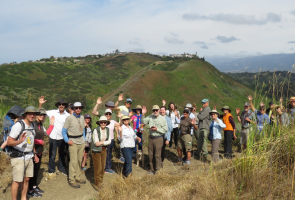
Community Walk with ‘Latino Outdoors’

Sat, Sep 12
10:00 AM
Santa Barbara
Planned Parenthood’s 52nd Annual Mary Jane McCord Book Sale
Sun, Sep 13
10:30 AM
Santa Barbara
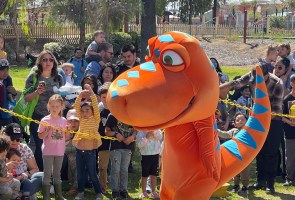
Meet PBS Kids Character Buddy the Dinosaur
Sun, Sep 13
1:00 PM
Santa Barbara
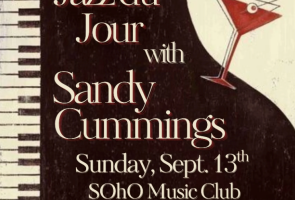
SB Jazz Society: Jazz du Jour with Sandy Cummings at SOhO

Sun, Sep 13
4:00 PM
Santa Barbara
PPCCC YA (Planned Parenthood Young Advocates) Community Reading
Sun, Sep 13
6:00 PM
Santa Barbara
The Papas and Mamas – A MAMAS & PAPAS Experience
Mon, Sep 14
6:30 PM
Santa Barbara
Science Pub: Fire – History, Science and Practice
Fri, Sep 11 2:00 PM
Santa Barbara
Music & Meditation SB with Robert DeMaine, cello
Sat, Sep 12 9:00 AM
Santa Barbara
Santa Barbara Sea Glass & Ocean Arts Festival
Sun, Sep 13 9:00 AM
Santa Barbara
Santa Barbara Sea Glass & Ocean Arts Festival
Fri, Sep 11 5:00 PM
Santa Barbara
Romeo & Juliet at Elings Park
Fri, Sep 11 7:30 PM
Santa Barbara
Planned Parenthood CCC After-Hours Event!
Fri, Sep 11 7:30 PM
Santa Barbara
Selah Dance Collective: “Beethoven’s Tango” and “The Stranger”
Sat, Sep 12 9:00 AM
Santa Barbara
Community Walk with ‘Latino Outdoors’
Sat, Sep 12 10:00 AM
Santa Barbara
Planned Parenthood’s 52nd Annual Mary Jane McCord Book Sale
Sun, Sep 13 10:30 AM
Santa Barbara
Meet PBS Kids Character Buddy the Dinosaur
Sun, Sep 13 1:00 PM
Santa Barbara
SB Jazz Society: Jazz du Jour with Sandy Cummings at SOhO
Sun, Sep 13 4:00 PM
Santa Barbara
PPCCC YA (Planned Parenthood Young Advocates) Community Reading
Sun, Sep 13 6:00 PM
Santa Barbara
The Papas and Mamas – A MAMAS & PAPAS Experience
Mon, Sep 14 6:30 PM
Santa Barbara



You must be logged in to post a comment.