
Book Smart
Santa Barbara’s First Literary Festival
Offers a Feast for Story Lovers of All Kinds
By Leslie Dinaberg, Matt Kettmann, Brian Tanguay & Emily Vesper
April 29, 2026
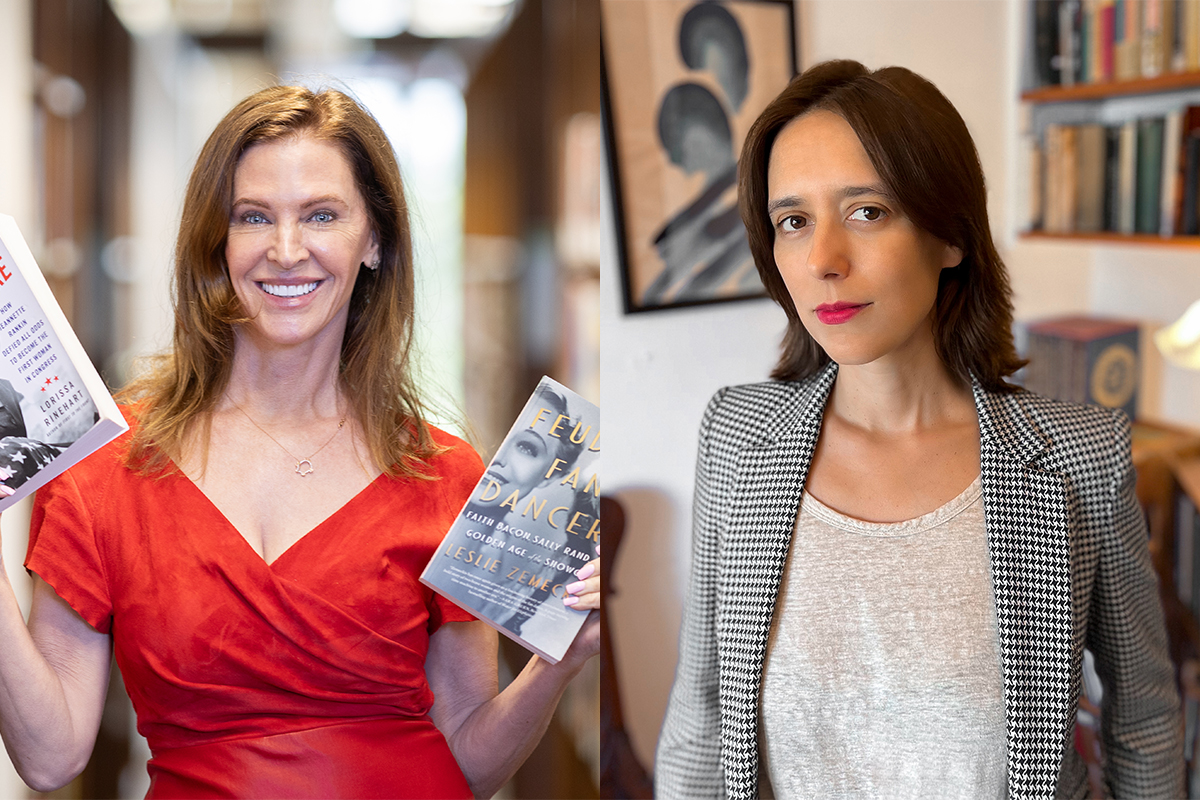
A delicious treat is coming to Santa Barbara in a big way with this weekend’s launch of the inaugural Santa Barbara Literary Festival, featuring an impressive menu of big names from the book world giving keynote addresses and participating in panels, workshops, and pop-up events in a veritable buffet of lovely venues throughout downtown S.B. the weekend of May 2-3.
This fabulously ambitious undertaking was cooked up by founders Lorissa Rinehart and Leslie Zemeckis, both Santa Barbara–based authors and tirelessly passionate advocates for the notion that literature is not just meant to be read, but experienced.
And what an experience they’ve got in store for us!
With topics that run the gamut from pop culture to food, fiction, art, nonfiction, children and teen authors (including activities for families and young readers), audiobooks, romantasy, agents, and memoirists, in addition to an A-list array of authors, the literary festival truly aims to please every interest. The event is also set up in a way that encourages guests to explore the downtown area on foot between venues that include the Lobero Theatre, La Arcada Plaza, the Alhecama Theatre, the Kimpton Canary Hotel, Karpeles Manuscript Library, the Pico Adobe, and the CEC Hub — truly weaving the festival into the fabric of our town where they can not only appreciate the intellect and wit of the participants, but also the beauty of their surroundings.
After all, a book is one of the most portable forms of entertainment there is, so why not indulge in a little real-life scenery along with the armchair travel that reading provides.
We spoke with a few of the dozens of authors participating in the festivities, a mere amuse-bouche for the banquet in store for story lovers. See santabarbaraliteraryfestival.org for the complete schedule.
—Leslie Dinaberg, Arts & Culture Editor
The Santa Barbara Literary Festival takes place May 2-3 throughout downtown Santa Barbara featuring a distinguished list of authors that includes Susan Orlean, Ann Liang, Ariel Sullivan, Katherine Stewart, Paula McLain, Danielle Trussoni, Shannon Watts, Tod Goldberg, Roda Ahmed, Romina Garber, Beatrice Dixon, Mike Bender, Daniel Humm, Stuart Gibbs, Morgan Matson, Pete Oswald, Justina Blakeney, Dawn Tripp, Faith Phillips, Lolá Ákínmádé Åkerström, Jane Borden, Chelsey Goodan, and Edward Humes, among others. Several of the events (including children’s programming) are free, and the entire event is free for first responders. See santabarbaraliteraryfestival.org for additional details and to purchase tickets.
Walter Mosley, Keynote Speaker, May 2
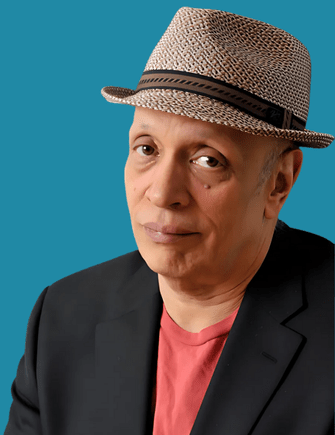
When I asked Walter Mosley if he remembered the first book that had captivated him as a child, his answer came instantly: Winnie-the-Pooh. Besides being a book that’s an apt representation of childhood, Mosley said Winnie-the-Pooh is a useful starting point for a novelist, with its cast of characters, each with their own story and idiosyncrasies, and their relationship to one another. Useful indeed.
Over the course of his long career, Mosley has established himself as one of the most versatile American writers of his generation, producing work in eight different genres. His newest book, Ghalen, is a romance. When I asked him if his approach differs from one genre to the next, he told me that what he’s writing about dictates the genre. When he had an idea for a story about the human soul, for example, he found that science fiction was the most effective genre to tell that story.
In addition to being prolific and versatile, Mosley is a craftsman who believes that writing is rewriting. His books go through as many as 30 iterations before he deems them ready for the world, and this includes reading them aloud, first to make sure the words are properly used, then to determine if the dialogue sounds authentic, and finally to see if the prose has the right beat and rhythm.
Read any of Mosley’s books and you’re likely to recognize the musicality of his writing. Mosley’s Easy Rawlins series alone would be a career for some writers, but as he explained to me, whether he’s writing about a recurring character or starting a completely new project, his intent is to produce a book that stands on its own. “I write the books that I think get closest to what I’m trying to do,” he said.
When I asked about books that he deems worthy of rereading, he mentioned The Stranger by Albert Camus, One Hundred Years of Solitude by Gabriel García Márquez, and the stories of Langston Hughes. A lover of science fiction, Mosley had high praise for Lord of Light by Roger Zelazny. He also pointed to Dashiell Hammett as a stylist who was ahead of his time, noting how seamlessly The Maltese Falcon moved from the page to the screen. The point about these particular books, and rereading in general, is that while the book remains the same, locked into its time and place, the reader is likely to have changed and that changes the experience. I mentioned having just begun to reread Fearless Jones, a novel Mosley published in 2001, and how the opening scene struck me very differently than it did the first time I read it several years ago.
Though Mosley kept the subject of his keynote address close to his vest, it’s certain to be a memorable and edifying experience for those in attendance. See bit.ly/48na5A5 for tickets. —Brian Tanguay
Steven Rowley, Keynote Speaker, May 3

Before becoming a best-selling novelist in his forties — with the surprise 2016 hit Lily and the Octopus, which uses magical realism to tell the moving story of a man’s love for his dog and her losing battle with cancer — Steven Rowley set his storytelling sights on the big screen. He got bites and options here and there, but that big Hollywood break proved elusive.
“I went to film school, and I was trying to make it as a screenwriter for a while. But screenwriting is frustrating because … you need an actor, you need a director, a producer…. After years of attempting that, I was frustrated, and I thought naively, perhaps that … if I just wrote a novel, I would have more control over putting it out into the world,” Rowley told me.
“Of course, it’s never as easy as one thinks, but that’s what first led me to try writing novels,” he laughed. Now, he’s the author of many books — including The Editor, The Dogs of Venice, The Celebrants, The Guncle, The Guncle Abroad, and the upcoming Our Guncle illustrated children’s book and the upcoming novel Take Me with You, both of which come out on May 19 — whose primary throughline is that they’re all heartfelt, witty, emotionally resonant, and feature gay characters prominently.
Speaking from his home in Palm Springs, where he lives with his husband, Byron Lane — a fellow novelist (Big Gay Wedding, A Star Is Bored) who will appear at the Santa Barbara Literary Festival on Saturday, May 2, doing a workshop called Turn Your Life Into a Novel, and as part of the Survival Panel on May 3 — Rowley confided that even with the knockout success of Lily and the Octopus, his journey was still not an entirely smooth one.
“I love to be honest about this, for people who have their own writing ambitions…. Lily was a success out of the gate; it was a best-seller. I sold translation rights in 20 languages, and it was optioned for a film, and so by any metrics, it was a success. But my publisher rejected my follow-up novel, which was a book called The Editor [a fictional story of a young author whose manuscript is acquired by Jacqueline Kennedy Onassis during her time at Doubleday].”
When I expressed surprise, Rowley said, “I think, from their point of view, they wanted me to write another dog book.” Needless to say, that book forced him to take a leap. “I decided to roll the dice on myself again, and I landed with my now current publisher, Putnam, and was very lucky to be able to land on my feet. But each one is its own challenge. Just because you’ve been published once does not mean, necessarily, that it’s smooth sailing from here on. The business is a tough one … it’s always a challenge.”
On the subject of challenges, Rowley said the thrust of his keynote talk on Sunday, May 3, will be the importance of humor in challenging times. “I think people often mistake humor for the absence of seriousness, and I very much disagree with that. I think humor just reframes or recontextualizes a situation that allows it to be a little more easily digestible and understandable,” he said. “And so sometimes, I think if we approach something with humor, it’s actually because we are taking it more seriously, and it’s a way to get through it.”
See bit.ly/4mITuMY for tickets. —Leslie Dinaberg
Susan Orlean on Joyride, Curiosity, and Craft,
May 2
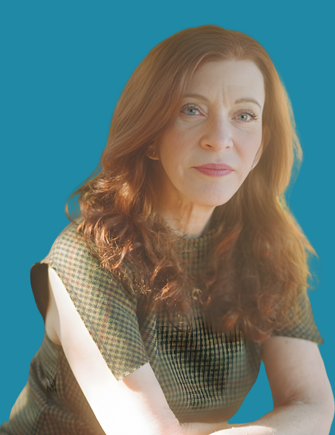
When Pico Iyer interviewed Susan Orlean in 2019 for a UCSB Arts & Lectures event featuring her extraordinary book The Library Book, Iyer paid her a compliment I’ve never forgotten. Pointing at a glass of water sitting on the table between them, Iyer said that Susan Orlean could write a story about this glass of water and make it absolutely fascinating. And no doubt she could. Orlean is one of our most beloved writers of narrative nonfiction.
She was taught to read by her older siblings before she started school and recounted to me her first reading of The Black Stallion and other animal books. Her love of animals carried on, and in October 2021, she published a collection of essays titled On Animals. When I spoke with her recently, I was curious to find out what books and writers she turns to repeatedly, and without hesitation, she cited Slouching Towards Bethlehem by Joan Didion, Great Plains by Ian Frazier, and any number of books by John McPhee and Calvin Trillin. For Orlean, these writers are stand-ins for a great teacher that she can turn to for inspiration or to figure out how to deal with a particular narrative challenge. We also talked about books that deserve to be reread. “Books that achieve greatness,” Orlean said, “are those you can revisit again and again.”
Orlean is known for her uncanny ability to merge insatiable curiosity with phenomenal storytelling. This doesn’t come about by accident. Orlean spent six years working on The Library Book. Her practice is to cast a wide net over her subject and then slowly tease out the most relevant and tantalizing details. She didn’t need to know about the iconic library of Alexandria, for example, and it’s only referenced one time in The Library Book, but Orlean felt she needed to know something about it nonetheless. She refers to her pre-writing process as “elbow grease.” Through her research and reporting, she typically uncovers far more information than she can use, but it’s this painstaking process that produces telling and evocative details.
Writing her memoir, Joyride, presented a different challenge in that she had to treat herself as the subject. Answering the question “How do I report on myself?” was one the first thing she had to sort out. She ended up hiring another journalist to interview her, and then used the transcripts to help her put herself front and center in the narrative.
The Santa Barbara Literary Festival happens to coincide with the first time Orlean will inhabit the house in Toro Canyon she’s been renovating, so, as she told me, it’s a significant weekend on a personal and professional level. At a time when the death of reading is routinely lamented in the media, literary festivals are more important than ever as sites of community and connection. Local readers and book lovers are in for a sumptuous experience. See bit.ly/4cvPr3n for tickets. —Brian Tanguay
Christina Hammonds Reed,
Survival, Identity, and the Stories We Tell Panel, May 3
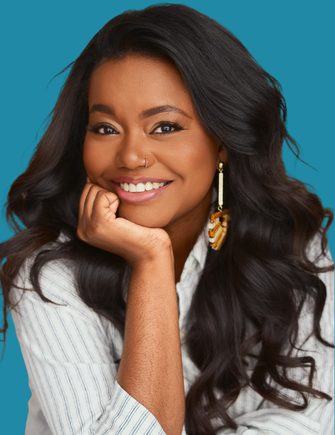
At the end of the day, what inspires Christina Hammonds Reed is people.
“I’m trying to make sure I say this without it sounding too cliché,” said Hammonds Reed, whose fiction debut, The Johnson Four, was published in February. “But I love people. I love life and all of its messiness and how beautiful it can be and how very hard it can be, and why people choose to do the things that they do. I don’t think you can be a good fiction writer without caring deeply about people.”
The Johnson Four is a masterclass in care and character. Hammonds Reed displays a nuanced hand with interiority and relationships as she tells the story of the Johnson family, a trio of adolescent brothers chasing musical stardom at their father’s behest. They’re joined by Christmas Jones the Third, the ghost of a Black child minstrel performer who still wears the rope he was lynched with around his neck. Beginning in 1968, Hammonds Reed follows the boys over several decades as they trace divergent paths.
“I’m always fascinated by family stories and how we all pull together and come apart, and what shapes our families look like over the years,” said Hammonds Reed. The sweeping historical epic connects a number of topics in which she’s long been interested.
“There’s this idea of, ‘What does fame ask of people and specifically younger performers?’ ” said Hammonds Reed. “And I love the idea of looking at fame through the lens of race — what does it mean to be a Black performer in this era with that kind of a spotlight? But also, what does it mean to be a little Black boy who doesn’t end up being able to reach his potential in the world because of a life cut short?”
As impressive as Hammonds Reed’s character work and agile, sensitive prose is the extensive research involved in crafting The Johnson Four, which journeys through early-1970s psychiatric facilities, army units in Vietnam, queer life in 1980s New York, and beyond. The process was intense, but Hammonds Reed delighted in it; if she had to do something other than write, she quipped, she’d go back to school for a PhD in history. Her 2020 young adult novel, The Black Kids, is also a work of historical fiction, following a wealthy Black teenager as she navigates the 1992 Los Angeles Riots.
“A lot of times, history books have been written by the people who have been afforded the opportunities and power to write them, so there’s so many stories about women and minorities and queer people that you have to uncover on your own,” Hammonds Reed said.
At the Santa Barbara Literary Festival’s “Survival Panel,” Hammonds Reed will discuss “belonging, resilience, and the courage to be seen in spaces never built with them in mind” — a collection of themes that resonate deeply with her work.
“Black people are constantly navigating spaces that are not necessarily the easiest for us to navigate,” said Hammonds Reed, whose characters find themselves in predominantly white settings on numerous occasions, be it the upper echelons of the recording industry or an elite private high school.
“We shape ourselves or collapse or expand ourselves to fit into these spaces, in both good and bad ways,” she says. “I think both works interrogate, what does it mean to survive? And if surviving is not enough, then what do we then need to do to thrive?”
Joining Hammonds Reed on the panel are Lisa Alvarez, Byron Lane, and Lola Akinmade. See bit.ly/4vPenKz for tickets. —Emily Vesper
Ariel Sullivan, Romantasy Panel, May 3

Ariel Sullivan describes her novels Conform and Beneath, the first books in a planned nine-part dystopian romance series, as two sides of the same coin. “Conform is the shiny side that makes you pick up the penny, and Beneath is that corroded one that lives underneath, that is the only reason it got to see the sun in the first place.”
Conform has its share of glitz and glamour, indeed. The novel follows Emeline, a young woman banished at birth into the low caste of “Minor Defects,” as she is selected to mate with a member of her rigidly hierarchical society’s most elite. Emeline ascends into a world of decadent luxury while secretly growing closer to a handsome stranger who’s mounting a rebellion against their totalitarian overlords. Prequel Beneath, meanwhile, is mired in the grungy depths of an underground city, where humanity’s last survivors have decamped in the aftermath of a nuclear war.
But it’s Conform, Sullivan’s debut, that was born from a dark place. She began the novel in 2020 while in the throes of postpartum depression. Writing became her outlet and escape, a “meditative” process. “It was a place to put all the things that were difficult to hold on my own,” she said.
The world outside was challenging, too. “COVID was running rampant. It was the most dystopian-like setting I have ever experienced in my life,” she said. The post-apocalyptic worlds of Conform and Beneath emerged from her desire to reflect in narrative form the discord and division she was witnessing.
“I’m a firm believer that when you start listening to judge and not listening to understand, humanity dies,” she said. “I wanted to explore, on a greater scale and in a fictional world, what that looks like.”
Sullivan has wanted to be a writer since her childhood as a military brat, when she turned to books for companionship during her family’s frequent moves. But the pitch that led her to publication happened by accident. Sullivan was running late on her way to a playdate between her son and Jenna Bush Hager’s — well, “military late,” she clarified, compulsively punctual. She shot Bush Hager a quick text, mentioning that she’d been “caught up writing.” Bush Hager asked about the project and ended up bringing Sullivan on to her new imprint, Thousand Voices; the rest was history.
Conform and Beneath aren’t fantasy, per se, but they’ve taken off in tandem with the “romantasy” boom of the past few years. “When you deal with dystopian, a lot of the time, the thing that draws those characters and drives them forward against a totalitarian government, or maybe toward certain death, is typically some type of love. Whether it’s a love for justice, whether it’s a love for a person, whether it’s a love for their people as a whole, there’s something pulling them,” said Sullivan.
“I’m a firm believer that I’ll only write the romance if it feeds the character’s narrative and continues the story,” she added. “It’ll never be the main part, but you can’t live as a human and not want love, so I think that it has to be there.”
The story has resonated deeply with readers, who clamor for news of upcoming books (Sullivan has planned the series as a “trilogy of trilogies”), propose fan theories, and root for their preferred romantic interest in Conform’s love triangle. The books have been massively successful, with Beneath making the New York Times best-seller list. But above all, Sullivan said, it’s that reader response that has meant the most to her.
“I wrote this from a very lonely place, and to know that I’ve made anybody feel less lonely, or allowed them to feel like their pain or their struggle is justified and seen … I mean, that’s everything to me.”
Joining Sullivan on the panel are Geneva Lee, RM Gray, Romina Gerber, and Kiki Astor, with host and moderator Pierson Fodé. See bit.ly/3QohhpD for tickets. —Emily Vesper
Culinary Storytellers, May 2
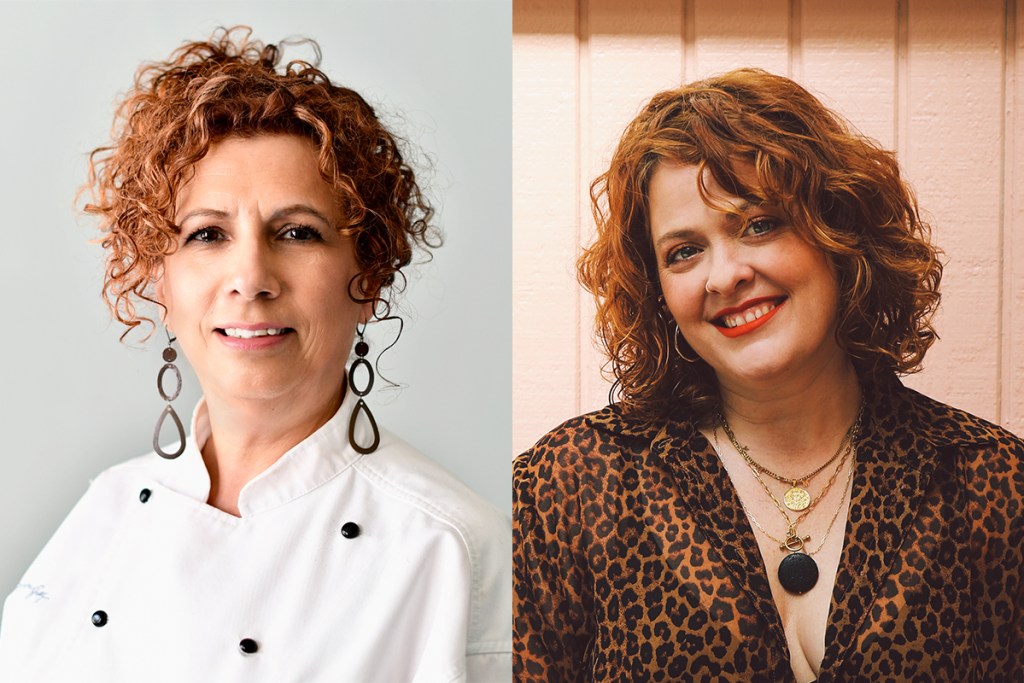
Americans today are fascinated with everything about food, from famous chefs and restaurant recipes to where ingredients come from and how certain dishes carry cultural meaning. That’s held the door open for a steady publishing market around cookbooks — baking books are super hot right now! — and other forms of food writing, including memoirs, histories, and deep dives into specific cuisines.
The Santa Barbara Literary Festival is harnessing that interest by hosting a “Culinary Storytellers” day on May 2, when food-focused authors from near and far will gather at the Pico Adobe near the Presidio for a panel and collective book signing. The nine invitees include familiar names such as cookbook dynamo Pascale Beale and renowned writer Betty Fussell — whose recent memoir How to Cook a Coyote was the topic of an Independent cover story last year — as well as authors who are coming from out of town and chefs sharing their edible creations with the crowd.
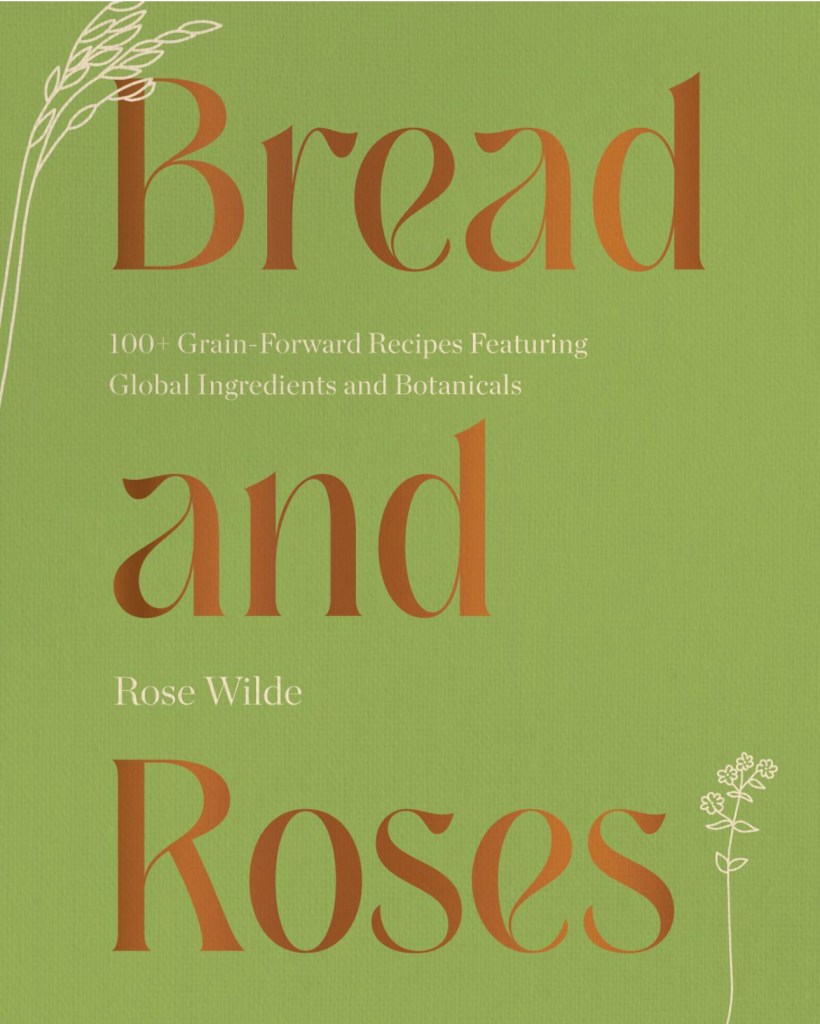
Visiting from Los Angeles is actor-turned-lawyer-turned-activist-turned-baker Rose Wilde, author of Bread & Roses and the forthcoming Tiny Cakes. “Food writing and cookbooks matter because they’re never just about what’s on the plate,” said Wilde. “Like theater, they pull you into someone else’s world — expanding your palate, but also your empathy. They capture a moment in time: what people were growing, valuing, struggling with, celebrating. They’re how we hold onto stories and pass traditions forward without flattening them. Food is never just food — it’s culture, memory, politics, and a way of understanding each other. I think it’s the best way, because eating is one of the few things we all have in common.”
Anne-Marie Pietersma considers herself a “sensory storyteller,” bouncing between Southern California and Brooklyn for her various teaching, judging, acting, and writing gigs. She’s excited to speak about “the huge role food plays (consciously or not) in creating narrative, memory, connection, and identity.”
Her childhood on a SoCal dairy farm led to writing I’ll Have What Cheese Having, which pairs 23 cheeses with romantic comedies. “There’s so many different facets of the cheese world, and it all started to crystallize for me a few years in, that it was all edible storytelling,” said Pietersma, whose company Trust Your Taste teaches people about tasting in a welcoming environment. “The tasting world can be a little pretentious and intimidating at times, and I really love providing a space where people can believe their own experience is valid,” she said.
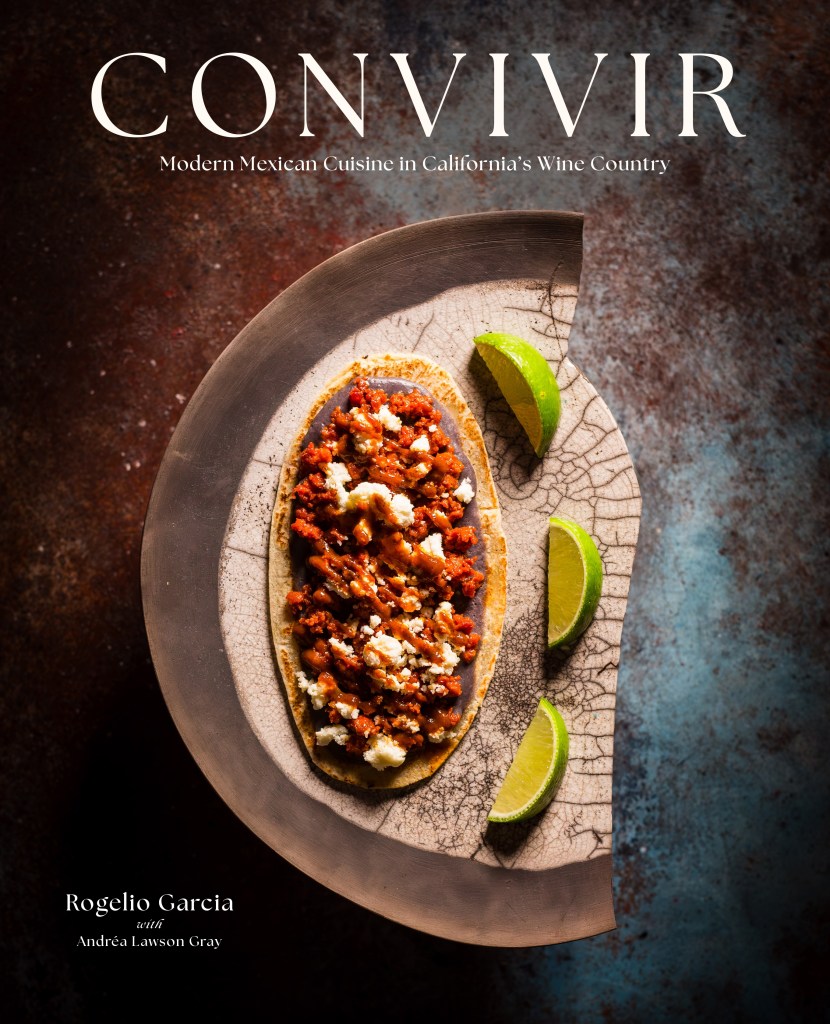
A third out-of-towner is San Francisco culinary anthropologist and food writer Andréa Lawson Gray, the author ofConvivir: Modern Mexican Cooking in California’s Wine Country (with Chef Rogelio Garcia) and the forthcoming Caribbean Cocktails: Drinks and Bites from the Afro-Latino Diaspora (with Top Chef alum Nelson German).
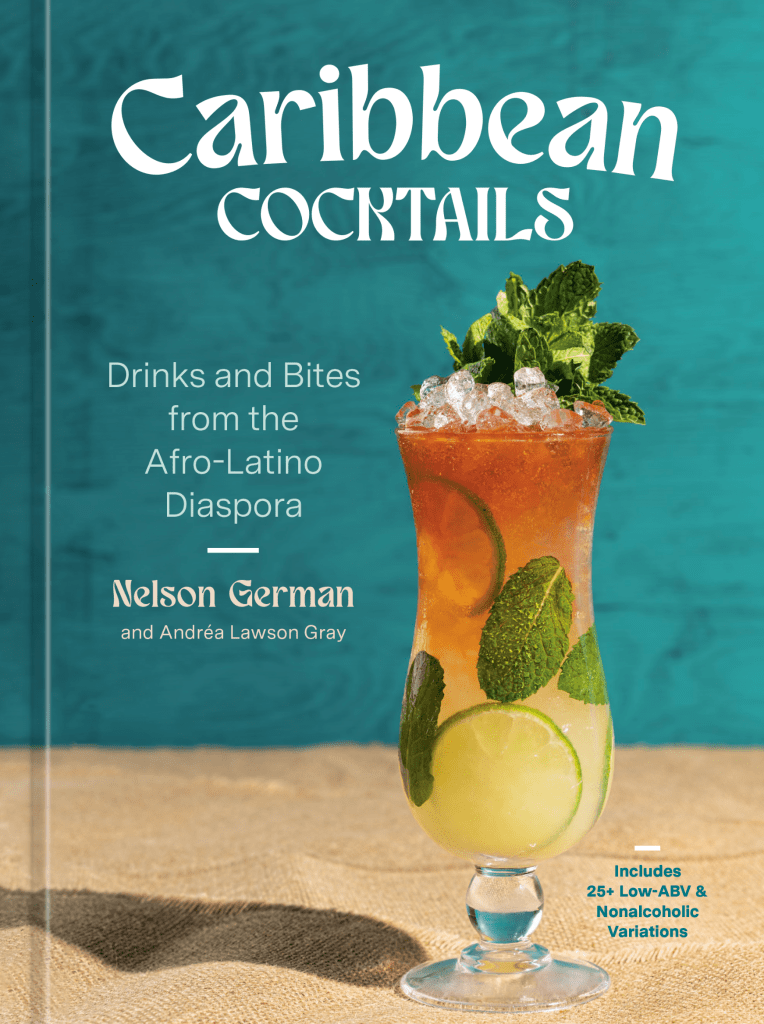
“I love that cookbooks can do more than teach people how to cook!” she said. “They can be a powerful way to engage with history — especially the histories of communities whose contributions have been ignored or undervalued. Someone may come for the recipe, but along the way, they’re also learning about migration, resistance and resilience, identity, and cultural memory. That’s what continues to inspire my work.”
Her work about the connection between California wine regions and Mexican culture should directly appeal to Santa Barbarans. “Mexican cuisine and wine country culture are not separate stories — they’ve been influencing one another for generations,” she said. “Calling attention to that combination helps us move beyond surface ideas of what ‘wine country’ is supposed to look like. It opens a fuller conversation about labor, agriculture, migration, and the community that helped build the region’s identity. It also reminds us that some of the most exciting food cultures come from exchange — when traditions meet, adapt, and create something new.”
That’s just an appetizer of what these Culinary Storytellers will cover on May 2. It’s sure to be a nourishing affair. The event runs from 11 a.m.-2:15 p.m. at the Pico Adobe, with doors opening at 11 a.m., and a culinarian panel discussion from 11:15 a.m.-12:15 p.m., followed by an artisan marché and book signings until 2:15 p.m. See bit.ly/4cKdhr2 for tickets. —Matt Kettmann


You must be logged in to post a comment.