
It’s Never Too Late to Get on the Mat
Santa Barbara Yoga Center Launches Program to
Help People Age with Strength and Vitality
By Tiana Molony | Photos by Jill Del Pol
July 23, 2026
Read more from our 2026 Active Aging Guide here.
There comes a time in everyone’s life when one is forced to reckon with the body’s inevitable decline. One finds oneself, say, reaching for the grab bar in a public restroom’s accessible stall or letting out a small, involuntary groan upon rising from the couch, wondering when that, too, became routine.
But why wait until then? Why wait for the body to make the decision for you? Why not take control while you still can?
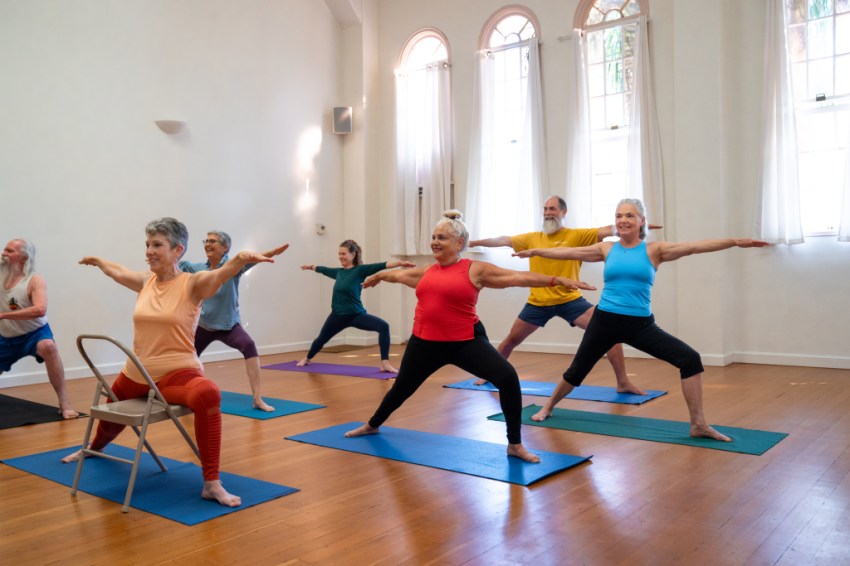
This idea of taking control — of becoming a more active steward of one’s own body — was the driving force behind Santa Barbara Yoga Center’s new Yoga for Healthy Aging course, a three-month program designed to strengthen both body and mind.
Each week, participants choose up to three of the program’s nine classes. Sessions focus on areas such as osteoporosis, brain health, arthritis, strength, and flexibility — “all the things that, as we age, we start to become more concerned about,” said Sarah Tuttle, the Yoga Center’s director.
Why three months? Well, “somebody told us it takes three months to change a habit,” said Tuttle. After the program ends, it’s up to each participant whether they would like to continue practicing.
When discussing yoga’s benefits, Tuttle cited the World Health Organization (WHO), which has recognized yoga as a valuable tool for healthy aging. WHO pointed to multiple studies showing that participants who practiced yoga regularly reported improvements in both their mental and physical well-being.
Tuttle said that although participants may not regain the agility of their younger years, the classes can leave them feeling more energized, more mobile, and in less pain.
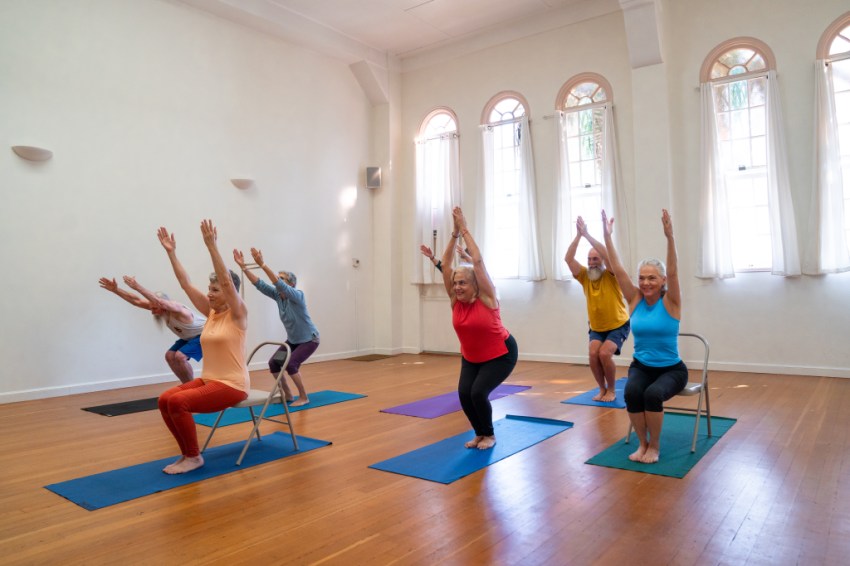
The mind benefits just as much as — if not more than — the body, said Tuttle. Yoga helps people practice “mindfulness in action,” the idea that one does not need to sit in silence for 10 minutes a day, unmoving, to quiet the mind. Tuttle puts it this way: “You might be in a challenging pose, but by being mindful in that pose, you’re learning to meditate in action.”
People often arrive at yoga with one specific concern, said Tuttle — arthritis, poor sleep, or anxiety, for example — and discover that the practice quietly addresses much more than their original complaint. A student may show up for joint pain and leave weeks later saying: “I’m sleeping so much better. My memory feels sharper. I’m calmer around my kids.”
Modern life keeps many of us locked in the sympathetic nervous system, said Tuttle — the “fight, flight, or freeze” mode that keeps us on edge, overwhelmed, or anxious. Yoga, practiced mindfully, stimulates the parasympathetic nervous system, the branch responsible for calming the body and mind.
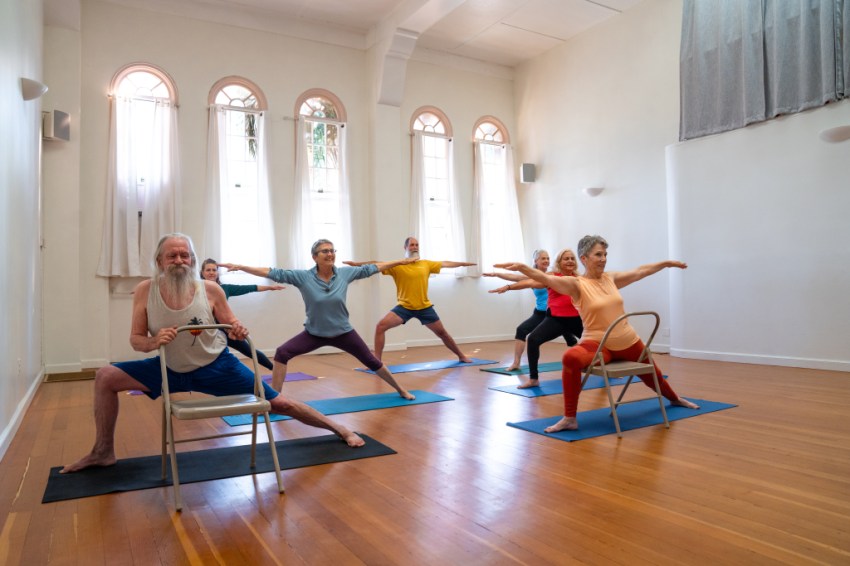
Most classes in the Yoga for Healthy Aging program are livestreamed for those who prefer to practice from the comfort of their homes. However, Tuttle notes that there is a clear benefit to being around fellow yogis and being part of a community.
There is no age requirement for the program. While Tuttle, who started practicing yoga 40 years ago, recommends beginning a regular yoga practice as early as possible to help prevent some of the physical challenges that often arise with age, she emphasizes that it is never too late to begin.
As she says, “It’s doable; it’s accessible; it’s not out of reach at all.”
Yoga for Healthy Aging is a three-month program at $149 per month. For more information, see sbyc.com.
Read more from our 2026 Active Aging Guide here.




You must be logged in to post a comment.