

Sign up to get Matt Kettmann’s Full Belly Files, which serves up multiple courses of food & drink coverage every Friday, going off-menu from our regularly published content to deliver tasty nuggets of restaurant, recipe, and refreshment wisdom to your inbox
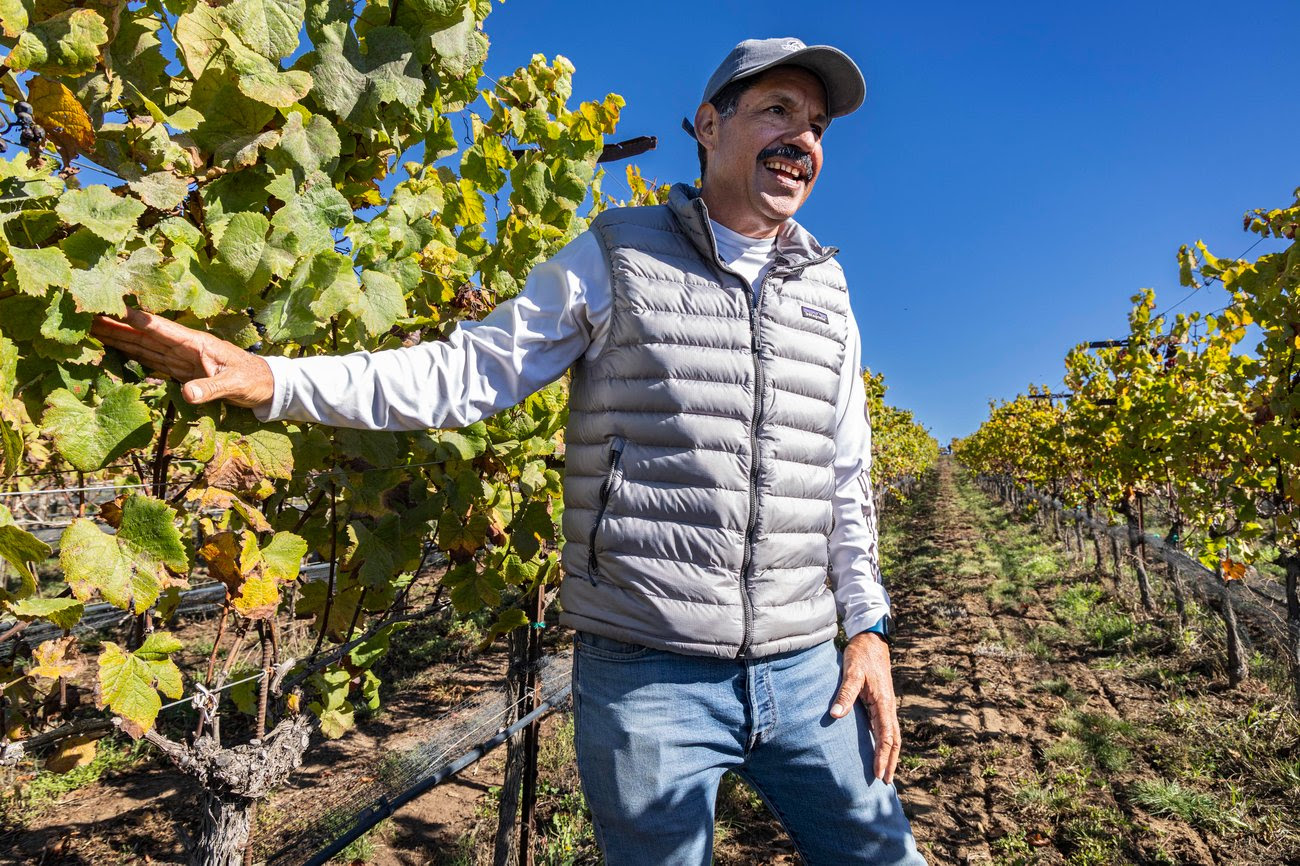
For being one of the most renowned grape guys in the region, Francisco Ramirez is sure into clover.
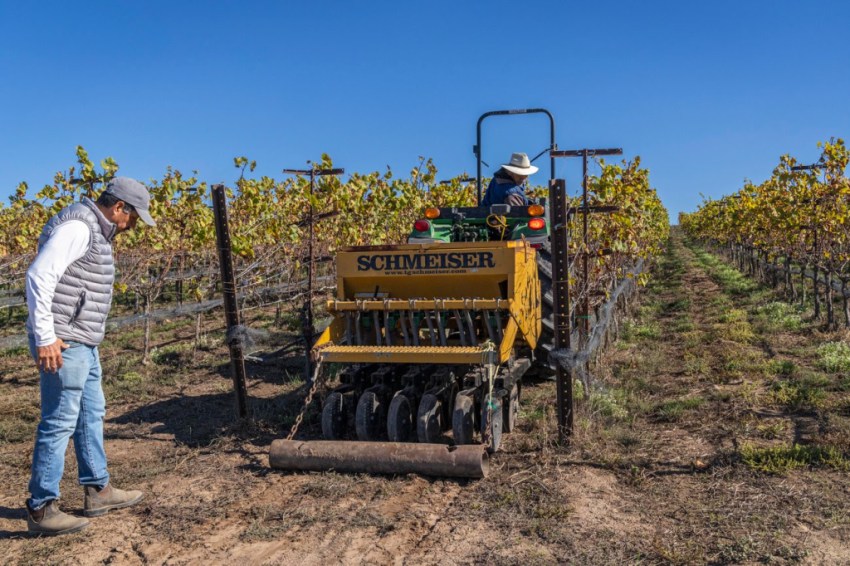
“This is what we want, we want, we want,” Ramirez tells me while pointing to the wispy plants hovering just above the ground beneath rows of Pali Vineyard pinot noir in the heart of the Sta. Rita Hills. “It’s like five different colors,” he explains of what will come once the new seeds — which are being dispersed by a tractor as we talk on an early October morning — blossom with the first rains. “It’s so beautiful.”
He’s showing me the clover, and little poppies, and a bunch of other species that are part of the vineyard’s cover crop, which is what viticulturists plant between and under rows to nourish the dirt, attract good bugs, and keep unwanted weeds at bay. This is one of the most critical components of sustainable farming, particularly in the regenerative world, where soil health is everything.
It especially makes sense for vineyards because the wild weeds, if not suffocated by the cover crops, grow tall enough to reach vines, spreading mildew and other threats into the grape clusters. And if the plants really establish themselves, they don’t even need to be planted every year. “We don’t re-seed it,” said Ramirez. “We prune it.”
This all seems quite obvious — to make healthier vines that produce reliable crops of tasty grapes, take care of the earth below. But industrial farming’s post-World War II grip on American agriculture is a hard habit to shake, which is why so many vineyards still just blast away their problems with poison, leaving tidy rows but sick soils.
Pali is one of the participants in the ongoing One Block Challenge, or 1BC, the year-long project promoted by the Regenerative Viticulture Foundation. I’ve been writing about the effort since it was announced last year, and also covered its kickoff and then wrote this cover story about it for our Earth Day issue. I even mentioned it for my other job at Wine Enthusiast once or twice.
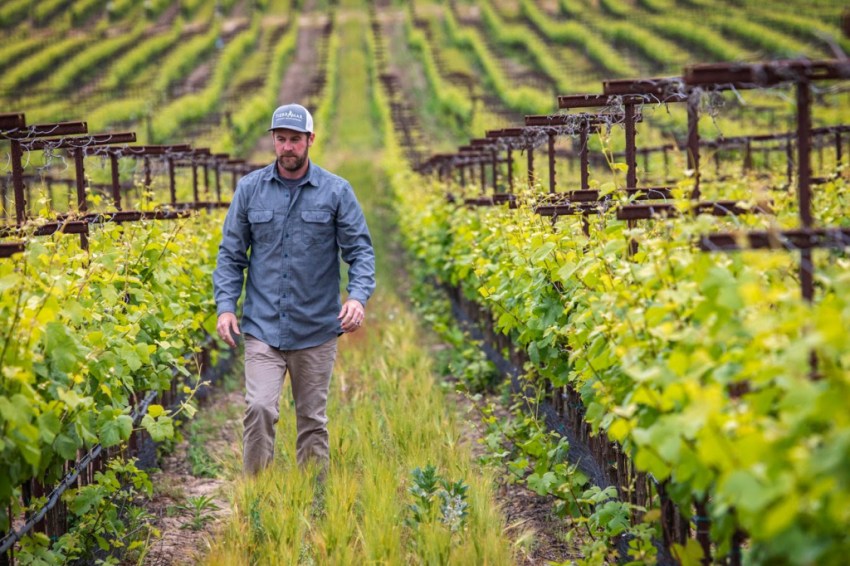
Pali’s winemaker Aaron Walker — whom I’ve known since writing this 2012 article and covered many times — has long been interested in farming more sustainably, but was especially turned onto regenerative methods after reading One Straw Revolution by Masanobu Fukuoka. “That opened my eyes and helped me better understand,” said Walker.
A successful adoption of regenerative techniques is also better for the bottom line. “You use less everything,” said Walker. “Less inputs, less money, less diesel. I’ve been very happy.”
A month or so earlier, I was at a farming supply yard on the other side of the Santa Ynez Valley, east of Highway 154 and just down from a polo field that seemed rather busy for a Friday morning. I’d trekked out to witness the pickup day for the cover crop seeds that the 1BC team had ordered for participants from Green Cover, a Nebraska-based company that produces custom blends of plant species that are also inoculated with mycorrhizal fungi. (California land is too valuable and productive for a cover crop company to pencil out here, apparently.)
I’m not sure what I was expecting — maybe a big pile of seeds with tractors dumping loads into truck bins? But the pickup day turned out to be just a bunch of white bags in stacks, with Jordan Lonborg of Coastal Vineyard Care Associates — and formerly Tablas Creek, which pioneered much of regenerative farming in California — moving the pallets around in a skid steer.
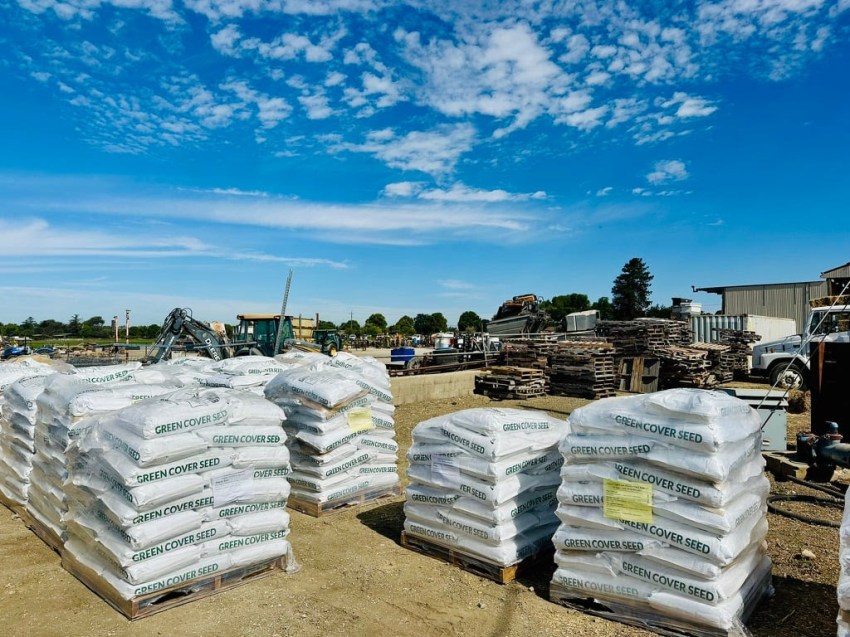
There were 70,000 pounds of cover crop seed being picked up that August 21 morning, which turned out to be in the middle of maybe the earliest grape harvest ever. “A fifth of the county is getting planted to cover crops — that’s insane, “ said Lonborg, and that doesn’t even count vineyards that bought their own cover crops outside of this delivery.
Across California, the numbers approached 400,000 pounds this year, amounting to nearly 5,000 acres of vineyard. “Not all of those are part of the One Block Challenge, but the opportunity arose out of the One Block Challenge,” said Lonborg. “This is way bigger than the One Block Challenge in my mind.”
This particular cover crop featured a handful of plant families and more than one dozen individual species, whereas a traditional cover crop includes maybe just three species. That diversity ups the odds for getting the seeds to prosper in a variety of climates and soils.
“People plant cover crops that aren’t diverse and don’t take,” said Lonborg, explaining that the mix of species also delivers a wider array of nutrients to the ground. “That’s what it’s all about when we’re talking about soil biology.”
By all accounts, this was one of the weirdest grape-growing years that anyone can remember. The warm winter months led to an early budbreak, so while the harvest wound up being extremely early, it wasn’t a particularly short season.
The upside is that almost everything was picked and buttoned up by early October, rather than the usual lingering into November for certain grapes in certain regions. That means vintners actually had ample time to plant cover crops and prep their properties before the rains started. I wrote about that in more detail for Wine Enthusiast in this article: “Everyone Is Freaking Out About El Niño — Except California Winemakers”.
Not only will this extra prep time and all these cover crop seeds be good for the vines, they should be good for our eyes too, as Ramirez mentioned. Expect to see more flowers than ever before peeking out from beneath the vines this winter and fall. It’s probably already happening, thanks to those first few storms of the season.
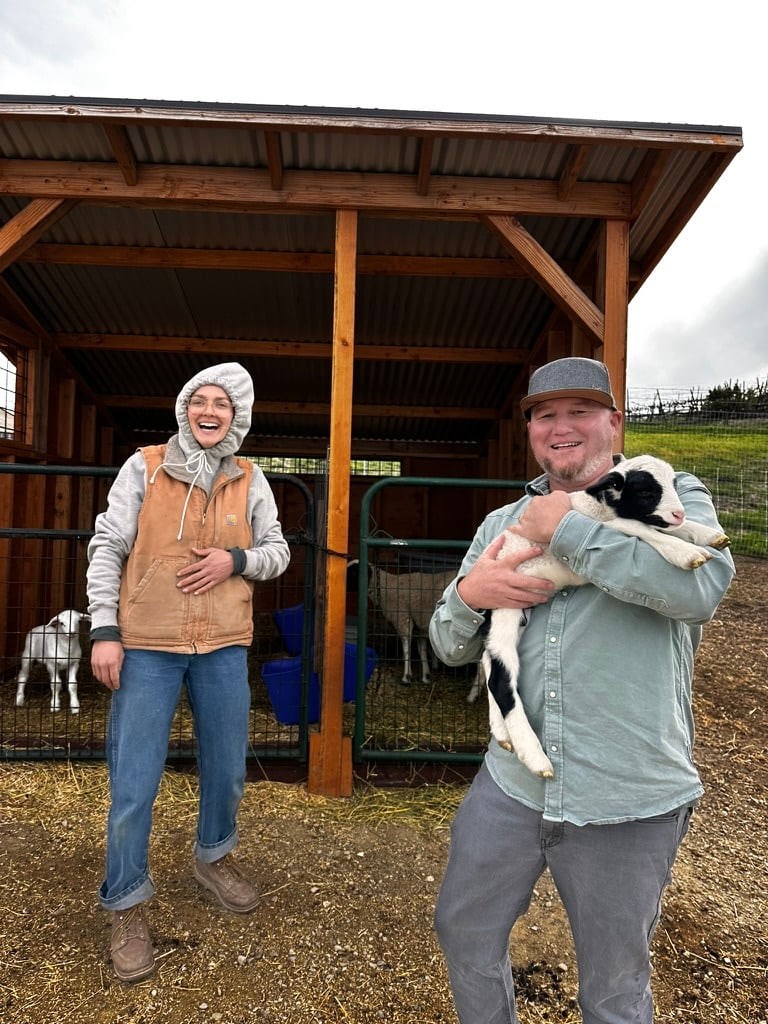
The One Block Challenge, meanwhile, continues to grow. From its origin in Paso Robles, the movement is now underway across California in Napa, Sonoma, Mendocino, Temecula, and Lodi. It’s also going on in Texas and the mid-Atlantic as well as in Chile, New Zealand, England, Provence, South Africa, Portugal, and the McLaren Vale region of Australia.
It kicks off for the S.L.O. Coast on November 9 with an event at Raj Parr’s Phelan Farm. Click here for details and to register. (And if you missed my recent profile of Raj for Wine Enthusiast, read that here.)
Here in Santa Barbara, the next field day is on November 19 at Mira Laguna Vineyard with Alice Anderson of Âmevive. This morning affair will focus on integrating animals into vineyards, which is another driving component of regenerative farming. You need to register to attend, so click here to do so.
I’ll see you there!
Josiah Citrin @ El Encanto
Super celebrated chef Josiah Citrin — from two-Michelin-starred Mélisse and one-Michelin-starred Citrin, among other restaurants — is coming to cook at El Encanto on Saturday, November 14. He’s partnering with the resort’s Executive Chef Joel Viehland on a collaborative menu as part of the El Encanto Culinary Series.
Tickets are $206 (including tax but not the beverage pairing), which is about half the price of the tasting menu at Mélisse. The reception begins at 6:30 p.m. with dinner starting promptly at 7 p.m. Get your reservations here.
Miracle Bar Is Back
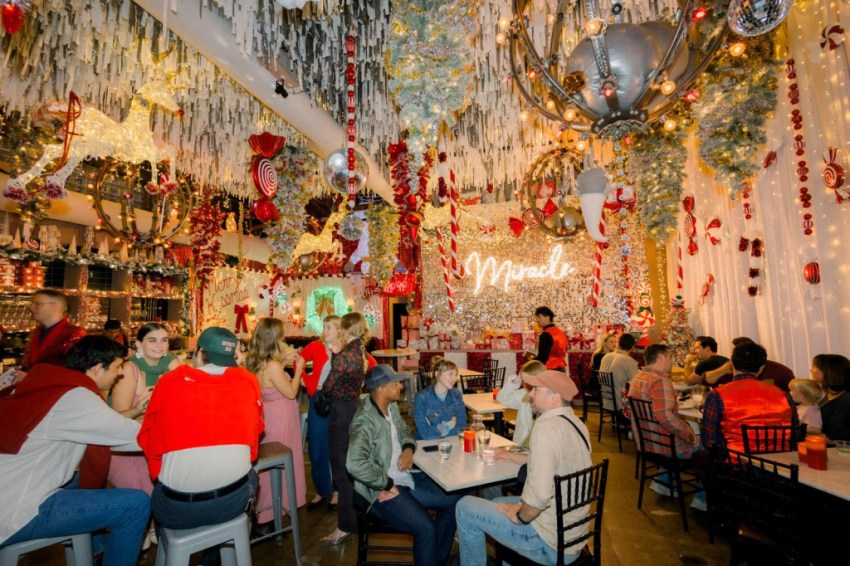
“It looks like Christmas threw up all over the place” was one of the best descriptions I heard years ago when the Miracle Bar concept landed at Pearl Social in the Funk Zone. (I wrote about that first iteration back in 2021.) The confidently kitschy seasonal takeover returns for the sixth straight year on November 13, running until New Year’s Eve, closing only for Thanksgiving and Christmas Day.
Guests will be wowed by the decor and the dozen specially made cocktails, such as the Snowball Old-Fashioned, Sugarplum Stampede, and Jingle Bells Nog. There’s a pretty extensive food menu this year as well, with pizza from Lucky Penny and then everything from popcorn and deviled eggs to lamb ribs and fried chicken sliders by The Lark. And it’s all for a good cause, as this year’s beneficiary is the United Boys & Girls Club of Santa Barbara County.
While cocktails are the star of the show, there are also nonalcoholic drinks and kids are welcome until 5 p.m. My own kids loved it when we went a couple years ago.
Reservations are highly recommended. Click here to do so.






You must be logged in to post a comment.