

Sign up to get Matt Kettmann’s Full Belly Files, which serves up multiple courses of food & drink coverage every Friday, going off-menu from our regularly published content to deliver tasty nuggets of restaurant, recipe, and refreshment wisdom to your inbox
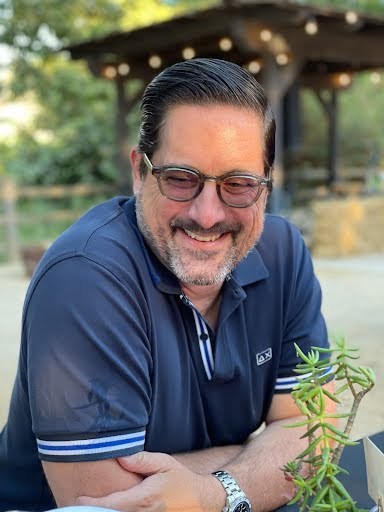
When Scott Hess moved to Solvang from Los Angeles in 2019, he happily stopped buying wine at grocery stores and started buying directly from his many winemaking neighbors in the Santa Ynez Valley.
As a fractional CFO for companies all around the country via his firm Main Street IQ, he naturally became intrigued in the business side of wine. He watched the industry surge through the COVID era, but grew concerned in recent years as wine sales started struggling both locally and beyond.
“They’re all complaining about the same problem,” said Hess. “They want more people.”
Thinking how he could help, Hess realized that artificial intelligence — which he’d been integrating into his other work — might shed some light into the darkness.
“Consumers no longer search Google for ‘best pinot in Santa Ynez,’” Hess explained. “More often, they log into an AI platform and say something like, ‘I’m a 32-year-old dental tech from Newport Beach. My three girlfriends and I are heading to the Santa Ynez Valley for a girls’ weekend. We enjoy dining outside, drinking white and rosé wine, going to Javier’s, and listening to live music. Create an itinerary for us.”
Then ChatGPT, Perplexity, Claude, or another AI platform creates a menu of wineries and the consumer’s itinerary is set. “If a winery doesn’t show up on that list, they don’t get a visitor,” said Hess, which caused him to wonder: “Why is one winery being referred more frequently than another?”
Seeking to better understand how that worked and why, he spent the first two months of this year compiling “The Wine Country Intelligence Report.” He sent typical wine country visitor questions to six different AI platforms multiple times per month, and then ranked the results on a 100-point scale based on how often each winery is named. He released his quarter one report for Santa Barbara County in the spring and then added San Luis Obispo County to his Q2 and Q3 reports, which now cover the nearly 450 wineries of both regions. (You can access them at mainstreetiq.com/wine-country-
“It’s really starting to broaden out and look at correlation and causation,” Hess explained. “I’m starting to see data that is proving out my assumptions.”
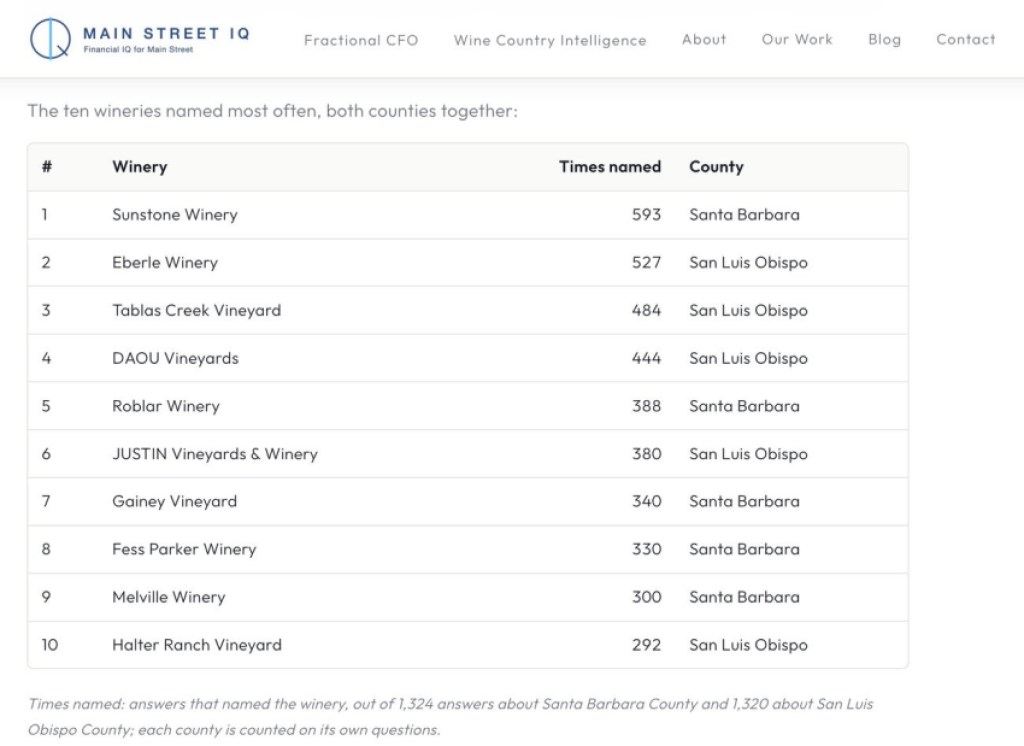
The reports are incredibly detailed and specific, ranking dozens of wineries across multiple categories. But an early takeaway is that the top performers appear to be consolidating their power.
“AI is already sending most of its recommendations to a small group of wineries,” explained Hess. “In our October research, the top 10 percent of the wineries we measure got 46.7 percent of all mentions.” Even more dramatic is that, of the 442 wineries ranked, only eight of them — a scant two percent — are getting enough points to qualify as what Hess calls a “strong digital operator.”
As to why, it’s becoming clear that a major driver of the AI recs are a healthy amount of consumer reviews on sites like Yelp and Google combined with sustained interaction between the winery and their customers on those sites. Said Hess, “It’s almost a circular relationship.”
Based on these insights, Hess has been hired by a dozen or so wineries to help them understand and use AI to their advantage, and he’s looking for more clients. His prices range from $600/month (or $6,000/year) for the full services down to detailed quarterly reports for $800 annually and individual reports for $250. Or you could just get the quarterly summary for free in exchange for your contact info. The subscriptions are detailed here.
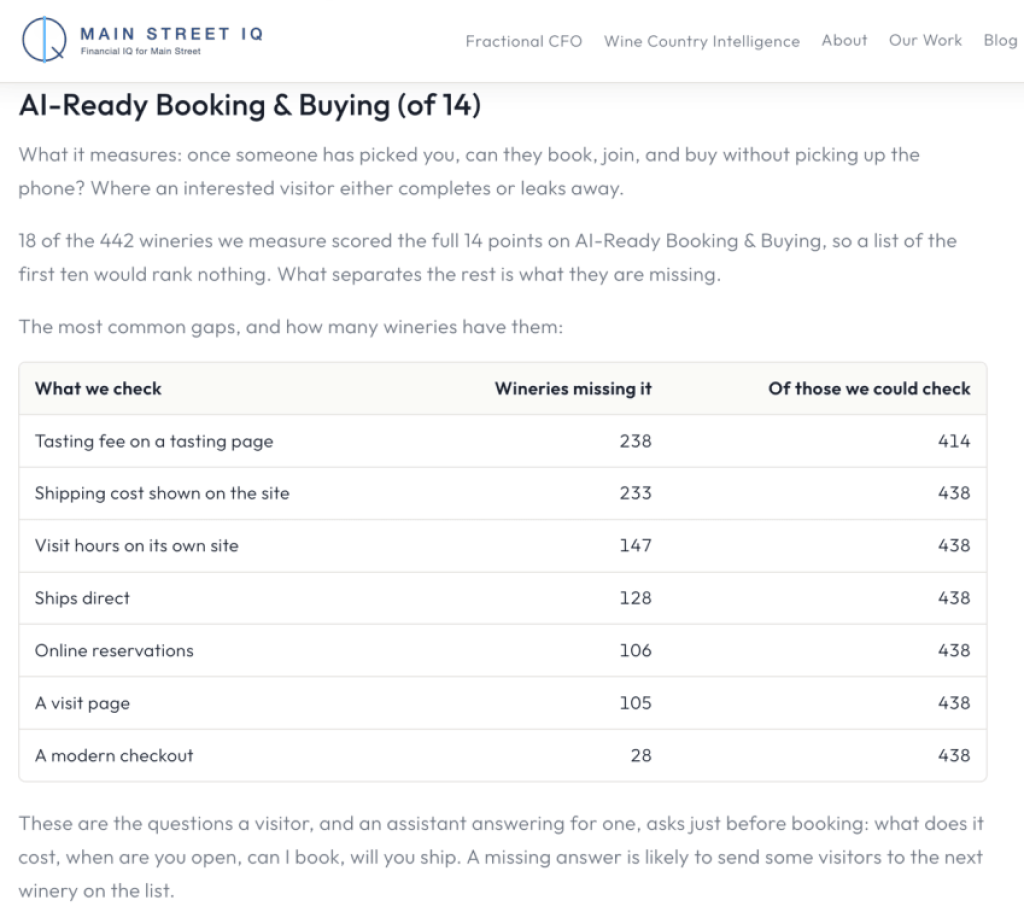
Clients receive a report card every month that shows their rankings, tracks their competitors, identifies areas of improvement, and includes insight into the latest AI trends. Hess does this without requiring any private information from each winery. “I am using publicly available info that’s out there for anyone to see,” he said. “We are just consolidating it into a useful data set.”
Not every winery cares. “Lots of places just want to hang a shingle, meet with people, and have fully realized that’s as big as they will ever get,” said Hess. “And that’s cool.”
Then there are the more ambitious wineries that want, or even need, to grow. “They are more interested in having this conversation,” explained Hess, who is already reporting positive movement. “They are starting to improve. This isn’t overnight. It is going to take months and months of concerted effort and following a plan and continuing to do it to see the fruits of their labors.”
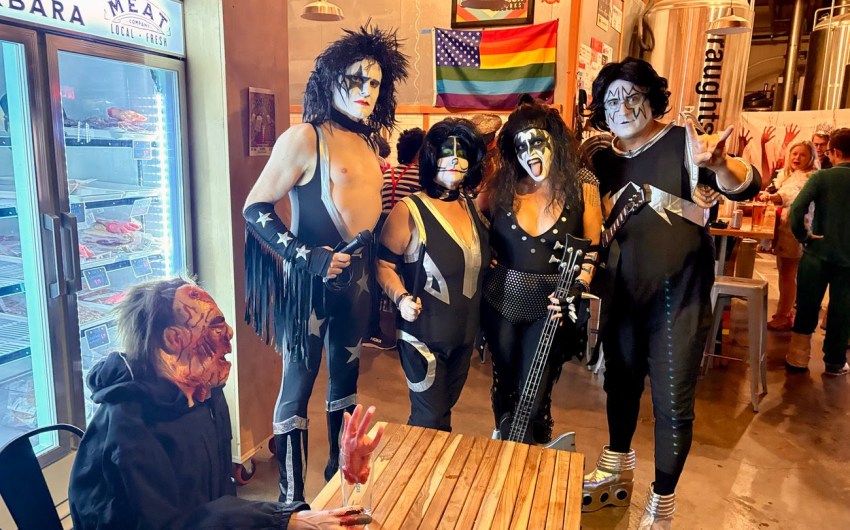
These strategies are easier to enact for wineries that really know their audiences or offer very specific services. That includes higher-end brands such as Crown Point and The Hilt who attract wealthier guests interested in collecting wine, and wineries that offer full food service, such as Vega Vineyards or Roblar Winery. Niches are also easier to dominate, such as Final Girl Wines in Solvang, which blends horror films and wine. “They are going to end up number one on that list every time,” said Hess.
As for those wineries still trying to attract every wine country visitor by generically marketing their tasting room as a nice place to visit? “I don’t think that’s realistic expectation anymore,” said Hess. “It’s going to be a very tough road ahead.”
Of course, staying ahead of the AI system will probably play out much like the SEO (search engine optimization) arms race. For the past two decades, websites — whether owned by wineries or newspapers or hotels or plastic surgeons — have tried to outperform competitors by adhering to the ever-shifting array of SEO rules and whims of Google and other search engines. Just when you thought you had finally optimized your search, the search engines moved the goalposts, or put up new ones entirely.
“It’s always gonna change,” admitted Hess of the AI platforms. “They are going to change their technology if they see it benefiting the customer.”
Though he doesn’t know of anyone else doing this work for the Central Coast wine industry, Hess believes someone may be doing so in Napa. Other industries are further ahead, as many SEO companies are reinventing themselves as AEO (Answer Engine Optimization) or GEO (Generative Engine Optimization) firms.
Like SEO, the AI game may be less about winning than simply not falling completely off the map. For instance, of the 442 wineries that Hess is tracking across the two counties, there are 54 brands that never ever show up on AI queries at all.
“You’ve got to be managing this and changing as it changes, otherwise you’re gonna get left out,” he said. “Trying to break back in is going to be even more difficult.”
Given the haze surrounding AI, some folks think Hess is a snake oil salesman merely trying to make a buck off the industry. And he’s well aware that most wineries, especially in Santa Barbara County, are not massive operations.
“They don’t have huge bankrolls, they don’t have teams of staff to handle social media management,” he said. “At a lot of these places, one or two people are doing seven different things.”
But that’s where he sees his Wine Country Intelligence Report as providing a cost-effective means of staying on top of this emergent tech, as wineries can use his information and implement it with their existing staff.
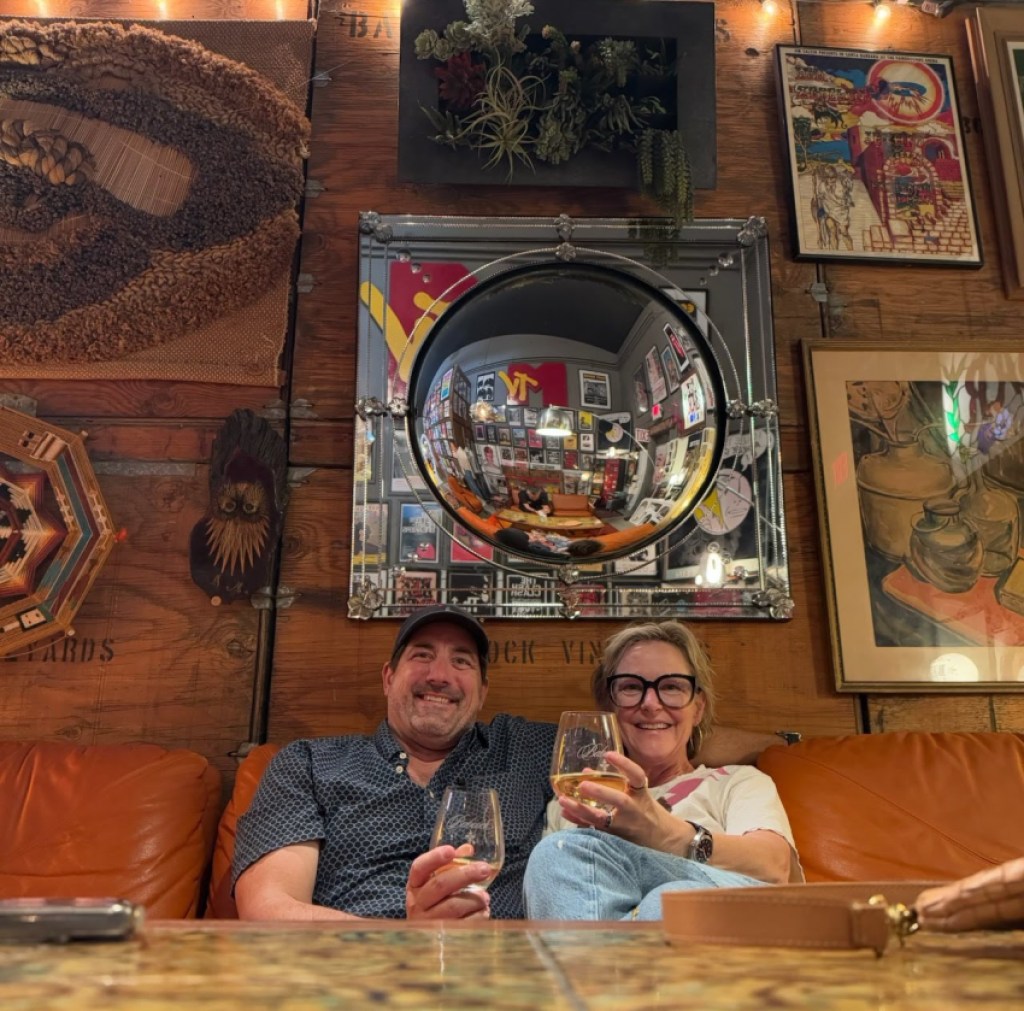
“There’s no way most of these people can keep up with this stuff,” said Hess. “You’ve got to find some sort of partner to help you through that, just like you need a lawyer to deal with legal stuff or someone to help you with marketing.”
Hess readily admits that he is very new to this, and that he hasn’t identified any silver bullets that will turn your winery into an AI rockstar. But he believes more consolidation is likely, explaining, “You’re going to have this concentration in the next 12 to 18 months where 30 percent of all wineries are getting 90 percent of the mentions.”
And he just wants to help. “I live in Solvang, and I love the wine community,” said Hess. “I want to see that continue because wine is getting crushed globally right now. I’d like to see as many survive as possible.”
See mainstreetiq.com/wine-country-






You must be logged in to post a comment.