

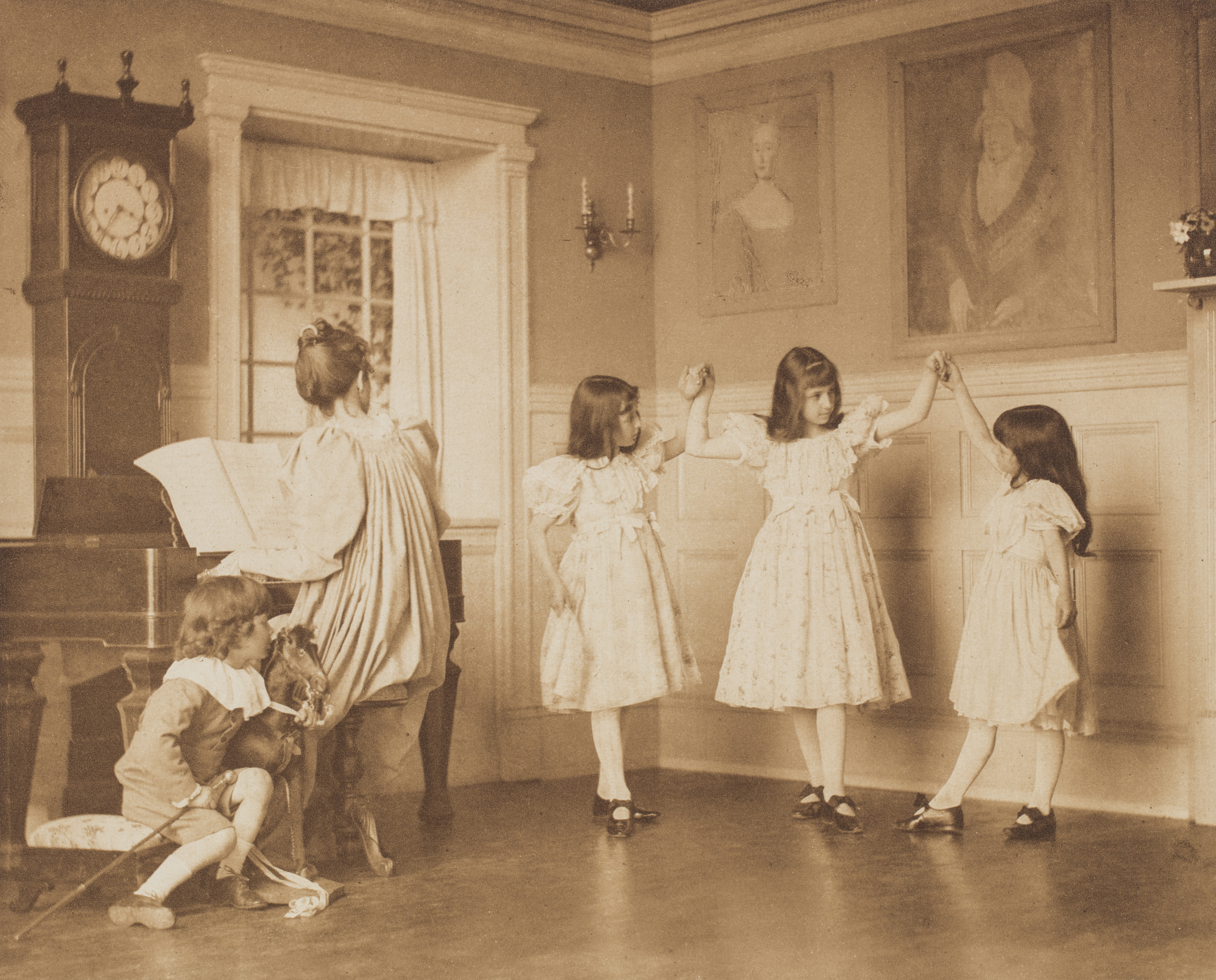
Stage Craft: Pictorialist Photography and Performance, the current exhibition now in the Santa Barbara Museum of Art’s upstairs media-photography gallery, has an underscoring curatorial agenda or two. On one hand, it offers us a glimpse into the Museum’s considerable permanent collection — which happens to be endowed with a strong photography component. It also seeks to survey the art of the “pictorialists” and those with links to stage and screen, with mostly early 20th century work by photographers who sought a place at the elite and discerning artworld table.
They may have reasonably felt excluded from a club which would later bestow its good graces and aura of artistic respectability on the medium. It should be noted that SBMA has long bestowed such respect, for several decades, evidenced by numerous significant photography shows and a well-fortified photography presence in the in-house collection. The bulk of the art here lives here, with some pieces on loan and even something driven over from UCSB’s AD&A Museum.
Pictorialists, and related photographers of the seminal phase of the medium, drew on tactics and references to painting, with theatrical devices and new approaches to photo finish, moving beyond the idea of photography as a crisp chronicler of reality. This show is divided into categories: Tableaux, Portraits, Environments and, in a side gallery, Stage and Screen.
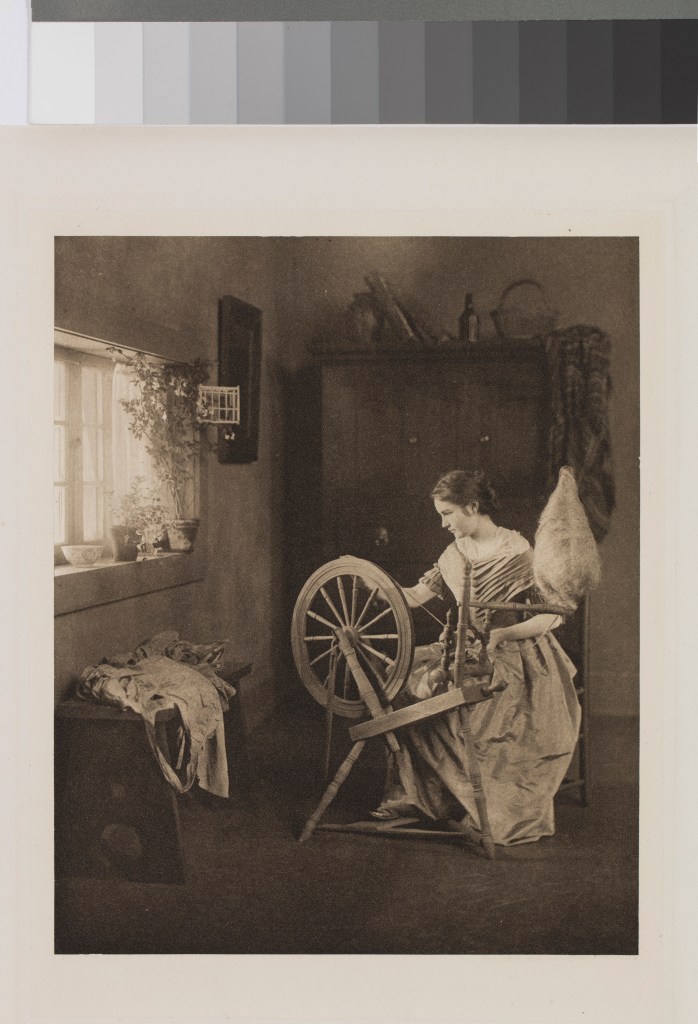
Leaning into the accepted artworld by mimicking its bias towards painting was a tactic deployed by these artists, as seen in Emile V. Clarkson’s “Spinning,” with its close correlation to Vermeer’s famed, window light-inflected “The Milkmaid.” John E. Dumont’s “Hailing the Ferry” nods to the working class-attentive designs of Daniel Ridgway Knight’s 1888 painting of the same name.
In the Portraits zone, we find more reinvention at work — and reshuffling of existing portrait-making conventions. Imogen Cunningham’s “Edward and Margrethe (Weston and Mather)” is a lean close-up two-shot, with a minimalist pose and background, and each subject peering off in separate directions. Some unstated drama hums here.
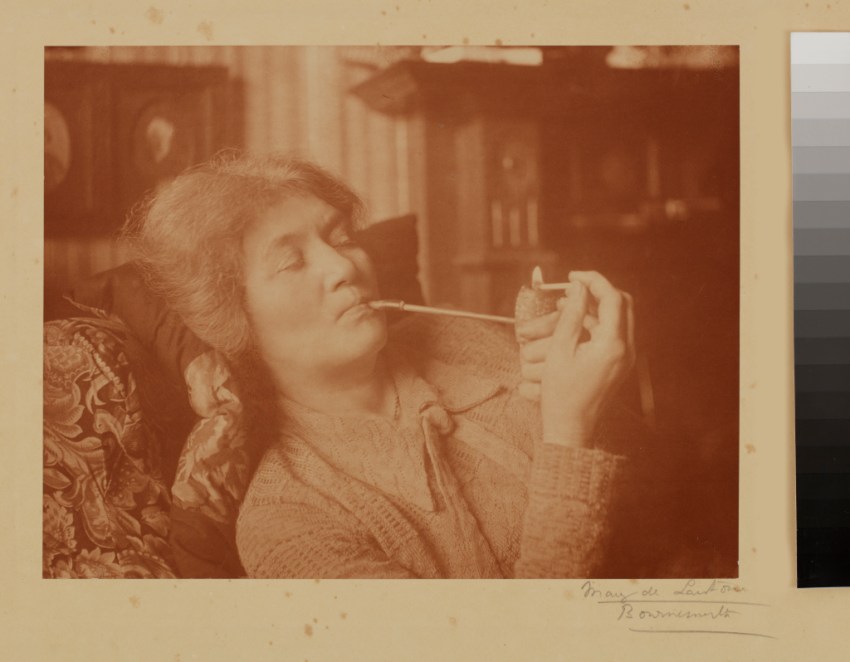
British pictorialist Marie de Lautour’s untitled self-portrait, from 1935, finds the artist in a casual semi-reclining pose, concentrating on lighting her long-stemmed pipe — a symbol of liberation from male attitudes of the day. As an inside joke, Florence Kemmler takes into account her photographer husband at his tripod in “The Cameraman,” an oblique study in light and shadow — and visual punning.
Eyeing the innate geometry found in the 20th century urban landscape, an area of interest for such painters as Charles Sheeler, is also part of the general assembly of photographers in the show. Hisao E. Kimura, from Los Angeles by way of Japan, admired the found geometry in L.A.’s Japantown, with the 1930 image “To the Roof Garden”, showing a child enmeshed in the diagonal mesh of a stairwell.
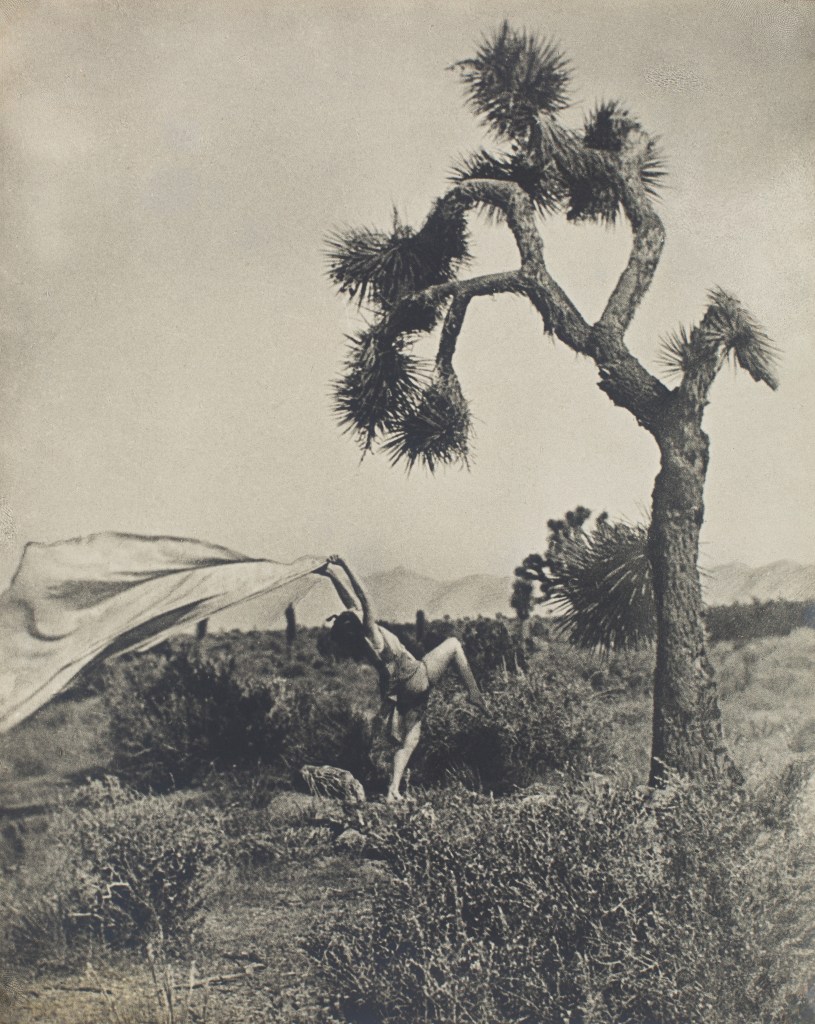
Anne W. Brigman, “The Breeze,” ca. 1910. Gelatin silver print. SBMA, Museum purchase with funds provided by the SBMA Women’s Board. | Photo: Courtesy 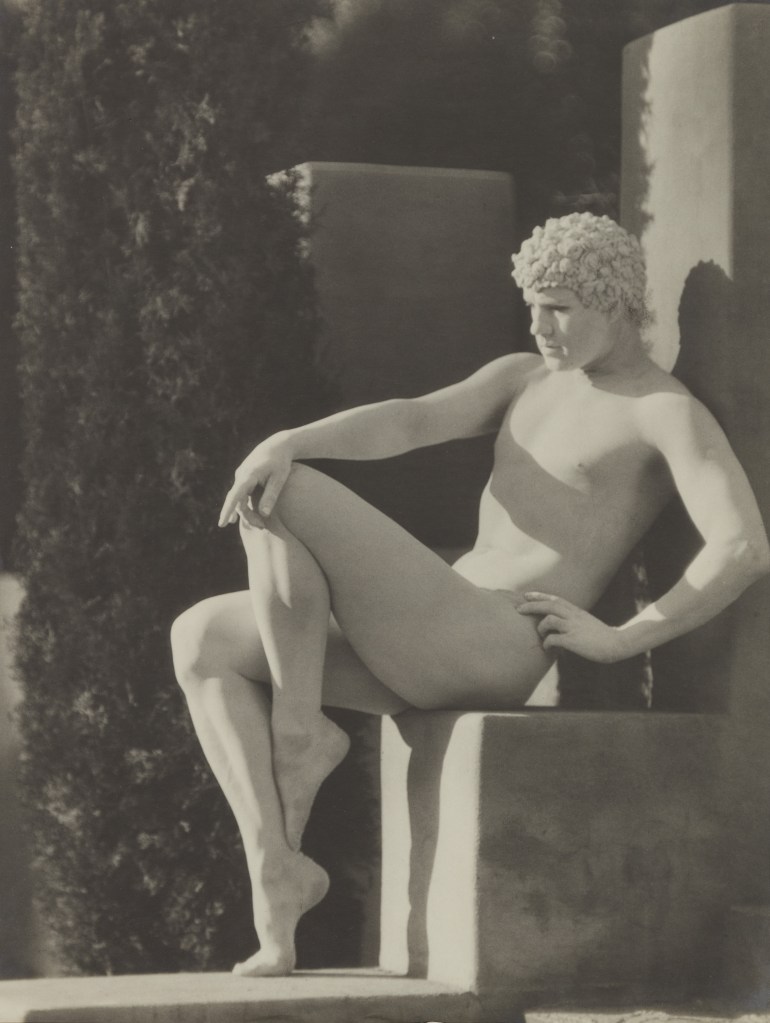
James Walter Collinge, “Ted Shawn,” ca. 1926. Gelatin silver print. SBMA, Museum purchase, Photography Acquisition Funds. | Photo: Courtesy 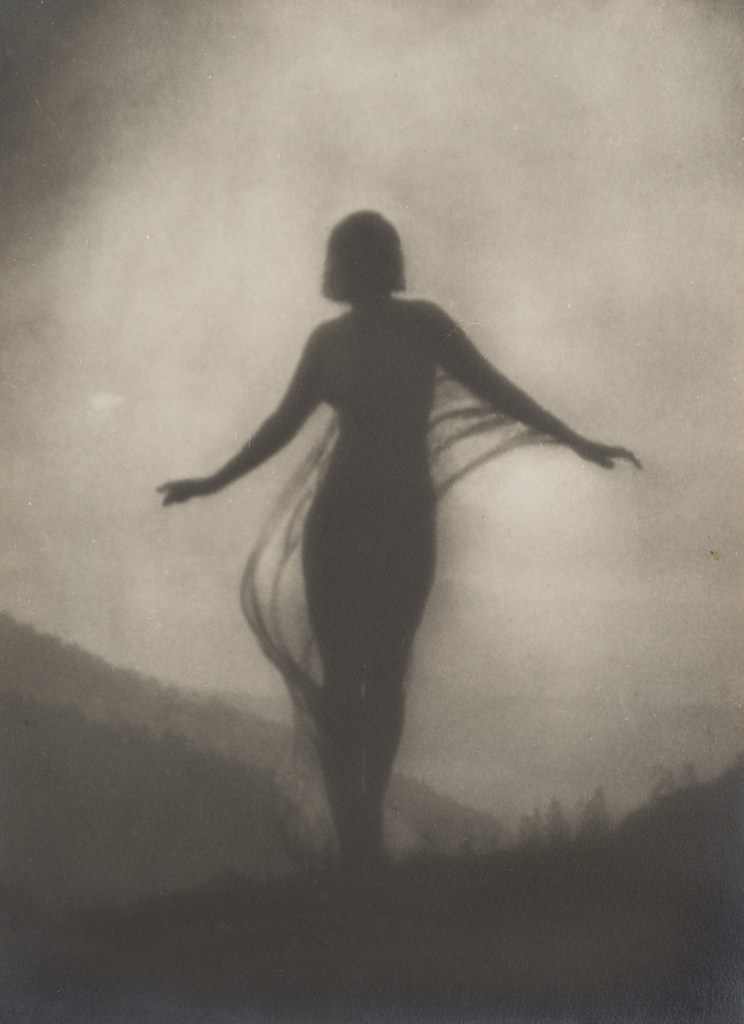
Anne W. Brigman, “The Breeze,” ca. 1910. Gelatin silver print. SBMA, Museum purchase with funds provided by the SBMA Women’s Board. | Photo: Courtesy 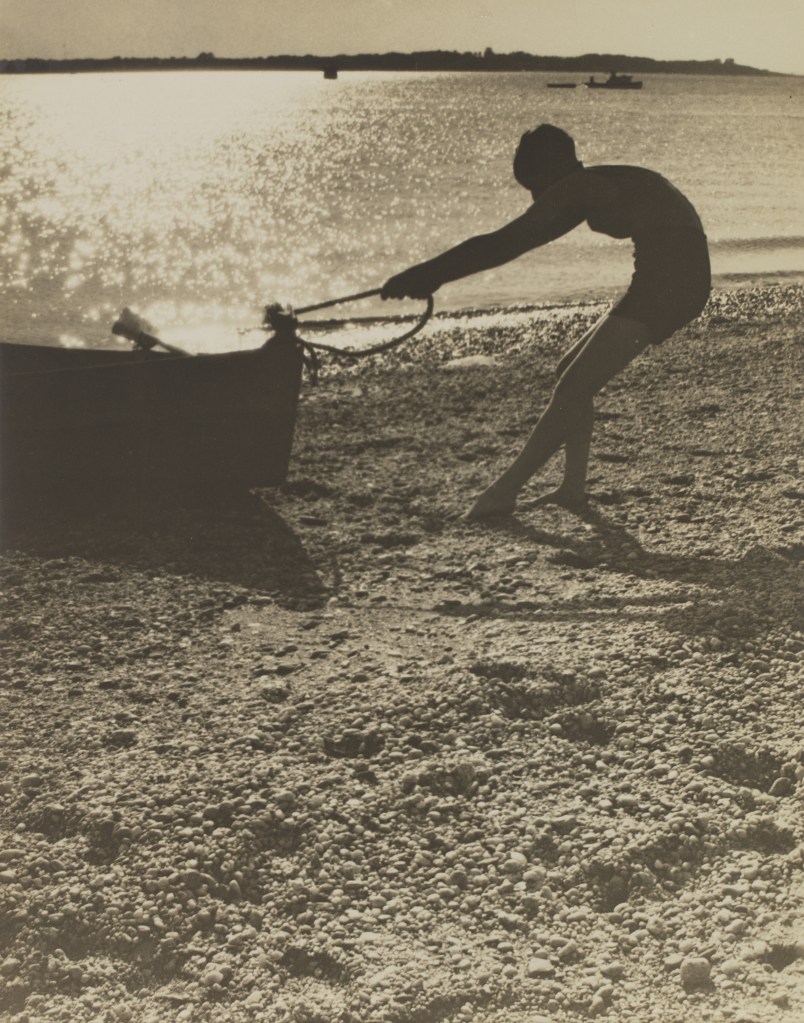
Mary de Lautour (British, 1881–1951), Untitled (Self-Portrait with Pipe), ca. 1935,. Carbon print. SBMA, Gift of Jane and Michael G. Wilson | Photo: Courtesy
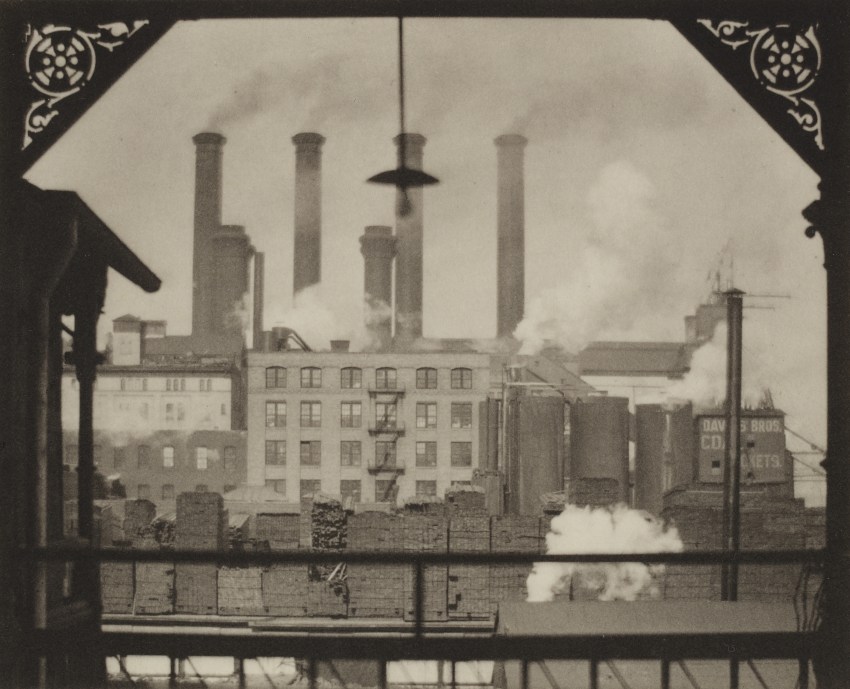
Karl Struss, “Consolidated Edison from the Second Avenue Elevated, New York,” ca. 1912, printed 1977–78. Platinum print. SBMA, Museum purchase with funds provided by PhotoFutures in honor of Wm. Brian Little. | Photo: Courtesy 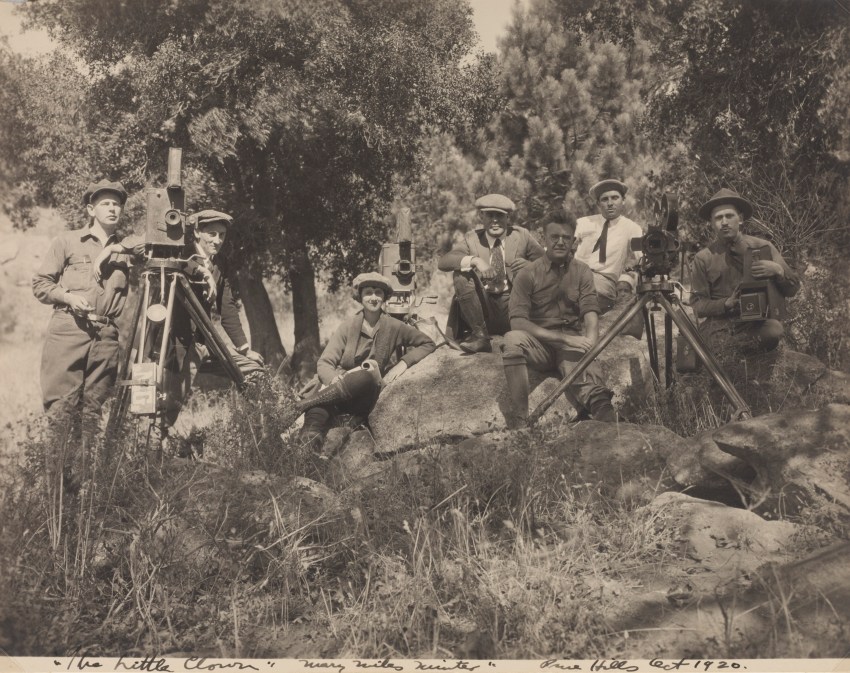
Anne W. Brigman, “The Breeze,” ca. 1910. Gelatin silver print. SBMA, Museum purchase with funds provided by the SBMA Women’s Board. | Photo: Courtesy
Karl Struss, meanwhile, shows his city love with the 1909 study of an artistic valentine for the then-towering Metropolitan Life Insurance Tower, strategically framed by bordering windows in the foreground. Another legendary NYC building, the Flatiron, reigns in the 1904 image by Edward Steichen (an artist who did know artworldly love during his career). It is an agreeably romanticized shot, in foggy focus and seen through tree branches for context.
In the Stage and Screen room, a local angle greets us in the form of images by Carolyn and Edwin Gledhill — who lived and worked in Santa Barbara in the early 20th century. There is more than just artistic intrigue attached to their images of a 1921 production of Pelleas et Mellisande at the old Potter Theatre (at the corner of State and Montecito streets), destroyed by the 1925 earthquake.
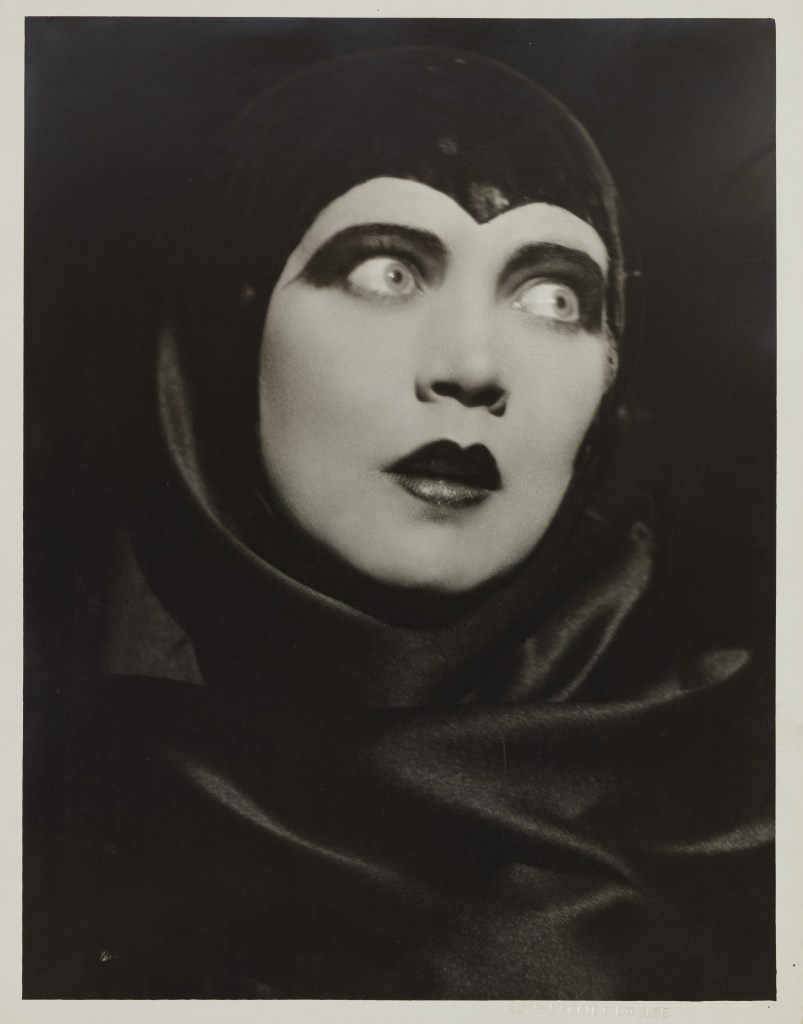
Dorothea Lange, best known for her compassionate and timeless WPA images during the Great Depression, is here seen in a very different light, with 1921 soft-focus and elliptically cropped images of a dancer in mid-motion.
Hollywood came calling in the photography world, relying on the publicity and set photography services of such artists as Ruth Harriet Louise, chief photographer for MGM, seen here through her shot of Renee Adoree. William Mortensen, a prop designer and set photographer for Cecil B. Demille and others, had a fascination for the macabre, as seen in “The Tribunal,” a surreal composite image suggesting religious torture and retaliation against a presumed — and nude — “witch.”
Pictorialist Fred Archer, who helped form the influential Los Angeles Camera Club, was another set photographer, who fed into the exotic Egypto-kitsch fad of the ‘20s with “Prayer to Isis.”
Struss, again, is seen in his role as a cinematographer and assistant director for Demille, with a soft focus shot of a faux Buddhist temple movie set, shot in Struss’s off hours and led by more of an artistic impulse than a Hollywood paycheck. Fast forward to SBMA, fall of 2026, and he is getting a desired museum spotlight.
Stage Craft: Pictorialist Photography and Performance is on view at Santa Barbara Museum of Art through January 31, 2027, bit.ly/4itjA6o.
Related Posts
Premier Events
Mon, Nov 09
6:00 PM
Santa Barbara
Chaucer’s Books Author Talk-D.J. Palladino “Spake as a Child”
Wed, Nov 11
11:00 AM
Santa Barbara
S.B. Veterans Day Ceremony: Honoring Our Men and Women in Uniform
Thu, Nov 12
7:30 PM
Santa Barbara
UCSB Theater and Dance Presents All My Sons

Fri, Nov 13
2:00 PM
Santa Barbara
Music & Meditation SB presents Lina Bahn violin
Fri, Nov 13
6:00 PM
Santa Barbara
Fall Opening Party at SBMA

Mon, Nov 16
7:00 PM
Santa Barbara
Toast – The Best of Bread at the Arlington
Tue, Nov 17
7:00 PM
Santa Barbara
CWC Screening and Conversation: “Criminal Minds” James T. Clemente
Wed, Nov 18
12:00 PM
Santa Barbara
UCSB Son Jarocho
Wed, Nov 18
7:00 PM
Santa Barbara
Outside+ Showing of “Warren Miller’s Days Off”
Fri, Nov 20
11:00 AM
Santa Barbara
Santa Barbara Antique & Vintage Show
Mon, Nov 09 6:00 PM
Santa Barbara
Chaucer’s Books Author Talk-D.J. Palladino “Spake as a Child”
Wed, Nov 11 11:00 AM
Santa Barbara
S.B. Veterans Day Ceremony: Honoring Our Men and Women in Uniform
Thu, Nov 12 7:30 PM
Santa Barbara
UCSB Theater and Dance Presents All My Sons
Fri, Nov 13 2:00 PM
Santa Barbara
Music & Meditation SB presents Lina Bahn violin
Fri, Nov 13 6:00 PM
Santa Barbara
Fall Opening Party at SBMA
Mon, Nov 16 7:00 PM
Santa Barbara
Toast – The Best of Bread at the Arlington
Tue, Nov 17 7:00 PM
Santa Barbara
CWC Screening and Conversation: “Criminal Minds” James T. Clemente
Wed, Nov 18 12:00 PM
Santa Barbara
UCSB Son Jarocho
Wed, Nov 18 7:00 PM
Santa Barbara
Outside+ Showing of “Warren Miller’s Days Off”
Fri, Nov 20 11:00 AM
Santa Barbara



You must be logged in to post a comment.