This story first appeared at SB Newsmakers.
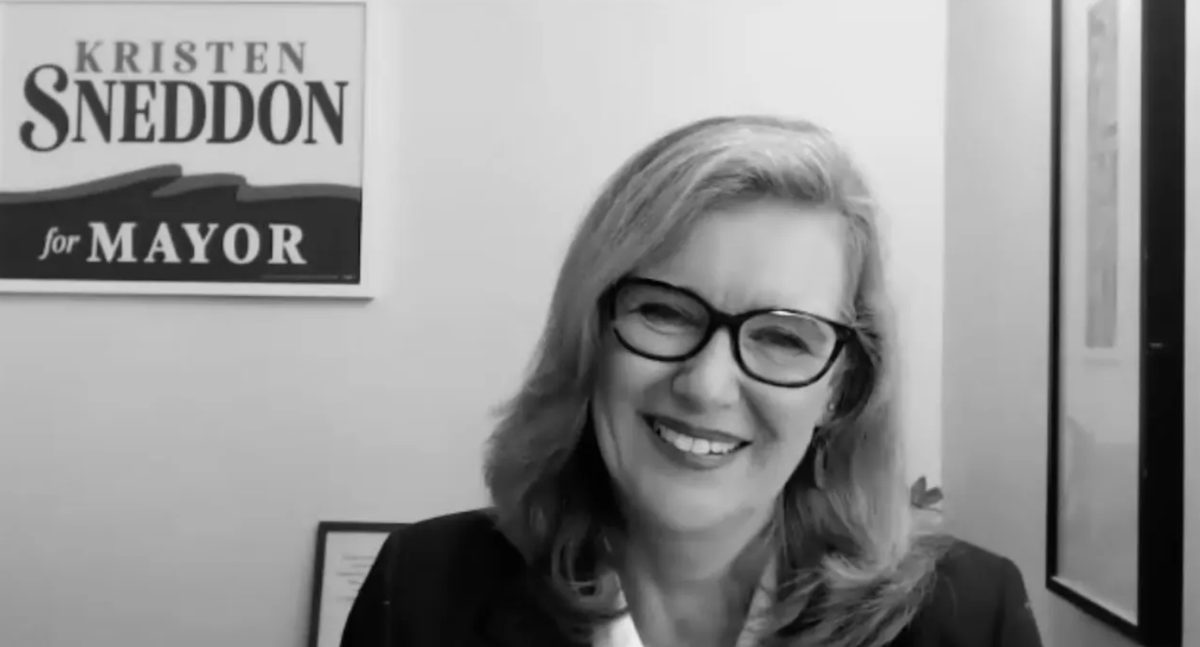
Kristen Sneddon’s victory in the Santa Barbara mayor’s race, part of a decisive vote for generational change at City Hall, does not settle the most contentious citywide issues that animated the boisterous campaign.
Near-final election returns released Thursday show that Sneddon won almost half of the nearly 15,000 votes counted after Election Day, slingshotting her past the more moderate fellow Democrat Eric Friedman, who captured much less of the post-election tally and lost the preliminary lead he held on election night.
This vote-count dynamic reflects not only a large number of ballots from traditionally late-deciding, younger and more liberal voters, but also an energetic and robust Democratic get-out-the-vote operation on Election Day.
Dubbed “knock and drag” by organizers, it is the payoff of months of patient neighborhood canvassing by party and campaign volunteers, who first identified solid or potential supporters and then ensured they cast their ballots in time.
Amid a countywide Democratic “blue tsunami,” the effort was a key feature of the ground-game infrastructure and mechanics that local Democratic organizers wielded to engineer their own wave election to match the party’s national midterm landslide.
Pending final returns, party-backed candidates have won, or are poised to win, in 36 of the 40 targeted local government races — city councils, school boards, special districts — most notably the progressive Ricardo Valencia’s apparent victory in the Board of Supervisors’ conservative 5th District.
In the City of Santa Barbara, the scope of their success is clear by multiple measures.
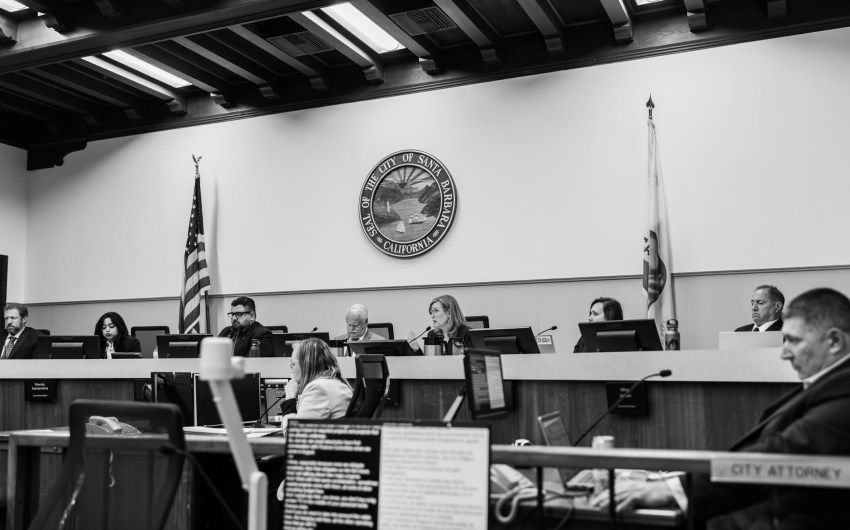
As a practical matter, a youthful slate of Democratic-backed candidates swept the mayor and council races, reducing by nearly a decade the average age of the incoming seven members. The new lineup includes three Millennials — Devon Wardlow, Gabe Escobedo and Oscar Gutierrez — and two Gen Zers — Ian Baucke and Wendy Santamaria — led by Gen X mayor-elect Sneddon, with 71-year-old incumbent Mike Jordan the lone Boomer on the dais.
As a political matter, Santa Barbara voters awarded left-liberal Democrats six seats on the seven-member council. This near-hegemony comes 11 years after the city adopted a system of electing council members by district, and eight years after it moved municipal voting from odd-numbered years to even — two liberal reforms that advantaged the party’s precinct-level strategies and tactics.
As a policy matter, the overall election results mark the triumph of renters over property owners, City Hall unions over South Coast Chamber of Commerce interests, and liberal spending inclinations over conservative budget sensibilities.
Three key takeaways:
Santa Barbara residents remain divided over key substantive issues. The race for mayor, the only official elected citywide, is a proxy for a popular poll on the three big policy matters that dominated the campaign — rent control, the State Street Master Plan, and the spending down of prudent budget reserves — with Sneddon and Friedman on opposite sides of each. Despite her success, more than half of voters cast ballots for someone other than Sneddon, evidence that suggests the perspective of many residents does not align with the liberal consensus among the new council, leaving an ideological gulf between City Hall and much of the community.
The district election system is structurally skewed to benefit the most liberal Democrat who runs in any city race. Every political campaign rises or falls on three basic elements: message, money, and mechanics. A decade after the adoption of district elections in the face of legal threats, the most critical campaign asset in Santa Barbara now is now mechanics — a ground game rooted in a passionate if small political base that simply overwhelms candidates who run without the party’s stamp of approval — not a unifying, citywide message nor even money. The Democratic Party is the one and only organization with the one and only full-time mission of electing political candidates; in practice, this means that the resources that come with its endorsement — organizers, voter data, canvassers, phone bankers, a party slate card and more — become determinative.
The new mayor and council won’t get much of a honeymoon. The council, to be sworn in on Tuesday, January 12, will immediately face political and legal fallout arising from two referendum petitions, signed by many thousands of registered voters, that aim to repeal the city’s new rent stabilization ordinance and the State Street Master Plan, both approved by the incumbent council. Feeling unrepresented on council, downtown property owners, landlords, realtors and retailers organized and financed signature-gathering campaigns that require City Hall either to repeal both programs or to put them on the ballot for a citywide vote.
It will be an early glimpse of the new era of governance in the city, as disgruntled individuals and interest groups turn to tools of democracy available to them, like referendum and recall, to push back against a City Council united by liberal doctrine.