
‘Welcome to Isla Vista‘ is a six-part podcast series. Listen to new episodes here or anywhere you get your podcasts.
Welcome to Isla Vista. I’m Christina McDermott. Last episode, we looked at I.V.’s development and student stories up through 2016. Now we’re back in the ’20s (the 2020s, that is — if you want to jump back 100 years, go to Episode 1).
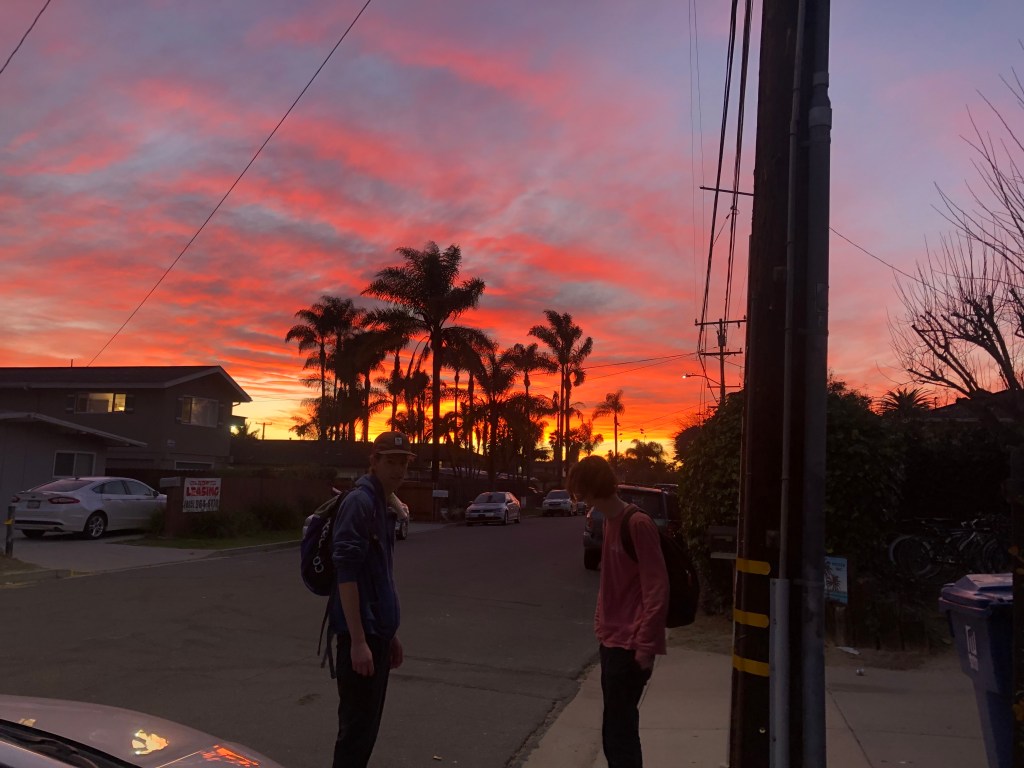
Spencer Brandt graduated less than a year before COVID shut down daily life across the country and the world. He stayed in I.V. to work for the Isla Vista Community Services District, first as a board member and later as the district’s president.
“One of the big things, too, I’ll say about COVID is, you know, during the pandemic, about half of the town got up and left because there was no in-person school,” he said.
On March 10, 2020, as COVID cases increased in California and throughout the United States, UCSB announced that it would shift immediately to remote instruction. By March 14, the university had announced that the entire spring quarter would be online.
“During that time, that was the only time I’ve ever seen housing prices fall, when it comes to rental housing prices,” he said.
Thousands of students transitioned to life back in their childhood bedrooms with laptops or phones serving as the means for their education. For many, people’s mental health, their motivation, their connection to community — it all suffered.

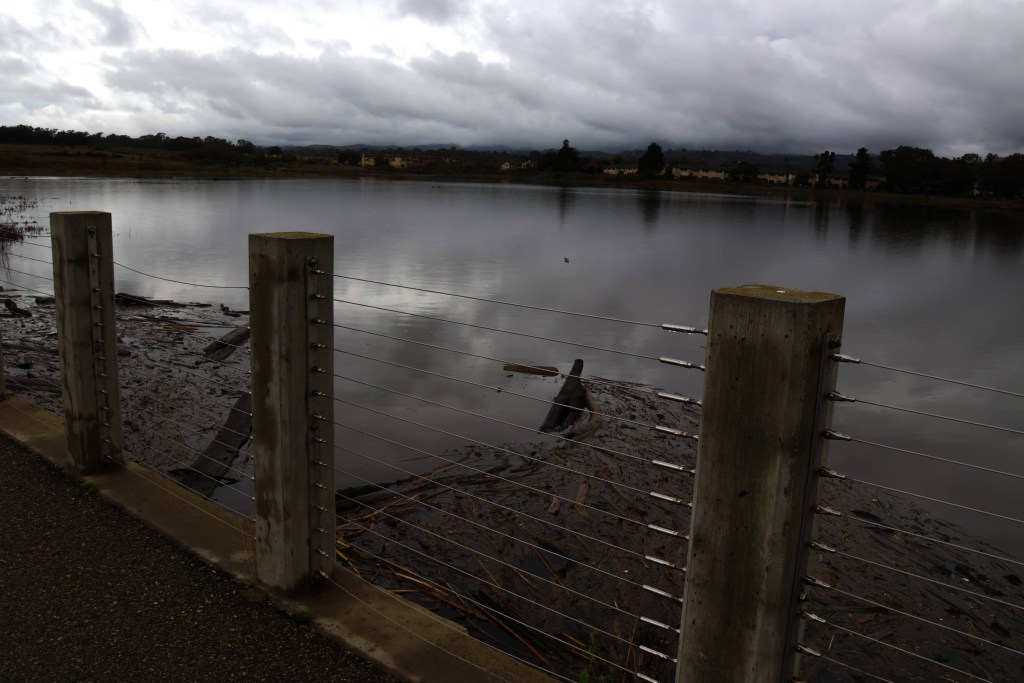
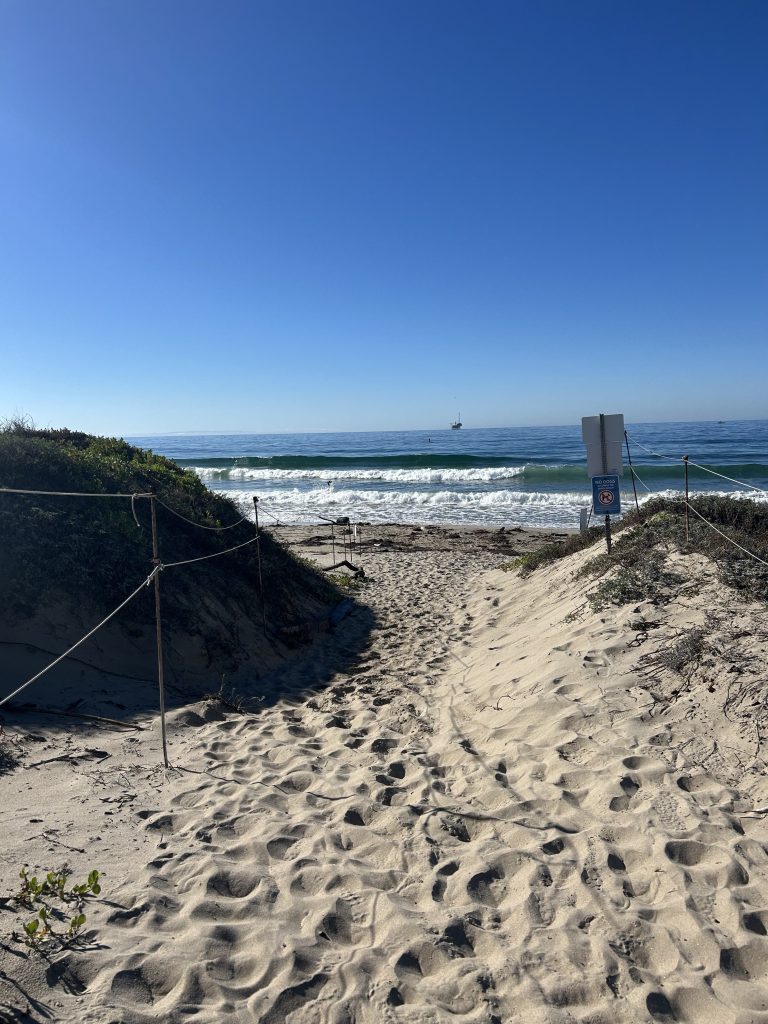
I’m walking with Maya Johnson and Richelle Boyd to Deveraux Beach, just west of I.V. To get to the beach, you walk through UCSB’s North Campus Open Space, a wetland and estuary that the university’s Cheadle Center has worked to revitalize and maintain. There are rare plant species in this area. Birds stand in the water, and sometimes you can hear wildlife at night. The path to the beach is fairly straight and slightly uphill. Both Johnson and Boyd attended UCSB starting in the fall of 2021, as the university’s in-person classes started again in earnest. Now, they both work for the Independent.
I know. I know. There are lots of folks from the Independent featured on this podcast. The paper happens to employ a lot of Gauchos, and those Gauchos seemed as good a place to start as any, to hear stories about I.V.
“I moved into I.V. — I think it was 2021,” Johnson said.
I.V.’s emptiness, after the COVID exodus, didn’t last, of course. By the summer of 2021, students were looking for spots in I.V. The area’s crunch had returned and with it news reports of on-campus waiting lists and a lack of housing itself. UCSB even began renting local hotel rooms to put students in. The number of students enrolled at UCSB was actually less than in 2019. But a news report at the time suggests that Santa Barbara City College students and recent graduates were also looking for spots.

Property values in the wider area shot up at this time. Redfin is a real estate website. It has data from the zip code that I.V. is in. It’s important to note that it also includes parts of Goleta and that big stretch of land up to Gaviota. Still, coupled with people’s personal accounts of their rents, it helps us understand that everything was getting more expensive. In 2019, the median home for the zip code value was about $824,000. By 2022, it was more than $1.2 million.
Johnson said she started her search for housing in March, scrolling Facebook for spots and pitching herself in hopes of finding a good set of roommates. She said her parents told her to get the cheapest place she could find.
“It was hopeless,” she said. “I would wake up every single day and go scouring through the Facebook group, scouring through the Instagram groups, posting on my story, being like, ‘Does anybody have fucking housing?’ It was really, really bad and really anxiety-inducing.”
Eventually, it worked out for Johnson. She said she found a two-bedroom within her budget with five other girls. She said she liked the apartment’s kitchen. Although the rent raised each year, it was reasonable (her spot in the triple started at around $600 per month).
Johnson said she and many of her friends rented apartments that were managed by the same company.
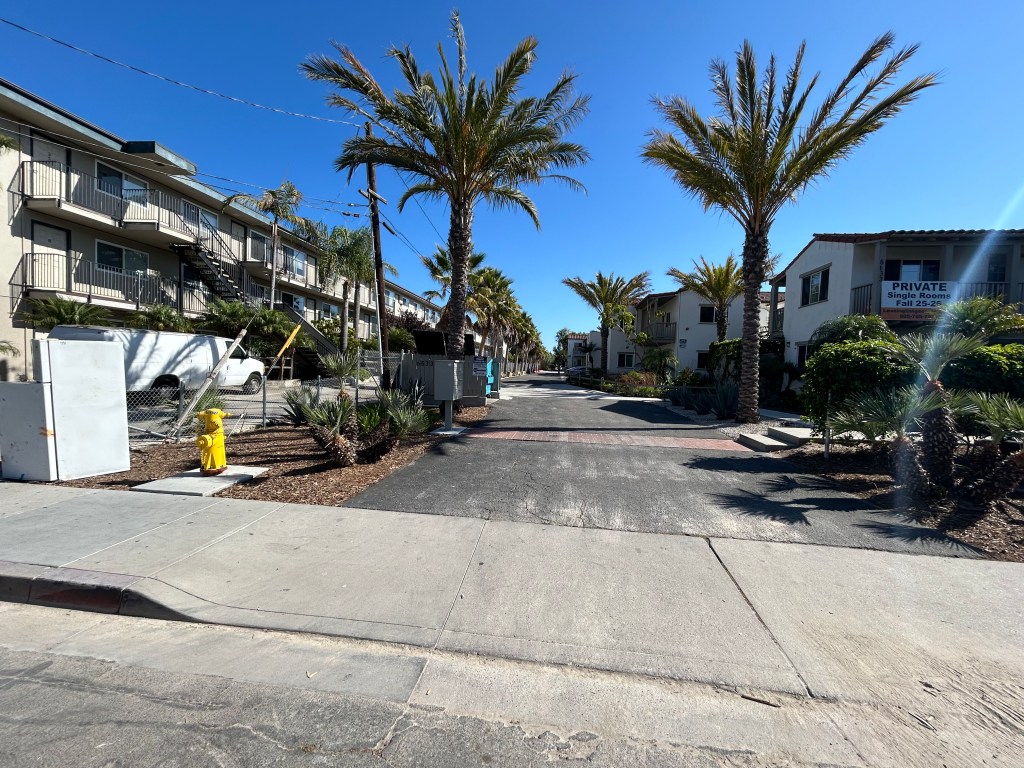
If you drive (or bike) around I.V., you’ll notice signs for management companies. Management companies aren’t the same thing as landlords. Their job is to manage, and depending on the contract, that can include anything from fielding maintenance calls to filling spots. It’s a service, and for this service, the company takes a cut — around 8 percent to 12 percent on average. If a landlord wants to recoup that cost, they may raise rent within their legal limits.
So, a property management company that does its job can help a landlord run a property effectively; that’s the goal, after all. But the management company creates an added layer of distance between the tenant and the property owner. For management companies, properties are part of their portfolio. It’s a business model.
Johnson said the management company fielded calls to the landlord. She said it wasn’t easy for tenants to get a hold of him, and he wasn’t really present on-site.
“But he was never around,” she said. “He literally never saw our apartment.”
Richelle Boyd also transferred to UCSB in 2021. At first, she lived in student housing — in San Joaquin Villages near western I.V. She said she had six roommates. They had to get an extra fridge so everyone could keep their food.
“It was cramped. It was so cramped. It was not fun in there,” she said.
But she said overall the accommodation was nicer than many I.V. apartments, and she didn’t have to pay for utilities. She said some of her housing costs were covered by her financial aid, too.
After moving out of student housing, Boyd lived in two different apartments over the next two years. She said she had the same property management company both times. For her first apartment, she moved in with her roommate without meeting the landlord. If anything went wrong inside it, you submitted a ticket online.
“Again, you had no landlord to really call. If you called the office, they just told you to go on their website, [and] submit a ticket. That took forever to get anything fixed,” she said.
Case in point:
“My roommate and I — one time, our sink wasn’t draining properly. We had that issue for almost an entire month before we even got an email response being like, ‘Oh, thanks for letting us know. We’ll, we’ll reach out to a plumber and get back to you,’” she said.
That is the thing about management companies — they work for landlords, not tenants.
These days, people start looking for housing as early as October of the year before. After your first year, living on-campus isn’t a guarantee.
Mikaela Wilson is a fourth-year at UCSB and the chair of the Isla Vista Tenants Union. She said she’s a first-generation college student who’s had to learn how to navigate the higher education system. She said she was lucky enough to have a friend at UCSB that was a year older than her to advise her.
“My first year, I’m a freshman, I’m super anxious about everything, and it’s November, so I’ve been in school for barely two months. She’s like, ‘You need to start looking for a place to live now,’” she said.
To apply to live in different apartments, students may pay an application fee and compete for a spot. Two other students I spoke to likened the process to trying to get concert tickets online.
“I’m financially independent. I pay for all things myself,” she said. “So there are, like, a lot of obstacles to juggle on top of being a first-year and being told you have to find somewhere to live, or else you won’t be able to. And then on top of that, if I wanted to do student housing, it’s a lottery system.”
There’s a discrepancy in the rental-hunting timeline. Student housing at UCSB isn’t guaranteed after the first year, and the application opens in January, after many students have already signed leases to be able to live in units with their friends.
The average lifespan of an apartment building is roughly 50 years. I.V.’s buildings from its ’60s boom are past that. Older buildings, on average, require more maintenance, and if things are neglected, that might mean major maintenance
Grace Kish is a recent graduate at UCSB. In the past, she was part of the Tenants Union. She said the apartment she moved into during her junior year was clean.
But there were little things that were little, repeated issues. Here’s part of an interview we did last year.
“Actually a few things: Our garbage disposal always breaks,” she said.
She said the building has a supervisor, and it’s easy to get him to come fix things, but they felt bad bothering him all the time.
There were bigger issues. In the winter of 2023, rain fell heavy, and mold grew in earnest.
“I.V. faced really bad rain,” she said. “It was really bad to the point where, like, everyone that I know was getting mold and stuff. And we got mold dripping down, like, in our wall, like, in our bedroom.”
Kish said the mold had grown into their walls, and she remembers getting headaches frequently. She said she and her roommate let their management company know, and management said they’d fix it.
“They were like, ‘Okay, we have to take your wall out, and it’ll be done by the end of day. We’ll fix it, just move your beds,’” she said.
But treating the mold took more time than management initially estimated. Kish and her roommate slept on a pullout couch in their living room for a couple of nights, before the management, because of fumes, offered to put them up in a hotel. They agreed, but after they moved back in a week later, the property managers said they’d stayed in the hotel longer than they had to, and they should pay for it. Kish’s roommate’s dad got involved, and they managed to get most of the stay paid for.
Many of I.V.’s buildings are old, and that can contribute to the need for repairs. But many are also packed with people using facilities constantly.
Ella Heydenfeldt is a reporter for the Independent. She graduated from UCSB in 2025. One day, she met me in downtown Santa Barbara for lunch. For three years, Heydenfeldt lived in a packed house. Between the tenants, visiting friends, and van boarders (folks who live in their cars and pay to use a place’s facilities), there could be as many as 15 or 16 people living in the house at a given time.
“It felt like I was living in a hostel, which was equally awesome, because there’s always, like, characters to talk to, but at the same time, if I was trying to get work done, that was not going to happen,” she said.
It also meant a lot of wear and tear on the building. They needed four refrigerators, and that overloaded the system often. Heydenfeldt said the bathroom situation could also get a little gross.
By her senior year, she said, the house established stricter ground rules and stopped accepting van borders. That helped keep the home cleaner and more organized.
Heydenfeldt and her housemates had a security deposit — around $10,000, she said. You pay a security deposit to cover any damage to a house. Let’s say you’re a tenant, and you accidentally break a window. The cost to fix it would come out of your security deposit.
“To be fair, there was damage to the house. It just had so many people. It’s a house made for four people, and you know, you got nine, 10 people in there, so there was damage,” she said.
In California, landlords can charge up to two times the monthly rent as a security deposit for an unfurnished apartment. They’re supposed to give an itemized receipt of the money taken out if the tenant requests it.
Heydenfeldt said that their landlord didn’t give the deposit back, and that’s typical for I.V.
“Most people will pursue legal routes to get their security deposit back,” she said. But in IV, to do that … the school does have some avenues that you can go through. But it’s so hard to prove, and you don’t want to piss anyone off, and we still have people that are living there from this past year. So, yeah, you don’t want to get kicked out of the house.”
As a member of the Tenants Union, Mikaela Wilson said she’s seen the breakdown of communication between landlords and tenants too, everything from getting repairs done to, yes, problems with security deposits.
“I have property managers straight up ghosting tenants, just not telling them why they didn’t get their security deposit back, basic things that they have a right to know, they just aren’t [knowing],” she said.
What do landlords have to say about all this? There are, after all, two sides to this rental equation.
I reached out to several management companies as well as landlords for this series. No one was interested in an on-record interview. The Isla Vista Rental Property Owners Association, a group of landlords, responded to questions I sent through a mediator.
They gave some numbers. They said that there are roughly 700 private rental properties in I.V., and that they require a high level of property management, everything from keeping up to date with current regulations and local laws, updating leases each term, and working with owners on market conditions (that last one is for management companies).
“Where Isla Vista truly differs is in day-to-day resident management,” the association wrote. “Because residents are often focused on academics and busy schedules, they may not report maintenance issues. This requires extra supervision, regular property walks, and proactive communication.”
The Rental Association said that most management companies provide access to log issues through websites, but phones are the most common method of contact when there’s a problem.
There are a lot of maintenance calls, too. The association said for about 500 units, a management company or landlord can expect about 2,600 calls per year.
Costs have increased faster than rent, the association said. For example, the association wrote, insurance has increased by up to 400 percent. Across the state, landlords have seen insurance premiums grow. The nonprofit news organization CalMatters reports that insurance companies say that, in the case of a catastrophe, rebuilding is just more expensive than it used to be.
It is easy to paint landlords as the villain in the landlord/tenant scenario, especially when the housing market in I.V. is so tight, and tenants are often young or low-income and easy to take advantage of, because they don’t have the experience, the free time, or disposable income to address problems. But through this series I’ve come to appreciate that, like students, landlords are not a monolith. We’ll talk more about landlords and hear from the rental association again in Episode 6.
Back on the beach, Maya Johnson, Richelle Boyd, and I talked a little about I.V.’s drug, alcohol and party culture. After all, parties — both the joy and destruction they can bring — are woven into the fabric of I.V., happening within dense apartments and houses.
Johnson said that she met people, co-workers and friends, who struggled with drug and alcohol addiction. And party culture could help normalize excessive consumption.
“We love to drink. We love to party. But it can get very harmful really quickly, and it’s hard to acknowledge when you’re going off the deep end when everyone around you is also doing the same thing,” she said.
There’s a risk of sexual assault, too. During the 2021-2022 school year, UCSB’s Title IX office received nearly 600 reports of sexual violence and sexual harrassment. In 2024, the Daily Nexus reported that UCPD recorded 43 rapes and saw an increase in dating violence, domestic violence, and stalking. Not all of that occurred at parties, of course; sexual assault can occur anywhere. But research shows that alcohol can be a major factor in sexual assault, and there is research connecting party culture and sexual assault, as well.
The situation is serious, but it’s not everyone for themselves all the time. Johnson said that during her time at school, she saw women looking out for each other.
“I think the women are what made the community feel safer because we were all watching each other’s backs,” she said. “That’s why I was saying the thing about, like, you have to have a friend with you, because every girl there at some point learned ‘Oh, you need to go check on your friend. This is not a negotiable thing.’”
Boyd said that she found smaller parties more fun, and she talked a little about the general dynamic in partying.
“It’s just a very interesting dynamic, dichotomy, between the two, where you have so much fun and then so much risk at the same time,” she said.
If you dwell on it, you can get bogged-down in I.V.’s problems. But most of the people I spoke to had so many good memories about Isla Vista. Take Heydenfeldt.
She said life in I.V. brought a lot of joy — night surfing when the bioluminescent algae was in, hunting for whale bones, or paddling out to Platform Holly.
“It’s massive,” Heydenfeldt said. “When you’re up there, there’s so many sea lions. You can’t touch it, which we were really bummed about, because there are workers that will yell at you.”
IV is interconnected, too. After all, in I.V. you can walk to restaurants, a locally sourced food co-op, your friends’ houses, more than two dozen parks, and the beach in one afternoon. Here’s Boyd:
“There’s just so much that’s like, good. I love — this is stupid — but people let their dogs off leash here. Like, you just get to see people with their little animals walking around,” she said.
I.V. is diverse. Johnson said you meet all kinds of people from around the world. She said there’s a strong Latino community, a Black community, an Indian community, a queer community, the list goes on.
And you know, you can walk to the beach, smell the salt, hear the waves, and just breathe.
I.V. is unique. It’s distinct from Santa Barbara and Goleta. But it’s also not a city. It’s one of the densest if not the densest part of our county, but it doesn’t have much voice in county government. Why is that? That’s next.
This is Welcome to Isla Vista.
That was Episode 3 of Welcome to Isla Vista. Next week, tune in to Episode 4: “Political I.V.” Why does I.V. have such a vast network of parks? Why isn’t I.V. a city? And decades later, how did tragedy bolster support for the Community Services District, according to its founders?
Episode 3 was written, fact-checked, recorded, and produced by Christina McDermott, the Mickey Flacks Fellow for the Santa Barbara Independent. Episode 3’s script was edited by the Independent’s news editor, Jackson Friedman. The landlord quote was voiced by Lindita Djovik. The COVID clips you heard were from a news broadcast from KCSB radio in March of 2020, a Board of Supervisors meeting from March 10, 2020 and a March 30, 2020 KCLU News Story by Lance Orozco. And that song is “Driving Blind” by The Framers. You can find the Framer’s music on Spotify here, and you can follow them on Instagram @theframers_sb.













You must be logged in to post a comment.