• CREATE AN ACCOUNT
  • LOG.IN
  • CONTENTS
  • CLASSIFIEDS
  • ARCHIVE
  • INFO | ADVERTISING | CONTACT US

  • Home
  • News
    • NewsFlash
  • A&E
    • Movie Times
    • TV Listings
    • A&E Blog
    • Art Galleries
    • Best Bets
  • Opinion
    • Columns
    • Voices
    • Letters
    • In Memoriam
  • Events
    • Today
    • Search
    • Submit
    • Best Bets
  • Living
    • Travel
    • Sports
    • Peeps
  • Food & Drink
    • All Restaurants
    • Delivery
    • All Bars & Clubs
    • Drink Specials
    • Open Now
  • Outdoors
    • Outside Insider
    • Spotlight On
    • Features
  • Classifieds
    • Real Estate
    • Jobs
    • Autos
  • Personals
  • Obits

Liz ClarkLisa Acho Remorenko

Lisa Acho Remorenko

What To Do When You See a Stray Animal

Pet Talk: Know when to be a hero and when to keep your distance.

Friday, January 4, 2008
By Lisa Acho Remorenko (Contact)
Article Tools
Print friendly
E-mail story
Contact an Editor
iPod friendly
Comments
Bookmark This
del.icio.us. del.icio.us.
Digg! Digg!
furl furl
google google
newsvine newsvine
reddit reddit
technorati technorati
Facebook Facebook
Yahoo! My Web 2.0 Yahoo!

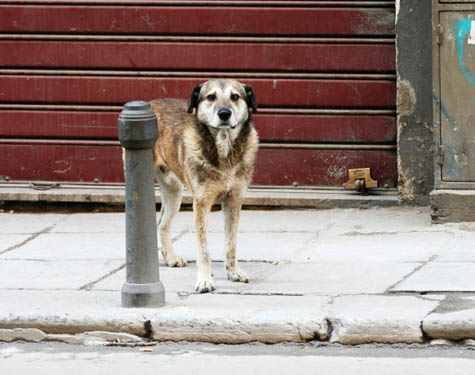
You're out for your morning walk, minding your own business and suddenly, you see a dog, walking alone. You may have only seconds in which to act. But what should you do? Do you run away? Do you try to rescue him?

Lisa Acho Remorenko

If the animal seems friendly and not aggressive, you may choose to rescue him. If the animal appears at all aggressive, follow these four rules: (1) don’t talk to the animal; (2) don’t make eye contact with the animal; (3) don’t touch the animal; (4) stand still if approached.

Never approach a stray animal unless you are an adult. If you determine the animal is not aggressive and want to help, here are some guidelines for assisting stray animals safely and effectively:

Use caution when approaching the animal. Speak calmly to reassure him. Make sure he can see you at all times as you approach, and perhaps entice him to come to you by offering food if available.

If the animal still appears to be friendly, slowly continue to approach and avoid making eye contact. Look down and to the ground. Let the animal sniff the back of your hand as you approach or as he approaches you.

If possible, restrain the animal. Create a barrier using your jacket, a towel, a box or whatever you can get your hands on to keep the animal from leaving the area. If the animal is friendly and you have him restrained, see if the animal is wearing an id tag around his collar. As soon as possible, try contacting the owner if their name is listed. If there isn’t a tag, call animal control and attempt to stay with the animal until they arrive.

Whether or not you are able to restrain the animal, call the local police or animal control agency. Many times they are able to come out for a stray that is not confined. Have animal control phone numbers stored in your phone. Here are the local listings:

Santa Barbara City Animal Control: (805) 963-1513)

Santa Barbara County Animal Control: (805) 681-5285

If you are willing to rescue a stray animal you see while you are driving, follow the same steps to approach and restrain the animal. Be sure to signal and put your hazard lights on when you pull your car over to the side of the road. You can be prepared ahead of time with these items in your car: a cell phone, the phone numbers of local animal control, a cat carrier or cardboard box, leashes, heavy blanket, an animal first aid kit, water bowls and water, strong-smelling foods, such as canned tuna or dried liver.

If you're uncertain about whether or not to assist an animal, here's a final word of advice: If for one second you do not feel comfortable, do not assist a stray animal, injured or not. Children should never assist a stray animal without an adult nearby. And if you are bitten or scratched, be sure to see your doctor right away!


Story Help (Click-ability)
Double-clicking on any word or phrase in this story will open a reference window with definitions and links to other reference material.

Comments

Discussion Guidelines

"Let the animal sniff the back of your hand as you approach or as he approaches you."

I would add here that one should let a dog smell a closed fist, as opposed to an open hand.

A fist is harder for a dog to bite, should it get agressive or bite out of fear, and it's much less painful to get bitten that way, as opposed to an open hand.

equus_posteriori (anonymous profile)
January 4, 2008 at 8:52 a.m. (Suggest removal)

Post a comment

Username:
Password: (Forgotten your password?)

Comment:

EVENT CALENDAR

Previous Month | Next Month

Today's Events Best Bets Submit an Event

Local Weather

Currently:
Clear Sky
Temperature:
62.1°
Wind:
18 N

Surf Report
  • Specials
  • InPrint
  • Top Emails
  • Blue Green Guide 2008
  • Summer Camp Guide 2008
  • Wedding Guide 2008
  • SBIFF 2008 All Access
  • 2008 Election Coverage
  • Best of Reader's Poll 2007
  • Calendar of Fundraisers
  • Local Bands
  • Kid's Mother's Day Issue
  • Made in Santa Barbara
  • Zaca Fire 2007
  • Election 2008 Kickoff
  • Esau’s: It’s Not Just for Breakfast Anymore
  • Juarez’s Fate in Jurors’ Hands
  • Our 2008 Endorsements
  • k.d. lang Returns, Wearing Her Heart on Her Sleeve
  • World Series Now?
  1. The Trolley of Terror
  2. Watch Her Strut
  3. Barney Buys a House
  4. Brad Ebner’s Comeback
  5. Cold Springs Trail—East Fork
  6. Ananda Zaren Identified as Crash Victim
  • CREATE AN ACCOUNT
  • LOG.IN
  • CONTENTS
  • CLASSIFIEDS
  • ARCHIVE
  • INFO | ADVERTISING | CONTACT US
Google
 
Independent.com Web
Copyright ©2008 Santa Barbara Independent, Inc. Reproduction of material from any Independent.com pages without written permission is strictly prohibited. If you believe an Independent.com user or any material appearing on Independent.com is copyrighted material used without proper permission, please click here.
This is our Privacy Policy.