Botanic Garden Plan Steps Closer to Reality
County Planning Commission Conceptually Approves Project with Changes
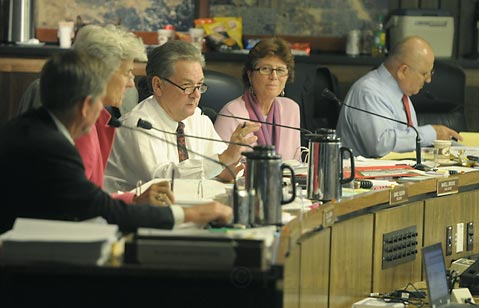
It’s safe to say that neither those for nor against the proposed development plans at the Santa Barbara Botanic Garden were smiling on Tuesday afternoon, following another grueling six-plus hours of public debate in front of the County of Santa Barbara Planning Commission. It was the second full-day hearing about the garden’s “Vital Mission Plan,” a four-years-in-the-making proposal to build 25,000-square-feet of new construction that, according to 1st District Commissioner Michael Cooney, has sparked more public interest than any other project during his five years on the commission.
By the end, the folks allied against the plan weren’t happy because the commissioners voted 4-1 to conceptually approve the project. But the garden proponents couldn’t have been too jazzed either, because the commissioners’ approval came with a laundry list of significant amendments – both those proposed by county staff and others that were tacked on by commissioners as the hearing continued. Aside from the building designs, the Vital Mission Plan also finalizes changes to a historic meadow and puts the garden under a conditional use permit for the first time, so the commissioners are also debating historic concerns and establishing standards that have never before been applied to the garden. Altogether, the plan makes for plenty of often confusing, always contentious debate – a combination that tends to elongate already controversial meetings.

No matter one’s opinion, though, the project – which garden representatives claim is necessary for it to continue being a viable nonprofit organization – will get one more airing before the Planning Commission on September 16. That’s when staff will return with the amended plans, the public will once again be able to share their views – although only relating to the plan’s changes this time – and the commissioners will cast their final vote on the project.
Among other amendments, the commission favored such staff-suggested changes to the plan as: limiting the use of pavers throughout the property, and bringing in the Board of Architectural Review to assess their use in the historic meadow; eliminating a “roadway”-type path called the Cavalli Trail, which would have run toward the garden’s easternmost ridgeline; nixing the kiosk planned to be atop that ridgeline; and denying the garden’s desired increase of large events and number of event attendees, instead keeping the permitted amount to the historic maximum levels.
On top of those, the commissioners – led primarily by Cooney, whose district includes the garden – added some more amendments to the plan. Among others, they would like to see a five-year review of the project, to assure that the neighbors’ needs are being properly addressed; to prohibit any lengthy closing of Mission Canyon or Las Canoas roads, other than the minimum of what’s required for construction; to establish resting periods between construction phases, so that neighbors get a break from the noise and traffic; and – perhaps most controversially, as the suggestion led to a lengthy debate – to deny the use of a microwave, toaster oven, or any sort of heating device for food at the proposed snack window. Other items discussed without clear conclusions included what to do with the in-progress terracing of the historic meadow and how much fencing should be allowed.
Many of those amendments were approved solely on straw polls of 3-2, with the two North County commissioners – 4th District Commissioner Joe Valencia and 5th District Commissioner Daniel Blough – clearly in favor of many aspects of the project that the other commissioners were not. Referring to the county’s treatment of the proposal to open the Val Verde estate to the public years ago – which effectively led to the mansion reverting to private ownership this year – Valencia explained, “We restricted the daylights out of it. I hope we don’t to that to the garden.” Among other pro-garden arguments, Valencia advocated for more and bigger events, if only because the garden will need the fundraisers to help pay for the new development.
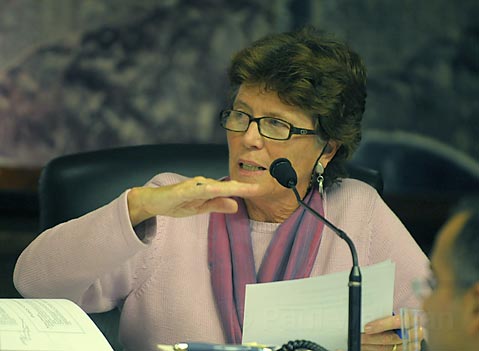
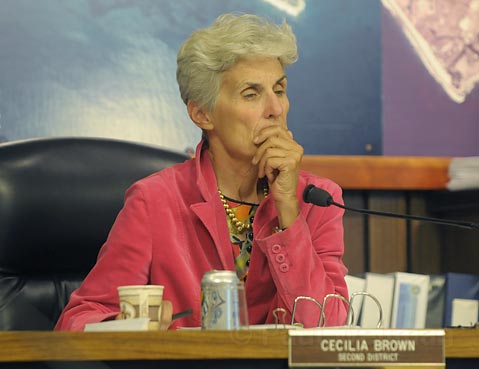
Cooney and 3rd District Commissioner Marell Brooks both expressed much trepidation and obvious frustration with how large and un-garden-like the development plans are – Brooks’ “aye” vote came with an audible sigh – but only 2nd District Commissioner Cecelia Brown decided to cast a dissenting vote in the conceptual approval. “It’s just simply too much,” said Brown. “It’s not warranted.” She went on to say the plans were “urbanizing the garden,” that it was “ironic” that a garden would propose taking out oak trees, and that she would have preferred a “lighter touch.”
As with any controversial development plan, there’s still plenty of debate in store for the future of the Santa Barbara Botanic Garden. That’ll start again on September 16 before the Planning Commission, and will likely continue later into the year before the Board of Supervisors, as an appeal is almost certain.