• CREATE AN ACCOUNT
  • LOG.IN
  • CONTENTS
  • CLASSIFIEDS
  • ARCHIVE
  • INFO | ADVERTISING | CONTACT US

  • Home
  • News
    • News Main Page
    • NewsFlash
  • A&E
    • A&E Main Page
    • Movie Times
    • TV Listings
    • A&E Blog
    • Art Galleries
    • Best Bets
  • Opinion
    • Opinion Main Page
    • Endorsements
    • Blogs
    • Columns
    • Voices
    • Letters
    • In Memoriam
    • Obituaries
  • Events
    • Today
    • Search
    • Submit
    • Best Bets
  • Living
    • Living Main Page
    • Outdoors
    • Travel
    • Sports
    • Peeps
  • Food & Drink
    • Food & Drink Main Page
    • All Restaurants
    • Delivery
    • All Bars & Clubs
    • Drink Specials
    • Open Now
  • Sports
  • Outdoors
    • Outdoors Main Page
    • Outside Insider
    • Spotlight On
    • Features
  • Classifieds
    • Real Estate
    • Jobs
    • Autos
  • Obits

    Natural Dog Training

    Making You the Most Attractive Object in Your Dog’s Universe


    Friday, September 4, 2009
    By Lisa Acho Remorenko (Contact)
    Article Tools
    Print friendly
    E-mail story
    Tip Us Off
    iPod friendly
    Comments
    Bookmark This
    del.icio.us. del.icio.us.
    Digg! Digg!
    furl furl
    google google
    newsvine newsvine
    reddit reddit
    technorati technorati
    Facebook Facebook
    Yahoo! My Web 2.0 Yahoo!

    If you haven’t heard of natural dog training, you’re not alone. Natural dog training is a new technique that uses dogs' emotional awareness of the world around them as well as their prey drive to help develop a deeper emotional connection between dogs and their human companions; teaching obedience and solving problems like dog aggression, anxiety, and hyperactivity. Expert dog trainer Neil Sattin recently released a DVD set that teaches the basics of natural dog training. This two-disc set is an excellent way for the average dog to learn basic obedience at home, without having to hire a professional trainer. I recently spoke with Sattin to get an understanding of what it means to teach your dog using natural dog training.

    Sattin became a dog trainer by accident. He told me that he began studying natural dog training after he was told by a prominent trainer that his dog Nola should be euthanized because of her aggression. Sattin began looking into other options and came across Kevin Behan, a dog trainer in Vermont, who founded the natural dog training techniques. After an apprenticeship with Behan, Sattin applied the techniques he learned and almost immediately noticed a change in Nola. Sattin then embarked on a career of private dog training and recently decided to produce a series of DVDs that would help dog owners learn the techniques of natural dog training at home.

    What is natural dog training?

    Proponents of natural dog training strive to make the human the most attractive object in the dog’s emotional universe, by answering a dog’s most important question: “What do I do with my energy?”

    The main philosophy in this training is for humans to focus their dog’s energy toward them, a role Sattin metaphorically refers to as “be the moose.” Sattin tells me to imagine a group of kids in someone’s fenced-in backyard with no swing sets, balls, or toys. Soon the kids will get bored, not knowing what to do with their energy. Someone may become the leader and organize activities, but most likely fights will break out. In comparing himself to Caesar Millan, Sattin states: “in Caesar’s world, you have to be the leader in this situation. With natural dog training, you become the swing set, the balls, and the toys.” Since a game is simply coordinated behavior with a common purpose, if you become that “game” or that “moose” for your dog, your dog’s energy turns to you. According to Sattin, a moose is the largest prey; it’s the ultimate prize for a carnivore.

    Sattin goes on to explain that when dogs hunt or chase a moose, they automatically interact in perfect harmony. They perform what we might call “obedience” but do it naturally. For example, when hunting/chasing a moose, dogs will start running alongside the moose (“heel”), then if the moose stops and stares them down, the dogs will drop down (“down-stay”) while waiting to see what the moose will do. It’s always the moose that controls the behavior of the dogs. Sattin says that during this situation, even if some other animal runs right in front of the dogs, the dogs will remain focused on the moose. If your dog sees you as “the moose” even in the most extreme circumstances, your dog will remain responsive to you. During the natural dog training process, one of the ways to train your dog to see you as the moose is to give treats—just as your dog would be eating prey. There are many other ways to “be the moose” for your dog, which Sattin explains in his DVDs.

    I was curious to get Sattin’s opinion about the tragic situation that happened at Hendry’s beach last month where an off-leash dog approached an on-leash dog repeatedly and the on-leash dog eventually attacked and killed the off-leash dog. Although Sattin wasn’t present during this occurrence, he was confident that had the off-leash dog been trained with natural dog training techniques, he would have stopped pestering the on-leash dog immediately and come to his owner when called. Sattin says that a dog can be trained to recall (“come!”) even when the dog is extremely interested in something else.

    I was a bit skeptical of this recall training, but Sattin explains that dogs are emotional beings out in the world having emotional experiences. He says that rather than processing those experiences before reacting, many dogs can’t handle the energized state and release the energy in an unconstructive way. However, if you channel your dog’s energy into the behaviors that you want, you can get your dog to relax and be attracted to you even at increasing levels of energy and stimulation. For example, at an off-leash beach, even if your dog takes off to chase something, once you call your dog, they will recall that when they feel energized the best way to resolve that energy is to direct their focus on you.

    Tug-of-War

    When it comes to playing a game of “tug-of-war” with your dog, the difference between standard dog training and natural dog training is apparent. In standard dog training, owners are told that they should always win at tug-of-war. It’s a game of dominance, so the owner must establish dominance by winning that game. Sattin does not believe that tug-of-war is in the context of dominance and submission. He explains that when dogs get energized, they feel the need to hunt. During tug-of-war, dogs get physical and emotional satisfaction from chewing (the release of endorphins and the feeling of hunting) and we want our dogs to feel that satisfaction. By letting the dog win, they experience the release of winning the game, which builds their trust in you. He asked me if I when I was a child, would I continue playing tug-of-war with an older sibling who always won? Of course not, how much fun would that be?

    Sattin even feels that tug-of-war should be played intensely. He says that the more intense the tugging, the higher energy release and satisfaction your dog will feel. Your dog will associate this satisfaction with you, and want to be around you more and play again. Even if you are walking your dog and your dog sees another dog he’s attracted to, if you have a tug toy with you, you can redirect that energy into the tug toy. Sattin states that many dog owners have noticed radical changes in their dog’s behavior simply from letting them win at tug-of-war.

    According to Sattin, natural dog training teaches your dog to relax even at higher levels of energy. It gives owners a consistent way to teach, no matter what kind of dog you have. You can run with your dog and he may get physically exhausted, but when you use natural dog training your dog becomes more mentally and physically calm and content.

    For more information on Neil Sattin’s Natural Dog Training DVD, visit www.naturaldogblog.com. It is also available at amazon.com.
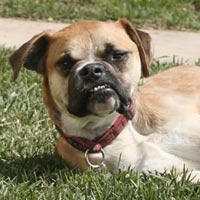
    Trevor

    Adoptable Dog of the Week

    Trevor is a 2- to 3-year-old neutered male boxer mix, who weighs about 55 lbs. He is very affectionate, eager to please, and a gentle, playful pup. Trevor is also good with kids and even enjoys the company of most other dogs, especially female dogs. Trevor is so well mannered that he would make a wonderful addition to any family!

    DAWG (Dog Adoption and Welfare Group) is a no-kill not for profit dog rescue/adoption organization located at 5480 Overpass Road in Goleta. For more information, call 681-0561. You can view more adoptable dogs at sbdawg.com.

    The public is invited to stop by and look around every day from 9 a.m.- 4 p.m. DAWG relies on volunteers to take care of all the dogs, so if you love dogs, think about volunteering! Students are able to fulfill their volunteer community service requirement by volunteering. Volunteer orientations are generally held every other Saturday at 10 a.m. Contact DAWG for the next meeting.


    Related Links

    • More Pet Chat columns

    Lisa Acho Remorenko is executing director for Animal Adoption Solutions.

    Story Help (Click-ability)
    Double-clicking on any word or phrase in this story will open a reference window with definitions and links to other reference material.

    Comments

    Discussion Guidelines

    Oh wow, anthropomorphic new age dog training! Be the large prey animal your dog wants to kill!

    I'll bet this guy gets eaten by his dog before the year is over.

    Readers say: Thumbs Up: 2 of 4 • Thumbs Down: 2 of 4

    Kratatoa (anonymous profile)
    September 4, 2009 at 6:03 p.m. (Suggest removal)

    Nice, constructive comment.

    This is the one form of dog training that actually removes anthropomorphizing from the equation and embraces the true nature of dogs. Dominance, the idea that dogs want to please, operant conditioning.....those are anthropomorphic training methods.

    I've seen these techniques in action firsthand, with dogs that would eat you for lunch if given half the chance, and the shift that happens is incredible. If there are any doubters, watch the dvd if you get a chance, and just try it. You WILL see changes, especially if your dog has behavior issues like fear or aggression.

    Readers say: Thumbs Up: 1 of 3 • Thumbs Down: 2 of 3

    inspector16 (anonymous profile)
    September 4, 2009 at 6:58 p.m. (Suggest removal)

    kratatoa - in your name in reference to the volcano?
    krakatoa? if it is, you spelled it wrong. neener.

    Readers say: Thumbs Up: 0 of 2 • Thumbs Down: 2 of 2

    matilija (anonymous profile)
    September 4, 2009 at 10:39 p.m. (Suggest removal)

    Kratatoa wrote: "Oh wow, anthropomorphic new age dog training! Be the large prey animal your dog wants to kill! I'll bet this guy gets eaten by his dog before the year is over."

    This is a common misunderstanding on how and why wolves hunt -- that they're intent on killing their prey. They're not.

    If you watch the chase part of the hunt, where the wolves are almost magnetically attracted to the prey animal and following in its "orbit," it's almost as if you're watching a group of dogs playing a game of "chase" at the dog run. The wolves just seem to be having fun, with no aggressive intent whatever. It's only when they get in close enough to be in danger of the moose or elk's horns and hooves, and the prey animal is intent on killing *them* that the wolf's teeth come out. So in the wolf's mind he's not intent on killing anything or anyone. At that moment, he's just defending himself.

    As long as you don't put a dog in a defensive situation, there would be no need for the dog to attack you. On a certain level, aggression is actually unnatural in dogs; no dog wants to be aggressive if he can help it.

    I'm a trainer myself, and have been using Natural Dog Training methods for nearly 17 years to rehabilitate dogs with severe behavioral problems.

    A few years ago I was met at the doorway of a client's house by a 100 lb. female Rottweiler with "predatory aggression" problems (she liked to lunge at cyclists, joggers and skateboarders). She came over to me and jumped up, with her paws on my shoulders and her face a few inches from mine (and I'm 6'1"). Then I made a rookie mistake; I thought she wanted to lick my nose, so I moved my face a little closer to hers.

    I should've known better. Her lips curled back, she growled quite intensely, and I was pretty sure she wanted to rip my face off. However, since I know that no dog *wants* to be aggressive, and that they only act in such a manner when they feel threatened, I broke eye contact, softly praised her a few times just to reassure her that I wasn't a threat.

    She immediately jumped down and started licking my hand. A few minutes later she was lying next to me on her back on the client's couch, with all four legs up in the air, asking for a tummy rub.

    Within a few weeks of teaching her owners how to play tug and let the dog win, etc., she stopped her attacks on the neighborhood fitness aficionados.

    Neil Sattin's DVDs are excellent. I actually learned a lot myself from watching them!

    LCK
    http://www.LeeCharlesKelley.com
    http://blogs.psychologytoday.com/blog/my...
    http://www.facebook.com/LeeCharlesKelley...
    http://twitter.com/_LCK

    Readers say: Thumbs Up: 1 of 3 • Thumbs Down: 2 of 3

    LeeCharlesKelley (anonymous profile)
    September 5, 2009 at 8:41 a.m. (Suggest removal)

    I should point out that I'm not recommending that anyone else try doing what I did with Twyla, the Rottweiler. I'd been working with dogs for nearly 20 years (15 using NDT), and I had been in a few scary situations before where I'd "outsmarted" an aggressive dog by acting in a non-threatening manner.

    My anecdote was *not* a recommendation for others to try to this approach. I *had* to do it because I had stupidly gotten myself into a bad situation and had no other way out.

    LCK

    Readers say: Thumbs Up: 0 of 2 • Thumbs Down: 2 of 2

    LeeCharlesKelley (anonymous profile)
    September 5, 2009 at 8:50 a.m. (Suggest removal)

    Very good article on Natural Dog Training. I have been studying to become a dog obedience instructor/trainer for a year now and hadn't heard of NDT, but have always felt that by utilizing the dogs natural instincts and abilities would be a better way to get your dog to understand what you expect of him/her. I look forward to learning more about NDT. Thanks for the resources in the article and in others comments.
    Johnney Pauley
    www.thatdogguy.com

    Readers say: Thumbs Up: 1 of 3 • Thumbs Down: 2 of 3

    dogguy1 (anonymous profile)
    September 5, 2009 at 6:16 p.m. (Suggest removal)

    Wow, my comment brought out all the new age dog nuts! Most of you even created new accounts specifically to reply to me -- thanks!

    Seriously, this kind of BS training encourages dogs to become dominant, aggressive, and out of control. Dogs aren't "emotional," and wolves most certainly do have aggressive intent when they hunt.

    Stop teaching people this crap -- it's going to get someone hurt.

    Readers say: Thumbs Up: 2 of 3 • Thumbs Down: 1 of 3

    Kratatoa (anonymous profile)
    September 6, 2009 at 4:53 a.m. (Suggest removal)

    I can understand why you'd think wolves have aggressive intent when they hunt, but why would you think dogs don't have emotions? Isn't aggression, for example, based on emotion? Don't you think dogs are capable of experiencing happiness and sadness, fear and desire?

    As for dogs becoming dominant, I don't understand the logic there. First of all, if dogs aren't capable of experiencing emotion, how would they be capable of symbolic thinking? Yet in order for a dog to try rise in rank and status, to strive to become "alpha" or the most dominant member of the pack, he would have to either be able to think symbolically, or his behavior would have to be totally controlled by instinct. Wouldn't you agree?

    However, since it has been shown in recent years that dominant and submissive behaviors are so rare in wild wolf packs as to be virtually non-existent, that would mean that wolves themselves have no instincts related to being dominant or submissive, or being alpha, or becoming the "pack leader," etc. And if wolves have no such instincts, how could dogs have "inherited" them?

    I suggest you read some of the articles I've written for Psychology Today, especially the 3-Part series: "Is Your Dog Dominant?" If you do, it might help you understand where this myth of dominance in canines came from.

    http://www.psychologytoday.com/blog/my-p...
    http://www.psychologytoday.com/blog/my-p...
    http://www.psychologytoday.com/blog/my-p...

    LCK

    Readers say: Thumbs Up: 0 of 2 • Thumbs Down: 2 of 2

    LeeCharlesKelley (anonymous profile)
    September 6, 2009 at 8:23 a.m. (Suggest removal)

    *Who* showed that dominant and submissive behaviors are so rare in wild wolf packs as to be virtually non-existent? Do you have a scientific citation for that?

    Readers say: Thumbs Up: 2 of 2 • Thumbs Down: 0 of 2

    Kratatoa (anonymous profile)
    September 6, 2009 at 2:53 p.m. (Suggest removal)

    According to LeeCharlesKelley ( www.trustme-I'm-an-expert.com ):

    "...it has been shown in recent years that dominant and submissive behaviors are so rare in wild wolf packs as to be virtually non-existent, that would mean that wolves themselves have no instincts related to being dominant or submissive..."

    Tell that to the omegas in the pack.

    Readers say: Thumbs Up: 1 of 3 • Thumbs Down: 2 of 3

    binky (anonymous profile)
    September 6, 2009 at 3:02 p.m. (Suggest removal)

    Natural Dog Training: be the omega.

    Readers say: Thumbs Up: 1 of 2 • Thumbs Down: 1 of 2

    Kratatoa (anonymous profile)
    September 6, 2009 at 4:06 p.m. (Suggest removal)

    Thank you, Lisa, for an interesting article. It's always good to know what is out there.

    Readers say: Thumbs Up: 0 of 0 • Thumbs Down: 0 of 0

    sbron (anonymous profile)
    September 7, 2009 at 7:44 a.m. (Suggest removal)

    “Labeling a high-ranking wolf ‘alpha’ emphasizes its rank in a dominance hierarchy. However, in natural wolf packs, the alpha male or female are merely the breeding animals, the parents of the pack, and dominance contests with other wolves are rare, if they exist at all. During my 13 summers observing the Ellesmere Island pack, I saw none. Thus, calling a wolf an alpha is usually no more appropriate than referring to a human parent ... as an alpha. Any parent is dominant to its young offspring, so ‘alpha’ adds no information.”

    “The concept of the alpha wolf as a ‘top dog’ is particularly misleading.” Alpha Status, Dominance, and Division of Labor in Wolf Packs, L. David Mech, May 2000

    http://www.mnforsustain.org/wolf_mech_do...

    I hope this helps,
    LCK

    Readers say: Thumbs Up: 0 of 1 • Thumbs Down: 1 of 1

    LeeCharlesKelley (anonymous profile)
    September 7, 2009 at 2:26 p.m. (Suggest removal)

    It was suggested here that Natural Dog Training would make dogs dominant, aggressive, and cause them to attack people:

    "Seriously, this kind of BS training encourages dogs to become dominant, aggressive, and out of control. ... Stop teaching people this crap -- it's going to get someone hurt." -- Kratatoa

    Actually, using dominance, or "pack leader" techniques is far more likely to increase aggression, so-called "dominant" behaviors, and cause people and dogs to get hurt. Here's one of a number of recent studies demonstrating this:

    “Sadly, many techniques used to teach a dog that his owner is leader of the pack [are] counter-productive; you won’t get a better behaved dog, but you will either end up with a dog so fearful it has suppressed all its natural behaviours and will just do nothing, or one so aggressive it’s dangerous to be around.”

    http://www.sciencedaily.com/releases/200...

    LCK

    Readers say: Thumbs Up: 0 of 1 • Thumbs Down: 1 of 1

    LeeCharlesKelley (anonymous profile)
    September 8, 2009 at 6:31 a.m. (Suggest removal)

    known better. Her lips curled back, she growled quite intensely, and I was pretty sure she wanted to rip my face off. However, since I know that no dog *wants* to be aggressive, and that they only act in such a manner when they feel threatened, I broke eye contact, softly praised her a few times just to reassure her that I wasn't a threat.
    <a href="http://doggy-whisperer.com" rel="dofollow">
    older dog care</a>

    Readers say: Thumbs Up: 0 of 0 • Thumbs Down: 0 of 0

    pratishtha (anonymous profile)
    September 24, 2009 at 10:22 a.m. (Suggest removal)

    Post a comment

    Username:
    Password: (Forgotten your password?)

    Comment:

    EVENT CALENDAR

    Previous Month | Next Month

    Today's Events Best Bets Submit an Event

    Local Weather

    Currently:
    Clear Sky
    Temperature:
    61.0°
    Wind:
    6 WSW

    Surf Report
    • Specials
    • InPrint
    • Top Emails
    • Best Of 2009
    • 2009 Election Coverage
    • Wedding Guide 2009
    • Blue Green Guide 2009
    • SBIFF 2009
    • Tea Fire 2008
    • Local Heroes 2008
    • Calendar of Fundraisers
    • Local Bands
    • High Noon in the Garden of Controversy
    • CAMA Presents the Shanghai Symphony
    • Elings Park Expansion Shot Down
    • Before I Be Your Dog …
    • Flobots Return with New Record, New Vision
    • Autism Attacked Alternatively
    1. Eating Animals
    2. Producer Must Pay Landscaper
    3. High Noon in the Garden of Controversy
    4. Montecito Pet Shop to Sell Only Rescued Dogs
    5. My Swine Flu Experience
    6. Teacher in Trouble
    • CREATE AN ACCOUNT
    • LOG.IN
    • CONTENTS
    • CLASSIFIEDS
    • ARCHIVE
    • INFO | ADVERTISING | CONTACT US
    Google
     
    Independent.com Web
    Copyright ©2009 Santa Barbara Independent, Inc. Reproduction of material from any Independent.com pages without written permission is strictly prohibited. If you believe an Independent.com user or any material appearing on Independent.com is copyrighted material used without proper permission, please click here.
    This is our Privacy Policy.