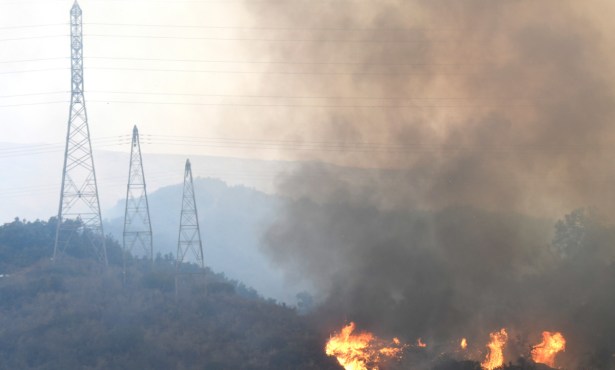
Ever since county officials were caught off guard by news in early May that Veneco Inc. was using “fracking” techniques to extract oil from two separate leases just outside Los Alamos, the supervisors have been on a fact-finding mission to better understand the controversial yet common chemical and water injection process, the multi-jurisdictional permitting protocol related to it, and the county’s potential ability to curb its use here in Santa Barbara. To that end, the supervisors held the second in a three-part series of hearings on the topic this week and invited folks from the state’s Department of Oil, Gas and Geothermal Resources (DOGGR) along with their governing entity, the state’s Department of Conservation, to join in.
Elena Miller, whose agency DOGGR has “down hole” authority on all things on-shore oil drilling-related and, as such, issues the permits required for any type of drilling, be it “fracking” or otherwise, explained that while California has an Underground Injection Control program and also requires a broad amount of information about the nature of drilling a company is applying to do, there are no specific permit triggers for people looking to frack. “This is basically the problem nationwide right now,” said Miller. That being said, she added that her department specifically evaluates potential drilling projects for their engineering integrity and what, if any, potential threat they may pose to ground-water quality—something that critics say is all too likely when fracking is used. Miller added that, at least as far as the Santa Barbara County fracking is concerned, she had reason to believe that no negative impacts were made on the quality of drinking water in the area.
For their part, the supes, albeit to varying degrees, were less than thrilled by the lack of fracking-specific oversight, a view ever present during a lengthy public comment period. Ultimately, they decided to continue discussion until September 20, while in the meantime directing county staff to continue working with oil industry folks to craft a workable path for how exactly the county can regulate fracking locally via the permitting process, and what the feasibility is of imposing a fracking moratorium county-wide until the state and federal governments develop their own standards.

Related Links
- County Curious About Venoco’s Oil-Extraction Techniques [ May 5, 2011 ]


Print friendly
E-mail story
Tip Us Off
Comments
Share Article
Myspace


Previous Month


Comments
Youtube "fracking" and watch flames shoot out of a tap coming to a sink near you! This stuff is a brutal assault on the environment, and us, because it isn't just what the process does to the layers of sentiment and rock it is also the extremely toxic chemicals they pump down there, but hey! All for the capitalist's and oil Barons, screw the little guy who would like clean water and a healthy environment.
contactjohn (anonymous profile)
August 3, 2011 at 11:22 p.m. (Suggest removal)
get out the vaseline, looks like the county is going to ease us into fracking. The last sentence says it all, 'working with oil industry folks'. Sounds kinda down home.
spacey (anonymous profile)
August 5, 2011 at 12:56 p.m. (Suggest removal)
This is one example of how environmental regulations don't work and the free market would be a far superior alternative for protecting the environment.
In a free market if these companies were polluting the groundwater and it could be proven then there could be a class action lawsuit against the companies and they would have to compensate by cleaning up the water. It would be such an expensive proposition that this would deter these companies from damaging the environment in the first place.
Currently, these companies are protected by regulations, you can't sue them for damages as long as they are within official regulations. This is how big corporations protect themselves, the EPA is a creation of big industry to limit their liability against the damages they do.
Some may argue that suing these companies will be ineffective because they will simply pay off the judges. Well, every time they do that the company is committing fraud and eventually they will likely get caught and people will be very upset, it can more easily be corrected at the local level and likely people stop buying their products and the company may go out of business if what they did was that egregious. Besides, the other alternative is a centrally controlled environmental policy that is HUNDREDS of times easier to manipulate because you have much fewer politicians to pay off to pass the regulations that protect the business than if they had these rogue corporate reps all over the country trying to implement this stuff on a local level.
loonpt (anonymous profile)
August 5, 2011 at 5:27 p.m. (Suggest removal)