Toxoplasmosis
What You Need to Know
Several years ago, a study from the University of Illinois linked toxoplasmosis, a disease caused by the Toxoplasma gondii parasite, with instances of schizophrenia. Now there’s mounting evidence that toxoplasmosis can also cause depression severe enough that can result in suicide, as reported in a July 2, 2012, news release from the University of Maryland Medical Center. Aside from schizophrenia and depression, toxoplasmosis is also linked to birth defects, if a pregnant woman is initially exposed to the parasite during her pregnancy. While this parasite and its effects sound frightening, the good news is there is a lot you can do to avoid becoming infected in the first place.
What is toxoplasmosis and how is it spread?
Toxoplasma gondii is a parasite that is spread through contact with cat feces or by eating undercooked meat or unwashed vegetables. When humans ingest the parasite, the organism spreads from the intestine to the muscles and the brain. Although toxoplasmosis can be transmitted by a cat if a human ingests the parasite from contaminated feces, handling or eating raw or poorly cooked meat is the most common way to contract the disease.
Studies show that 50 percent of humans in the United States are already carrying the parasite Toxoplasma gondii with no harmful effects. While it is true that birth defects can result if a fetus contracts this parasite through the placenta of a newly infected mother, the operative word in this case is “newly.” If you are pregnant, and you have already been exposed to toxoplasma, you most likely have the antibodies against it, and you are highly unlikely to become infected. It is only new exposures to toxoplasma that cause problems during pregnancy. Experts recommend asking your physician for a toxoplasma screen if you are pregnant or planning to become pregnant.
Thousands of cats have been turned in to shelters due to ignorance about this disease. Even though it is doubtful that a woman will contract toxoplasmosis from her cat, it’s still a good idea to exercise caution.
What you can do to avoid contracting toxoplasmosis.
Don’t let your cat outside. This way, you can be certain your cat won’t come into contact with (and ingest) an infected animal.
Have someone else clean out the litter box if you are pregnant. If this is not an option, be sure to wear gloves and a mask. Thoroughly wash your hands afterward.
Make sure the litter box gets cleaned daily. Experts say it takes one to five days for the feces of an infected cat to become contagious. Cleaning the litter box daily will help prevent infection.
Don’t feed your cat a raw food diet. Feed your cat only commercially prepared cat food.
Wear gloves when gardening. Since you can’t control other people’s outdoor cats, it’s best to wear gloves when working in any type of soil, as an infected cat may have defecated.
If you eat meat, cook it thoroughly, and wash your hands after touching any meat that is uncooked. Anything that might have come in contact with raw meat should be washed carefully. And never use a knife exposed to raw meat on cooked meat.
While many people panic when they see stories about the effects of toxoplasmosis on news shows like Good Morning America, it is not a necessary precaution to get rid of your cat due to health concerns. By following the above precautions, you can avoid the Toxoplasma gondii parasite and keep both you and your kitty healthy and safe.
Announcement
Best in Show
Contest at the Pacific Pride Festival at Leadbetter Beach. Saturday, July 7. Register your dog at the CARE4PAWS booth starting at 11 a.m. Prizes awarded for “prettiest pooch,” “most butch,” “dog/owner look alike,” and “most festive.” For more information, visit http://www.care4paws.org/index.html
Adoptable Pet of the Week
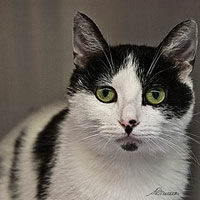
Antonia is a beautiful, young, black-and-white kitty with a great personality. She has already been spayed, she’s litter box trained, and she’s ready to jump into your lap and move in!
For more information, visit ASAP at the Santa Barbara County Animal Shelter, 5473 Overpass Road. Adoption hours are Monday-Friday, 9 a.m.-4:45 p.m.; Saturday, 10 a.m.-4 p.m. For more information, visit www.asapcats.org or call (805) 683-3368
Animal Shelter Assistance Program (ASAP) is a volunteer-based, nonprofit organization that takes care of the cats and kittens at the Santa Barbara County Animal Shelter. ASAP provides humane care for these animals and works to eliminate the practice of euthanizing them for reasons other than serious health or behavior problems.
The following is included in the adoption fee at ASAP: spay or neuter surgery, flea treatment, vaccinations, microchipping, health evaluation, including testing for feline leukemia (FeLV) and feline immunodeficiency virus (FIV). Cats thought to be 10 years or older receive a full blood panel evaluation, thus assuring that the cat is indeed healthy and adoptable, medical and drug coverage through ASAP’s vet for two weeks beyond adoption, if necessary, temperament evaluation, and cat carrier (you can save the county money by bringing your own).