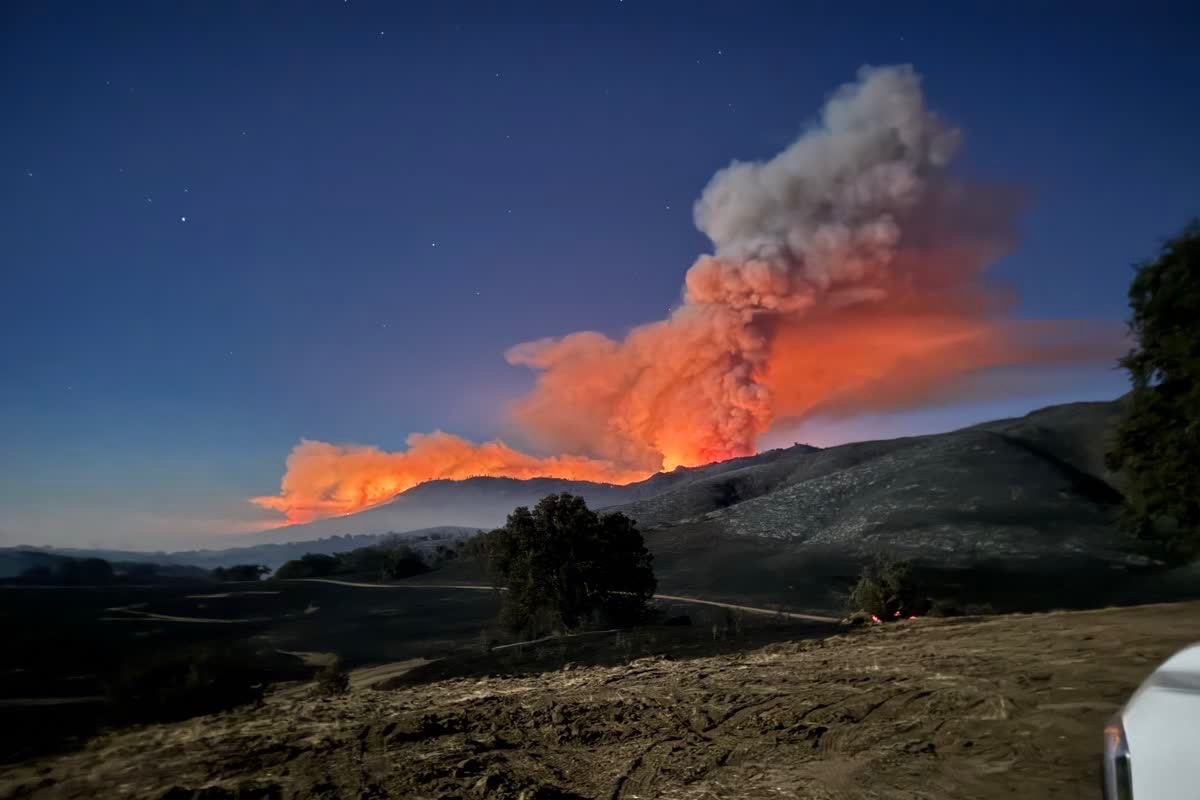
Firefighters are continuing to suppress the flames eating up forested areas in Santa Barbara County. As the Gifford Fire spreads, responders have described flakes of ash floating through the air, plumes of smoke, and hazy, orange-hued skies. As of Tuesday morning, the fire has scorched more than 122,000 acres and is 33 percent contained.
Based on these reports, one might expect air quality in the county to be worse than it is. According to the Air Pollution Control District’s (APCD) Air Quality Index, as of Tuesday, most areas in Santa Barbara County have been mainly green and yellow — green indicating “safe” and yellow “moderate” air quality, which is only unsafe for people who may be unusually sensitive to particulate pollution. At the time of this writing, Santa Maria and Cuyama Valley, Santa Barbara County’s most populated areas closest to the fire, have not even branched into the orange zone of being unhealthy for sensitive groups like seniors and children.
Lyz Bantilan with the APCD, which documents air quality using monitoring stations around the county, said that the smoke from the fire has been mostly staying aloft due its “mixing height,” which indicates where and to what extent smoke disperses. So far, most of the smoke is visible but not felt on the ground.
While it may look smokey, forecasters expect it to continue to stay up high with no real ground impacts, Bantilan said. She added that they expect stronger winds and greater dispersions of the smoke at night in coming days and weeks.
However, there is still an Air Quality Alert for the Cuyama Area and an Air Quality Watch for the rest of the county in place because conditions can change very quickly with wildfire, Bantilan said. She encourages residents to keep track of the overall air quality regionally and on the neighborhood level using the APCD’s up-to-date Air Quality Index and the Environmental Protection Agency’s Fire and Smoke Map.
Anecdotally, some people have reported effects like dry mouth and coughing. For people who have conditions such as asthma, Bantilan suggests using N95 masks to protect themselves from smoke if they must go outdoors, but staying indoors is “the best protection.” People are also encouraged to treat ash cleanup wisely and not to use leaf blowers. Sensitive groups should talk to their doctors to create a wildfire health plan and determine what steps they should take if they live in an affected area. There are also several resources on the APCD’s website with useful tools to create “clean air rooms” and other tips to breathe safely.
Respiratory effects of fire, smoke, and ash are known to contribute to short-term negative health impacts and even fatalities, as suggested by studies of past fires. One such study of the fires that burnt through Los Angeles earlier this year found that at least 400 additional, indirect deaths can likely be attributed to the blazes due to factors including poor air quality exacerbating lung and heart conditions.
A decade-long study of more than 1.2 million Southern California residents released last year also revealed a strong correlation between the presence of wildfire smoke and dementia diagnoses later in life. And because fires are only becoming more frequent and intense in California, another study is currently being conducted by the California Air Resources Board examining the health impacts of short-term repeated exposure to wildfire smoke. Results of the four-year study are expected to be released next year.