

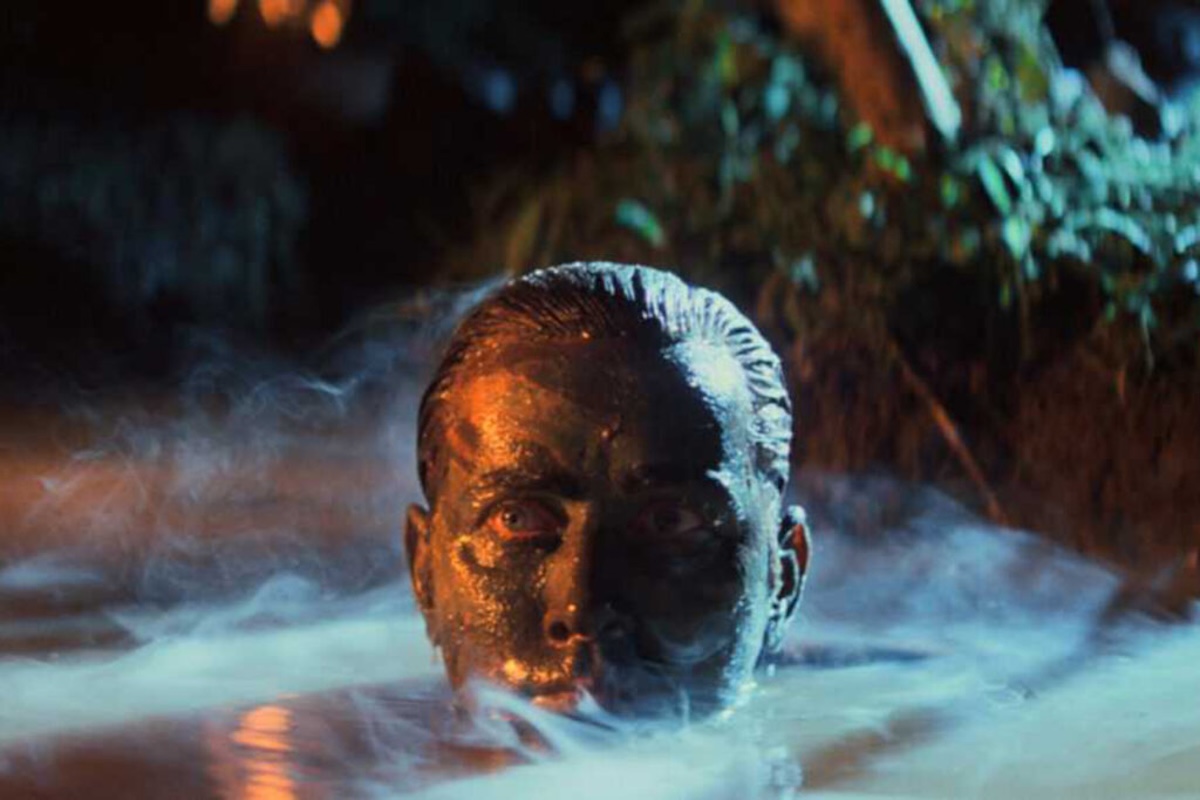
From one valid perspective, the 1991 documentary Hearts of Darkness: A Filmmaker’s Apocalypse is a must-see for anyone who has been enchanted and/or haunted by the great American film Apocalypse Now. Francis Ford Coppola’s Joseph-Conrad-goes-to-‘Nam epic is ripely laden with infamous internal and external upheavals and crises, including creative angst, budget overruns, Martin Sheen’s real-bloody meltdown and subsequent heart attack, and the dizzying onset eccentricity of Dennis Hopper and Marlon Brando. The horror, the horror.
On the other hand, the revealing and fascinating documentary about the making of the film — directed by Faz Bahr, George Hickenlooper, and Coppola family matriarch Eleanor — may be distracting, a reality checking myth-buster for those who like their fiction content kept safe from the harsh light of production backstory. For some, what happened behind the scenes should stay behind the scenes.
A modest proposal: make a point to catch both the restored 4K “Final Cut” Coppola film and this valuable piece of ancillary documentary magic in the venue splendor of the Riviera Theatre when both are screened August 29-September 4. Prospects are you will be moved, and a bit exhausted, in a cathartic way.
Naturally, the combo of a metaphorical jungle expedition film and a companion making-of documentary finds a doppelgänger in film history. Werner Herzog’s ambitious, operatic, and semi-indulgent river/jungle-based film Fitzcarraldo (from 1982, three years after the Apocalypse release) had its curtain pulled back through quirky documentarian Les Blank’s classic portrait of a crazed, jungle bound artist, Burden of Dreams.
In his jungle epic doc spotlight, Herzog reveled in his own mission-driven persona to the jungle not as a romantic domain but a place “full of fornication and murder” (delivered in his droll, signature German patois). For his part, kicking off Hearts of Darkness, Coppola touches on the essence of the filmmaking process in a press conference after its premiere: “The way we made it was very much the way the Americans were in Vietnam. We were in the jungle. There were too many of us. We had access to too much money, too much equipment, and little by little, we went insane.”
Later in the doc, he explains that “the film is a metaphor for the journey into self. It’s scary to watch someone go into the center of himself and confront his fears — of failure, death, going insane. You have to fail a little, die a little, go insane a little to come out the other side.” Key words: “insane,” “other side.”
Conrad’s classic novel Heart of Darkness was a film struggling to be made. Orson Welles, clearly a hero and model for Coppola, wanted to bring it to the screen in 1936, but budgetary restrictions steered him away from his dream: instead, he made Citizen Kane. Welles’s emphatic yet enigmatic voice-intoning lines from the Conrad novel become recurring leitmotif echoes throughout this documentary.
Coppola took on the project, using John Milius’s script (which Coppola liberally altered and amended), after George Lucas pulled out, paving the way for this landmark production for Coppola’s American Zoetrope production company.
In the new doc, we get a rare intimate perspective on the director’s toil and tribulations along the path to completing his grand vision, the massive scope of which was made possible by the huge success of his two Godfather films preceding it. Even so, Coppola believed strongly enough to pump plenty of his own money into the project (as he did with his latest film, Megalopolis, though to disastrous ends).
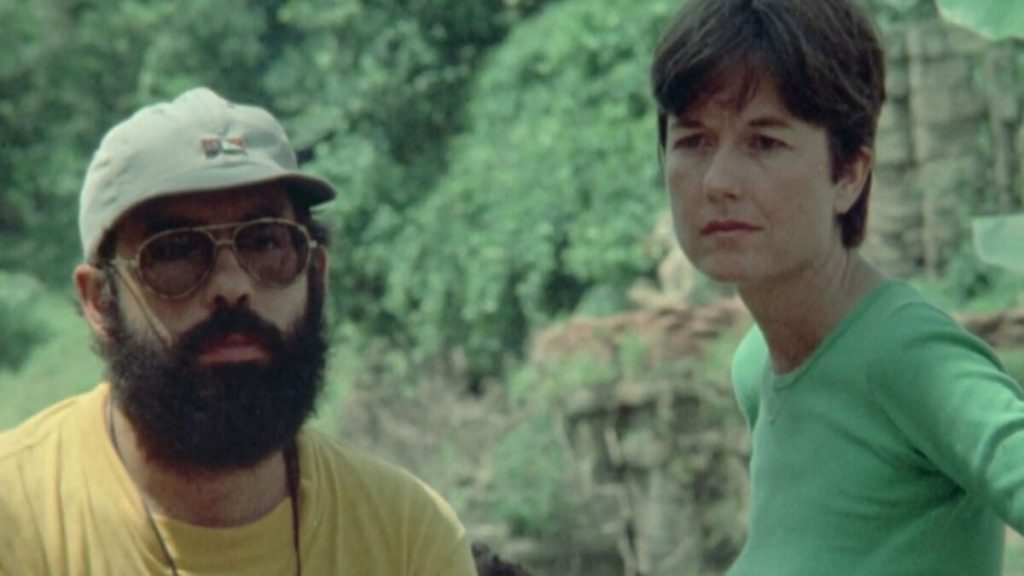
Eleanor Coppola wisely narrates the doc and unveils her trove of valuable production footage and recorded conversations with her tortured artist husband, ostensibly for her diaries about the project. The Coppola children were scooped up and taken to the rugged jungle terrain of the Philippines for the shoot, and Eleanor recalls that wee Sophia thought that it was cool — “like Disneyland’s Jungle Cruise.” Except the Disneyland ride doesn’t experience deadly, production-halting typhoons or a Philippine government reneging on its contingent offer of military helicopters to the film when the warring rebellion in the South requires extra firepower.
Interviews with actors in the film reveal a project in a forbidding landscape, often on the verge of chaos, with Coppola insisting on an intuitive and ever-changing story structure and dialogue “options.” Fred Forrest comments, “sometimes, we’d get pages that would say ‘scenes unknown’ on the call sheet. They didn’t know what we were going to do.” Santa Barbara–bred Sam Bottoms explained that, for much of the shooting schedule, he was high on weed or other mind-altering substances. Bottoms also explained that when Coppola asked the soldier characters what they’d like to do in the film, the idea of a meaningless butchery à la the My Lai massacre would make sense: hence the painful “slaughter over a puppy” scene.
Through it all, Coppola managed to create a definitive yet also unprecedented film which bravely tapped into collective anxiety about the absurd Vietnamese war, rerouted Conrad-ian themes, new filmic vocabulary, and timeless scenes and lines (eg. Duvall’s “I love the smell of napalm in the morning”). But at times, Coppola was ready to bail, fearing the film would fail on both entertainment and art fronts. “Nothing is so terrible is a pretentious movie,” he says at one dispirited moment. “That’s the greatest horror of filmmakers, being pretentious. For me, a film has to have answers — I don’t mean just a punch line, but answers on about 47 different levels.”
Apocalypse Now had uneasy questions and answers by the score. By logical extension, so does this documentary, an intriguing portrait of an obsessed artist and his difficult artistic birth story.
View trailer here. See Hearts of Darkness: A Filmmaker’s Apocalypse at the SBIFF Riviera Theatre August 29-September 4. sbifftheatres.com



You must be logged in to post a comment.