The threat of immigration enforcement on school campuses was discussed during the Santa Barbara Unified School Board’s meeting on Tuesday, September 9.
With instances of federal immigration enforcement on the rise, teachers were recently trained on how to respond to Immigration and Customs Enforcement (ICE) presence on or near campuses, including reporting and navigating a request from an immigration officer to visit a school site or to have access to a student.
In addition, as discussed at the meeting, staff were trained on related safety protocols; the district reiterated its commitment to never share student information, nor collect data on immigration status; the district is partnering with local immigration rights organizations for “know your rights” workshops and other initiatives; and board members are considering implementing schools as safe spaces.
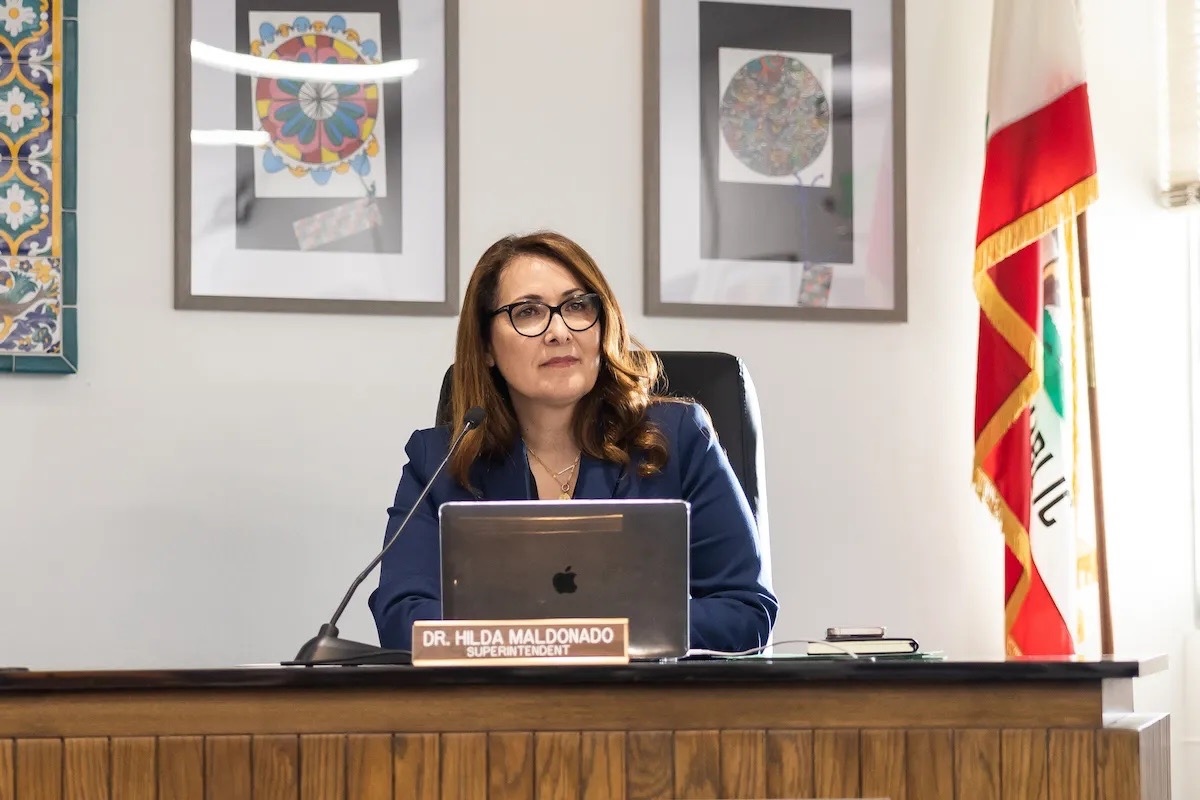
Superintendent Hilda Maldonado noted that, when it comes to immigration enforcement, “these are scenarios we cannot predict.” ICE arrests and raids have been random, sudden, and jarring, with masked agents in unmarked cars grabbing people off the streets. Maldonado emphasized that, if a situation arises, staff were reminded to think about “protecting students first.”
York Shingle, the president of the Santa Barbara Teachers Union, said he appreciated the communication sent out to teachers and staff about what to do if ICE enters a classroom, but they “still need more support.” He asked for language and practices so teachers can stay calm in such a situation, as well as guidance around what student data they may be accidentally sharing (e.g. student names on desks) and practice in hiding that information.
He and other public commenters referenced the recent Supreme Court decision allowing “racial profiling” in federal enforcement sweeps. Another parent asked the district to establish protocols in case a student goes home and finds that their parents were detained by ICE.
“ICE is ramping up activity,” Shingle said. “We need to be more proactive in keeping our students and families safe.”
According to the district, at the school board’s August 19 meeting, a student representative shared that “fear is evident among students.” The student suggested extending advocacy and awareness efforts (such as “Know Your Rights” education) beyond high schools into junior highs and elementary schools.
On Tuesday, board member Sunita Beall discussed potential guidelines for crisis response and suggested gathering resources to have protocols if, for example, a student is “abducted” by ICE during a field trip, something she called a “terrifying thought.”
Board President Gabe Escobedo expressed support for coordinating resources and response protocols with community partners, other school districts and the County Education Office, as well as establishing schools as safe spaces, or sanctuaries. “The goal is to make sure that our schools as a whole, independent of the situation, which will look different, are safe and welcoming — to parents, as well,” he said.
Maldonado took note of the various suggestions from the meeting to guide her next steps and directions to staff, she said. Those next steps include activating a crisis response team with the school administration and community partners, establishing communication with the County Education Office and other local school districts on responding to immigration enforcement, and working with district leaders and staff to identify safe spaces for families on school campuses.