

The berm was so steep I couldn’t see over the top as I inched my gear-laden kayak up the seaside earthwork. It was nearly dark on the southeast end of Santa Rosa Island and the soft, wet mud oozing between my toes felt good after paddling 30-plus miles.
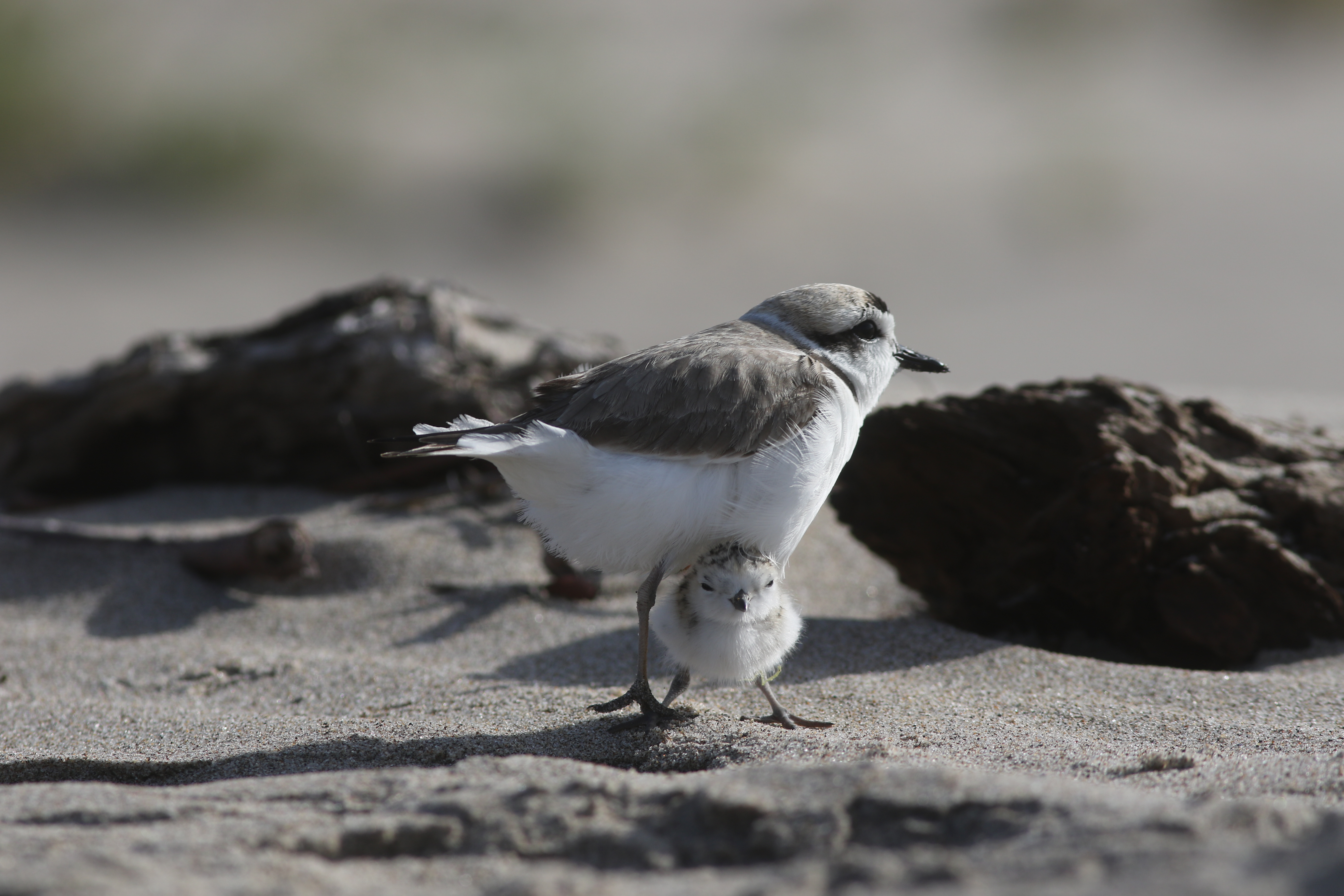
The section of beach directly in front of me started to move. I thought my eyes were deceiving me. However, after squinting mightily in the thick, low-lit air, I realized the swath of sand was in fact a well-choreographed shift by a flock of western snowy plovers sidestepping in unison across the deserted beach.
Western snowy plovers meld into their habitat with utter aplomb; their tan and buff-colored feathers are their best defense when handling threats, manmade or otherwise. And although they’ve lost huge swaths of precious coastal habitat, the West Coast’s hardiest shorebird persists on busy beaches.
On July 18, 2024, a western snowy plover egg was discovered by state parks staff at Oceano Dunes State Vehicular Recreation Area. The egg had been incubated but abandoned. It was then transported to the Santa Barbara Zoo. Two days later the egg hatched. Six weeks later, on September 4, 2024, the plover was released with several other fledglings at the UC Reserve System at Coal Oil Point.
The newly banded shorebird is known as “py:lv,” which refers to the colored bands on the plover’s legs ― pink, yellow, lime, and violet. This restless western snowy plover didn’t dawdle long at the most highly concentrated western snowy plover site in all of California.
The busy plover soon traveled northwest to a sandy pocket beach on The Nature Conservancy’s Dangermond Preserve. Western snowy plovers have been monitored there since 2019, but this plover was special because of the partnerships between agencies and nonprofits that keep these feisty little shorebirds going between nesting sites and reliable wrack lines. On the preserve, it became a successful dad, fledging two chicks of its own in 2025, despite the breeding pair having to retrieve its eggs following big high tides.
“Currently, there are about 30 western snowy plovers using the beach at Perkos, with more plovers just north of Point Conception,” said Emily Rice, a coastal program biologist with Point Blue’s Vandenberg’s Field Station. “It’s possible that this plover may decide to winter at Coal Oil Point.”
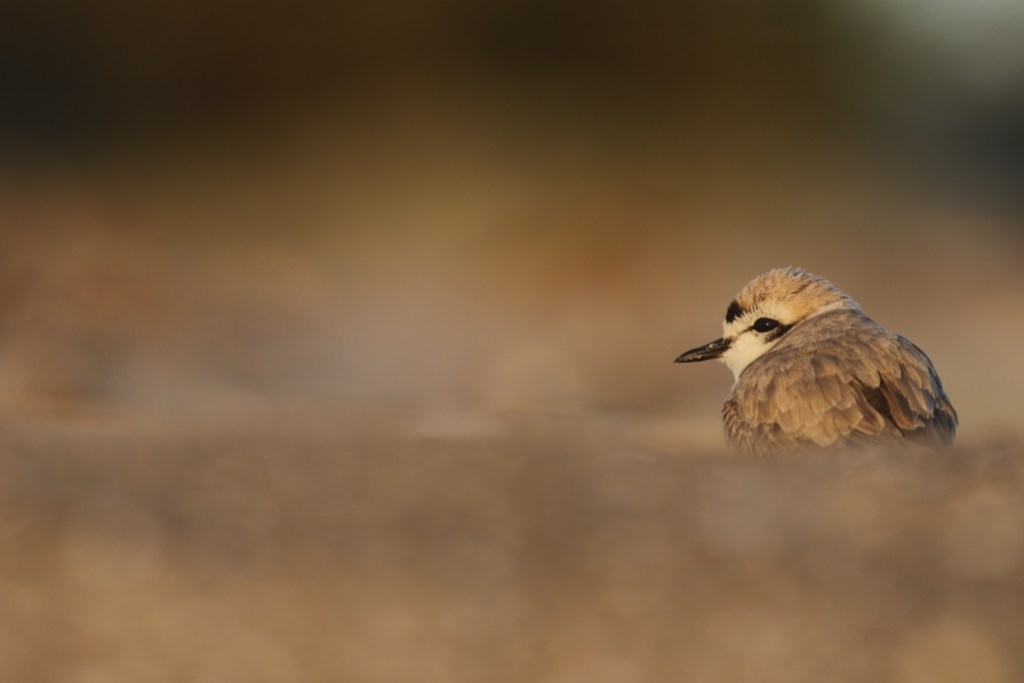
Whatever the male plover decides, its journey has been a great testament of multiple organizations working closely together to ensure shorebirds like the western snowy plover have a chance against environmental challenges and human disturbance.
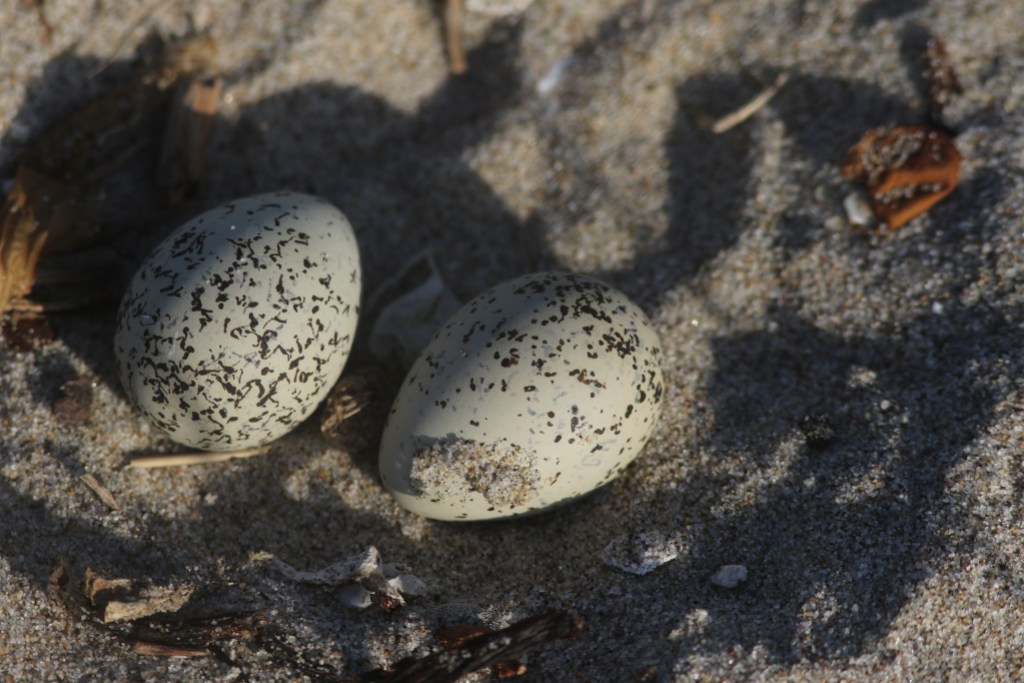
Shortly thereafter, the successful dad paired up with another female, and was incubating a second viable nest, but battled surging high tides once again. After successfully retrieving their eggs after one big tidal swing, on July 29, 2025, a large tide — possibly enhanced by the earthquake off Russia — scattered their eggs for good.
“They can gather eggs scattered by big tides and can dig out eggs if they are not buried too deep by wind,” said Dan Robinette, senior scientist, Coastal Marine Program Leader at Point Blue. “We definitely lose nests from wind and tides.”
Carpinteria’s beaches house wintering plovers on local county, city, and state beaches. In fact, 2021 saw the first successful western snowy plover nest in 60 years, where three chicks fledged off Carpinteria State Beach. It was a great example of how tolerant plovers are of crowded areas.
More far-flung beaches like the Guadalupe — Nipomo Sand Dunes National Wildlife Refuge that provide more depth and far less human disturbance are some of the best available habitats left for this threatened shorebird. The wrack line is consistent and dense, and the nesting habitat is expansive.
It’s a section of northern Santa Barbara County that looks like it did centuries ago, and the western snowy plovers are a great indicator species of how healthy that ecosystem is.
Related Posts



Premier Events
Sat, Mar 28
7:15 PM
Santa Barbara
Santa Barbara Stargazing Tour

Sat, Apr 18
5:30 PM
Solvang
The Winemaker’s Table: An Evening of Rideau Reds

Thu, Mar 19
1:30 PM
Goleta
Film Club: “Intruder in the Dust,” 1949

Thu, Mar 19
6:00 PM
Santa Barbara
Chaucer’s Book Talk & Signing: Elizabeth Gilchrist

Thu, Mar 19
6:30 PM
Santa Barbara
Wildflowers and other Wonders

Thu, Mar 19
6:30 PM
Santa Barbara
Resist & Rise: A Community Vigil to Protect Our Coast from Sable Pipeline

Thu, Mar 19
8:00 PM
Santa Barbara
Nefesh Mountain

Fri, Mar 20
9:00 AM
Santa Barbara
The 78th Santa Barbara International Orchid Show 2026

Fri, Mar 20
8:00 PM
Santa Barbara
The Framers & False Puppet with DJ Ringworm Radio

Sat, Mar 21
11:00 AM
Santa Barbara
Film Screening for World Down Syndrome Day!

Sat, Mar 21
12:00 PM
Santa Barbara
The Rack Grand Opening Party

Sat, Mar 21
2:00 PM
Ojai
Live It Up Free Benefit Concert at Libbey Bowl
Sat, Mar 28 7:15 PM
Santa Barbara
Santa Barbara Stargazing Tour
Sat, Apr 18 5:30 PM
Solvang
The Winemaker’s Table: An Evening of Rideau Reds
Thu, Mar 19 1:30 PM
Goleta
Film Club: “Intruder in the Dust,” 1949
Thu, Mar 19 6:00 PM
Santa Barbara
Chaucer’s Book Talk & Signing: Elizabeth Gilchrist
Thu, Mar 19 6:30 PM
Santa Barbara
Wildflowers and other Wonders
Thu, Mar 19 6:30 PM
Santa Barbara
Resist & Rise: A Community Vigil to Protect Our Coast from Sable Pipeline
Thu, Mar 19 8:00 PM
Santa Barbara
Nefesh Mountain
Fri, Mar 20 9:00 AM
Santa Barbara
The 78th Santa Barbara International Orchid Show 2026
Fri, Mar 20 8:00 PM
Santa Barbara
The Framers & False Puppet with DJ Ringworm Radio
Sat, Mar 21 11:00 AM
Santa Barbara
Film Screening for World Down Syndrome Day!
Sat, Mar 21 12:00 PM
Santa Barbara
The Rack Grand Opening Party
Sat, Mar 21 2:00 PM
Ojai


You must be logged in to post a comment.